How Liberty Township, Licking County began
Liberty Township, in the county's northwest corner, was among the last parts of Licking County settled and the last organized, carved out of the east half of Monroe Township in 1827. Lying away from the main early roads and waterways, its dense hardwood forest sheltered game long after neighboring townships had been cleared, and its first permanent settlers, the family of Stephen Emerson, did not arrive until October 1818. It never grew a real town, only the small crossroads of Concord and New Way, but by 1881 supported five country churches. No municipality has ever incorporated within its borders, and it still borders Johnstown, the seat of neighboring Monroe Township, to its east.
Settled October 1818 (Stephen Emerson and family), incorporated 1827 (organized out of the east half of Monroe Township).
Where the name comes from
No source consulted explains why this township was named Liberty. It is one of many Ohio townships carrying the name, chosen in this era for its patriotic association rather than for any local person or place.
Before the town
The 1881 county history records no Native village, trail, or treaty line within Liberty Township's own boundaries. Before settlement it was, in the history's words, 'a most excellent hunting ground,' and remained so 'longer than other townships around it,' because the settlements filling in on every side drove deer, wild turkey, wolves and wild hogs into its still-uncleared forest for safety. The only trace the 1881 history records of the earlier Mound Builder culture is a single mound, forty feet across and five feet high, half a mile north of Brook's Four Corners. Liberty was organized in 1827 out of the eastern half of Monroe Township, whose own chapter records that the Wyandot maintained a village, Raccoon Town, on Raccoon Creek about a mile above Johnstown until 1807 — inside what had been the undivided Monroe Township at the time, though no source consulted specifies which side of the later Liberty-Monroe line the village stood on. The wider region was ceded to the United States at the Treaty of Greenville in 1795, decades before either township organized.
Nations recorded here: Wyandot, Shawnee.
- Mound near Brook's Four Corners (mound) — half a mile north of Brook's Four Corners, Liberty Township, prehistoric (Mound Builder era, culture unspecified) (archive.org)
Timeline
- — The Treaty of Greenville cedes most of what becomes Ohio, including the future Liberty Township, to the United States.
- — Stephen Emerson and family, from Ware Township, New Hampshire, settle within the present limits of neighboring St. Albans Township.
- — The Emerson family moves into the present limits of Liberty Township in October, becoming, according to George Emerson's account, the township's first settlers; his son George E. Emerson is the first white child born within the township.
- — Rena Knight arrives and builds the second cabin in the township, followed soon after by a Mr. Sawyer, the third settler; the 1881 county history calls the older claim that Knight was the first settler here 'probably a mistake.'
- — Liberty Township is organized out of the east half of Monroe Township; John Clark and Caleb Brooks become its first justices of the peace.
- — A Baptist congregation organizes in the village of Concord, the township's first religious organization, under Revs. Owen Owens and David Adams.
- — A Universalist congregation organizes and soon erects a church at New Way, becoming known as the 'New Way' church.
- — The Regular Baptist church of Liberty Township builds its permanent church edifice in Concord.
- — Concord's Methodist Episcopal church is built and dedicated in November by Rev. Uriah Heath.
- — 'Liberty chapel' is organized near the McKean township line by consolidating the local Methodist Episcopal and Wesleyan Methodist churches, and its building is erected in 1867.
Stories
The First Family in Liberty
Stephen Emerson brought his family from Ware Township, New Hampshire, to Licking County in 1815, settling first within what became St. Albans Township. Three years later, in October 1818, they moved into the still-empty forest that would become Liberty Township, and for nearly three years the Emersons were its only residents. His son George Emerson later gave the family's account to the county historians, who used it to correct an older, mistaken claim that one Rena Knight had been the township's first settler in 1821; Knight, they concluded, was only the second settler, arriving after the Emersons had already spent years alone in the township's dense hardwood forest.
A Hunting Ground to the Last
Liberty Township's late settlement had an unusual side effect: it became, and stayed, one of the best hunting grounds in the county. As the townships around it filled with farms, wolves, deer, wild turkeys and wild hogs were pushed into Liberty's still-uncleared woods, which lay off the main roads and waterways that guided most early travel. The 1881 county history notes that the township remained an excellent hunting ground 'longer than other townships around it' for exactly this reason, its isolation from the main lines of settlement working, for a time, in the game's favor rather than the farmers'.
Five Churches for a Farm Township
By 1881, Liberty Township's entire public life outside its farms centered on two tiny villages, Concord and New Way, and the five churches its scattered families had built between them. The Regular Baptist church, organized in a schoolhouse in Concord in 1832, coexisted with a separate Free Will Baptist congregation formed a decade later by many of the same neighboring families; a Universalist society, organized in 1843, built the 'New Way' church at the settlement of that name; and in 1866 local Methodist Episcopal and Wesleyan Methodist members merged to build 'Liberty chapel' near the McKean township line. A union Sunday school in Concord served the children of several denominations at once, in a township too small and scattered to support separate schools for each.
Photographs
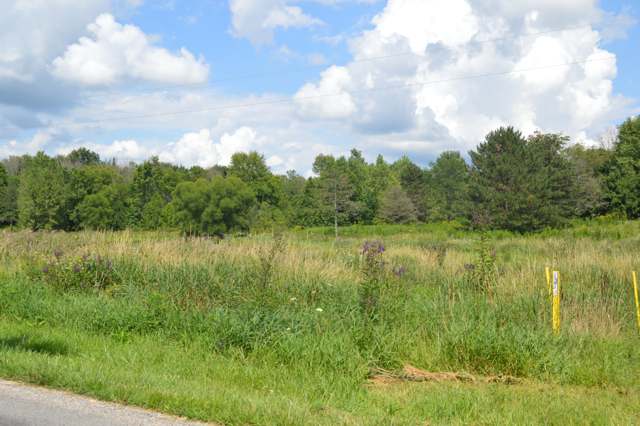
Photo: Nyttend, via Wikimedia Commons, public domain · Wikimedia Commons
Local history sources: archive.org · en.wikipedia.org · en.wikipedia.org · en.wikipedia.org · commons.wikimedia.org
Water
Mostly private wells The water here
- Johnstown City84% of residentsGroundwater wells (3 wells)
- Del-co Water Company, Inc.7% of residentsOlentangy River, O'Shaughnessy and Alum Creek reservoirs, plus Knox County wells
- Alexandria Village6% of residentsGroundwater wells (3 wells)
- Columbus Public Water System3% of residentsScioto River (Griggs & O'Shaughnessy), Hoover Reservoir on Big Walnut Ck, plus wells
- Green Meadows MHP0% of residentsGroundwater wells (2 wells)
Its ZIP codes
Each ZIP code that touches Liberty Township, Licking County, with the share of its residents who live here and the same headline figures as the ZIP page.
| ZIP | Share | Water | Radon | Home value | Schools | Flood |
|---|---|---|---|---|---|---|
| 43031 Johnstown | 18% | Mostly private wells | 5.7 pCi/L average radon | Median year built 1991 | Johnstown-Monroe Local · 3.5 stars overall | 0.2% of residents in the 1% floodplain |
| 43001 Saint Albans Township and Alexandria | 13% | Mostly private wells | 8.9 pCi/L average radon | Median year built 1978 | Northridge Local · 4 stars overall | 3.3% of residents in the 1% floodplain |
The county
Licking County: 17 ZIP codes, 38 cities, villages and townships, 160,939 people.
Nearby places
Cite this page
Cite this page as:
Cracked Buckeye (Open Shower Co), "Liberty Township, Licking County", https://crackedbuckeye.com/place/liberty-township-licking-county/, built 2026-09-16, accessed [date].
Machine-readable: /api/place/liberty-township-licking-county.json (open JSON, CC BY 4.0 for the compilation; the underlying records keep their own terms) · How to cite · Report a correction · Built 2026-09-16