How Bennington Township, Licking County began
Bennington Township was carved out of a larger block of Monroe Township land in 1815 and settled beginning in 1809 by Henry Iles, a Virginian, followed by families from Pennsylvania and Virginia who filled the township's ordinary-sized farms by about 1830. Its only village, Appleton, was laid out in 1832 and named for a Zanesville lawyer who had owned much of the land; the county histories' best-remembered story from Appleton is that a young store clerk there in the early 1830s, known locally only as "Billy," went on to become Civil War general William S. Rosecrans. The township has no railroad, canal, or turnpike, and its 1881 and 1909 county histories both describe it as a purely agricultural, somewhat isolated township whose population was already declining by 1909. Today it remains a township of farms on the Knox County line, with Appleton still unincorporated.
Settled 1809 (Henry Iles, from Rockingham County, Virginia), incorporated 1815 (organized from a block of Monroe Township).
Where the name comes from
Neither the 1881 nor the 1909 county history explains why the township is called Bennington; both simply record that it was organized in 1815 from the northern half of a square block that had been part of Monroe Township since 1812 (the southern half remained Monroe, and Liberty Township was split off the east side of that block in 1827). No source consulted ties the name to the Vermont battle or town of the same name.
Before the town
The 1881 county history is explicit that Bennington "presents few traces of the Mound Builders, and those not remarkable," and that the Indians "seem to have left few traces or reminiscences of their occupation" -- no one living in the township in 1881 remembered seeing them, and no permanent camp is recorded within its limits in historic times. The one exception was a small, non-permanent camp on Indian Run near its junction with Lake Fork, which disappeared soon after the first settlers arrived but is credited with giving the stream its name. The land itself was opened to settlement by the Treaty of Greenville, signed August 3, 1795, in which the Wyandot, Shawnee, Lenape (Delaware), Miami, Ottawa and other nations ceded most of what is now Ohio, including Licking County, to the United States. No source consulted names a specific village, trail, or burial site inside Bennington Township's own boundaries; a Wyandot town called "Raccoon Town," occupied until 1807, stood in neighboring Monroe Township a mile or more above Johnstown, but that is outside this township.
Nations recorded here: Wyandot, Shawnee, Lenape (Delaware), Miami, Ottawa.
- Camp on Indian Run (camp) — Indian Run, near its junction with Lake Fork, southern Bennington Township, pre-settlement, gone by soon after 1809 (archive.org)
Timeline
- — The Treaty of Greenville cedes most of what becomes Ohio, including the future Bennington Township, to the United States.
- — Henry Iles, from Rockingham County, Virginia, becomes the township's first white settler.
- — John Dripps and Isaac Vanausdel settle near the North Fork; John Trout and, soon after, Peter Staymates settle on the Otter Fork.
- — Monroe Township is organized, at first including a square block of land that becomes Monroe, Liberty, Bennington and Hartford townships.
- — A line is drawn through the center of that block; the north half is organized as Bennington Township.
- — Hartford, previously joined with Bennington's territory, is set off as its own separate township in September.
- — In an old log schoolhouse, settlers organize what is probably the township's first religious society, a "New Light" or Christian congregation assisted by pioneer preachers Isaac N. Walters, Daniel Long and Matthew Gardner.
- — Titus Knox and Carey Mead lay out the village of Appleton, naming it for Appleton Downer, a Zanesville lawyer who had owned much of the land.
- — Gideon Long and family arrive in Appleton and move into the town's only building, an empty storeroom Carey Mead had built for a son-in-law who never came to occupy it.
- — A young store clerk boarding with the Long family in Appleton, remembered locally only by the nickname "Billy" Rosecranz, later becomes Major General William S. Rosecrans, commander of Union forces at the Battle of Stones River and at Chickamauga.
- — Rev. Wesley Clark organizes a Methodist class at the house of John Denty, the township's first regularly organized Methodist congregation.
- — The Belle Hall Covered Bridge, carrying Dutch Cross Road over the Otter Fork east of Hartford, is built; it is later listed on the National Register of Historic Places on October 22, 1976.
- — The county's centennial history records that Bennington's "interior and somewhat isolated position" has left its population in decline for many years.
Stories
The General Who Clerked in Appleton
Carey Mead built the first house in the new village of Appleton as a storeroom for his son-in-law, a Mr. Delong, who was expected to bring in a stock of goods and become the town's first merchant; when that plan fell through, the frame building stood empty until Gideon Long and his family moved into it in April 1833. David Messenger then rented the front of the building and opened the first store, bringing on two clerks even though customers were scarce. One clerk, Franklin Bryant, eventually bought the store himself. The other, a young man everyone simply called "Billy," had so little clerking to do that he spent most of his time hunting in the woods; Mrs. Long remembered him as "a good boy -- a jolly, whole-souled fellow as ever lived." His last name was Rosecranz. Six months after arriving, he left for West Point, and grew up to be Major General William S. Rosecrans, the Union commander remembered for his victory at Stones River and his defeat at Chickamauga. The 1881 county history adds that his father was, at that time, a merchant and farmer living in Homer in the adjoining township -- though Wikipedia's own biography of Rosecrans instead places his birth in Kingston Township, Delaware County, and names Utica and Mansfield as his early clerking towns, so this Appleton stint survives only in Licking County's own telling.
A Village That Never Grew
Appleton was laid out in August 1832 by Titus Knox and Carey Mead, in a beautiful setting near the township's southern border, and named for Appleton Downer, a Zanesville lawyer who had owned much of the surrounding land. Even so, both the 1881 and 1909 county histories note that it "never attained to the proportions of a town of one hundred inhabitants," and that it had already been declining for years by the time they were written. By 1881 the village held two stores, two blacksmith shops, two wagon shops, two shoe shops, two hotels, and Gideon Long -- by then an old man, still living -- still making furniture and coffins by hand in the same cabinet shop he had run since the 1830s.
Photographs
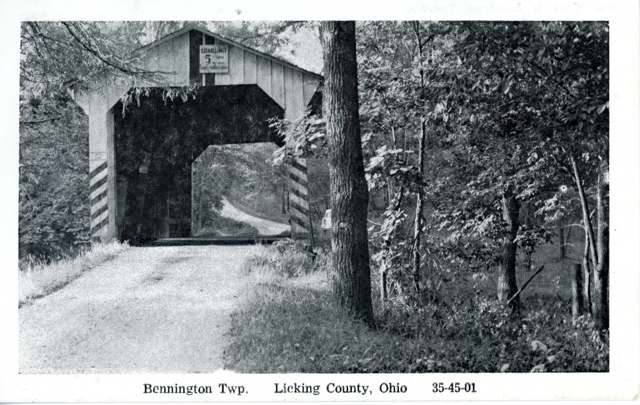
Photo: Columbus Metropolitan Library, via Digital Public Library of America, no known copyright restrictions · Wikimedia Commons
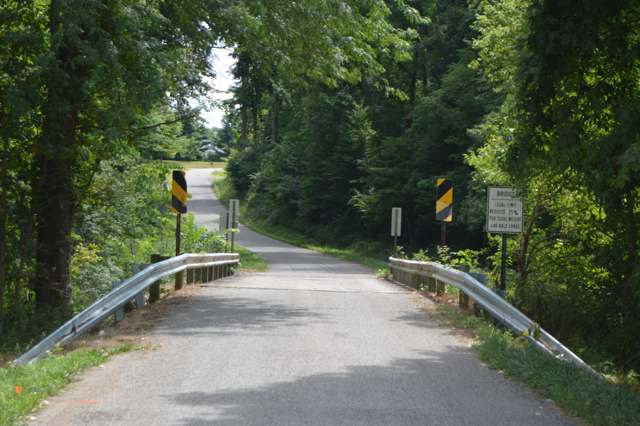
Photo: Nyttend, via Wikimedia Commons, public domain · Wikimedia Commons
Local history sources: archive.org · archive.org · en.wikipedia.org · en.wikipedia.org · en.wikipedia.org · en.wikipedia.org · en.wikipedia.org · commons.wikimedia.org · commons.wikimedia.org
Water
Mostly private wells The water here
- Del-co Water Company, Inc.47% of residentsOlentangy River, O'Shaughnessy and Alum Creek reservoirs, plus Knox County wells
- Johnstown City45% of residentsGroundwater wells (3 wells)
- Utica Village7% of residentsGroundwater wells (2 wells)
- Columbus Public Water System2% of residentsScioto River (Griggs & O'Shaughnessy), Hoover Reservoir on Big Walnut Ck, plus wells
- Martinsburg Village0% of residentsGroundwater wells (3 wells)
- Green Meadows MHP0% of residentsGroundwater wells (2 wells)
Its ZIP codes
Each ZIP code that touches Bennington Township, Licking County, with the share of its residents who live here and the same headline figures as the ZIP page.
| ZIP | Share | Water | Radon | Home value | Schools | Flood |
|---|---|---|---|---|---|---|
| 43013 Hartford Township and Croton | 19% | Mostly private wells | 11.1 pCi/L average radon | Median year built 1974 | Northridge Local · 4 stars overall | 4.0% of residents in the 1% floodplain |
| 43031 Johnstown | 7% | Mostly private wells | 5.7 pCi/L average radon | Median year built 1991 | Johnstown-Monroe Local · 3.5 stars overall | 0.2% of residents in the 1% floodplain |
| 43011 Hilliar Township and Centerburg | 6% | Del-Co's East Knox wellfield at Bryant and Lucerne Rds, Wayne Twp, about 5 miles WSW of Fredericktown | 8.2 pCi/L average radon | Median year built 1988 | Centerburg Local · 3.5 stars overall | 0.9% of residents in the 1% floodplain |
| 43080 Utica | 3% | Mostly private wells | 16.1 pCi/L average radon | Median year built 1972 | North Fork Local · 3 stars overall | 6.9% of residents in the 1% floodplain |
The county
Licking County: 17 ZIP codes, 38 cities, villages and townships, 160,939 people.
Nearby places
Cite this page
Cite this page as:
Cracked Buckeye (Open Shower Co), "Bennington Township, Licking County", https://crackedbuckeye.com/place/bennington-township-licking-county/, built 2026-09-16, accessed [date].
Machine-readable: /api/place/bennington-township-licking-county.json (open JSON, CC BY 4.0 for the compilation; the underlying records keep their own terms) · How to cite · Report a correction · Built 2026-09-16