How Johnstown began
Johnstown grew up on a 4,000-acre tract that President John Adams granted to Revolutionary soldier John Brown in 1800; Brown sold the land in 1810 to Dr. Oliver Bigelow, who platted the village in 1813 around a public square he donated along with its streets and alleys. Before that, the Wyandot village of Raccoon Town stood a mile or so above the future town on Raccoon Creek until 1807, when settlers Charles and George Green purchased the Wyandots' improvements there. The town grew slowly for more than a century, reaching a nationally notable moment in 1926 when a farmer unearthed a nearly complete mastodon skeleton beneath what is now the city, sold to the Cleveland Museum of Natural History. Johnstown crossed the 5,000-resident threshold and became a city on October 21, 2021, its population having built gradually rather than in the sudden burst suggested by any single cause.
Settled 1806-1807 (George W. "Washington" Evans and wife Lucy, from Greene County, Pennsylvania), platted 1813, incorporated October 21, 2021 (city; village government dated to the 1813 platting), by Dr. Oliver Bigelow.
Where the name comes from
No source consulted states directly why the town was named Johnstown. The 1881 county history and the Johnstown Historical Society's own timeline both describe Dr. Oliver Bigelow platting the town in 1813 on land he had bought in 1810 from John Brown, but neither explains the choice of name.
Before the town
The Wyandot maintained a town of some size, called Raccoon Town, a mile or more above the site of Johnstown on Raccoon Creek, within what became Monroe Township. According to the 1881 county history, the Wyandot lived there in considerable numbers until 1807, when settlers Charles and George Green purchased their possessions and took over the cultivated land; a few Indian families lingered in the township afterward, including a small group with huts on the Brushy Fork near the McKean-Granville township line who stayed until after the War of 1812 began. The Johnstown Historical Society's own timeline independently confirms 1807 as the year George and Charles Green "purchased land from the Wyandots," and records that the Green family's daughter Mahala, born that autumn, was the first white child born in the township. No source consulted records any mounds or earthworks within Monroe Township's limits; the 1881 history states plainly that "few, if any, traces of Mound Builders exist within its limits."
Nations recorded here: Wyandot.
- Raccoon Town (village) — on Raccoon Creek, about a mile above the site of Johnstown, until 1807 (archive.org)
Timeline
- — President John Adams grants a 4,000-acre tract that will include Johnstown to Revolutionary War soldier John Brown.
- — George W. "Washington" Evans and his wife Lucy, from Greene County, Pennsylvania, become the first white settlers in what will become Monroe Township.
- — Charles and George Green purchase the improvements of the Wyandot village of Raccoon Town on Raccoon Creek; the Greens' daughter Mahala, born that September 15, is the first white child born in the township.
- — John Brown sells his land holdings, including the future townsite, to Dr. Oliver Bigelow of New York State.
- — Dr. Oliver Bigelow lays out and incorporates the village of Johnstown around a public square, though the 1881 county history notes the town "made little or no progress" until 1815.
- — Bigelow donates the streets, alleys, public square and cemetery to the village before his death on November 6 of that year.
- — The Monroe Baptist church, one of the township's first congregations, organizes a mile north of Johnstown under Rev. George Evans.
- — The Toledo and Ohio Central railroad's construction trains reach Johnstown in September, more than two-thirds of a century after the town's founding, though the first passenger train has not yet arrived.
- — Elijah Barton builds the Monroe Township Hall and Opera House, dedicated January 1, 1885.
- — The Johnstown Jail, a small brick lock-up later listed on the National Register of Historic Places, is built.
- — Farmer James Bailey finds a nearly complete mastodon skeleton beneath what is now Johnstown; it is sold to the Cleveland Museum of Natural History.
- — The Village of Johnstown becomes the City of Johnstown on October 21, its population having passed the 5,000 threshold Ohio law sets for city status.
Stories
Raccoon Town's Last Year
A mile or so above the ground that would become Johnstown, the Wyandot kept a town of some size on Raccoon Creek, remembered in the county history only as Raccoon Town. In 1807, Virginians Charles and George Green, accustomed to frontier life, bought out the Wyandots' improvements there and began farming the cleared land themselves. The Wyandot did not leave all at once: a small number stayed on in the township for a time afterward, and a separate handful built a few huts on the Brushy Fork, near where McKean and Granville townships now meet, remaining until after the War of 1812 had begun. George Green's family put down deep roots on the same ground; his wife's daughter Mahala, born that autumn, was remembered as the first white child born in the township, and Mrs. George Green herself was still living there in 1881, ninety-two years old, with seventeen children and a hundred grandchildren behind her.
A Square That Never Filled In
When Dr. Oliver Bigelow laid out Johnstown in 1813 on the southwest quarter of Monroe Township, he gave it the shape most Licking County towns shared: a grid of streets around a large public square at the center, which he donated to the village along with its streets and alleys. The town was slow to catch on. Progress was so faint that by 1815 Bigelow was still waiting for it to take hold, and even after settlers Alden, Hoover and Sellers began improving lots that year, the 1881 county history could report that the town "never grew...up to the expectation of its founders" and likely held no more people in 1880 than it had fifty years before. That year's census counted just 278 residents, five stores, three wagon shops, two harness shops and three blacksmith shops, and the public square itself, the historian wrote, "at present, looks like a vacant field," with young trees planted around its edge that might, with care, someday beautify it. More than a century later, in October 2021, the town Bigelow had founded finally crossed 5,000 residents and became a city.
The Mastodon Under Main Street
In 1926, a Johnstown-area farmer named James Bailey turned up something no one expected in his fields: the bones of a mastodon, one of the great Ice Age relatives of the elephant that vanished from Ohio roughly ten thousand years earlier. The skeleton proved to be nearly complete, an unusually good find, and Bailey sold it to the Cleveland Museum of Natural History, where it entered the scientific record. The discovery became, and remains, one of the details most associated with the town, a reminder that the ground beneath a small Licking County farming community had been the hunting range of Ice Age megafauna long before it was Wyandot territory or a Revolutionary War land grant.
Photographs
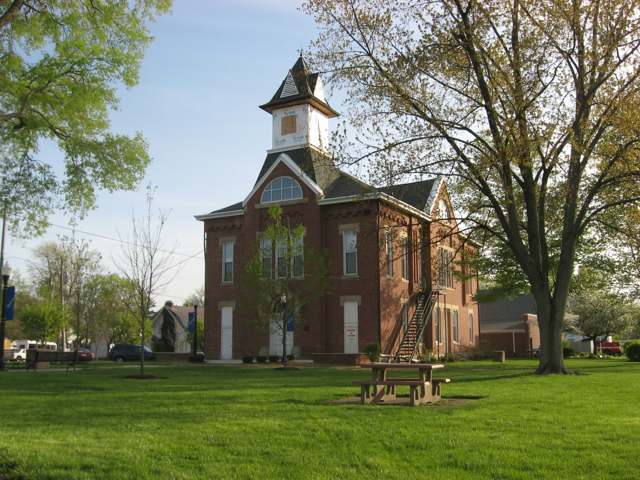
Photo: Nyttend, public domain · Wikimedia Commons
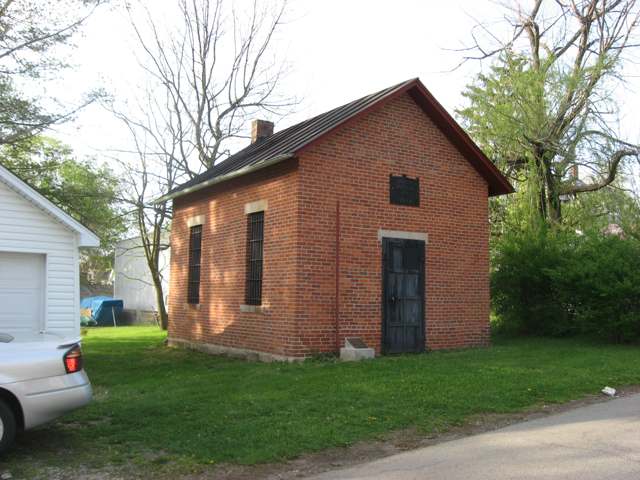
Photo: Nyttend, public domain · Wikimedia Commons
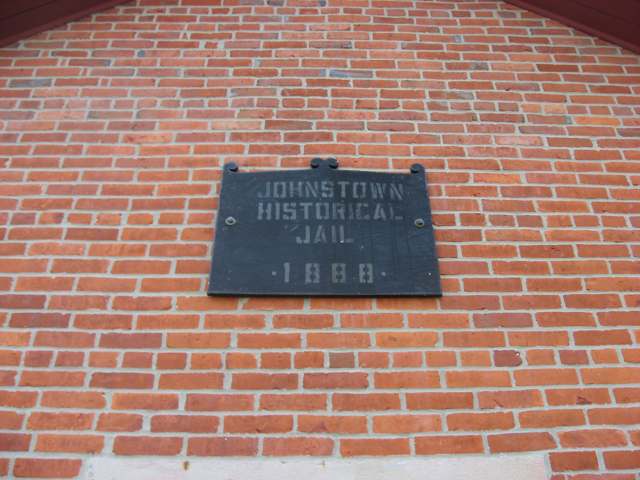
Photo: Nyttend, public domain · Wikimedia Commons
Local history sources: archive.org · en.wikipedia.org · johnstownohiohistoricalsociety.com · en.wikipedia.org · commons.wikimedia.org · commons.wikimedia.org
Water
Mostly private wells The water here
- Johnstown City89% of residentsGroundwater wells (3 wells)
- Del-co Water Company, Inc.8% of residentsOlentangy River, O'Shaughnessy and Alum Creek reservoirs, plus Knox County wells
- Columbus Public Water System3% of residentsScioto River (Griggs & O'Shaughnessy), Hoover Reservoir on Big Walnut Ck, plus wells
- Green Meadows MHP0% of residentsGroundwater wells (2 wells)
Its ZIP codes
Each ZIP code that touches Johnstown, with the share of its residents who live here and the same headline figures as the ZIP page.
| ZIP | Share | Water | Radon | Home value | Schools | Flood |
|---|---|---|---|---|---|---|
| 43031 Johnstown | 41% | Mostly private wells | 5.7 pCi/L average radon | Median year built 1991 | Johnstown-Monroe Local · 3.5 stars overall | 0.2% of residents in the 1% floodplain |
The county
Licking County: 17 ZIP codes, 38 cities, villages and townships, 160,939 people.
Nearby places
Cite this page
Cite this page as:
Cracked Buckeye (Open Shower Co), "Johnstown, Licking County", https://crackedbuckeye.com/place/johnstown/, built 2026-09-16, accessed [date].
Machine-readable: /api/place/johnstown.json (open JSON, CC BY 4.0 for the compilation; the underlying records keep their own terms) · How to cite · Report a correction · Built 2026-09-16