How Saint Albans Township, Licking County began
St. Albans Township was settled beginning in 1807 by John Cooke Herron and organized in 1813 out of Granville Township, at first including Jersey Township as well. Its early economy ran to small, often short-lived ventures: a failed attempt to bore for salt on Mootz Run in 1819 and 1820 that struck coal instead of brine, and a clock factory built in 1825 that turned out about eleven hundred clocks over three years before its craftsmen moved on to Granville. Alexander Devilblis laid out the village of Alexandria in 1830, and it remains the township's only village. No source consulted explains the origin of the name St. Albans itself, and none records a specific Native village, trail or treaty site within the township's own boundaries, only four small Mound Builder mounds and two earthwork enclosures.
Settled 1807 (John Cooke Herron), incorporated 1813 (organized out of Granville Township, at first including Jersey Township).
Where the name comes from
No source consulted explains why the township is called St. Albans. The 1881 county history's chapter on the township opens with its 1813 organization and physical description and does not address the origin of the name.
Before the town
The 1881 county history's chapter on St. Albans Township records no Indian village, camp, trail or treaty site within its boundaries, and the word 'Indian' does not appear in its narrative of settlement, industry or churches; the chapter's only reference to earlier peoples concerns 'Ancient Works.' Four Mound Builder mounds are recorded: on the Gailor farm near the Kirkersville road, on a hill east of Alexandria, on the Thrall farm, and the largest, on the E. R. Cornell farm south of the Delaware road, said to have stood eighteen feet high before an 1830 excavation by Dr. Fassett, Archibald Cornell and Israel Peck found human bones and polished stones at its center. Two earthwork enclosures are also recorded, one shaped like an egg and enclosing about six acres on the Phillips or Follett farm, the other on the Thrall farm. The land was ceded by the Treaty of Greenville in 1795. See the Delaware and Licking county files for the wider historic-tribe record of the surrounding region.
- Cornell farm mound (mound) — about twenty rods south of the Delaware road, on the E. R. Cornell farm, prehistoric (Mound Builder) (archive.org)
- Egg-shaped enclosure (earthwork) — on the Phillips or Follett farm, crossed by the Delaware road, prehistoric (Mound Builder) (archive.org)
Timeline
- — The Treaty of Greenville cedes most of what becomes Ohio, including the future St. Albans Township, to the United States.
- — John Cooke Herron marries Catharine Ward and settles in the township's southern part, its first settler.
- — Gideon, Sylvanus and Archibald Cornell move into the township temporarily to clear land under contract for an early landowner named Waters.
- — John Cooke Herron makes the first clearing in the township, assisted by a neighbor from Harrison Township.
- — Joshua Lobdell arrives from Pennsylvania and settles what becomes the Atwood or Fitch farm, later planting the township's first orchard in 1809.
- — William Pettee, his son True, and carpenter Noble Landon arrive together from Vermont.
- — St. Albans Township is organized out of Granville Township, at first including the territory that becomes Jersey Township.
- — The township's first log school-house is built north of where the Kirkersville road intersects the Worthington road.
- — An agent identified only as Mr. Smith bores two wells, one 550 feet deep near Spelman's mill and one 450 feet deep near Gilbert's mills, seeking salt; both strike a vein of coal instead and the search is abandoned.
- — Knowles Linnell builds a clock factory on his farm near the brick school-house; over the next three years craftsmen Charles French and William H. Brace make about eleven hundred clocks there before moving their trade to Granville in 1828.
- — Alexander Devilblis lays out the village of Alexandria.
- — Devilblis gives a lot for a burial ground in Alexandria after the village's founding, and the first interments are made that June.
- — The St. Albans Congregational Church is organized at a council held in the Christian Union church three miles north of Alexandria.
Stories
The Township's Clock Factory
In 1825, Knowles Linnell of Granville, then living in St. Albans, built a clock factory on his farm near the brick school-house. His first hire, a man named Charles Lewis, proved unable to do the work and was soon dismissed; William Munsell then rode to Delaware County to fetch a clock maker named Charles French, who moved to St. Albans in the spring of 1826 and worked through that summer. His brother-in-law, William H. Brace, joined him that fall, both of them sons-in-law of the Elder Wildman who had organized the township's Baptist church in 1826. Between them, French and Brace turned out about eleven hundred clocks before the factory closed in the spring of 1828 and both men moved their trade to Granville. Munsell himself sold the clocks around the county and beyond as a traveling peddler. The building that once housed the clockworks was, by 1881, doing duty as a hay and sheep barn east of Lyman Carter's residence.
Boring for Salt, Finding Coal
In 1819, an agent named Smith, working for a Granville firm thought to be Sawyer, Mower & Company, set up a small store near the Clemons mill and spent the fall and winter, and the following winter and spring, boring for salt on Mootz Run. One well, sunk in the streambed near Spelman's mill, went five hundred and fifty feet deep; another, near Gilbert's mills, reached four hundred and fifty feet. Neither struck brine. The well near a Mr. Palmerton's, however, passed through a vein of coal ten to fifteen feet thick between three and four hundred feet down. The salt venture was abandoned, but both wells kept producing water afterward, artesian at some depth no one had troubled to determine.
Photographs
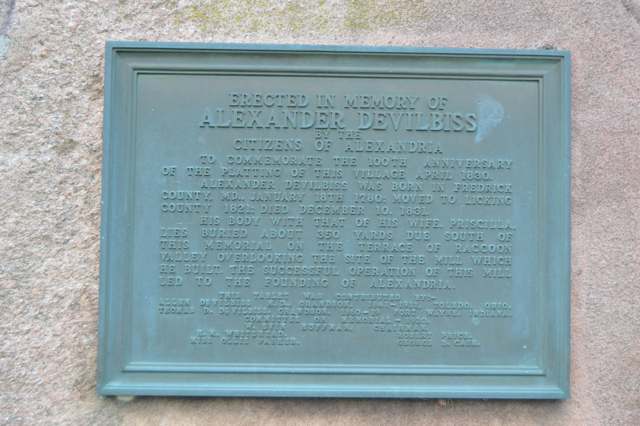
Photo: Nyttend, public domain · Wikimedia Commons
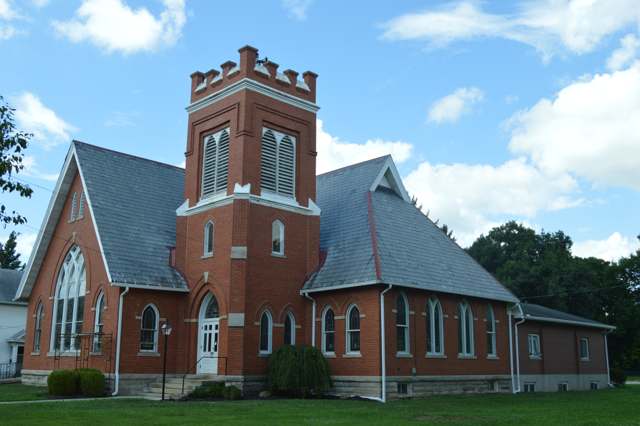
Photo: Nyttend, public domain · Wikimedia Commons
Local history sources: archive.org · en.wikipedia.org · en.wikipedia.org · en.wikipedia.org · commons.wikimedia.org · commons.wikimedia.org
Water
Mostly private wells The water here
- Alexandria Village85% of residentsGroundwater wells (3 wells)
- Johnstown City13% of residentsGroundwater wells (3 wells)
- Del-co Water Company, Inc.1% of residentsOlentangy River, O'Shaughnessy and Alum Creek reservoirs, plus Knox County wells
- Columbus Public Water System0% of residentsScioto River (Griggs & O'Shaughnessy), Hoover Reservoir on Big Walnut Ck, plus wells
- Green Meadows MHP0% of residentsGroundwater wells (2 wells)
Its ZIP codes
Each ZIP code that touches Saint Albans Township, Licking County, with the share of its residents who live here and the same headline figures as the ZIP page.
| ZIP | Share | Water | Radon | Home value | Schools | Flood |
|---|---|---|---|---|---|---|
| 43001 Saint Albans Township and Alexandria | 66% | Mostly private wells | 8.9 pCi/L average radon | Median year built 1978 | Northridge Local · 4 stars overall | 3.3% of residents in the 1% floodplain |
| 43031 Johnstown | 1% | Mostly private wells | 5.7 pCi/L average radon | Median year built 1991 | Johnstown-Monroe Local · 3.5 stars overall | 0.2% of residents in the 1% floodplain |
The county
Licking County: 17 ZIP codes, 38 cities, villages and townships, 160,939 people.
Nearby places
Cite this page
Cite this page as:
Cracked Buckeye (Open Shower Co), "Saint Albans Township, Licking County", https://crackedbuckeye.com/place/saint-albans-township-licking-county/, built 2026-09-16, accessed [date].
Machine-readable: /api/place/saint-albans-township-licking-county.json (open JSON, CC BY 4.0 for the compilation; the underlying records keep their own terms) · How to cite · Report a correction · Built 2026-09-16