Local events in Burlington Township, Licking County
13 events in the next 90 days from 1 public calendar. All local events in Burlington Township, Licking County
Checked October 20; the events page is refreshed daily.
How Burlington Township, Licking County began
Burlington Township, on Licking County's northern line against Knox County, was organized in 1817 and named for Colonel Wait Wright's native Burlington, Vermont, after Wright reportedly bought the naming privilege from the settlers with two gallons of whiskey. Its first cabins went up in 1806 on Otter Creek and the North Fork, and its village, first also called Burlington, was laid out by John Chonner in 1816 and renamed Homer around 1825 when it took a post office. The township is thick with Mound Builder earthworks, and on May 18, 1825, it took the brunt of a tornado so violent that the county still calls it "the Burlington storm." Homer's own claim on the wider world rests on two people who spent part of their youth there: Victoria Woodhull, born in the village in 1838 and later the first woman to run for President of the United States, and Union General William S. Rosecrans, whose family kept a store there in his boyhood, though modern biographies place his actual birth in Delaware County.
Settled 1806 (James Dunlap, Cornelius Vanausdal, Henry Oldacre, Nathan Conard, John Johnson, Jonathan Beaty, Hugh McKindley, Adam Patterson, John and Thomas Dixon), platted Homer (first called Burlington) laid out by John Chonner in 1816; renamed Homer c. 1825 when it became a post town, incorporated 1817, by township named by Colonel Wait Wright, who is said to have paid for the naming privilege with two gallons of whiskey for the settlers.
Where the name comes from
"It is said that Colonel Wait Wright treated the 'boys' to two gallons of whiskey for the privilege of naming the township, and thereupon called it after his native place in Vermont," the 1881 county history records. The village at its center went by the same name, Burlington, until residents had to pick a new one for their post office and settled on Homer instead.
Before the town
No source found ties a named historic nation or village site to Burlington Township specifically; the record here is entirely about the Mound Builders and their earthworks, with the historic-era Wyandot, Shawnee and Lenape (Delaware) presence attested only at the county and regional level. The 1881 county history counts seven or more mounds within the township: one a mile west of Homer on the former Fulton farm, one on the Butcher farm, two (originally three) on the Hunter/Yocum farm, one west of Utica on the McKnight/Hanger farm, one near Homer on the Woodruff farm, and "the largest and most entire" immediately at Homer on the Edwin Williams farm, about thirty rods around and nearly thirty feet high. Under one of the Hunter-farm mounds diggers found a domed stone vault about ten feet across and three feet high, capped with a large fieldstone, but empty when opened. In 1824, near an old fort whose outline was still visible on the creek bank by the Homer cemetery, workmen uncovered an unusually large human skeleton, which the county history speculates, without evidence, might have been "some pre-historical Indian chief." A circular embankment with a ditch on the inside and a central mound, on Joseph Conard's farm on the township's western line, is described as belonging to the same class of "sacred enclosures" as the Newark earthworks. None of this material is tied to a named historic people; the Licking County history covers the wider treaty and removal record.
Nations recorded here: Adena culture.
- Dixon Mound (mound) — off South Street, Homer village, Adena culture; listed on the National Register of Historic Places (ref. 73001494) (commons.wikimedia.org)
- Mound at Homer (Edwin Williams farm) (mound) — Homer village, on the Edwin Williams place, unspecified Mound Builder era (archive.org)
- Stone-vaulted mound, Hunter/Yocum farm (mound) — Hunter (later Yocum) farm, unspecified Mound Builder era (archive.org)
- Circular embankment and mound, Conard farm (earthwork) — Joseph Conard's farm, western line of the township, unspecified Mound Builder era; compared by the 1881 history to the Newark "sacred enclosures" (archive.org)
Timeline
- — First settlers reach the township, among them James Dunlap, Cornelius Vanausdal, Henry Oldacre, Nathan Conard and John and Thomas Dixon.
- — Settlers build a block-house on the "Indian path" near the Dunlap residence, on the road from Utica to Johnstown, as a defense against Indian attack.
- — John Chonner lays out the village, first called Burlington like the township around it.
- — Burlington Township is formally organized.
- — The village takes a post office and is renamed Homer to avoid confusion with another Ohio Burlington.
- — A tornado, remembered ever after as "the Burlington storm," tears across Bennington and Burlington townships, killing Colonel Wright's teenage son and two sons of a Mr. Vance and flinging livestock, wagons and buildings for miles.
- — Homer's Congregational (later Presbyterian) church is organized on May 5 by Rev. Jacob Little of Granville.
- — Victoria California Claflin, later Victoria Woodhull, the first woman to run for President of the United States, is born in Homer, the seventh of the Claflin family's ten children.
- — Homer celebrates its centennial in August; the oldest resident present, Elizabeth Burner, aged ninety-three, had lived in the village since 1845.
Stories
The Burlington Storm
On the afternoon of May 18, 1825, a tornado dropped out of the sky in southeastern Delaware County, lifted, and came down again with even greater violence as it crossed into Bennington and Burlington townships, cutting a swath one-third to three-fifths of a mile wide. It crossed the Newark-to-Mount-Vernon road just above Utica, flattening forest and orchard alike; a heavy ox-cart was carried forty rods and smashed, a cow was found dead eight feet up in a fallen treetop, and a coat torn from a cabin turned up the following November forty miles away in Coshocton County. Colonel Wait Wright's teenaged son was killed instantly when the family's log house came apart around him; two sons of a Mr. Vance died as their family fled to the orchard and the house's upper story tore free and sailed through the trees. Witnesses said the ground itself trembled, and the storm advanced, by their estimate, at nearly a mile a minute. It remains the storm the county named a village's misfortune after, even though Burlington itself, by then, had already become Homer.
Homer's Native Daughter and the General's Boyhood Home
Homer's two most famous names never fit comfortably into the pious 1881 county history that otherwise recorded every mill and church in the township. Victoria California Claflin was born there on September 23, 1838, the seventh of the Claflin family's ten children; she grew up to become a stockbroker, newspaper publisher, spiritualist and advocate of free love who in 1872 ran for President of the United States as the nominee of the Equal Rights Party, decades before women could vote. A separate Homer family, the Rosecrans, produced both Sylvester Rosecrans, the first Catholic bishop of Columbus, and William S. Rosecrans, the Union general who won at Stones River and lost catastrophically at Chickamauga; the 1881 county history places his father as a Homer merchant and farmer and recalls "Billy" Rosecrans himself clerking as a teenager in a store fourteen miles away in Alexandria, restless and eager to enlist. Modern biographies, however, put the general's actual birth in Kingston Township, Delaware County, in 1819, which suggests the family moved to Homer sometime after his birth rather than before it. Neither Woodhull's scandalous later career nor Rosecrans's Chickamauga disgrace found much of a welcome in the centennial pieties of 1881; both are remembered today mostly by people who never set foot in the township.
The Mound That Kept Its Secret
The largest and best-preserved of Burlington Township's Indian mounds stood, and still stands, close beside Edwin Williams's house at Homer, about thirty rods around at the base and nearly thirty feet high, with the usual saucer-shaped hollow at its crown. Roughly fifty years before the county history was written, a party of five or six curious settlers decided to dig into it in search of relics. They got about fifteen feet down before giving up, having found nothing at all for their trouble. Other, smaller mounds in the township were less fortunate: one on the Hunter farm turned out to hide a carefully built dome of fitted stone, ten feet across and three feet high, capped with a boulder the settlers called a "nigger head" — and it too, when finally broken open, proved empty. What the Mound Builders intended by these structures, the 1881 historian could only guess, but he was certain of one thing: whoever they were, they had not built them to hide treasure, and generations of township diggers came away with nothing to show for their curiosity but the holes they left behind.
Photographs
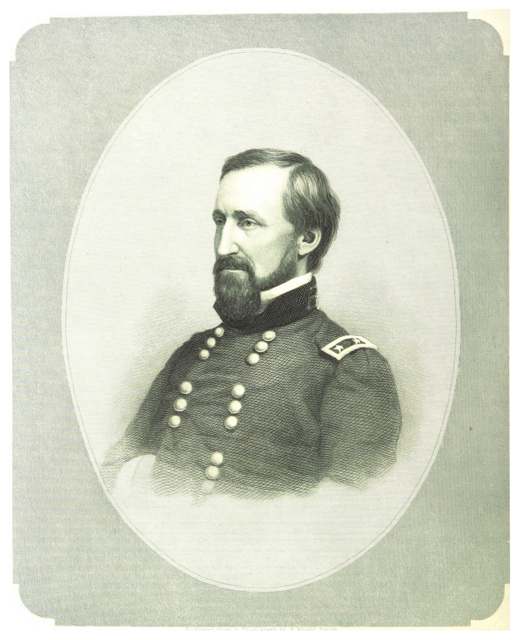
Photo: William Augustus Crafts, The Southern Rebellion, vol. 1, p. 398, via British Library/Wikimedia Commons, public domain · Wikimedia Commons
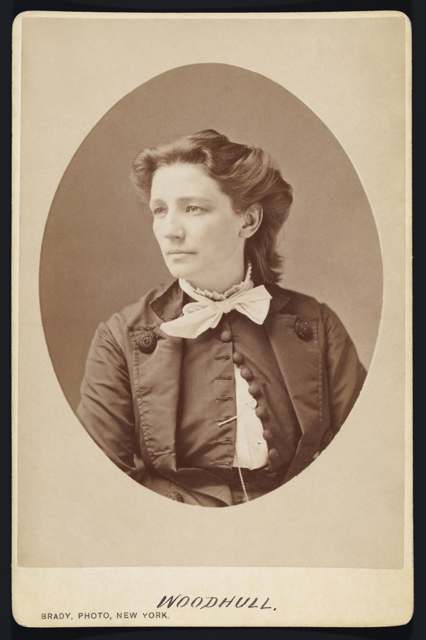
Photo: Mathew Brady; restored by Adam Cuerden, via Wikimedia Commons, public domain · Wikimedia Commons
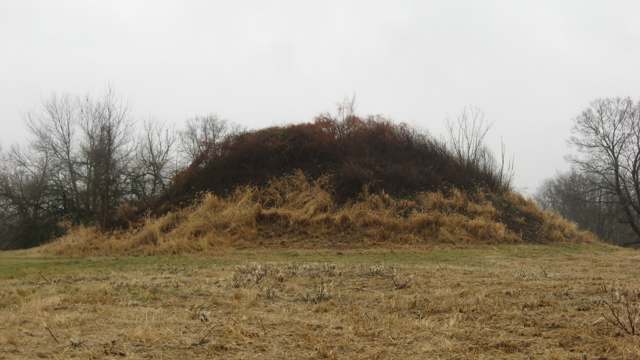
Photo: Nyttend, via Wikimedia Commons, public domain · Wikimedia Commons
Local history sources: archive.org · en.wikipedia.org · en.wikipedia.org · en.wikipedia.org · genealogytrails.com · commons.wikimedia.org · commons.wikimedia.org · commons.wikimedia.org
Water
Mostly private wells The water here
- Utica Village83% of residentsGroundwater wells (2 wells)
- Johnstown City13% of residentsGroundwater wells (3 wells)
- Martinsburg Village3% of residentsGroundwater wells (3 wells)
- Del-co Water Company, Inc.1% of residentsOlentangy River, O'Shaughnessy and Alum Creek reservoirs, plus Knox County wells
- Columbus Public Water System0% of residentsScioto River (Griggs & O'Shaughnessy), Hoover Reservoir on Big Walnut Ck, plus wells
- Green Meadows MHP0% of residentsGroundwater wells (2 wells)
Hospitals, fire stations and more
Inside Burlington Township, Licking County's boundary: 1 fire or EMS station, 1 private school, 1 library and 3 spill cases. Press a pin or a name for its whole record and its source.
Fire and EMS stations (1)
-
Homer Fire District - Station 471Homer
- Address
- 1491 Homer Road, Homer, OH 43027
- Coordinates
- 40.25172, -82.52689
USGS National Map structures (source) ↗ Street map and directions ↗
Source: USGS National Map structures (most Ohio records last updated 2019 to 2022), checked against the Columbus and Cleveland station lists. The department that answers a call is set by jurisdiction and mutual aid, not by distance.
Private schools (1)
-
The Learning Spectrum Ltd - JohnstownPrivate, special education · Johnstown
- Address
- 3060 Johnstown Utica Rd, Johnstown, OH 43031
- Kind
- special education
- Students, 2023-24
- 45
- Teachers (full-time equivalent)
- 6
- Students per teacher
- 7.5
- Phone
- (740) 759-7099
- NCES private school ID
- A2103017
Source: NCES Private School Survey 2023-24.
Public libraries (1)
-
Homer Public LibraryCentral library · Utica
- Address
- 385 South St. N.W., Utica, OH 43080
- What it is
- Central library
- Library system
- Homer Public Library
- Open
- 2,444 hours a year, 52 weeks
- Building
- 7,800 sq ft
- System's visits, FY2024
- 3,484
- System's loans, FY2024
- 24,960
- People the system serves
- 1,222
- Phone
- (740) 892-2020
IMLS Public Libraries Survey (source) ↗ Street map and directions ↗
Source: IMLS Public Libraries Survey FY2024 (outlets and their systems). Any Ohio resident can get a free card at any Ohio public library.
Spills reported since 2021 (3)
-
Fuel Diesel / Diesel Fuel (Vehicle On Or Off Road)2023-04-11 · Burlington Twp
- Reported
- 2023-04-11
- What spilled
- Fuel Diesel / Diesel Fuel (Vehicle On Or Off Road)
- Where
- Burlington Twp, Licking County
- Ohio EPA district office
- CDO
- Ohio EPA case number
- 2304EPA0000560
Ohio EPA spill reports (source) ↗ Street map and directions ↗
-
Fuel Diesel / Diesel Fuel (Vehicle On Or Off Road) Reached water2023-04-11 · Burlington Twp
- Reported
- 2023-04-11
- What spilled
- Fuel Diesel / Diesel Fuel (Vehicle On Or Off Road); Oil Hydraulic Fluid(S)
- Reached a waterway
- 99 - Unnamed
- Where
- Burlington Twp, Licking County
- Ohio EPA district office
- CDO
- Ohio EPA case number
- 2304EPA0000559
Ohio EPA spill reports (source) ↗ Street map and directions ↗
-
Sediment / Sedimentation Reached water2022-09-30 · Burlington Twp
- Reported
- 2022-09-30
- What spilled
- Sediment / Sedimentation
- Largest amount reported
- 100 gallons
- Reached a waterway
- 45 - North Fork Licking River
- Where
- Burlington Twp, Licking County
- Ohio EPA district office
- CDO
- Ohio EPA case number
- 2209EPA0001495
Ohio EPA spill reports (source) ↗ Street map and directions ↗
Source: Ohio EPA emergency response spill reports, 2021 to September 2026, one point per case where Ohio EPA placed it. A report is what the caller or responder recorded; amounts are often blank or estimated.
Its ZIP codes
Each ZIP code that touches Burlington Township, Licking County, with the share of its residents who live here and the same headline figures as the ZIP page.
| ZIP | Share | Water | Radon | Home value | Schools | Flood |
|---|---|---|---|---|---|---|
| 43027 Burlington Township and Homer | 100% | Mostly private wells | 7.6 pCi/L average radon | Median year built 1900 | Northridge Local · 4 stars overall | 47% of residents in the 1% floodplain |
| 43080 Utica | 16% | Mostly private wells | 16.1 pCi/L average radon | Median year built 1972 | North Fork Local · 2.5 stars overall | 6.9% of residents in the 1% floodplain |
| 43031 Johnstown | 1% | Mostly private wells | 5.7 pCi/L average radon | Median year built 1991 | Johnstown-Monroe Local · 4 stars overall | 0.2% of residents in the 1% floodplain |
Local government
Who holds office in Burlington Township, Licking County, how its elections and ballot issues came out, and the state auditor's record.
Money issues on the ballot since 2020: 1 of 2 passed; of those asking for new or higher taxes, 0 of 1.
Ballot issues
| Date | Issue | For | Against | Result |
|---|---|---|---|---|
| 2021-11-02 | Issue: Township of Burlington - Property Tax - Additional, 0.5 Mill, 3 Years, Cemeteries (0.5 mills, additional) | 93 | 99 | Failed (48.44% for), unofficial |
| 2020-11-03 | Issue: Township of Burlington - Property Tax - Renewal - 0.8 Mill, 5 Years, Fire Protection and EMS (0.8 mills, renewal) | 484 | 239 | Passed (66.94% for), unofficial |
Elections for office
| Date | Office | Candidates and votes |
|---|---|---|
| 2021-11-02 | Township Trustee (unofficial count) | Bradley B. Kyle 136, 48.4%; Jeffrey L. Patton 145, 51.6% |
Winners in bold. Results from the county board of elections' official canvass unless marked.
Auditor of State record
- No fiscal caution, watch or emergency on the Auditor of State's lists.
- Agreed Upon Procedures, 2023 to 2024, released 2025-08-05
The county
Licking County: 17 ZIP codes, 38 cities, villages and townships, 160,939 people.
Nearby places
Quick answers
What county is Burlington Township, Ohio in?
Burlington Township, Licking County is a township in Licking County, Ohio, with 1,209 residents.
When was Burlington Township, Ohio founded?
Burlington Township, Licking County was settled 1806 (James Dunlap, Cornelius Vanausdal, Henry Oldacre, Nathan Conard, John Johnson, Jonathan Beaty, Hugh McKindley, Adam Patterson, John and Thomas Dixon); laid out Homer (first called Burlington) laid out by John Chonner in 1816; renamed Homer c. 1825 when it became a post town; incorporated 1817. Founders on record: township named by Colonel Wait Wright, who is said to have paid for the naming privilege with two gallons of whiskey for the settlers. Source
How did Burlington Township, Ohio get its name?
"It is said that Colonel Wait Wright treated the 'boys' to two gallons of whiskey for the privilege of naming the township, and thereupon called it after his native place in Vermont," the 1881 county history records. Source
What ZIP code is Burlington Township, Ohio?
Burlington Township, Licking County is served by ZIP codes 43027 and 43080; 43027 holds the largest share of its residents.
Where does Burlington Township, Ohio get its water?
The main water source for Burlington Township, Licking County (Utica Village): Mostly private wells.
Cite this page
Cite this page as:
Cracked Buckeye, "Burlington Township, Licking County", https://crackedbuckeye.com/place/burlington-township-licking-county/, built 2026-10-31, accessed [date].
How to cite · Report a correction · Built 2026-10-31
