How Jersey Township, Licking County began
Jersey Township, in the western edge of Licking County, was settled beginning in February 1815 when Joseph and Peter Headley camped on the South Fork of the Licking to make sugar, and organized in 1820 when it was divided off from St. Albans Township. Nearly every one of its early families, the Headleys, Martins, Beems, Whiteheads and Meekers among them, came from New Jersey, which gave the township its name by a unanimous vote of the citizens. Settlers found abandoned Wyandot wigwams still standing near a stream they named Indian Run, only a few years after the Wyandot had left the area around the War of 1812. Jersey village was laid out in 1832, and the township, part of it now within the New Albany growth corridor along State Route 161, remains otherwise a farming community better supplied with churches than almost any other in the county.
Settled February 1815 (Joseph and Peter Headley, camped on the South Fork of the Licking), platted 1832 (Jersey village, by Wickliffe Condit, Lewis Headley, Edward Beecher and Andrew Pierson), incorporated 1820 (organized by dividing St. Albans Township), by Peter Headley, Richard Beem and Elias Williams, the township's first trustees.
Where the name comes from
The 1881 county history states plainly that the township's early settlers were 'nearly all from New Jersey, which fact gave the township its name,' and that 'by a unanimous vote of the citizens the township was named Jersey.' The Headley, Martin, Beem, Whitehead, Meeker and Condit families who settled the township between 1815 and 1820 were, with few exceptions, New Jersey emigrants.
Before the town
The 1881 county history records that Wyandot Indians 'had more or less permanent encampments' in what became Jersey Township, but that all had disappeared by about 1812, when the war with Great Britain began. Three years later, in 1815, the township's first white settlers found a few of the Wyandot huts and wigwams still standing, though greatly dilapidated, on a small stream they named Indian Run, half a mile northwest of the future village of Jersey; the source notes that the area's beech woods and streams had made it a favored hunting ground. No treaty, named village, trail or mound within the township's own boundaries is recorded in the sources consulted, and only four small Mound Builder mounds were found within its limits, which the 1881 history attributes to the township's clayey soil being poorly suited to their purposes. The land itself was ceded by the Treaty of Greenville (1795), whose signers included the Wyandot, Shawnee, Lenape and other nations.
Nations recorded here: Wyandot.
Timeline
- — The Treaty of Greenville cedes most of what becomes Ohio, including the future Jersey Township, to the United States.
- — Joseph Headley, Peter Headley and a companion camp on the South Fork of the Licking near the present village of Jersey and make maple sugar; Peter Headley soon enters land for himself, Lewis Martin and Richard Osborn at the Chillicothe land office.
- — Lewis Martin, with his father-in-law Richard Osborn and other family, moves into a cabin built by Peter Headley, becoming among the township's first settler families.
- — Peter Headley moves his wife and two children into his own cabin, making him the first settler of Jersey Township to occupy his own land permanently.
- — William, son of Peter Headley, is born, the first child born in the township.
- — Michael Beem, a Revolutionary War veteran who had served in George Washington's body-guard, settles in the township with eight sons and one daughter; he lived there thirty-four years, dying in 1850 at nearly ninety-six.
- — The township's first school-house is built on the farm of Onesimus Whitehead, lit by greased paper pasted over openings cut in the log walls.
- — The township is organized by dividing St. Albans Township, and by unanimous vote of the citizens is named Jersey for the home state of most of its settlers.
- — Abner Whitehead erects a small log mill on the South Fork, the township's first, north of the later village of Jersey.
- — Jersey village is laid out by Wickliffe Condit, Lewis Headley, Edward Beecher and Andrew Pierson.
- — The Jersey Independent Order of Odd Fellows Hall, on Morse Road in Jersey, is listed on the National Register of Historic Places.
- — Intel announces plans to build a large semiconductor fabrication complex on land annexed into neighboring New Albany, Franklin County, drawing the State Route 161 corridor that touches western Jersey Township into a major regional growth push.
Stories
Wigwams on Indian Run
When Jersey Township's first white settlers arrived in 1815, the Wyandot who had once camped through its beech woods were already gone, driven off, the county history says, around the time of the outbreak of the War of 1812. But their traces were still visible: half a mile northwest of the future village of Jersey, on a small stream that settlers came to call Indian Run, stood a scatter of huts and wigwams, dilapidated but still standing three years after their builders had left. The county historian who recorded this in 1881 offered no names, no village, no further detail, only the bare fact of empty dwellings on a stream that kept the memory in its name. It is one of the few concrete traces of Native presence recorded anywhere within the township's boundaries.
New Jersey Comes to the Beech Woods
Jersey Township was built almost entirely by transplanted New Jerseyans. Peter and Joseph Headley arrived from Muskingum County in 1815 and 1816, having emigrated originally from New Jersey in 1809; Lewis Martin, his father-in-law Richard Osborn and a Vandegriff brother-in-law followed the same year, all New Jersey natives. Samuel Williams, Abner Whitehead, Elijah Meeker, David Meeker, Onesimus Whitehead, Elias Williams and Wickliffe Condit, who arrived between 1816 and 1819, were New Jersey families almost without exception. By 1820, when the settlers organized their own township out of St. Albans, there was no real debate about a name: a unanimous vote made it Jersey, after the state nearly all of them called home.
A Bodyguard of Washington's, Ninety-Six Years On
Michael Beem arrived in Jersey Township in March 1816 already an old soldier. As a young man he had served in the body-guard of General George Washington during the Revolution and, the county history notes, 'knew him well.' He brought eight sons and one daughter into the township's beech woods and stayed thirty-four years, dying in December 1850 at the age of nearly ninety-six, one of the longest-lived of the county's Revolutionary veterans and a direct personal link between Jersey Township's pioneer cabins and the Continental Army's high command.
Photographs
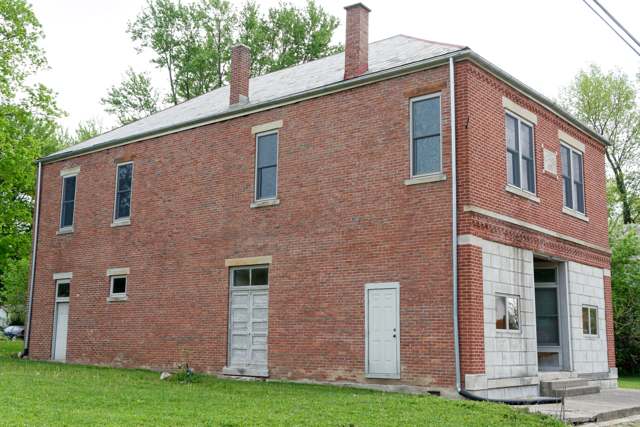
Photo: Jud McCranie, via Wikimedia Commons, CC BY-SA 4.0 · Wikimedia Commons
Local history sources: archive.org · en.wikipedia.org · en.wikipedia.org · en.wikipedia.org · en.wikipedia.org · commons.wikimedia.org
Water
Mostly private wells The water here
- Licking Regional Water District55% of residentsRaccoon Creek Valley aquifer (local wells)
- Johnstown City25% of residentsGroundwater wells (3 wells)
- Pataskala City17% of residentsSouth Fork Licking River Buried Valley Aquifer
- Del-co Water Company, Inc.2% of residentsOlentangy River, O'Shaughnessy and Alum Creek reservoirs, plus Knox County wells
- Columbus Public Water System1% of residentsScioto River (Griggs & O'Shaughnessy), Hoover Reservoir on Big Walnut Ck, plus wells
- Green Meadows MHP0% of residentsGroundwater wells (2 wells)
Its ZIP codes
Each ZIP code that touches Jersey Township, Licking County, with the share of its residents who live here and the same headline figures as the ZIP page.
| ZIP | Share | Water | Radon | Home value | Schools | Flood |
|---|---|---|---|---|---|---|
| 43031 Johnstown | 6% | Mostly private wells | 5.7 pCi/L average radon | Median year built 1991 | Johnstown-Monroe Local · 3.5 stars overall | 0.2% of residents in the 1% floodplain |
| 43062 Pataskala | 4% | Wells drawing from the Raccoon Creek Valley buried aquifer serving Etna, Pataskala, and Reynoldsburg-area customers | 6.2 pCi/L average radon | Median year built 1999 | Southwest Licking Local · 4 stars overall | 2.6% of residents in the 1% floodplain |
Local government
Who holds office in Jersey Township, Licking County, how its elections and ballot issues came out, and the state auditor's record.
Auditor of State record
- No fiscal caution, watch or emergency on the Auditor of State's lists.
- Financial Audit, 2024 to 2025, released 2026-06-16
- Financial Audit, 2022 to 2023, released 2024-09-24
The county
Licking County: 17 ZIP codes, 38 cities, villages and townships, 160,939 people.
Nearby places
Cite this page
Cite this page as:
Cracked Buckeye (Open Shower Co), "Jersey Township, Licking County", https://crackedbuckeye.com/place/jersey-township-licking-county/, built 2026-09-17, accessed [date].
Machine-readable: /api/place/jersey-township-licking-county.json (open JSON, CC BY 4.0 for the compilation; the underlying records keep their own terms) · How to cite · Report a correction · Built 2026-09-17