How Pataskala began
Pataskala grew out of a scatter of pioneer cabins on the headwaters of the South Fork of the Licking River, first settled in 1805, that became part of Lima Township when it organized in 1827. Two rival towns were platted at once when the Central Ohio Railroad reached the area around 1850: John Reese's Columbia Center and Richard Conine's town, first called Conine and renamed Pataskala by 1852 for a name the pioneers said the Indians had given the Licking River. Conine's town won the depot, the post office and the telegraph office and slowly outgrew its rival, while Columbia Center faded to little more than a crossroads. The village stayed a modest railroad and turnpike town through the 20th century until 1996, when it merged with the whole of Lima Township, instantly enlarging its area and population and setting it on course to become Licking County's second-largest city.
Settled 1805 (David Herron, first white settler in what became Lima Township, builds a cabin on Clear Creek near the future townsite), platted 1850 (John Reese's Columbia Center) and 1851 (Richard Conine's town, first called Conine), incorporated 1996 (present city, formed by the merger of the village of Pataskala with all of Lima Township); the village's own earlier incorporation date was not confirmed in the sources consulted, by Richard Conine (1851 town plat); David Herron (1805 first settlement).
Where the name comes from
Richard Conine's 1851 plat was first called simply Conine, but by 1852 the town had taken the name Pataskala instead. The 1881 county history states plainly that this was 'this name being given to the Licking river by the Indians,' identifying it as a Native name for the stream rather than for the town; Wikipedia's article on Pataskala likewise describes the name as derived from the Delaware (Lenape) language.
Before the town
No source consulted records a permanent Native village, mound, or earthwork within the bounds of old Lima Township (the area now inside Pataskala). The 1881 county history states that 'little is known regarding the Indian occupation of this township, though within the memory of the white man there were no permanent Indian camps within its limits,' but that the area was 'no doubt extensively used' as hunting ground 'by the Shawnees encamped in Licking valley, and those occupying Raccoon town in the present township of Monroe' -- a Wyandot village a few miles northwest, near present Johnstown, that Euro-American settlers bought out in 1807. The same history records one settler anecdote, told from the pioneer side: during David Herron's first year on Clear Creek, an elderly Native man reportedly threatened Herron's wife while testing whether he could frighten her, and she drove him off with a butcher knife -- an incident the book presents as local lore rather than documented fact. The Licking River itself, on whose headwaters the township sits, carries a name that pioneers recorded as of Native origin and that became the town's own name in 1852.
Nations recorded here: Shawnee, Wyandot.
Timeline
- — David Herron, believed to be the first white settler in what becomes Lima Township, builds a cabin on the east bank of Clear Creek about a quarter mile north of the future site of Pataskala.
- — Richard Conine settles in the township and later builds a grist mill, probably the first in the township, becoming one of its most influential citizens.
- — Lima Township is organized.
- — As the Central Ohio Railroad approaches, Welsh proprietor John Reese lays out the rival town of Columbia Center on 20 acres just outside the Conine tract after Richard Conine refuses to sell him land.
- — Richard Conine lays out his own town near the east line of the township, just before the railroad begins operating; he first calls it Conine.
- — The town is renamed Pataskala and a post office is established there under postmaster Ephraim Munsell, who had opened the first store; Pataskala also wins the new telegraph office over rival Columbia Center after merchant W. C. Elliott offers a free room to house it.
- — The South Fork Presbyterian church, organized in 1837 near Kirkersville and long meeting in schoolhouses and a gristmill loft, petitions the presbytery to change its name to 'Pataskala'; the request is granted.
- — The census records Pataskala's population at 634, already well ahead of the rival village of Columbia Center.
- — Five Pataskala buildings -- the Bethel Baptist Church, Casterton House, Elliot House, Mead House, and the Warren F. Kauber Funeral Home -- are listed on the National Register of Historic Places.
- — The village of Pataskala merges with the whole of Lima Township, sharply enlarging its population and land area and setting it toward city status.
Stories
Two Towns Racing the Rails
When word spread that the Central Ohio Railroad would cross Lima Township around 1850, two men tried to found a town on it at almost the same moment. John Reese, an enterprising Welshman, first approached Richard Conine, who owned the land where the depot was likely to sit, and offered to buy a townsite from him. Conine refused -- he had quietly decided to lay out his own town -- so Reese went a little farther up the creek, bought twenty acres outside the Conine tract, and platted Columbia Center in 1850. Conine did not get his own plat, first called simply Conine, onto the ground until about a year later. The two towns then competed directly: Conine's town landed the post office and, when the railroad needed a telegraph office, won that too because merchant W. C. Elliott offered a rent-free room to house it. Columbia Center never recovered the lead; by 1881 it held barely a hundred people while Pataskala, as Conine's town was renamed in 1852, had grown to 634.
A River's Old Name Outlives a Founder's
Richard Conine wanted his new depot town named for himself, and for a short time it was: early maps and records call it simply Conine. But by 1852 the name had changed to Pataskala, and it stuck. The 1881 county history is direct about where the word came from, noting that the name had been 'given to the Licking river by the Indians' long before any town stood on its banks. The Licking's south fork ran through the middle of Conine's plat, so the river lent the growing railroad town its name rather than the other way around -- one of the few places in Licking County where a founder's own name lost out to an older, Native one.
A Mammoth Under the Schoolhouse
Directly behind Pataskala's old brick schoolhouse, in what had once been an extensive swamp, workmen digging in the ground some years before 1881 turned up the remains of a mammoth. The Reverend T. W. Howe, Pataskala's longtime Presbyterian minister, measured one of the tusks himself and found it five feet six inches long. By the time the county history was written the swamp had dried up and been filled nearly level with the surrounding land, but the discovery was still remembered as one of the odder facts of the town's ground -- a reminder that Ice Age animals had once walked the same low, wet bottomland where the schoolchildren of Pataskala later played.
A Village Becomes a City Overnight
For nearly a century and a half after its 1852 renaming, Pataskala remained a small railroad village ringed by the farms of Lima Township. That changed all at once in 1996, when the village and the township merged into a single municipality, absorbing in one stroke all the land and people that had surrounded Pataskala since its founding. The consolidation transformed a village of a few thousand into a fast-growing city on the edge of the Columbus suburbs, setting the stage for the population Pataskala has today.
Photographs
Photo: Columbus Metropolitan Library, via DPLA/Ohio Digital Network, no known copyright restrictions · Wikimedia Commons
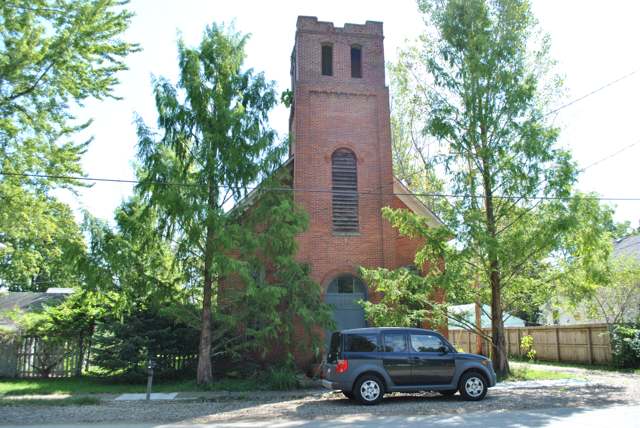
Photo: Wdzinc, via Wikimedia Commons, CC BY-SA 3.0 · Wikimedia Commons
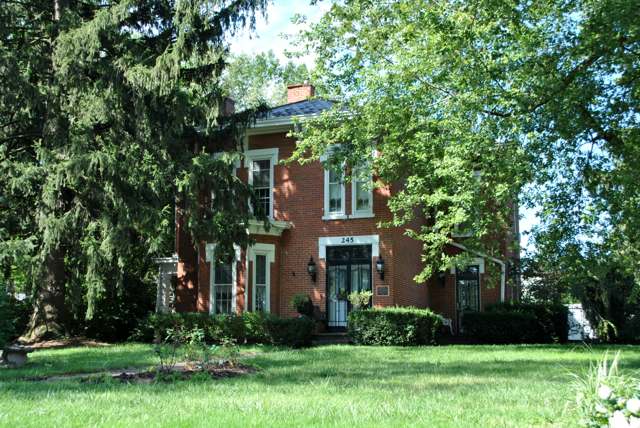
Photo: Wdzinc, via Wikimedia Commons, CC BY-SA 3.0 · Wikimedia Commons
Local history sources: archive.org · en.wikipedia.org · en.wikipedia.org · en.wikipedia.org · en.wikipedia.org · commons.wikimedia.org · commons.wikimedia.org · commons.wikimedia.org
Water
Wells drawing from the Raccoon Creek Valley buried aquifer serving Etna, Pataskala, and Reynoldsburg-area customers The water here
- Licking Regional Water District70% of residentsRaccoon Creek Valley aquifer (local wells)
- Pataskala City21% of residentsSouth Fork Licking River Buried Valley Aquifer
- Reynoldsburg City6% of residentsScioto River (Griggs & O'Shaughnessy), Hoover Reservoir on Big Walnut Ck, plus wells
- Columbus Public Water System3% of residentsScioto River (Griggs & O'Shaughnessy), Hoover Reservoir on Big Walnut Ck, plus wells
- Fairfield County Utilities0% of residentsLocal groundwater wells (central Ohio, aquifer undocumented)
Its ZIP codes
Each ZIP code that touches Pataskala, with the share of its residents who live here and the same headline figures as the ZIP page.
| ZIP | Share | Water | Radon | Home value | Schools | Flood |
|---|---|---|---|---|---|---|
| 43062 Pataskala | 52% | Wells drawing from the Raccoon Creek Valley buried aquifer serving Etna, Pataskala, and Reynoldsburg-area customers | 6.2 pCi/L average radon | Median year built 1999 | Southwest Licking Local · 4 stars overall | 2.6% of residents in the 1% floodplain |
| 43068 Reynoldsburg | 2% | Big Walnut Creek at the plant's low-head dam and screen house on Morse Rd, below Hoover Dam | 5.8 pCi/L average radon | Median year built 1987 | Reynoldsburg City · 3 stars overall | 4.9% of residents in the 1% floodplain |
The county
Licking County: 17 ZIP codes, 38 cities, villages and townships, 160,939 people.
Nearby places
Cite this page
Cite this page as:
Cracked Buckeye (Open Shower Co), "Pataskala, Licking County", https://crackedbuckeye.com/place/pataskala/, built 2026-09-16, accessed [date].
Machine-readable: /api/place/pataskala.json (open JSON, CC BY 4.0 for the compilation; the underlying records keep their own terms) · How to cite · Report a correction · Built 2026-09-16