How Etna Township, Licking County began
Etna Township, lying entirely within Licking County's Refugee Lands, was among the last parts of the county settled, its first cabin going up only in 1815, and it was the last township organized in the county, in 1833. Growth came with the National Road: the town of Carthage, platted along the road's surveyed line in 1832, had been renamed Etna by the time the road reached it in 1833-34, and the smaller town of Wagram (first called Cumberland) rose nearby at almost the same time. Both towns briefly boomed on road traffic and both were stopped cold when the railroad bypassed them, leaving Etna a village of a few hundred people for the rest of the 19th century. Two Woodland-period Native American mounds near the township's northeastern edge, one destroyed by later development and the other placed under permanent protection in 2022, are the clearest surviving trace of a much older presence on this land; today Etna is an unincorporated census-designated place inside a township increasingly reshaped by Columbus-area growth along the State Route 161 corridor.
Settled 1815 (John Williams, first settler, on the later Matthews farm), platted 1832 (the town of Carthage, laid out by Lyman Terrell along the surveyed line of the National Road), incorporated 1833 (township organized June 22; the town of Etna itself has never incorporated and remains a census-designated place), by Lyman Terrell (town plat); the township's own settlers, via county organization, in 1833.
Where the name comes from
The town Lyman Terrell platted in 1832 along the National Road was first called Carthage; by the time the road reached it in 1833-34 it was known as Etna, and the township organized that same year took the same name. Neither the 1881 county history nor Wikipedia's article on the community explains why 'Carthage' gave way to 'Etna.' Other, non-primary web sources attribute it to the Sicilian volcano Mount Etna, said to have been chosen because the site was the highest ground between Jacksontown and Columbus, but the page making that claim (Etna Township's own website) could not be loaded to confirm it, so it is not asserted here as fact.
Before the town
Etna Township's own chapter in the 1881 county history is silent on Mound Builder works and on Native villages, trails, or camps within the township -- an absence the book itself acknowledges is typical of townships away from the county's major river valleys. The township's clearest link to a much older presence lies at its northeastern edge, near the Harrison Township line and Reynoldsburg: the Etna Township Mounds, a pair of Woodland-period earthen mounds built largely of sand and covering 22.7 acres, whose siting -- neither on a hilltop nor along a stream, as is typical of Adena mounds -- has puzzled investigators since at least the 1920s. The whole township lies within what settlers called the 'Refugee Lands,' a tract Congress set aside in 1798 for Canadians and Nova Scotians who had aided the American cause in the Revolution, land that had been ceded by the Wyandot, Shawnee, Lenape (Delaware), Miami, Ottawa and other nations at the 1795 Treaty of Greenville.
Nations recorded here: Wyandot, Shawnee, Lenape (Delaware), Miami, Ottawa.
- Etna Township Mounds (mound) — northeastern Etna Township, near the Harrison Township line and east of Reynoldsburg, close to Interstate 70, Woodland period (specific culture not identified in sources consulted) (en.wikipedia.org)
Timeline
- — The Treaty of Greenville cedes most of what becomes Ohio, including the future Etna Township, to the United States.
- — John Williams becomes the township's first settler, clearing land on what is later known as the Matthews farm; several more families, including the Nelsons, John Crouch, and the Houser brothers, follow within the year.
- — The town of Carthage, soon renamed Etna, is laid out by Lyman Terrell along the surveyed line of the National Road; Wagram, first called Cumberland, is laid out by Jerry Armstrong at about the same time.
- — The National Road reaches Etna and Etna Township is organized on June 22, the last township organized in Licking County; the first election is held at John Henthorn's house.
- — A cholera epidemic strikes the young town of Etna, killing merchants Daniel Warner and Oliver K. Baldwin within twelve hours of each other, along with Dr. Buell and others, and nearly depopulating the place.
- — A smallpox outbreak strikes Etna village, causing much suffering and several deaths.
- — Etna's Methodist congregation, organized in a settler's cabin around 1819-1820, builds a brick church costing about $7,500, replacing the frame church that had stood since about 1835.
- — The Etna Township Mounds are listed on the National Register of Historic Places on September 5.
- — The surviving Etna Township Mound (Mound I) is donated to the Archaeological Conservancy for permanent protection; its companion, Mound II, had already been destroyed for housing development.
Stories
A Village Built on Great Expectations
When the National Road was surveyed through the southwestern corner of Licking County around 1832, Lyman Terrell platted a town on its line and called it Carthage. Like nearly every other town strung along that road, it had, in the words of the county's own historian, 'great expectations' -- so much so that in Etna, as the town was soon renamed, 'nearly every other house was designed for a tavern,' built on the assumption that traffic would only grow. It did not last. Cholera swept through in 1834, killing several of the town's leading merchants within hours of each other, and smallpox returned in 1845. Then the railroad arrived elsewhere in the county, and, as the 1881 history puts it flatly, 'the coming of the railroad stopped the growth of Etna and all other towns along the National road.' By 1881 the town counted fewer than three hundred people, a fraction of what its builders had once imagined.
The Last Township Organized
Etna Township sat entirely within the Refugee Lands, a tract set aside for veterans of the Revolution who had come from Canada to fight for American independence, but its own settlement lagged well behind its neighbors'. No one built a cabin there until 1815, when John Williams arrived, and even then settlers trickled in slowly for nearly two decades. Only in 1833, after the National Road's construction had finally brought people and money into the area, did Etna become a township in its own right -- the last one organized anywhere in Licking County. Its first trustees, elected that June at John Henthorn's house, divided the new township into school and road districts the following spring, just as federal road crews were still grading the National Road through its center.
Two Mounds, One Saved
Long before Lyman Terrell platted his roadside town, people of the Woodland period built a pair of earthen mounds in what is now the northeastern corner of Etna Township, near the line with Harrison Township and Reynoldsburg. Built largely of sand rather than the soil typical of most Ohio mounds, and set on level ground rather than a hilltop or streambank as Adena mounds usually are, the two mounds puzzled the archaeologists who first investigated them in the 1920s. One of the pair, Mound II, was eventually destroyed to make way for housing. Mound I survived, was listed on the National Register of Historic Places in 1975, and in 2022 was donated outright to the Archaeological Conservancy -- giving at least one piece of the township's oldest history a permanent home nearly two centuries after Etna's first log cabin went up nearby.
Photographs
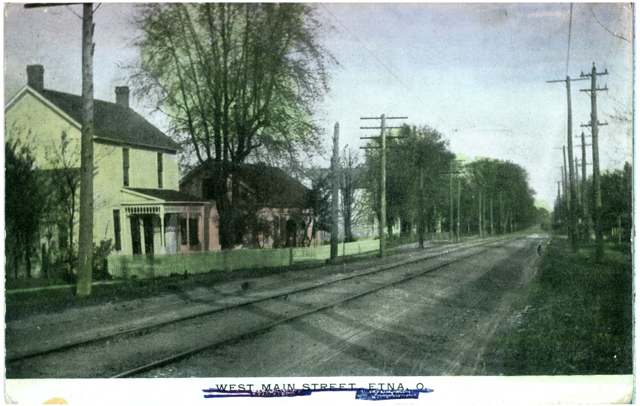
Photo: Columbus Metropolitan Library, via DPLA/Ohio Digital Network, no known copyright restrictions · Wikimedia Commons
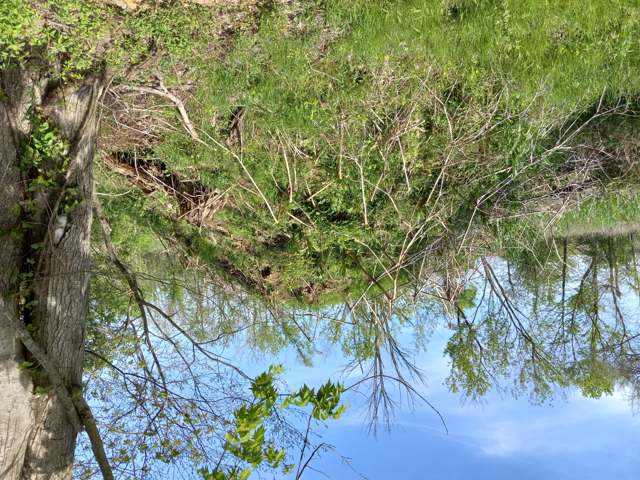
Photo: Cerebellum, via Wikimedia Commons, CC0 · Wikimedia Commons
Local history sources: archive.org · en.wikipedia.org · en.wikipedia.org · en.wikipedia.org · en.wikipedia.org · commons.wikimedia.org · commons.wikimedia.org
Water
Wells drawing from the Raccoon Creek Valley buried aquifer serving Etna, Pataskala, and Reynoldsburg-area customers The water here
- Licking Regional Water District62% of residentsRaccoon Creek Valley aquifer (local wells)
- Pataskala City18% of residentsSouth Fork Licking River Buried Valley Aquifer
- Reynoldsburg City14% of residentsScioto River (Griggs & O'Shaughnessy), Hoover Reservoir on Big Walnut Ck, plus wells
- Columbus Public Water System6% of residentsScioto River (Griggs & O'Shaughnessy), Hoover Reservoir on Big Walnut Ck, plus wells
- Millersport Village0% of residentsGroundwater wells (4 wells)
- Buckeye Lake, Village Of0% of residentsGroundwater wells (4 wells)
- Fairfield County Utilities0% of residentsLocal groundwater wells (central Ohio, aquifer undocumented)
Its ZIP codes
Each ZIP code that touches Etna Township, Licking County, with the share of its residents who live here and the same headline figures as the ZIP page.
The county
Licking County: 17 ZIP codes, 38 cities, villages and townships, 160,939 people.
Nearby places
Cite this page
Cite this page as:
Cracked Buckeye (Open Shower Co), "Etna Township, Licking County", https://crackedbuckeye.com/place/etna-township-licking-county/, built 2026-09-16, accessed [date].
Machine-readable: /api/place/etna-township-licking-county.json (open JSON, CC BY 4.0 for the compilation; the underlying records keep their own terms) · How to cite · Report a correction · Built 2026-09-16