How Newton Township, Licking County began
Newton Township, in the northern part of Licking County, was organized in 1809, three years after John Evans became its first settler in 1803. Judge Elliott laid out the township's first village, Fairfield, in 1805 near the Brushy Fork, though it never grew and eventually took the name Cannonsburgh before disappearing from the map entirely; the villages that lasted, Chatham, St. Louisville and Vanattaburgh, came later, platted in 1829, 1839 and the following decades. The township was a stop on the circuit of pioneer Methodist preacher James B. Finley in 1810 and 1811, and its early religious life included the emotional "jerks" that had first appeared at the 1801 Cane Ridge revival in Kentucky, brought north by Finley and the controversy-prone preachers who followed him. Its longest-lived resident of the pioneer era, Revolutionary War veteran Zachariah Albaugh, died in the township in 1857 at the age of a hundred or more, a living link between the Battle of Germantown and the Licking County of the eve of the Civil War.
Settled 1803 (John Evans), incorporated 1809.
Where the name comes from
No source consulted explains why the township was named Newton; the 1881 county history describes its 1809 organization without discussing the choice of name.
Before the town
The 1881 county history states plainly that "there is no Indian history of especial interest connected with the township." The Wyandot, Lenape (Delaware) and Shawnee "roamed through it extensively, using it as a hunting ground, and most likely had temporary encampments within it, but none of a permanent character, nor any village within historic times, at least." The Mound Builders left a modest record: a small stone mound between the North Fork and Clear Fork on the farm formerly owned by John Reed, a large earth mound on the late Benjamin Elliott's farm near where the Brushy Fork meets the North Fork, and a small stone mound on the hill west of the Coffman mill. No further excavation or dating of these is recorded in any source consulted.
Nations recorded here: Wyandot, Lenape (Delaware), Shawnee.
- Stone mound, Reed farm (mound) — between the North Fork and Clear Fork, Mound Builder era (unspecified) (archive.org)
- Earth mound, Benjamin Elliott farm (mound) — near the junction of the Brushy Fork and North Fork, Mound Builder era (unspecified) (archive.org)
- Stone mound near Coffman mill (mound) — on the hill west of the Coffman mill, Mound Builder era (unspecified) (archive.org)
Timeline
- — John Evans, from Virginia, becomes the township's first settler.
- — General John Spencer settles near the "Big Spring," probably the largest spring in Licking County; Judge Elliott lays out the township's first village, Fairfield, on the Brushy Fork, later renamed Cannonsburgh for tavern-keeper Thomas Cannon.
- — Rev. James B. Finley, later a well-known Ohio pioneer preacher and missionary to the Wyandot, regularly rides a circuit through the township, preaching at Stephen Robinson's house.
- — The first camp meeting in the township is held on Stephen Robinson's land, at a spot long remembered as Camp Hollow.
- — Newton Township is formally organized.
- — A second camp meeting is held near the future site of Chatham on the Clear Fork.
- — Settler William Kinning is shot and wounded crossing a creek on a log in an attempted murder; the accused assailant escapes jail before trial and is never heard from again.
- — Colonel John Waggoner lays out the village of Chatham, first called Harrisburgh.
- — John Bell and Stephen Ritter lay out the village of St. Louisville.
- — Zachariah Albaugh, a Revolutionary War veteran who fought at the Battle of Germantown in 1777, dies in the township at the age of a hundred or more.
- — Colonel William Spencer, son of General John Spencer and a longtime county officeholder, dies on April 27 at age seventy-two.
Stories
The Bear, the Pig and the Spencer Family
One summer day in the mid-1810s, while General John Spencer worked his corn field near the head of Spencer's Run and his wife was away from their cabin, a large bear wandered up and seized one of the family's pigs from the yard, passing close by the cabin door as it carried off its prize. The squealing pig gave the Spencer children just enough warning to scramble inside; their four-year-old brother was boosted into the cabin loft by his older sister moments before the bear passed. The bear ran on toward the cabin of neighbor Chisholm May, who grabbed his gun and dogs, gave chase, and killed it. The county historian later reflected that it was owing mainly to the bear's choice of the pig in the yard, rather than the boy at play near it, that Newton Township kept the continued presence of that startled four-year-old, Colonel William Spencer, who went on to serve as county sheriff, auditor, and clerk of the courts, and who was, at his death in 1874, one of the best-known public men in the county.
A Revolutionary Veteran's Long Life
Zachariah Albaugh was eighteen years old and living in Maryland when the Revolutionary War began; he enlisted as a private, was later commissioned an officer, and served through the entire war, fighting in the bloody Battle of Germantown on October 4, 1777. He settled in Newton Township in 1817 after decades in Pennsylvania near the estate of General Arthur St. Clair, and lived out the rest of his very long life there in comparative quiet, working part of that time as a teacher in both German and English. He died at his son's home in the township on November 9, 1857, at what his neighbors believed to be a hundred years old or more, and was buried with military honors. A Lutheran, he attributed his long life to near-total abstinence from liquor, sound habits and, as the county historian put it, his disposition to "look on the sunny side of things," a rare direct link, by 1857, between the founding of the republic and the county that had grown up in Ohio's northern woods.
The Attempted Murder of William Kinning
One winter evening around 1817, an eccentric Scotsman named William Kinning was shot while crossing Newton Township's North Fork on a log, the bullet striking him in the hip. Tracks in the snow led investigators to a suspect living on the far bank, who was captured, jailed in Newark, and defended by prominent attorney William Stanbery, but who escaped before trial and was never seen again. Kinning recovered, though left permanently lame, and spent his later years traveling widely on a good horse, sometimes disappearing for months and, some said, posing as a wounded War of 1812 veteran to solicit charity. His story ends almost as strangely as it began: hearing that the Granville Alexandrian library and banking company had failed while he was owed money there, a well-lubricated Kinning took a maul to the locked office door, drew a crowd, and fled Newark on horseback moments ahead of the pursuing Granville constable and his posse. It was, the county history notes, the last anyone in Licking County ever saw of him.
Photographs
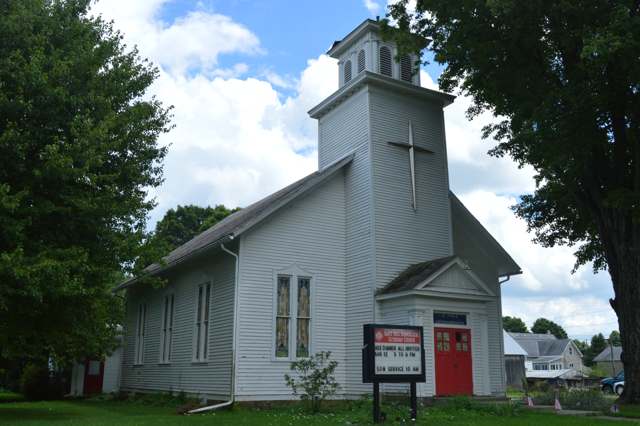
Photo: Nyttend, public domain · Wikimedia Commons
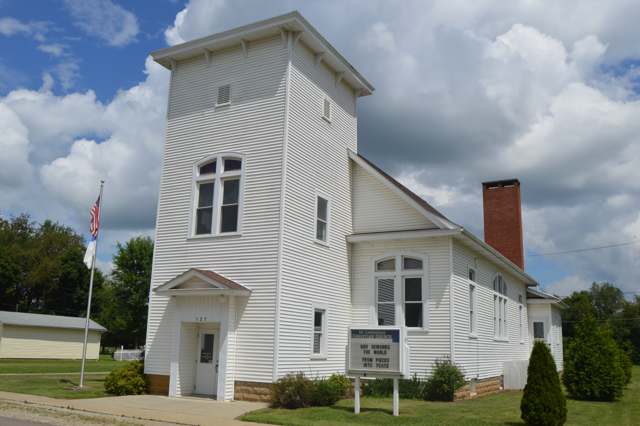
Photo: Nyttend, public domain · Wikimedia Commons
Local history sources: archive.org · en.wikipedia.org · en.wikipedia.org · commons.wikimedia.org · commons.wikimedia.org
Water
Mostly private wells The water here
- Newark City95% of residentsNorth Fork Licking River
- St. Louisville Village3% of residentsGroundwater wells (2 wells)
- Licking County Prescott Estates1% of residentsGroundwater wells (3 wells)
- Lakeshore Court Mobile Home1% of residentsGroundwater wells (1 wells)
- City of Heath0% of residentslocal wells
- Winding Creek Estates0% of residentsGroundwater wells (1 wells)
- Valley Mobile Home Park0% of residentsGroundwater wells (2 wells)
- Wilkins Mobile Home Park0% of residentsGroundwater wells (2 wells)
Its ZIP codes
Each ZIP code that touches Newton Township, Licking County, with the share of its residents who live here and the same headline figures as the ZIP page.
| ZIP | Share | Water | Radon | Home value | Schools | Flood |
|---|---|---|---|---|---|---|
| 43071 Eden Township and Saint Louisville | 16% | Mostly private wells | 14.8 pCi/L average radon | Median year built 1974 | North Fork Local · 3 stars overall | 0.9% of residents in the 1% floodplain |
| 43055 Newark | 4% | North Fork of the Licking River, drawn directly at riverbank intake screens beside the plant at the north end of Newark | 11.5 pCi/L average radon | Median year built 1960 | Newark City · 2.5 stars overall | 6.1% of residents in the 1% floodplain |
The county
Licking County: 17 ZIP codes, 38 cities, villages and townships, 160,939 people.
Nearby places
Cite this page
Cite this page as:
Cracked Buckeye (Open Shower Co), "Newton Township, Licking County", https://crackedbuckeye.com/place/newton-township-licking-county/, built 2026-09-16, accessed [date].
Machine-readable: /api/place/newton-township-licking-county.json (open JSON, CC BY 4.0 for the compilation; the underlying records keep their own terms) · How to cite · Report a correction · Built 2026-09-16