How Saint Louisville began
Saint Louisville was laid out in 1839 by John Bell and Stephen Ritter on the North Fork of the Licking River, inside Newton Township, superseding an older post office at Newton Mills half a mile downstream. It grew up in a township the 1881 county history says the Wyandot, Lenape (Delaware) and Shawnee had once used extensively as a hunting ground, though without any permanent village of their own inside its bounds within historic times. The village became a center of Lutheran worship in the township from about 1839, and its earliest Methodist congregation traces to a circuit rider whose ministry began at a Revolutionary War-era camp meeting in Kentucky famous for a religious phenomenon called "the jerks." Newton Township's Zachariah Albaugh, a Revolutionary War veteran who died in 1857 at more than a hundred years old, and General John Spencer, for whom the township's largest spring is named, both figure in the township's founding generation whose descendants populated Saint Louisville itself.
Platted 1839, by John Bell and Stephen Ritter; later additions laid out by John Evans and Wesley Coffman.
Where the name comes from
No source found explains the choice of the name Saint Louisville itself, only that the village superseded an older post office at Newton Mills, half a mile downstream on the North Fork of the Licking, once it was platted in 1839.
Before the town
"The Wyandots, Delawares and Shawnees roamed through it extensively, using it as a hunting ground, and most likely had temporary encampments within it," the 1881 county history says of Newton Township as a whole, "but none of a permanent character, nor any village within historic times, at least." No source found ties any of these nations to a site inside the platted village of Saint Louisville specifically. The township's Mound Builder remains include a small stone mound between the North and Clear forks on the former John Reed farm, a large earth mound near the junction of the Brushy Fork and North Fork on the late Benjamin Elliott's farm, and a small stone mound on the hill west of the Coffman mill; none of these is described as standing inside the village itself. No county-level file yet exists for Licking to point to for the wider regional and treaty history.
Nations recorded here: Wyandot, Lenape (Delaware), Shawnee.
- Stone mound between North and Clear forks (mound) — former John Reed farm, Newton Township, unspecified Mound Builder era (archive.org)
- Earth mound near Brushy Fork/North Fork junction (mound) — late Benjamin Elliott farm, Newton Township, unspecified Mound Builder era (archive.org)
Timeline
- — John Evans, from Virginia, becomes Newton Township's first settler.
- — General John Spencer settles near the township's "Big Spring," later the site of mills and the township's namesake stream, Spencer's Run.
- — Newton Township is organized; Judge Elliott lays out the township's first, short-lived village, Fairfield (later Cannonsburgh), the same year.
- — Rev. James B. Finley, a circuit-riding Methodist preacher who as a young man had witnessed the famous 1801 Cane Ridge, Kentucky camp meeting that gave rise to the religious phenomenon called "the jerks," organizes Newton Township's first Methodist society at the house of Stephen Robinson.
- — John Bell and Stephen Ritter lay out the village of Saint Louisville, which soon takes over the post office previously held by Newton Mills.
- — The older of the township's two Lutheran congregations is organized, with a church building in Saint Louisville and pioneer preachers Andrew Henkle and Peter Schmucker.
- — Zachariah Albaugh, a Revolutionary War veteran who fought at the Battle of Germantown and settled in Newton Township in 1817, dies at the age of one hundred or more and is buried with military honors.
- — The village's population is recorded at one hundred and nine; it grows to two hundred fifteen by 1880.
Stories
The Jerks, Cane Ridge and a Circuit Rider's Road to Newton
Rev. James B. Finley, who organized Newton Township's first Methodist society at the house of Stephen Robinson in 1810 and preached there through 1811, carried an unusual inheritance into the Ohio backwoods. His father had led the Presbyterian church at Cane Ridge, Bourbon County, Kentucky, where in August 1801 one of the largest and strangest camp meetings in American religious history gave rise to a phenomenon contemporaries called "the jerks," convulsive religious exercise that swept through the crowds. Finley himself, by his own account a young man "much given to the vices prevalent in frontier communities," attended that meeting and emerged converted, going on to a fifty-year preaching career the 1881 county history describes as "plain, blunt, bluff, out-spoken." He later served years as a missionary among the Wyandot and as chaplain of the Ohio penitentiary, and it was this same combative, revival-tempered preacher who planted Methodism in the township nearly three decades before Saint Louisville itself was platted.
A Hundred Years on the Frontier
Zachariah Albaugh was eighteen years old and living in Maryland when the Revolutionary War broke out; he enlisted as a private, rose to officer's rank, and fought through the entire war, including the bloody October 1777 battle of Germantown. After the war he settled near General Arthur St. Clair in Westmoreland County, Pennsylvania, before finally emigrating to Newton Township in 1817, already an old man by frontier standards. He lived there, mostly in quiet retirement, for another forty years, a self-taught bilingual German and English speaker who had spent much of his working life as a teacher and who credited his extraordinary longevity to near-total abstinence from liquor and a naturally cheerful, sunny temperament. He died on November 9, 1857, at the age of one hundred or more, among the last living links the township had to the Revolution itself, and was buried, fittingly, with the honors of war.
Photographs
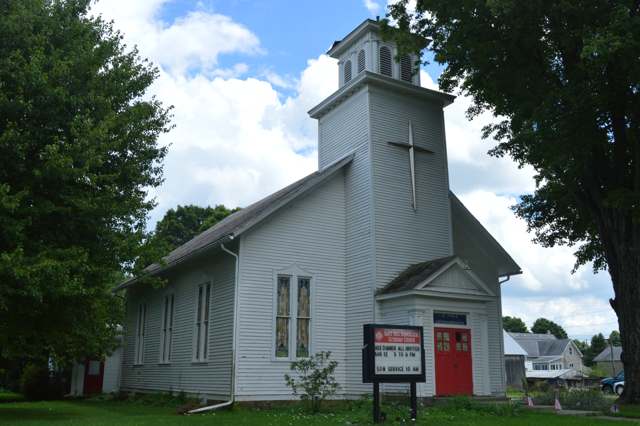
Photo: Nyttend, via Wikimedia Commons, public domain · Wikimedia Commons
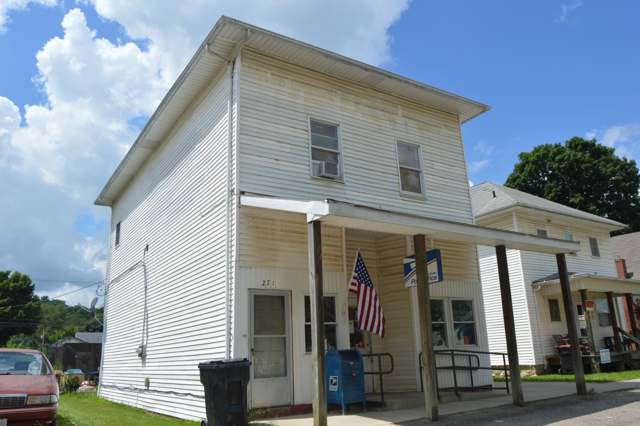
Photo: Nyttend, via Wikimedia Commons, public domain · Wikimedia Commons
Local history sources: archive.org · en.wikipedia.org · en.wikipedia.org · commons.wikimedia.org · commons.wikimedia.org
Water
Mostly private wells The water here
- St. Louisville Village100% of residentsGroundwater wells (2 wells)
Its ZIP codes
Each ZIP code that touches Saint Louisville, with the share of its residents who live here and the same headline figures as the ZIP page.
| ZIP | Share | Water | Radon | Home value | Schools | Flood |
|---|---|---|---|---|---|---|
| 43071 Eden Township and Saint Louisville | 14% | Mostly private wells | 14.8 pCi/L average radon | Median year built 1974 | North Fork Local · 3 stars overall | 0.9% of residents in the 1% floodplain |
The county
Licking County: 17 ZIP codes, 38 cities, villages and townships, 160,939 people.
Nearby places
Cite this page
Cite this page as:
Cracked Buckeye (Open Shower Co), "Saint Louisville, Licking County", https://crackedbuckeye.com/place/saint-louisville/, built 2026-09-16, accessed [date].
Machine-readable: /api/place/saint-louisville.json (open JSON, CC BY 4.0 for the compilation; the underlying records keep their own terms) · How to cite · Report a correction · Built 2026-09-16