How Newark began
Newark, the Licking County seat, was laid out in 1802 by General William C. Schenck at the forks of the Licking River, on ground that already held the largest set of geometric earthworks the Hopewell culture built anywhere in the world 1,600 to 2,000 years earlier. Schenck named the town for his birthplace, Newark, New Jersey. The Ohio and Erie Canal broke ground nearby in 1825, the Central Ohio Railroad and later the Baltimore and Ohio's car shops made it a rail town, and glass, stove and, from 1938, fiberglass manufacturing built its economy through the twentieth century. The surviving Octagon and Great Circle Earthworks were inscribed as part of Ohio's first UNESCO World Heritage Site in 2023, the same square mile of riverbank ground where the county courthouse, a Louis Sullivan bank, and the Longaberger Company's basket-shaped headquarters also stand.
Settled 1802 (cabins built at the site this year), platted 1802, laid out by William C. Schenck; the plat was formally recorded in Fairfield County's records on March 16, 1803, incorporated 1813, by General William C. Schenck, acting for himself and as agent for partners John N. Cummins and John Burnet.
Where the name comes from
Newark was named by its founder and principal proprietor, General William C. Schenck, for his birthplace of Newark, New Jersey, when he laid out the town at the forks of the Licking River in 1802.
Before the town
The single most important Native American site in Ohio sits inside the modern city: the Newark Earthworks, a complex of geometric enclosures the Hopewell culture built between roughly 100 BC and AD 400, moving an estimated 7 million cubic feet of earth by hand to lay out circles, squares and an octagon precisely keyed to the 18.6-year cycle of the moon's rising and setting points. It was a gathering and ceremonial place, not a residence: excavations there have turned up obsidian, marine shell, shark teeth, mica and copper carried in from a trade network reaching a thousand miles and more from central Ohio. By the time of historic-era contact the Wyandot and Shawnee used the Licking valley mainly as a hunting ground rather than a place of permanent towns; the 1881 county history, citing the estimate of U.S. geographer Thomas Hutchins for 1764, puts about three hundred Wyandot and five hundred Shawnee warriors in the wider region, and states plainly that the site of Newark itself lay outside the main trails, with only a branch trail passing through the county along the Licking River past a favorite fishing ground at the Bowling Green reservoir. The Licking River and county both take their name from salt licks on its banks that drew deer and buffalo, and later the settlers' own hunters; one early Ohio Delaware-language explanation instead derives the name from a phrase meaning 'where the flood waters recede.' The land that became Licking County lies within the vast tract the United States acquired from the Wyandot, Shawnee, Lenape (Delaware), Ottawa, and other nations by the Treaty of Greenville on August 3, 1795, whose line ran well to the north and west of the future county. In 1860 the amateur antiquarian David Wyrick, digging in the earthworks' mounds, produced inscribed stones purporting to show an ancient Hebrew presence in Ohio; they are now recognized as a hoax, but the affair shows how much fascination the earthworks already held only a generation after Newark's founding. No source-documented Native village, camp or burial ground specific to the town site itself survives in the record beyond the earthworks and the trail described above; readers looking for the fuller regional picture, including the Adena and Fort Ancient cultures and the treaty history of the wider county, should see the Licking County file.
Nations recorded here: Hopewell culture, Wyandot, Shawnee.
- Octagon Earthworks (earthwork) — within the city of Newark, joined by parallel walls to an Observatory Circle, Hopewell culture, c. 100 BC - AD 400 (en.wikipedia.org)
- Great Circle Earthworks (earthwork) — in the neighboring city of Heath, immediately south of Newark, part of the same Newark Earthworks complex, Hopewell culture, c. 100 BC - AD 400 (en.wikipedia.org)
- Wright Earthworks (earthwork) — within the city of Newark; a fragment of a once-20-acre square enclosure, largely destroyed by 19th-century canal construction and development, Hopewell culture, c. 100 BC - AD 400 (en.wikipedia.org)
- Newark Holy Stones find site (other) — mounds of the Newark Earthworks complex, Newark, objects excavated June and November 1860; later exposed as a hoax (en.wikipedia.org)
Timeline
- — The Hopewell culture builds the Newark Earthworks, the largest connected set of geometric earthen enclosures known anywhere, covering more than four square miles of what is now Newark and Heath.
- — U.S. geographer Thomas Hutchins estimates about three hundred Wyandot and five hundred Shawnee warriors in the wider region that includes the future Licking County, which the 1881 county history describes as used mainly as a hunting ground rather than settled with permanent towns.
- — The Treaty of Greenville, signed August 3, cedes a large area of Ohio, including the land that becomes Licking County, to the United States.
- — General William C. Schenck lays out the town of Newark at the forks of the Licking River, and settlers including Adam Hatfield, Samuel Elliott and others build the first cabins there the same year.
- — Schenck's plat and description of the town of Newark is sworn before a Fairfield County justice and recorded on March 16.
- — The Ohio legislature establishes Licking County on January 30, organized March 1, with Newark as the county seat.
- — Licking County's first courthouse, a one- or two-story log building on the public square, is erected; it serves until about 1815.
- — Newark is incorporated.
- — Benjamin Briggs founds the Newark Advocate, the city's first newspaper, which is still publishing a century later.
- — On July 4, ground is broken for the Ohio and Erie Canal at Licking Summit near Newark; Governor DeWitt Clinton of New York, the guest of honor, turns the first spadeful of earth before a crowd of thousands.
- — Licking County's third courthouse, a two-story brick building with an ungainly wooden third story on stone pillars, replaces the decaying second courthouse on the same public square.
- — John Clem, later famous as the Civil War drummer boy 'Johnny Shiloh,' the youngest noncommissioned officer in U.S. Army history, is born in Newark on August 13.
- — The Central Ohio Railroad begins running trains between Zanesville and Newark on January 19, the city's first rail connection.
- — The Central Ohio Railroad extends service from Newark west to Columbus.
- — David Wyrick excavates the inscribed 'Keystone' in June and the 'Decalogue Stone' in November from mounds of the Newark Earthworks; both are later identified as a hoax rather than evidence of an ancient Hebrew presence.
- — The Baltimore and Ohio Railroad builds heavy car shops at Newark, once described as the most extensive in the western United States, making the city a division headquarters with a 12-track yard and a 25-stall roundhouse.
- — Licking County's third courthouse burns.
- — Construction begins on the present Licking County Courthouse; in March, while still unfinished, its upper stories catch fire from a defective flue and burn to the second story before the fire is put out, damaging county records.
- — James Moser and, from 1885, partner Joseph Wehrle begin making cast-iron stoves at a former machine works in Newark, the start of what becomes the Wehrle Stove Company.
- — The privately owned Newark Water Company begins operating a pumping station and distribution system, drawing water from local wells filtered through wood tubs.
- — A. H. Heisey founds the A. H. Heisey Company glass works in Newark, which becomes one of the country's leading makers of fine pressed and blown tableware.
- — The City of Newark builds its own municipal pumping station and distribution system, drawing water from the North Fork of the Licking River.
- — The city buys out the privately owned Newark Water Company and merges its system with the municipal plant.
- — On July 8, a mob storms the Licking County jail and lynches Carl Etherington, a 17-year-old Anti-Saloon League agent who had shot and killed a man during a raid on illegal Newark saloons; Ohio Governor Judson Harmon removes Newark's mayor from office afterward.
- — Chicago architect Louis Sullivan designs the Home Building Association bank at 1 North Third Street, built in 1914 and opened August 25, 1915; it is one of only eight banks Sullivan designed.
- — Newark's water plant becomes the first municipal waterworks in the country to remove settled sludge by mechanical clarifiers, adding softening and filtration the same year.
- — Aviator Jerrie Mock, who in 1964 becomes the first woman to fly solo around the world, is born in Newark on November 22.
- — Owens-Illinois and Corning Glass spin off their joint glass-fiber research as the Owens-Corning Fiberglas Corporation, opening the new company's first manufacturing plant in Newark; the Newark plant remains one of the company's oldest and largest.
- — The Heisey Glass Company closes after 62 years; the Imperial Glass Company later buys its molds.
- — The Longaberger Company opens its seven-story, basket-shaped corporate headquarters along State Route 16 in Newark, built to resemble the company's Medium Market Basket.
- — Newark's water treatment plant adopts ultraviolet disinfection, becoming one of the first plants in the United States, and the first in Ohio, to disinfect drinking water with UV light.
- — On September 19, UNESCO inscribes the Hopewell Ceremonial Earthworks, including Newark's Octagon Earthworks and the Great Circle Earthworks in neighboring Heath, as Ohio's first World Heritage Site.
- — The Moundbuilders Country Club, which had leased and golfed on the Octagon Earthworks since 1910, vacates the site on January 1 following a 2022 Ohio Supreme Court ruling allowing the Ohio History Connection to acquire the lease by eminent domain, restoring full public access.
Stories
A Basketful at a Time
Roughly two thousand years ago, people of the Hopewell culture began laying out enormous geometric shapes in earth on the flat ground where the North and South forks of the Licking River meet. Working without wheelbarrows, draft animals or writing, they moved an estimated 7 million cubic feet of soil, dug and carried it seems basket by basket, to raise walls in a giant octagon, two great circles and a near-perfect square, connected by parallel embankments across a stretch of land more than four square miles. There is no evidence of an elite class that commanded this labor; houses and grave goods look similar across Hopewell society, so archaeologists believe many communities cooperated to build and periodically gather at the site, bringing with them obsidian, mica, marine shell, shark teeth and copper carried in from trade networks a thousand miles and more away. By the time American surveyors reached central Ohio, canal builders, farmers and the growing town of Newark had already erased nine-tenths of the complex; what is left, about 206 acres split among the Octagon, the Great Circle and the Wright Earthworks fragment, is still the largest connected set of geometric earthworks known anywhere in the world.
The Octagon and the Moon
For more than a century after the Ohio militia stopped using the Octagon Earthworks as a training ground in 1908, the walls of one of the most sophisticated ancient structures in North America doubled as a country-club golf course. That arrangement obscured, but never erased, what two Earlham College professors, astronomer Ray Hively and philosopher Robert Horn, worked out in 1982: that the Octagon's walls and gateways were engineered so that the moon, at the northernmost point of its 18.6-year rise-and-set cycle, appears to rise directly through the passage linking the Observatory Circle to the Octagon, a feat of surveying precision that later analysis judged twice as accurate as the famous solstice alignment at Stonehenge. The Moundbuilders Country Club held its lease until a 2022 Ohio Supreme Court ruling let the Ohio History Connection acquire it by eminent domain; the club played its last round and departed on January 1, 2025, and the following September the Octagon and its neighbor the Great Circle were inscribed, together with sites in Ross and Warren counties, as Ohio's first UNESCO World Heritage Site.
The Newark Holy Stones
In 1860 a Newark surveyor and self-taught antiquarian named David Wyrick, convinced that the mound-building people were connected to the Lost Tribes of Israel, dug in the earthworks and came up with proof, or so he believed: a small inscribed 'Keystone' bearing Hebrew phrases including 'Holy of Holies,' found in June, and in November a sandstone box holding a tablet carved with a miniature Ten Commandments in Hebrew, the 'Decalogue Stone.' The find caused a sensation, offering apparent evidence that ancient Israelites, not just prehistoric Indians, had built the wonders on Newark's outskirts. It did not hold up: contemporary Hebrew scholars judged the lettering 'not antique,' Wyrick's own sketches of the stones contained dozens of errors, and the script itself turned out to be a later form of Hebrew inconsistent with a Lost Tribes origin centuries earlier. The stones survive today, not as evidence of ancient Israelites but as a case study in archaeological hoaxes, on display at the Johnson-Humrickhouse Museum in nearby Coshocton.
Governor Clinton Turns the First Spadeful
Before the Ohio and Erie Canal, Licking County farmers had no good way to get produce to market; the 1881 county history recalls eggs selling at four cents a dozen and flour at a dollar a hundredweight for lack of an outlet. The state's canal commissioners chose Licking Summit, just outside Newark, as the place to begin digging, and invited dignitaries from across Ohio and beyond to a groundbreaking on July 4, 1825. Three days of rain before the event turned the woods to mud and ruined the caterer's profits, but the Fourth dawned clear, and Governor DeWitt Clinton of New York, the man who had championed the Erie Canal in his own state, was handed a spade and threw out the first shovelful of earth to the cheers of a crowd so large that a cavalry company had to be posted around the speakers' stand. Governor Morrow of Ohio and a young army captain took their turns after him, and the antiquarian Caleb Atwater, watching the horses stamp at flies in front of the podium, remarked afterward that it was only fitting, since horses could not read the speeches and the rest of the crowd could.
A Courthouse Twice Undone by Fire
Licking County has built four courthouses on the same public square in Newark, and fire cuts through the story of nearly all of them. The first, a log building put up around 1809, gave way about 1815 to a two-story brick building with offices in each corner; that one, judged too small and poorly built, was replaced around 1832 by a larger brick structure whose builders added a purely decorative, structurally useless wooden third story propped on stone pillars. That third courthouse burned in 1874, and the county began building its fourth and present courthouse in 1876 at a cost of about $190,000. Even the new building did not escape unscathed: in March 1876, before it was finished, a defective heating flue set the still-unroofed upper stories ablaze, burning down to the second floor and damaging records in the recorder's and auditor's offices before the fire was extinguished. The damaged upper floors were rebuilt at a further cost of forty to fifty thousand dollars, producing the Second Empire courthouse, with its mansard roof and gilded clock tower, that still stands on the square today.
Sullivan's Jewel Box on Third Street
In 1914 the Home Building Association Company hired the Chicago architect Louis Sullivan, already famous for skyscrapers and for coining the phrase 'form follows function,' to design its new bank on a narrow lot at Third and Main streets. Sullivan gave Newark one of only eight small-town 'jewel box' banks he designed late in his career, an unusually tall two-story building for the type, faced in gray-green terra cotta with his signature intertwined foliage ornament, winged lions over the entrance, and his own name worked into a tile mosaic above the door. It opened for business on August 25, 1915, and outlasted the bank itself, serving over the decades as a butcher shop, a jewelry store and an ice cream parlor before Newark businessman Stephen Jones bought it in 2007 to save it from demolition and later donated it to the Licking County Foundation for restoration.
The Lynching of Carl Etherington
In January 1909 Licking County voted itself dry under Ohio's new local-option law, but Newark's saloons kept pouring, reportedly with local officials paid off to look the other way. On July 8, 1910, the Anti-Saloon League sent in roughly twenty special agents, sworn in by the mayor of Granville, to raid three Newark saloons; the raid collapsed into a riot as saloon patrons attacked the agents. One agent, 17-year-old Carl Etherington, was chased more than two miles by a mob that included a former police captain, William Howard; when Howard beat him, Etherington shot Howard in what he said was self-defense and was arrested. Howard died of the wound that evening, and as the news spread a crowd that grew to thousands gathered outside the county jail, broke in, dragged Etherington to the public square, beat him and hanged him from a telegraph pole. Ohio's governor removed Newark's mayor from office for failing to prevent the lynching, the state indicted 39 people, including 15 on murder charges, for the mob's actions, and Newark did not formally commemorate what had happened until a historical marker went up at the old jail in 2017.
Stoves, Glass and Fiberglass
Newark built much of its economy on furnaces. In 1883 James Moser opened an iron foundry at an abandoned machine works on the east side; by 1890 his partner Joseph Wehrle's sons controlled it outright as the Wehrle Stove Company, which grew, by its own later account, into the nation's largest stove maker, running two miles of private railroad track and, at its peak, over two thousand employees. A dozen years after Wehrle started, in 1895, A. H. Heisey opened a glass works elsewhere in the city that became one of the country's most admired makers of fine pressed and blown tableware, a reputation that outlived the factory itself, which closed in 1957; collectors founded the National Heisey Glass Museum in Newark's Veterans Park in 1974. The city's furnace tradition continued into the fiberglass age: when Owens-Illinois and Corning Glass spun off their shared glass-fiber research in 1938 as the new Owens-Corning Fiberglas Corporation, they built its first factory in Newark, a plant the company still calls its flagship, the oldest and among the largest it operates.
The Basket That Ate a Cornfield
In 1997 the Longaberger Company, which had built its fortune selling handwoven maple baskets through home shows, opened a corporate headquarters along State Route 16 outside Newark shaped like its own Medium Market Basket, right down to two 150-ton steel handles arched over the glass roof and heated in winter so they would not ice over. The 180,000-square-foot building, wider at the top than the bottom in imitation of a real basket, became one of Ohio's best-known examples of novelty architecture, a piece of corporate showmanship built at the company's peak, when it employed more than 8,000 people and rang up a billion dollars a year in sales. The company's fortunes fell as fast as they had risen: it vacated the building in 2016 and folded a subsidiary into bankruptcy in 2018. Investors have cycled through the empty basket ever since, one pair paying $1.2 million for it in 2017 and, as of a 2026 listing at $8.5 million, offering it for sale on one condition: whatever it becomes next, they say, 'it's got to stay a basket.'
Photographs
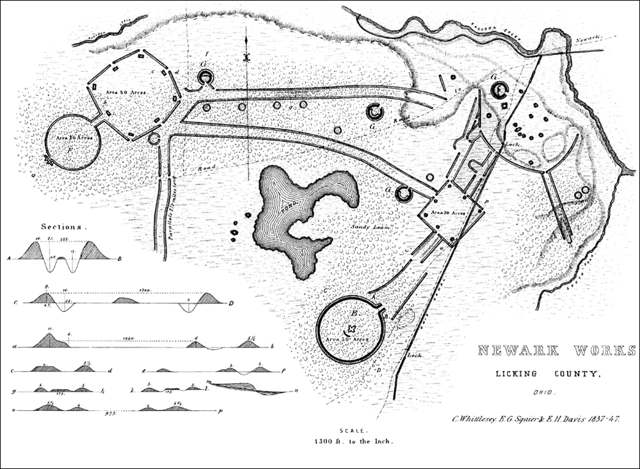
Photo: Ephraim G. Squier and Edwin H. Davis, public domain · Wikimedia Commons
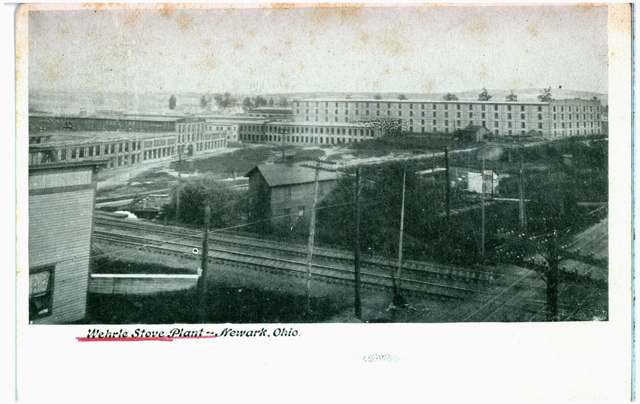
Photo: Columbus Metropolitan Library, via DPLA/Ohio Digital Network, no known copyright restrictions · Wikimedia Commons
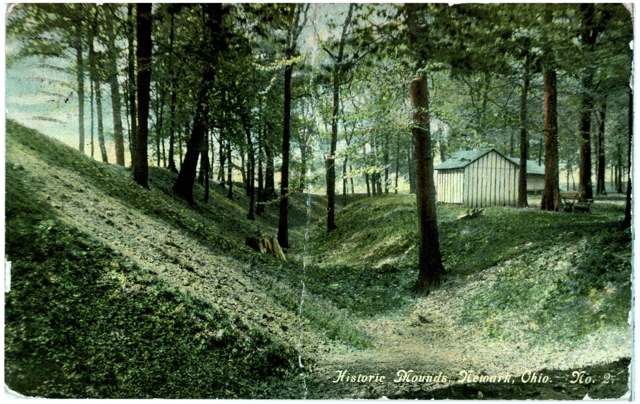
Photo: Columbus Metropolitan Library, via DPLA/Ohio Digital Network, no known copyright restrictions · Wikimedia Commons
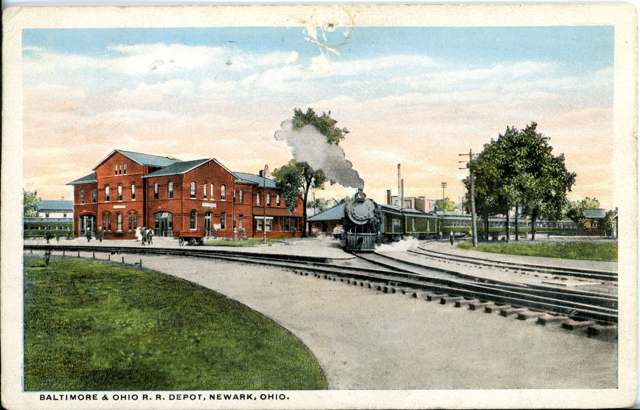
Photo: Columbus Metropolitan Library, via DPLA/Ohio Digital Network, no known copyright restrictions · Wikimedia Commons
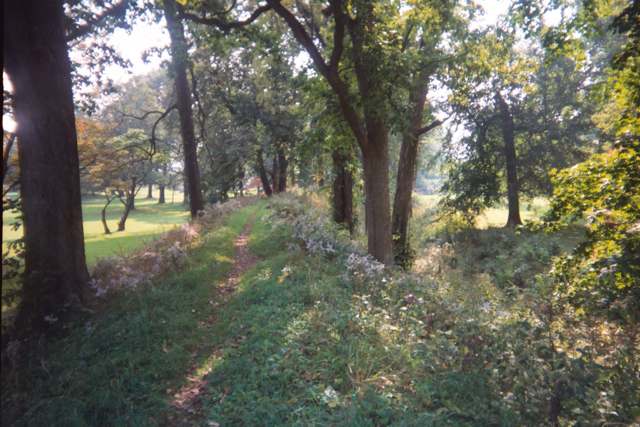
Photo: Ebyabe, via Wikimedia Commons, CC BY-SA 3.0 · Wikimedia Commons
Local history sources: archive.org · archive.org · en.wikipedia.org · en.wikipedia.org · en.wikipedia.org · en.wikipedia.org · en.wikipedia.org · en.wikipedia.org · en.wikipedia.org · en.wikipedia.org · en.wikipedia.org · en.wikipedia.org · en.wikipedia.org · american-rails.com · en.wikipedia.org · en.wikipedia.org · en.wikipedia.org · en.wikipedia.org · en.wikipedia.org · en.wikipedia.org · newarkohio.gov · ohiohistory.org · ohiohistory.org · ohiohistory.org · industrialartifacts.net · encyclopedia.com · buyinsulationproductstore.com · courthouses.co · commons.wikimedia.org · commons.wikimedia.org · commons.wikimedia.org · commons.wikimedia.org · commons.wikimedia.org
Water
North Fork of the Licking River, drawn directly at riverbank intake screens beside the plant at the north end of Newark The water here
- Newark City98% of residentsNorth Fork Licking River
- Licking County Prescott Estates1% of residentsGroundwater wells (3 wells)
- Lakeshore Court Mobile Home1% of residentsGroundwater wells (1 wells)
- St. Louisville Village0% of residentsGroundwater wells (2 wells)
- City of Heath0% of residentslocal wells
- Winding Creek Estates0% of residentsGroundwater wells (1 wells)
- Valley Mobile Home Park0% of residentsGroundwater wells (2 wells)
- Wilkins Mobile Home Park0% of residentsGroundwater wells (2 wells)
Its ZIP codes
Each ZIP code that touches Newark, with the share of its residents who live here and the same headline figures as the ZIP page.
| ZIP | Share | Water | Radon | Home value | Schools | Flood |
|---|---|---|---|---|---|---|
| 43055 Newark | 80% | North Fork of the Licking River, drawn directly at riverbank intake screens beside the plant at the north end of Newark | 11.5 pCi/L average radon | Median year built 1960 | Newark City · 2.5 stars overall | 6.1% of residents in the 1% floodplain |
The county
Licking County: 17 ZIP codes, 38 cities, villages and townships, 160,939 people.
Nearby places
Cite this page
Cite this page as:
Cracked Buckeye (Open Shower Co), "Newark, Licking County", https://crackedbuckeye.com/place/newark/, built 2026-09-16, accessed [date].
Machine-readable: /api/place/newark.json (open JSON, CC BY 4.0 for the compilation; the underlying records keep their own terms) · How to cite · Report a correction · Built 2026-09-16