How Union Township, Licking County began
Union Township, the largest in Licking County, was organized in 1808 out of the western part of Licking Township, and its earliest documented settler, Phineas Ford, built his cabin on Auter Creek in April 1801 after a difficult overland journey from a Scioto River settlement near Circleville. The township's fortunes long turned on the Ohio and Erie Canal, which crossed it at Hebron, a village John Smith platted in 1827 at the junction of the coming canal and National Road; a locally built canal boat, too large to pass the locks, spent its working life laid up in Hebron's basin instead of hauling freight. Nineteenth-century travelers and antiquarians, most notably Union Township native Samuel Park, catalogued dozens of Mound Builder mounds and forts scattered across the township's hilltops, part of the same ancient landscape whose most famous surviving piece, the Alligator effigy mound, sits just across the line in Granville Township. Today the township holds the village of Hebron and part of Buckeye Lake, both shaped by the reservoir the canal builders created on the township's southeastern edge.
Settled 1800 (John Van Buskirk, on land he owned), incorporated 1808, organized out of Licking Township.
Where the name comes from
No source consulted explains why the township was named Union; the 1881 county history describes its organization in 1808 without discussing the choice of name.
Before the town
The 1881 county history's Union Township chapter is built substantially around a letter from Samuel Park, a former township resident, describing dozens of Mound Builder mounds, forts and earthworks he catalogued across the township's hilltops in the years after he had moved away, developing a theory that they formed a linked signal-and-lookout system visible hilltop to hilltop across the Licking valley. Park also personally visited "Alligator Hill," his name for the effigy mound now called the Alligator Mound, describing it as roughly two hundred feet long with fifty-foot legs; that mound itself sits across the township line in neighboring Granville Township, though several of the mounds Park describes, including forts on the farms of Aaron and Henry Hillbrant and on the old John Ruffner farm, are specifically within Union Township. No source consulted names a specific historic Native nation's village within Union Township's own limits, though the same Wyandot-Delaware-Shawnee trail network described for neighboring townships passed through the general area, and the Licking Summit Reservoir on the township's southeastern edge, like similar water bodies elsewhere in the county, was used by Native people for fishing before it was enlarged for the canal. Phineas Ford's family, isolated on Auter Creek in 1801, received visits from Native people who left gifts of venison in exchange for bread and who, Ford's descendants recalled, continued visiting "so long as they continued to linger around the graves of their ancestors," implying a burial ground nearby that no source consulted locates precisely.
Nations recorded here: Wyandot, Lenape (Delaware), Shawnee.
- Fort on the Aaron Hillbrant farm (earthwork) — Union Township, exact location not further specified, Mound Builder era (unspecified) (archive.org)
- Double-walled fort, Henry Hillbrant farm (earthwork) — about a mile south of Union Station, Mound Builder era (unspecified) (archive.org)
- Mound on the Licking County Infirmary farm (mound) — near Union Station, Mound Builder era (unspecified) (archive.org)
- Ridge mounds and artificial pool, old John Ruffner farm (mound) — about a mile and a half northeast of Licking church, Mound Builder era (unspecified) (archive.org)
Timeline
- — Phineas Ford, John Jones, Frederick Ford and Benoni Benjamin and their families travel by flatboat down the Muskingum and Ohio to the Scioto, winter near Circleville, and in spring 1801 push north to the Auter Creek branch of the Licking, where Ford builds a bark-covered cabin by April 7, 1801.
- — John Van Buskirk becomes the first person to settle in Union Township on land he owned himself.
- — Phineas Ford builds the first mill in the township, on Auter Creek, using millstones he made himself from surface boulders.
- — Union Township is organized out of the western part of Licking Township.
- — Abram Mouser builds the township's first distillery, east of Thomas Stone's farm.
- — Joseph Mantonya erects water-powered works on Auter Creek for manufacturing sickles and augers, a business of major value to the county before Mantonya leaves it to become an Ohio Canal contractor.
- — John Smith plats the village of Hebron, the sixth town laid out in Licking County, anticipating the Ohio Canal and the National Road.
- — A joint-stock company at Hebron builds the "Licking Summit," the first canal boat built in the county, launched through the "Deep Cut" on July 4, 1828; built too large to pass the locks, it never leaves the summit level.
- — The Ohio Canal is completed through the township.
- — N. Buckland and Brother erect the first of only two wool carding machines ever operated in the township.
- — The National Road (the "Cumberland road") is completed through the township, crossing the canal at nearly right angles in Hebron.
- — The Central Ohio Railroad is completed through the township.
Stories
Eleven Days Alone on Auter Creek
Phineas Ford reached the bank of Auter Creek on April 7, 1801, and built a small bark-roofed cabin with a door woven from hickory bark and poles, the first structure of its kind on that stretch of the stream. When the family's provisions ran low, Ford and his brother-in-law Frederick Ford left Mrs. Ford and her two small daughters alone in the cabin and set out for the Scioto settlements to buy bread, a trip that high water stretched to eleven days. A bold wolf spent an hour circling the cabin studying its inmates before giving up; Mrs. Ford's rifle, its powder soaked by recent rain, would not fire had she needed it. On the eleventh day, out of food, she set out with her children through trackless woods for her sister's cabin four miles off on Raccoon Creek, and met her returning husband just at nightfall. The next day, several Native visitors came to the cabin to trade venison for bread, explaining they had come near several times during Ford's absence but stayed hidden "for fear the white squaw would be frightened." They continued visiting the family on friendly terms for as long as they kept returning to the graves of their ancestors nearby. Ford lived on that same fifty-acre lot until his death on April 7, 1839, thirty-nine years to the day after he lit his first campfire there.
The Boat That Never Left the Summit
In 1827 and 1828, a joint-stock company at Hebron built the first canal boat ever to float on the Ohio Canal within the county, naming it the Licking Summit and launching it through the newly dug "Deep Cut" on the Fourth of July, 1828. The boat turned out to be built too large to fit through the canal's locks, and so poorly constructed besides that no one thought it worth the trouble of rebuilding. Rather than hauling grain or pork to market, the Licking Summit spent the rest of its existence tied up in Hebron's basin, first pressed into service as a drinking saloon, then, in the county historian's careful phrasing, as "a kind of house of ill-fame," until the town finally destroyed it as a public nuisance or simply let it rot where it lay.
A Township Written in Mounds
Samuel Park, who grew up in Union Township before moving to Illinois, returned in memory again and again to the mounds that covered its hills. Climbing one on his old family farm, now the county infirmary farm, he was struck that nearly every mound he could recall within a twenty-five- or thirty-square-mile radius seemed visible from every other one, each also commanding some private view of a valley no other mound could see. Riding out on horseback to test the idea, he found forts and mounds on the farms of Aaron and Henry Hillbrant, a double-walled fort seventy-five rods across with three spring-fed gateways, a ridge on the old John Ruffner farm holding a fine mound, an oblong oval fort, and the eroded remains of an artificial pool that would still hold six feet of water if its broken bank were restored. He counted more than a hundred mounds in all, and concluded, against the popular notion that Mound Builders hid treasure inside their works, that no people foolish enough to bury wealth in such conspicuous piles ever existed, and that the works were built by a settled, organized society for reasons closer to civil government than warfare or burial.
Photographs
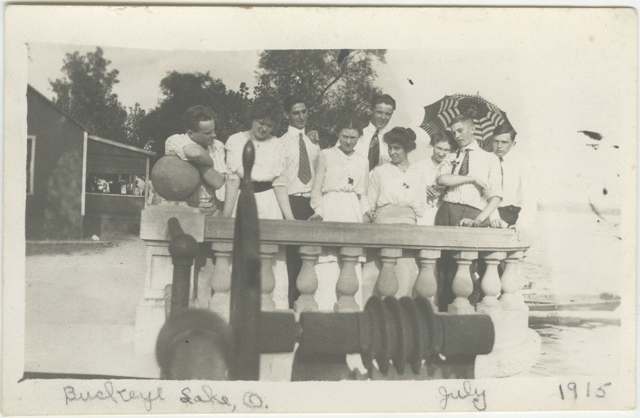
Photo: Columbus Metropolitan Library, via DPLA/Ohio Digital Network, no known copyright restrictions · Wikimedia Commons
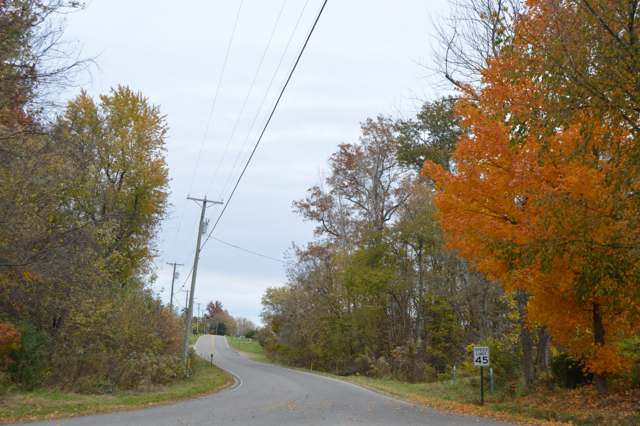
Photo: Nyttend, public domain · Wikimedia Commons
Local history sources: archive.org · hebronvillage.org · en.wikipedia.org · en.wikipedia.org · commons.wikimedia.org · commons.wikimedia.org
Water
Groundwater wells (4 wells) The water here
- Hebron Village44% of residentsGroundwater wells (4 wells)
- Granville, Village Of29% of residentsGroundwater wells (3 wells)
- Licking Regional Water District11% of residentsRaccoon Creek Valley aquifer (local wells)
- Licking County Harbor Hills8% of residentsGroundwater wells (4 wells)
- City of Heath5% of residentslocal wells
- Buckeye Lake, Village Of2% of residentsGroundwater wells (4 wells)
- Roberts Trailer Park1% of residentsGroundwater wells (1 wells)
- Millersport Village0% of residentsGroundwater wells (4 wells)
- Villa Vista Mobile Home0% of residentsGroundwater wells (2 wells)
- Muskingum County Water - Se0% of residentsMuskingum River buried valley aquifer (wells near Duncan Falls)
Its ZIP codes
Each ZIP code that touches Union Township, Licking County, with the share of its residents who live here and the same headline figures as the ZIP page.
| ZIP | Share | Water | Radon | Home value | Schools | Flood |
|---|---|---|---|---|---|---|
| 43025 Hebron | 38% | Groundwater wells (4 wells) | 9.2 pCi/L average radon | Median year built 1980 | Lakewood Local · 3.5 stars overall | 14% of residents in the 1% floodplain |
| 43023 Granville | 13% | Mostly private wells | 10.0 pCi/L average radon | Median year built 1985 | Granville Exempted Village · 5 stars overall | 1.1% of residents in the 1% floodplain |
| 43056 Heath | 1% | Mostly private wells | 8.8 pCi/L average radon | Median year built 1978 | Heath City · 4 stars overall | 5.8% of residents in the 1% floodplain |
| 43046 Walnut Township and Millersport | 1% | Mostly private wells | 4.7 pCi/L average radon | Median year built 1960 | Walnut Township Local · 2.5 stars overall | 18% of residents in the 1% floodplain |
The county
Licking County: 17 ZIP codes, 38 cities, villages and townships, 160,939 people.
Nearby places
Cite this page
Cite this page as:
Cracked Buckeye (Open Shower Co), "Union Township, Licking County", https://crackedbuckeye.com/place/union-township-licking-county/, built 2026-09-16, accessed [date].
Machine-readable: /api/place/union-township-licking-county.json (open JSON, CC BY 4.0 for the compilation; the underlying records keep their own terms) · How to cite · Report a correction · Built 2026-09-16