How Granville began
Granville sits in a valley the Fort Ancient culture filled with mounds and earthworks, including the effigy known as the Alligator Mound on a ridge above the town, centuries before the first Euro-Americans camped on Ramp Creek in November 1800. Welsh Hills settlers, led by Deacon Theophilus Rees, began arriving from 1802-1803, several years ahead of the town's real founding: in the fall of 1805, about 150 colonists organized the year before in Granville, Massachusetts, and Granby, Connecticut, as the Licking Land Company arrived together and laid out a New England-style village around a central square. The transplanted colony became a temperance and abolitionist stronghold that stayed legally dry from 1874 to 1974, and its Baptist Granville Literary and Theological Institute, organized in 1831, grew by 1856 into Denison University. Granville remains an incorporated village, not a city, of roughly 6,000 people on three hills -- College Hill, Sugarloaf and Mount Parnassus -- above the same Raccoon Creek valley the Fort Ancient people once shaped.
Settled 1800-1803 (John Jones, the Fords and Benoni Benjamin camp on Ramp Creek, November 1800; Welsh Hills settlement begins in earnest, spring 1803), platted 1805 (the Granville colony's arriving settlers lay out a 117-acre town plat on taking possession of the land that fall), incorporated not confirmed by sources consulted; secondary sources disagree between 1831 and 1832 for the village's original charter, by the Licking Land Company (the 'Granville colony'), organized in East Granville, Massachusetts, April 23, 1804.
Where the name comes from
Granville and Granville Township take their name directly from Granville, Massachusetts, hometown of most of the colonists who organized the Licking Land Company there in 1804 and emigrated together in 1805; a number of subscribers also came from the neighboring town of Granby, Connecticut.
Before the town
The Raccoon Creek valley around Granville holds, in the words of the 1881 county history, 'probably the most interesting territory in the State, or even in the United States, for the antiquarian': mounds and earthworks 'almost be counted by the hundred' once stood along its bottoms and bluffs, though many had already been plowed away by 1881. The most striking survivor is the Alligator Mound, a 200-foot effigy on a hilltop about six miles west of Newark, built by the Fort Ancient culture around AD 950 according to 1999 radiocarbon dating by archaeologists Brad Lepper and Tod Frolking; Lepper interprets it as representing an underwater panther, a powerful figure in Native tradition, rather than a true alligator, and it is one of only two surviving effigy mounds in Ohio, alongside the Great Serpent Mound. Nearby stood the 'Crescent' mound, a large circular enclosure of 75 to 80 acres (long since plowed under), and, on the McCune farm, a roughly 50-acre hilltop fortification with an outer ditch and embankment, two smaller interior circular redoubts, and lookout mounds -- described in 1881 as 'a work of considerable magnitude.' A conical mound that once stood in Main Street in the village itself was graded away to build the street. The valley also carried an Indian trail running from Newark up the Raccoon valley to a Wyandot village near present Johnstown -- almost certainly Raccoon Town, bought out by settlers in 1807 -- though the 1881 history states plainly that 'no Indian history has been preserved in connection with this township' beyond its use as hunting ground, and that no permanent Native camp is known to have existed within the township in the historic period.
Nations recorded here: Fort Ancient culture, Wyandot.
- Alligator Mound (mound) — hilltop about six miles west of Newark, near Granville, Fort Ancient culture, c. AD 950 (radiocarbon dated 1999) (en.wikipedia.org)
- McCune farm / "Fort Hill" earthwork (earthwork) — lots five and six of the Granville purchase, extending into the Welsh Hills purchase, unspecified (Mound Builder era) (archive.org)
- The Crescent and adjoining circular enclosure (earthwork) — bottom land near the McCune farm earthwork, Granville Township, unspecified (Mound Builder era) (archive.org)
- Wyandot village near Johnstown (probably Raccoon Town) (village) — reached from Newark by a trail up the Raccoon Creek valley through Granville Township, until settlers purchased the site in 1807 (en.wikipedia.org)
Timeline
- — The Fort Ancient culture builds the Alligator Mound, a 200-foot effigy, on a hilltop near the future site of Granville.
- — In late November, John Jones, Phineas and Frederick Ford, and Benoni Benjamin camp on Ramp Creek, the first recorded Euro-American presence at the site of Granville.
- — Mrs. Jones gives birth to the first white child born in the township on October 1 and dies of puerperal fever three weeks later, the township's first recorded white death; she is buried on a small hill in Newark.
- — Welsh Hills settlement begins in earnest as David Thomas and David Lewis, followed soon by Deacon Theophilus Rees and 'Jimmy' Johnson, move onto the hills north of the valley.
- — On April 23, thirty-five subscribers, mostly from Granville, Massachusetts, and Granby, Connecticut, sign articles of association in East Granville forming the Licking Land Company to buy land in Ohio.
- — In November and December, about 150 colonists of the Licking Land Company arrive from Massachusetts and Connecticut in ox-drawn wagons and lay out a New England-style village of 117 acres around a central square.
- — Granville Township is organized from the west half of Licking Township, Fairfield County.
- — The Granville Literary and Theological Institute is organized on December 13 on a 135-acre manual-labor farm southwest of the village; it is incorporated the following February.
- — An abolitionist convention in Granville is disrupted when anti-abolitionist townspeople retaliate with stones and eggs, part of a wider pattern of violent confrontation over the issue in the village.
- — The institute is renamed Granville College.
- — William S. Denison of Adamsville gives $10,000 toward the college's endowment, and in his honor the school is renamed Denison University.
- — Granville enacts local prohibition, remaining legally dry for a century.
- — The Alligator Mound is listed on the National Register of Historic Places on November 5.
- — Granville repeals local prohibition after one hundred years.
Stories
A Colony Chosen by Committee
Granville was not settled by chance but planned, almost corporately, from the start. On April 23, 1804, thirty-five people meeting in East Granville, Massachusetts signed articles of association forming the Licking Land Company, pledging themselves and their heirs to buy land in Ohio; by August, forty-four more had joined, and that September the group appointed a twelve-man board of trustees to hold deeds in trust for the whole company. Jesse Munson and James Smith each subscribed for 1,000 to 1,500 acres, and the average subscription ran to about 200 acres. The company sent agents west in May 1804 to scout land, and in the fall of 1805 the colony -- roughly 150 people in ox-drawn wagons, by the village's own history -- arrived together on the site the agents had chosen, built temporary shelters on a public square they had already planned, and by that first winter, one colonist later wrote, the place had 'assumed the metropolitan appearance of a small Indian village.'
The Alligator on the Hill
On a hilltop about six miles west of Newark, near Granville, Fort Ancient people shaped an effigy mound 200 feet long, its body twenty feet wide and its four limbs each twenty-five feet in length. Nineteenth-century surveyors Ephraim Squier and Edwin Davis documented it for the Smithsonian in 1848, and by then it was already being called the Alligator Mound for its unmistakable reptilian shape, even though no alligator has lived wild in Ohio. In 1999, archaeologists Brad Lepper and Tod Frolking used radiocarbon dating on charcoal from the site to place its construction around AD 950; Lepper has argued the effigy more likely represents an underwater panther, a fearsome water spirit in Native tradition, and that early observers' talk of a giant reptile may have been a garbled echo of that older story. Listed on the National Register in 1971, it survives today as one of only two effigy mounds left anywhere in Ohio, the other being the far larger Serpent Mound in Adams County.
The Welsh Who Came First
By the time the Massachusetts colonists reached Granville in the fall of 1805, they were not the first Euro-Americans on the ground. Welsh families had begun settling the hills north of the valley as early as 1802 and 1803, led by Deacon Theophilus Rees, who had bought land in the township the year before and sent an advance party to look it over. David Thomas and David Lewis were the first to stay as permanent settlers, soon joined by Rees himself and by 'Jimmy' Johnson; more Welsh families, some by way of western Virginia, followed in 1803 and 1804. These 'Welsh Hills' settlers organized their own Baptist church and, for a generation, held services in the Welsh language -- a distinct community that predated the famous Massachusetts colony and gave the hills north of Granville a name they still carry.
Forty-One Years Sober
The New England colonists who founded Granville brought their religion and their politics with them, and both hardened over the decades that followed: the village became a center of the temperance movement and, later, of abolitionist sentiment strong enough to draw stone-throwing mobs to an 1836 anti-slavery convention. That temperance strain eventually became law. In 1874, Granville enacted local prohibition of alcohol sales, nearly half a century before the Eighteenth Amendment made the whole country dry. When national Prohibition ended in 1933, Granville kept its own ban in place regardless, and the village did not vote to allow alcohol sales again until 1974 -- a hundred years, almost to the year, after it first went dry.
Photographs
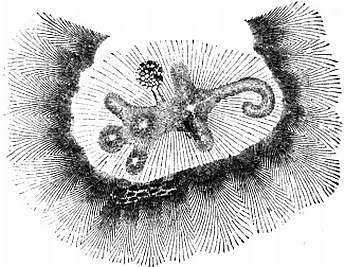
Photo: Rev. Stephen D. Peet, editor, American Antiquarian and Oriental Journal, public domain · Wikimedia Commons
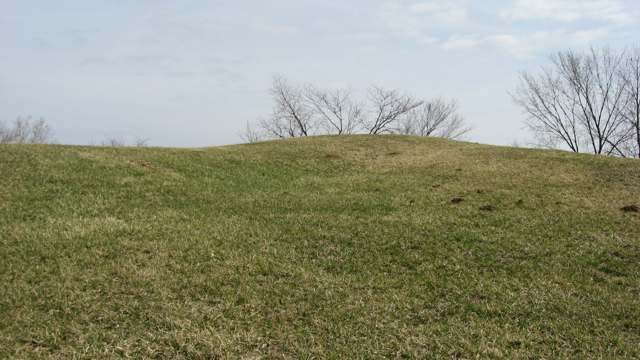
Photo: Nyttend, public domain · Wikimedia Commons
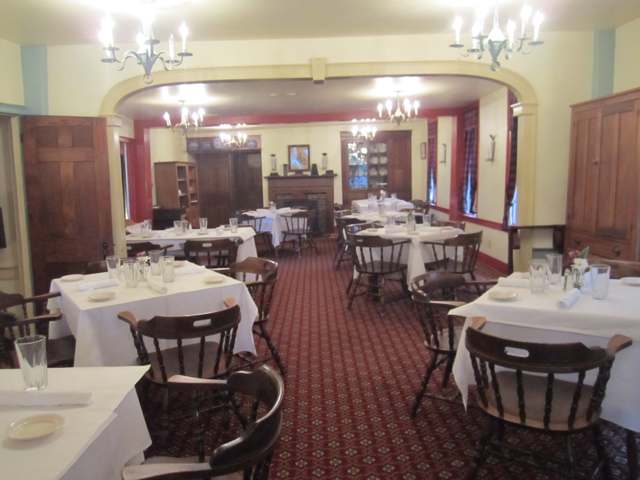
Photo: Ohio Redevelopment Projects - ODSA, via Wikimedia Commons/Flickr, CC BY 2.0 · Wikimedia Commons
Local history sources: archive.org · en.wikipedia.org · en.wikipedia.org · en.wikipedia.org · granville.oh.us · granvillehistory.org · commons.wikimedia.org · commons.wikimedia.org · commons.wikimedia.org
Water
Mostly private wells The water here
- Granville, Village Of73% of residentsGroundwater wells (3 wells)
- Licking Regional Water District27% of residentsRaccoon Creek Valley aquifer (local wells)
Its ZIP codes
Each ZIP code that touches Granville, with the share of its residents who live here and the same headline figures as the ZIP page.
| ZIP | Share | Water | Radon | Home value | Schools | Flood |
|---|---|---|---|---|---|---|
| 43023 Granville | 41% | Mostly private wells | 10.0 pCi/L average radon | Median year built 1985 | Granville Exempted Village · 5 stars overall | 1.1% of residents in the 1% floodplain |
The county
Licking County: 17 ZIP codes, 38 cities, villages and townships, 160,939 people.
Nearby places
Cite this page
Cite this page as:
Cracked Buckeye (Open Shower Co), "Granville, Licking County", https://crackedbuckeye.com/place/granville/, built 2026-09-16, accessed [date].
Machine-readable: /api/place/granville.json (open JSON, CC BY 4.0 for the compilation; the underlying records keep their own terms) · How to cite · Report a correction · Built 2026-09-16