How Heath began
The ground that became Heath was shaped long before any city existed: about 2,000 years ago Hopewell people built the Great Circle, part of the vast Newark Earthworks complex, on what is now the city's north side, and at least 11,000 years before that a Paleo-Indian group butchered a mastodon in a wetland that would one day be a golf-course pond. Euro-American settlement of the area came late, as farmland within older townships, and Heath itself did not exist as a place until the mid-20th century, when postwar U.S. Air Force development at Newark Air Force Base -- seat of the Aerospace Guidance and Metrology Center -- created enough population to incorporate a village in 1952. Rapid growth carried it to city status in 1965, Ohio's 196th city, and by 1986 it had Licking County's first indoor shopping mall. Today Heath still hosts Air Force metrology work and sits beside the Great Circle Earthworks, part of the UNESCO World Heritage Site inscribed in 2023.
Settled not fixed by any source consulted; the area was farmland within older Licking County townships through the 19th and early 20th centuries, incorporated 1952 (village); 1965 (city charter, Ohio's 196th city), by Richard Hoback, elected the village's first mayor in 1952.
Where the name comes from
No source consulted explains the origin of the name Heath for the city.
Before the town
Heath holds two of the oldest documented traces of human presence in Licking County. The older is the Burning Tree mastodon, whose bones -- 90 to 95 percent complete, the most complete American mastodon skeleton yet found -- were struck by a dragline digging a golf-course pond at the Burning Tree Golf Course on December 12, 1989. Radiocarbon dating placed the animal's death about 11,450 to 11,660 years ago, and cut marks on several ribs show it was butchered by Paleo-Indian people, even though no stone tools were found with it. Millennia later, about 100 BCE to 400 CE, Hopewell people built the Great Circle Earthworks on the city's north side as part of the much larger Newark Earthworks complex, which once covered more than 3,000 acres across present Heath and Newark; the circle is roughly 1,200 feet across, walled to a height of about 8 feet around a 5-foot-deep interior moat, with a low rise called Eagle Mound at its center that 1928 excavation showed was not a burial mound but sat over an earlier post building with a central hearth. No source consulted names a historic-era (post-1700) Native nation, village, or trail specifically within the area that is now Heath; the Great Circle's builders and the Wyandot, Shawnee, Lenape (Delaware), Miami, Ottawa, and Mingo nations who later held or passed through this part of Ohio are documented at the county level rather than site-specifically here.
Nations recorded here: Hopewell culture.
- Burning Tree mastodon site (other) — Burning Tree Golf Course, south side of Heath, Paleo-Indian, c. 11,450-11,660 years before present (en.wikipedia.org)
- Great Circle Earthworks (earthwork) — north side of Heath, part of the Newark Earthworks, Hopewell culture, c. 100 BCE-400 CE (en.wikipedia.org)
Timeline
- — A Paleo-Indian group butchers a mastodon at a wetland site later covered by the Burning Tree Golf Course; the skeleton, discovered in 1989, is found 90-95 percent complete with cut marks on several ribs.
- — Hopewell people build the Great Circle Earthworks, a roughly 1,200-foot-wide walled and moated enclosure, on the site that becomes the north side of Heath, as part of the wider Newark Earthworks complex.
- — Ground is broken for the Ohio Canal at Licking Summit near Newark, on ground within present-day Heath; the site is later listed on the National Register of Historic Places in 1973 as the Ohio Canal Groundbreaking Site.
- — Excavation of Eagle Mound, at the center of the Great Circle Earthworks, finds it was built over an earlier rectangular post building with a central hearth rather than as a burial mound.
- — Heath is incorporated as a village, with Richard Hoback elected its first mayor, as postwar growth around the new Newark Air Force Base builds a population where none had existed as a separate place before.
- — With population grown from 2,426 (1960) to 6,066, Heath is chartered as Ohio's 196th city.
- — The Air Force's Aerospace Guidance and Metrology Center is formed at Newark Air Force Base in Heath, continuing calibration work that had been based there since the early 1950s.
- — Indian Mound Mall opens in Heath as Licking County's first and, as of this research, only indoor shopping mall.
- — The Newark Earthworks, including the Great Circle in Heath, are designated the official prehistoric monument of the State of Ohio.
- — The Newark Earthworks, including the Great Circle in Heath, are inscribed as part of the Hopewell Ceremonial Earthworks UNESCO World Heritage Site.
Stories
The Mastodon in the Golf-Course Pond
In December 1989 a dragline operator digging a new pond at the Burning Tree Golf Course, on the south side of Heath, felt his shovel catch on something and damaged a skull before anyone knew what lay beneath the mud. Over three winter days a team excavated what turned out to be the most complete American mastodon skeleton ever found, missing only a rear leg, a few tail bones, two ribs and its toe bones. The animal, about thirty years old when it died, had been dead for roughly 11,500 years, and cut marks on several of its ribs show that Paleo-Indian people butchered it, even though no stone tools were recovered nearby. Its stomach still held moss, seeds, leaves, water lilies and swamp grass, and scientists later recovered living descendants of the gut bacteria that had helped it digest that last meal -- a find that made a golf-course pond in Heath one of the most scientifically important Ice Age sites in North America.
A Circle Two Thousand Years Older Than the City
Long before Heath existed as a place with a name, Hopewell people raised an earthen wall more than a thousand feet across on the same ground, digging a moat inside it and shaping the whole into a nearly perfect circle -- one of the largest of its kind in the Americas. At its center they built a low rise, later called Eagle Mound, that 20th-century archaeologists assumed was a burial mound until a 1928 excavation found instead the remains of a wooden post building with a hearth at its heart. The circle was part of a much larger complex, the Newark Earthworks, that once sprawled across more than 3,000 acres of present Heath and Newark. In 2006 the state of Ohio named the earthworks its official prehistoric monument, and in September 2023 UNESCO inscribed them as a World Heritage Site -- recognition, two millennia on, for a monument the city of Heath simply grew up around.
A City Built Around an Air Base
Heath has no colonial-era founding story because there was no town here to found until the twentieth century. What changed the ground from farmland to a city was the U.S. Air Force, which after World War II built Newark Air Force Base nearby and made it the seat of its Aerospace Guidance and Metrology Center, the Air Force's hub for calibrating precision instruments. The workers and families the base drew were enough to incorporate a village in 1952, under first mayor Richard Hoback, and growth was fast enough that by 1965, with population up to 6,066 from 2,426 just five years earlier, Heath was chartered as Ohio's 196th city. The base's metrology mission outlasted the base itself: after privatization in the 1990s, the Air Force Metrology and Calibration Program Office continued operating from Heath at the Central Ohio Aerospace and Technology Center.
Photographs
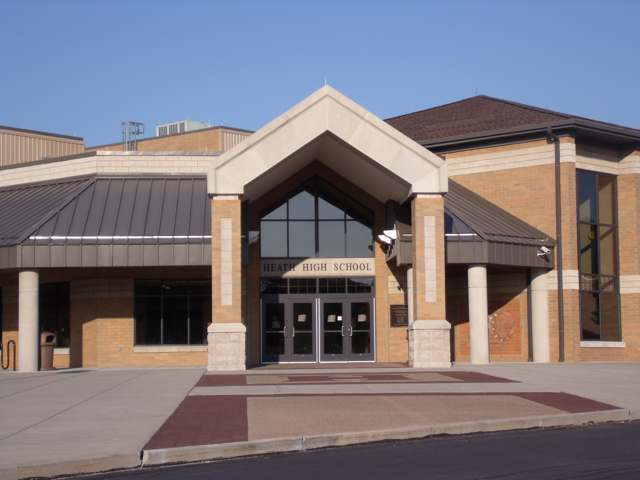
Photo: Ibagli, via Wikimedia Commons, public domain · Wikimedia Commons
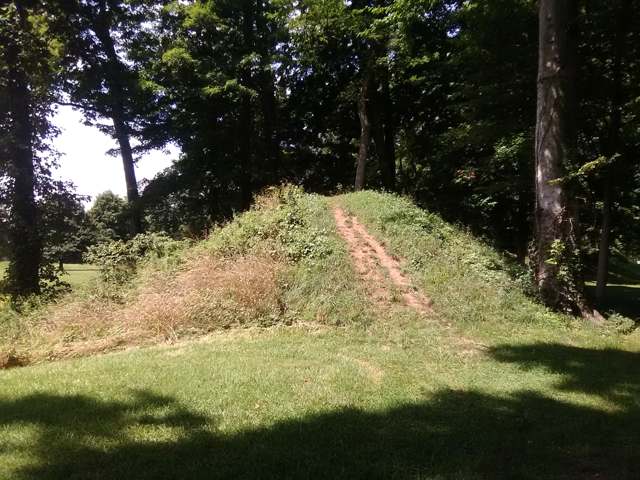
Photo: A21sauce, via Wikimedia Commons, CC BY-SA 4.0 · Wikimedia Commons
Local history sources: en.wikipedia.org · en.wikipedia.org · en.wikipedia.org · en.wikipedia.org · en.wikipedia.org · en.wikipedia.org · ohiohistory.org · commons.wikimedia.org · commons.wikimedia.org
Water
Mostly private wells The water here
- City of Heath99% of residentslocal wells
- Villa Vista Mobile Home1% of residentsGroundwater wells (2 wells)
- Muskingum County Water - Se0% of residentsMuskingum River buried valley aquifer (wells near Duncan Falls)
Its ZIP codes
Each ZIP code that touches Heath, with the share of its residents who live here and the same headline figures as the ZIP page.
| ZIP | Share | Water | Radon | Home value | Schools | Flood |
|---|---|---|---|---|---|---|
| 43056 Heath | 59% | Mostly private wells | 8.8 pCi/L average radon | Median year built 1978 | Heath City · 4 stars overall | 5.8% of residents in the 1% floodplain |
The county
Licking County: 17 ZIP codes, 38 cities, villages and townships, 160,939 people.
Nearby places
Cite this page
Cite this page as:
Cracked Buckeye (Open Shower Co), "Heath, Licking County", https://crackedbuckeye.com/place/heath/, built 2026-09-16, accessed [date].
Machine-readable: /api/place/heath.json (open JSON, CC BY 4.0 for the compilation; the underlying records keep their own terms) · How to cite · Report a correction · Built 2026-09-16