How Radnor Township, Delaware County began
Radnor Township takes its name from Radnorshire, Wales, home county of David Pugh, the young Welshman who scouted the land on horseback for a Philadelphia land warrant holder in 1802 and returned the next year with Henry Perry and Perry's two young sons to begin the township's first settlement. Pugh's planned town of New Baltimore, platted in 1805, never grew beyond a farm, but a Welsh colony did take root here through the 1820s, building what a contributor to the 1880 county history called the "Seven Churches of Radnor" and keeping the Welsh language alive in homes and pulpits for generations. A second village, Delhi, platted in 1833, was renamed Radnor decades later after its citizens subscribed money to bend a new railroad line through town - a decision that determined which of the two settlements would survive as the township's center.
Settled 1803, platted 1805, incorporated 1808-06-16, by David Pugh (New Baltimore plat); Delaware County Commissioners (township, one of the original three).
Where the name comes from
David Pugh, a young Welshman from Faesyfed (the Welsh name for Radnorshire), South Wales, named the township for his native county after surveying and settling the land in 1804. The 1880 county history notes the irony that "Radnor," though honoring a Welsh settler, is itself an English rather than Welsh name: after Edward I's conquest of Wales in 1282, the county was named Radnor by the English, while the Welsh had called it "Maesyfed," meaning "the field of drinking," a name bardic tradition tied to a battle in which the ground was said to be soaked with the blood of the slain. When the county organized in 1808, Radnor was one of the three original townships, comprising roughly a third of the county before being repeatedly subdivided into Marlborough, Thompson, Troy and other townships.
Before the town
No mounds or earthworks are recorded within Radnor Township, but the 1880 and 1908 county histories both preserve two specific incidents involving Native people during the township's earliest Welsh settlement. Wyandot and Shawnee people from the Sandusky reservation regularly visited the settlement to trade venison, moccasins and furs for corn, and the sources describe relations as generally friendly; one incident, remembered as an amusing local legend, involved a theft and a nighttime chase along a stream that was afterward named "Battle Run." During the War of 1812, the township built an 18-by-20-foot log blockhouse, and at least once the settlers abandoned their homes and fled to a fort near Franklinton over fears of attack, though the sources do not name the specific threat. The land itself had been ceded by the Wyandot, Shawnee, Lenape (Delaware), Miami, Ottawa and other nations at the Treaty of Greenville in 1795. For county-level Native history - the Delaware and Mingo villages near the city of Delaware and the region's prehistoric mound sites - see the Delaware County file.
Nations recorded here: Wyandot, Shawnee.
Timeline
- — The Treaty of Greenville cedes most of what becomes Ohio, including the future Radnor Township, to the United States.
- — David Pugh, a young Welsh emigrant then living in Philadelphia, is sent on horseback to locate and report on a 4,000-acre military land warrant belonging to Dr. Samuel Jones.
- — Pugh buys the quarter-township from Dr. Jones and, with Henry Perry of Anglesey, Wales, begins the settlement; Perry's two sons, left alone through a hard winter in an unfinished cabin while their father returned east for the rest of the family, survive by their own efforts. Sources disagree on the boys' ages at the time - thirteen and fifteen per the 1880 county history, nine and eleven per the 1908 county history.
- — David Pugh surveys his land into 100-acre lots and lays out a town at its center, called New Baltimore; the same year he sells the township's first land to an actual settler, Henry Perry.
- — Radnor becomes one of the county's original three townships (with Berkshire and Liberty), comprising nearly a third of the county's territory.
- — New Baltimore's plat, having never developed beyond 150 platted acres, is bought whole and converted into a farm, ending Pugh's plans for a town.
- — Thomas Warren opens the township's first tavern, a two-story log building 20 by 32 feet.
- — The Baptist church, Radnor's first organized religious society, is constituted May 4 in a log schoolhouse with eleven members.
- — The Radnor Presbyterian Church is organized, extending from the labors of Rev. Joseph Hughes, the first Presbyterian pastor in Delaware.
- — Rev. James Davies of North Wales organizes the Welsh Congregational Church at the cabin of John Jones (Penlan).
- — Delhi is surveyed and platted for landowner Edward Evans, near the site of Pugh's old New Baltimore.
- — The John Baker Tavern is built in the Federal style south of the future village.
- — The Samuel Cooper Farmhouse, on Lawrence Road south of Radnor village, is added to the National Register of Historic Places.
- — The Samuel Lewis farmhouse is built, later recognized as the best-preserved gabled-ell house in Radnor and Thompson townships.
- — After the Columbus & Toledo Railroad is built through town in exchange for a subscription raised by Delhi's citizens, the village's name is changed from Delhi to Radnor, after the township.
- — A two-story brick building later sold to Radnor Township Trustees for use as the township hall is constructed; the sale follows in 1894.
- — Del-Co Water Company is founded by Ralph Scott, Timothy McNamara and Gerald Solt, financed through the USDA Farmers Home Administration, later serving rural Radnor Township customers.
- — The former Radnor Township Hall becomes the Radnor Heritage Museum.
Stories
Two Boys Alone in the Welsh Settlement
Henry Perry left his wife and small children near Baltimore in the fall of 1803 and walked into the Ohio wilderness with only his two sons, Ebenezer and Levi, to begin a claim David Pugh had scouted the year before. Father and sons built a cabin and cleared a few acres, planting corn, potatoes, pumpkins and beans by spring; then, in the early summer of 1804, Perry set off on foot to fetch the rest of the family, leaving the boys alone to guard the claim. When he returned months later with his wife Margaret and the other children, after a long journey by cart, he found the boys exactly as he had left them: safe, with a fine crop growing and a cheerful cabin waiting. The 1880 and 1908 county histories disagree on how old the boys actually were - accounts range from nine and eleven to thirteen and fifteen - but agree on the substance of the story, which the Welsh community in Radnor retold for generations as proof of what its first settlers were made of.
The Seven Churches of Radnor
By the 1880s, Radnor Township - still thick with Welsh surnames three generations after David Pugh's arrival - supported a cluster of churches that a contributor to the county history called "The Seven Churches of Radnor," preaching in Welsh and English alike. The Baptist church, organized in 1816 in a log schoolhouse with eleven members, sent five of its own sons into the ministry, one of whom became a missionary in India. The Welsh Congregational church, organized in 1820 at the cabin of John Jones (Penlan) by a pastor trained in a North Wales theological seminary, built its brick meeting-house in the 1860s from subscriptions of $50 to $300 apiece. The writer of the township's history, Rev. B. W. Chidlaw, himself a son of Welsh Radnor, noted with evident pride that the township had never sustained a drinking saloon and had never sent a single son to the penitentiary - a claim of moral distinction the community measured directly against its churches.
From Delhi to Radnor, by Way of a Railroad
The little village that grew up near Pugh's abandoned New Baltimore site was platted in 1833 as Delhi, and for decades it stayed a modest crossroads of stores, blacksmith shops and a tavern kept by Thomas Warren, the village's first postmaster. Its fortunes changed when the Columbus & Toledo Railroad was being routed through the county: Delhi's citizens raised a subscription handsome enough to persuade the company to bend its course through their town rather than bypass it. In gratitude, or in acknowledgment of the deal, the village dropped the name Delhi and took the name Radnor instead, after the township that had carried the name since 1808. The Welshman John Powell, who had run a store on the same corner for twenty years, was still there when the name changed - one of the few threads connecting the pioneer settlement to the railroad town it became.
Photographs
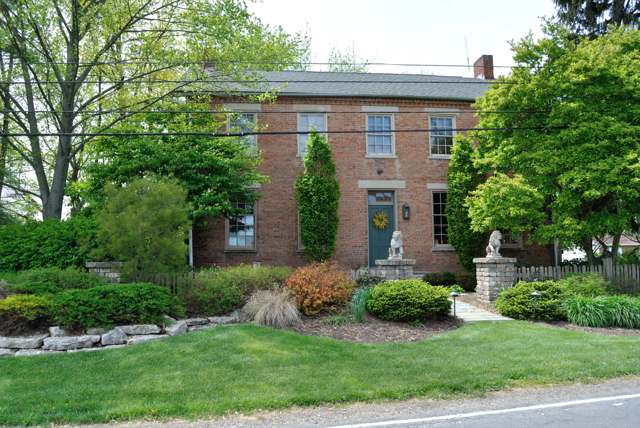
Photo: Wdzinc, via Wikimedia Commons, CC BY-SA 3.0 · Wikimedia Commons
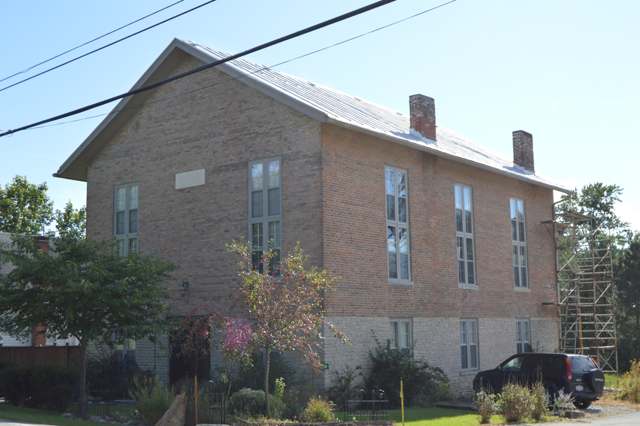
Photo: Nyttend, public domain · Wikimedia Commons
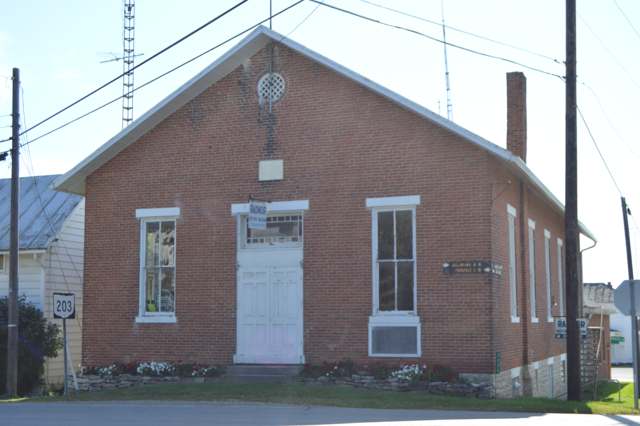
Photo: Nyttend, public domain · Wikimedia Commons
Local history sources: dn710906.ca.archive.org · archive.org · en.wikipedia.org · en.wikipedia.org · en.wikipedia.org · commons.wikimedia.org · commons.wikimedia.org · commons.wikimedia.org · delcowater.org
Water
Olentangy River intake at Del-Co's plant on Olentangy River Rd, Liberty Twp, south of the city of Delaware The water here
- Del-co Water Company, Inc.71% of residentsOlentangy River, O'Shaughnessy and Alum Creek reservoirs, plus Knox County wells
- Delaware City28% of residentsOlentangy River (blended with deep wells)
- Aqua Ohio - Marion1% of residentsScioto River and Little Scioto River intakes, blended with local groundwater wells
- Marysville City0% of residentsMill Creek via Marysville Reservoir (Raymond Rd) + wells
Its ZIP codes
Each ZIP code that touches Radnor Township, Delaware County, with the share of its residents who live here and the same headline figures as the ZIP page.
The county
Delaware County: 11 ZIP codes, 26 cities, villages and townships, 214,126 people.
Nearby places
Cite this page
Cite this page as:
Cracked Buckeye (Open Shower Co), "Radnor Township, Delaware County", https://crackedbuckeye.com/place/radnor-township-delaware-county/, built 2026-09-16, accessed [date].
Machine-readable: /api/place/radnor-township-delaware-county.json (open JSON, CC BY 4.0 for the compilation; the underlying records keep their own terms) · How to cite · Report a correction · Built 2026-09-16