How Liberty Township, Delaware County began
Liberty Township traces to May 1, 1801, when Captain Nathan Carpenter, a Revolutionary War veteran, arrived by riverboat and canoe with his family and became, by most local accounts, the first white settler in what would become Delaware County. It was one of the three original townships the county was divided into at its 1808 formation, later giving up territory to help form Concord Township in 1819. The 1880 county history describes it as unusually rich in Mound Builder remains and Native American memory, from mounds on the Carpenter and Goodrich family farms to the Wyandot hunter Leatherlips's seasonal camp at Otter Spring on the Scioto. Today the township contains the city of Powell and has grown into a populous Columbus suburb.
Settled May 1, 1801, incorporated 1808 (one of the three original townships formed with Delaware County itself), by Captain Nathan Carpenter.
Where the name comes from
No source consulted gives a specific reason Liberty Township carries that name beyond the obvious patriotic sense common to the era; Wikipedia notes it is one of twenty-five townships named Liberty across Ohio. The 1880 county history does note that the name predates the township's final boundaries: in the early 1810s the same territory was also known informally as Woodstock, after Dr. Delano's Vermont hometown, with 'Liberty' and 'Woodstock' used interchangeably in official papers until Liberty prevailed and the adjoining township took the separate name Orange.
Before the town
According to a first-hand sketch by early resident A. S. Goodrich, reproduced in the 1880 county history, the Carpenter family found 'the shores of the Olentangy ... swarming with Indians' on their 1801 arrival, who received the newcomers with friendship: 'the Wyandots predominated in numbers and enlightenment, followed in their order by the Senecas, Delawares, Shawanees, Choctaws and the Taways [Ottawas].' No village of any of these nations stood within Liberty Township itself, but its forests were prized hunting ground, and Otter Spring on the Scioto River, on land later held by the Stanbery family, was a favorite camping ground -- the Wyandot hunter remembered locally as 'Leather-lips' returned there every year during his annual hunt, and the Sandusky-to-Chillicothe trail passed directly by it. (This is very likely the historical Wyandot leader Leatherlips, who was executed by fellow Wyandot near present Dublin, on the Scioto a short distance south, on June 1, 1810; the sources consulted for that event do not themselves mention Otter Spring, so the identification rests on the 1880 county history alone.) The Olentangy's west bank also carried a trail Native travelers used seasonally to move cranberries from the Sandusky marshes to markets at Franklinton and Columbus. On the old Carpenter farm, stone-lined graves without mounds -- distinct from the earthen mounds described below -- were found well into the 19th century and are believed to mark a Native burying ground of the historic era. Liberty Township is also rich in earlier Mound Builder remains: mounds on the farm of one of the elder Goodrich's sons, in Mr. Goodrich's barn lot (containing three skeletons), and on the old Carpenter farm (containing an unusually large skeleton) are all described in the 1880 county history, which explicitly attributes them to an unidentified, much older 'Mound-Builder' population rather than to the historic-era nations. A larger, unexcavated earthwork the same source calls one of the most extensive in the county sits just across the river in neighboring Orange Township and is covered in that township's file.
Nations recorded here: Wyandot, Seneca (of Sandusky), Lenape (Delaware), Shawnee, Ottawa.
- Otter Spring (camp) — on the Scioto River, on the Stanbery farm in Liberty Township, seasonal hunting camp used annually until at least the 1810s (archive.org)
- Goodrich mounds (two mounds) (mound) — on the farm of one of Goodrich's sons and in Goodrich's barn lot, Liberty Township, unattributed 'Mound-Builder' culture, pre-1880 discovery (archive.org)
- Carpenter farm mound and burying ground (mound) — old Carpenter farm, north part of Liberty Township, unattributed 'Mound-Builder' culture (mound); separate stone-lined graves believed historic-era Native burials (archive.org)
Timeline
- — Captain Nathan Carpenter, a Revolutionary War veteran who fought at Bunker Hill and the surrender of Burgoyne, arrives on May 1 after a two-month, eighteen-day journey by wagon, flatboat and canoe from New York, and is remembered locally as the first white settler in Delaware County.
- — Delaware County is organized with Liberty as one of its three original townships, then comprising about half of Orange, Berlin, Delaware and Scioto townships and all of the future Concord Township.
- — The Wyandot leader remembered as Leatherlips, who the 1880 county history says camped seasonally at Liberty Township's Otter Spring, is executed by fellow Wyandot near present-day Dublin on June 1, accused of witchcraft after signing land treaties and cooperating with settlers.
- — Concord Township is erected largely from Liberty Township's territory, reducing Liberty to roughly its present bounds.
- — The Toledo Bridge Company builds a Pratt through-truss bridge, later called the West Orange Road-Thomas Bridge, over a waterway in the township.
- — The West Orange Road-Thomas Bridge is added to the National Register of Historic Places on June 26.
- — The bridge closes to vehicle traffic after a replacement span is built nearby.
- — The township's population grows from 3,790 to 33,252 as Columbus-area suburban development spreads north.
Stories
The First Settler in the County
Nathan Carpenter had already lived a full life before he ever saw Ohio: born in 1757, wounded at Bunker Hill, present at Burgoyne's surrender at Saratoga, married after the Battle of Monmouth. Restless in Connecticut and then New York, he sold his estate on the Unadilla River and set out for the Ohio country on February 12, 1801, with about twenty younger companions. They traveled by wagon and sled to Pittsburgh, then by flatboat down the Ohio River -- surviving a collision with a submerged snag that nearly sank them -- to the mouth of the Scioto, then by keelboat up to Franklinton, and finally by canoe up the Olentangy. Carpenter stepped ashore at the site where his descendant Hiram R. Carpenter's house later stood on May 1, 1801, two months and eighteen days after setting out. He is remembered in the county history as its very first white settler.
What the Mounds Held
Liberty Township's early settlers kept encountering evidence of a much older population. On the farm of one of elder Goodrich's sons stood a mound forty or fifty feet across, so well shaped it looked recent rather than ancient; in Goodrich's own barn lot, grading work turned up another mound containing three skeletons -- a large man, a smaller woman, and a child not fully grown, buried about eighteen inches down. On the old Carpenter farm, Captain Carpenter chose a mound as the site for his family burying ground after his wife's death; leveling it for graves turned up a skeleton so large that a six-and-a-half-foot neighbor's thighbone looked small beside it. The 1880 historian, unable to identify who built these mounds or when, called their builders simply 'that wonderful people, the Mound-Builders,' and left the question to future scientists.
A Chief's Gift
A. S. Goodrich, born and raised in Liberty Township, was remembered for his close friendship with Native visitors who continued to pass through after white settlement. According to his own account in the 1880 county history, when a chief living near Sandusky was preparing to leave for his tribe's reservation, Goodrich helped move the chief's family and belongings to Cincinnati. In gratitude, the chief gave Goodrich a war club that had reportedly been in his family for generations -- 'a rather ugly-looking shillalah,' the historian noted, still capable, in the right hands, of cracking skulls. Goodrich kept the club the rest of his life as a token of the friendship.
Photographs
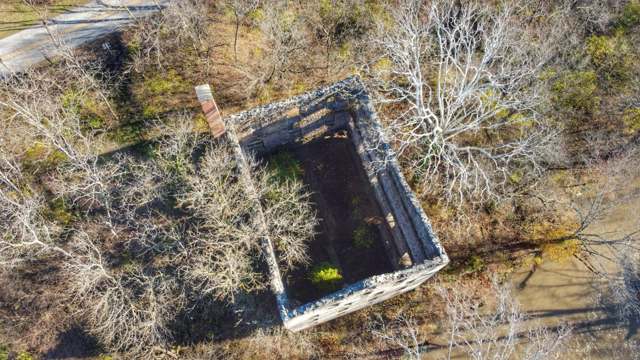
Photo: Jsjessee, via Wikimedia Commons, CC BY-SA 2.0 · Wikimedia Commons
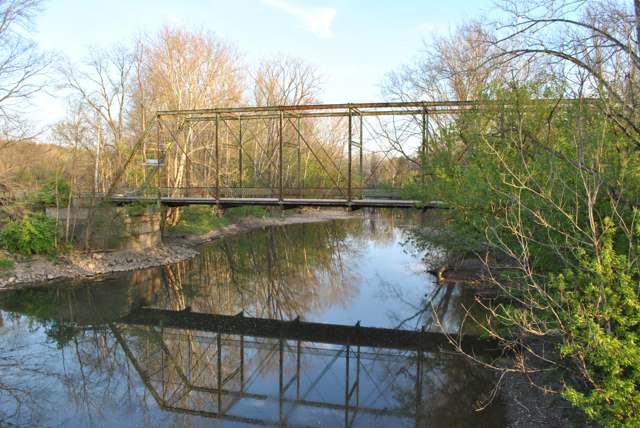
Photo: Wdzinc, via Wikimedia Commons, CC BY-SA 3.0 · Wikimedia Commons
Local history sources: archive.org · en.wikipedia.org · en.wikipedia.org · en.wikipedia.org · commons.wikimedia.org · commons.wikimedia.org
Water
Del-Co's own raw-water intake on O'Shaughnessy Reservoir (Scioto River) near Rathbone, Concord Township The water here
- Del-co Water Company, Inc.74% of residentsOlentangy River, O'Shaughnessy and Alum Creek reservoirs, plus Knox County wells
- Columbus Public Water System14% of residentsScioto River (Griggs & O'Shaughnessy), Hoover Reservoir on Big Walnut Ck, plus wells
- Delaware City13% of residentsOlentangy River (blended with deep wells)
- Hayden Heights MHP0% of residentsGroundwater wells (2 wells)
- Marysville City0% of residentsMill Creek via Marysville Reservoir (Raymond Rd) + wells
- Country Side Mobile Home0% of residentsGroundwater wells
Its ZIP codes
Each ZIP code that touches Liberty Township, Delaware County, with the share of its residents who live here and the same headline figures as the ZIP page.
The county
Delaware County: 11 ZIP codes, 26 cities, villages and townships, 214,126 people.
Nearby places
Cite this page
Cite this page as:
Cracked Buckeye (Open Shower Co), "Liberty Township, Delaware County", https://crackedbuckeye.com/place/liberty-township-delaware-county/, built 2026-09-16, accessed [date].
Machine-readable: /api/place/liberty-township-delaware-county.json (open JSON, CC BY 4.0 for the compilation; the underlying records keep their own terms) · How to cite · Report a correction · Built 2026-09-16