How Delaware began
Delaware, the Delaware County seat, was platted on the west bank of the Olentangy River in 1808 by Moses Byxbe and Henry Baldwin, on ground that a generation earlier had held a Lenape (Delaware) village and, from about 1772, the Mingo war leader Pluggy's town. It is named, like the county, for the Lenape (Delaware) people. A failed 1830s health resort built around a sulfur spring became, in 1842, the seed of Ohio Wesleyan University, and the city is the birthplace of the 19th president, Rutherford B. Hayes, born there in 1822. Railroads, a county courthouse rebuilt in 1868, and a modern water utility (Del-Co, founded 1969) followed as the town grew into the county's largest city.
Settled 1801-1807 (earliest cabins); as Delaware, 1808, platted 1808 (an abandoned east-bank plat dated March 7; a second plat locating the town on the west bank dated May 9), incorporated 1816, by Moses Byxbe and Henry Baldwin.
Where the name comes from
Delaware County and its county seat are named for the Lenape (Delaware) people, who along with the Mingo held the ground before white settlement; the city was in fact built on the site of a Mingo town, not a Lenape one, according to the 1880 county history's own account of the pre-settlement landscape.
Before the town
The 1880 county history opens its account of Delaware Township with a detailed description of the site before settlement: a meadow on the west bank of the Olentangy, ringed by low hills on which stood 'the towns of the natives,' with a deer-lick at the foot of the northern slope 'famous among the tribes.' It places a Lenape (Delaware) village on the north side of the run that crosses the site, near where Ohio Wesleyan's Monnett Hall now stands. Separately, and consistent with this, the Mingo war leader Pluggy (Tecanyaterighto), born a Mohawk, founded a town remembered as Pluggy's Town at this same site around 1772, using it as a base for raids into Kentucky and Virginia during Lord Dunmore's War and the opening years of the Revolution until his death in December 1776. The 1880 history states the surrounding country was ceded to the United States by the 1785 Treaty of Fort McIntosh and reconfirmed at the 1795 Treaty of Greenville, but that Lenape families did not leave the site of the future city for good until 1802 -- six years before Byxbe and Baldwin platted their town on the same ground.
Nations recorded here: Lenape (Delaware), Mingo (Seneca-Cayuga).
- Pluggy's Town (village) — site of the city of Delaware, on the west bank of the Olentangy River, c. 1772-1802 (Pluggy killed 1776; site occupied afterward until Lenape departure in 1802 per the 1880 county history) (en.wikipedia.org)
Timeline
- — The Mingo war leader Pluggy, born a Mohawk, founds Pluggy's Town on the site of present-day Delaware, 18 miles north of present Columbus, and stages raids from it into Kentucky and Virginia.
- — Pluggy is shot and killed on December 29 leading 40 to 50 warriors against McClelland's Station in Kentucky; the site he founded on the Olentangy remains occupied afterward.
- — The last Lenape (Delaware) families leave the site later platted as the city of Delaware, according to the 1880 county history.
- — The Ohio government creates Delaware County on February 10, with Delaware chosen as its seat.
- — Moses Byxbe and Henry Baldwin plat a town of Delaware on the east bank of the Olentangy in March; the plan is abandoned within weeks and a second plat, dated May 9, locates the town on the west bank instead.
- — Delaware is incorporated, the first incorporated town in the county.
- — Rutherford B. Hayes, the future 19th president, is born in Delaware on October 4, ten weeks after his father's death; the birthplace house was later demolished for a gas station, the site now marked by a historical marker on East William Street.
- — A sulfur spring northwest of the original Barber cabin draws visitors; citizens build the Mansion House hotel around it as a health resort.
- — After the Mansion House fails financially, Delaware citizens buy the property and its spring and donate it to the Methodist Episcopal Church for a school.
- — Ohio Wesleyan University is chartered on the former Mansion House and sulfur-spring grounds.
- — Ohio Wesleyan opens to students on November 13 under its first president, Edward Thomson.
- — Delaware becomes a stop on the Cleveland, Columbus and Cincinnati Railroad in April, its first rail connection.
- — Delaware hosts Union training camps on both banks of the Olentangy; the 127th Ohio Volunteer Infantry, recruited on the east side, becomes the first complete Black regiment raised in Ohio and is later redesignated the 5th Regiment, United States Colored Troops.
- — The present Delaware County Courthouse, designed by architect R. N. Jones in the Italianate style, is built for $80,000, replacing an 1815 courthouse damaged by fire.
- — The Cleveland, Columbus, Cincinnati and Indianapolis Railway completes a brick depot on Lake Street, replacing an 1850s wooden station; later known as the Big Four Depot, it is listed on the National Register in 2022.
- — The city's library operates out of rooms in the Masonic Temple, recorded in a photograph published in the state library association's Sketches of Ohio Libraries.
- — On March 29 the Olentangy River floods the city, a scene photographed by Fuller & Harmount for the Library of Congress.
- — Former Ohio governor and U.S. Senator Frank B. Willis dies while campaigning in Delaware; his funeral procession leaves his home on North Franklin Street.
- — Ralph Scott, Timothy McNamara and Gerald Solt found Del-Co Water Company to serve southern Delaware County, financed through the USDA Farmers Home Administration, with a 1-million-gallon-per-day treatment plant and 200 miles of pipe.
Stories
A Town Twice Platted
The city of Delaware nearly ended up on the opposite bank of the river from where it stands today. In 1808 Moses Byxbe, a Massachusetts colonel who had come west to speculate in land, met lawyer Henry Baldwin in Pittsburgh and struck a deal to found a town on Baldwin's inherited property. Baldwin went to Berkshire township and platted a town of Delaware on the east side of the Olentangy, and on March 7, 1808, the two men signed a power of attorney to record it. For reasons the record does not explain, that plat was dropped. A second one, dated May 9 of the same year, put the town on the west bank instead -- the site where Delaware has stood ever since. It is a small, easily overlooked fact: modern Delaware exists on the side of the river its founders chose only on their second attempt.
From Mingo Town to County Seat
Long before Byxbe and Baldwin arrived, the ground where Delaware now stands was already a place people chose to live. The 1880 county history describes a Lenape (Delaware) village on the north side of the stream that crosses the town site, near a deer-lick prized by the tribes for the game it drew. Separately, around 1772, the Mingo leader Pluggy -- a Mohawk-born war chief -- built a town at essentially the same spot, using it as a staging base for raids as far as western Pennsylvania and Virginia during Lord Dunmore's War. Pluggy was killed in December 1776 attacking McClelland's Station in Kentucky, but the town on the Olentangy continued to be occupied afterward. Only in 1802, six years before the first survey stakes went in for the town of Delaware, did the last Lenape families leave the site for good.
A Failed Spa Becomes a University
In the early 1830s, a sulfur spring northwest of the cabin built by early settler Barber began drawing visitors seeking its supposed medicinal qualities. Local promoters built the Mansion House, a large hotel, around the spring and hoped to turn Delaware into a fashionable watering place. The venture never caught on, and after the Panic of 1837 it limped along for a few more years before failing for good. In 1840 the citizens of Delaware bought the property outright and gave it to the Methodist Episcopal Church, which chartered Ohio Wesleyan University on the site in 1842; classes began in November 1844. The old sulfur spring still flows on the Ohio Wesleyan campus today, a health-resort relic repurposed into the heart of a university.
The 127th and the Road to the USCT
During the Civil War, Delaware hosted training camps on both sides of the Olentangy River: white recruits for the 96th and 121st Ohio Volunteer Infantry drilled on the west side, while African American men enlisting for the 127th Regiment, Ohio Volunteer Infantry, trained on the east side. A surviving 1863 photograph shows a portion of the 127th on Sandusky Street just south of the Fort Delaware Hotel. The 127th was the first complete Black regiment recruited in Ohio, and it was later redesignated the 5th Regiment, United States Colored Troops, going on to serve in the Union Army for the rest of the war.
Photographs
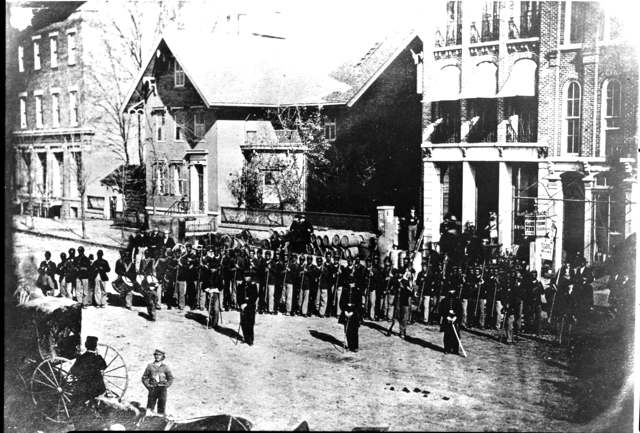
Photo: Ohio Historical Society, via Wikimedia Commons, public domain · Wikimedia Commons
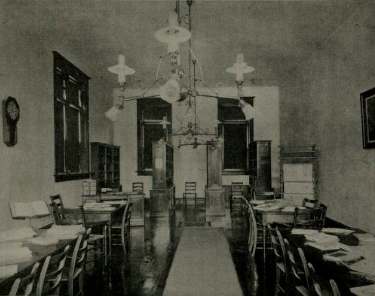
Photo: Delaware City Library Association, published in C. B. Galbreath's Sketches of Ohio Libraries, public domain · Wikimedia Commons
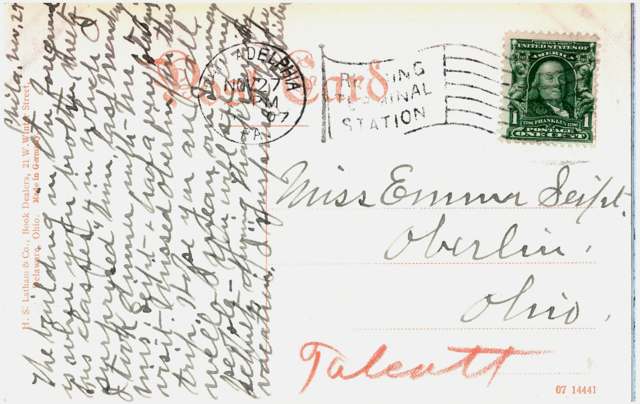
Photo: Columbus Metropolitan Library, via DPLA/Ohio Digital Network, no known copyright restrictions · Wikimedia Commons

Photo: Fuller & Harmount, via U.S. Library of Congress Prints and Photographs Division, public domain · Wikimedia Commons
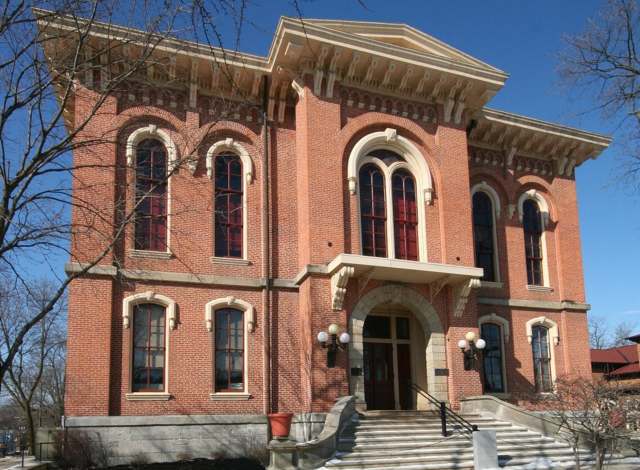
Photo: Bwsmith84, via Wikimedia Commons, CC BY 3.0 · Wikimedia Commons
Local history sources: archive.org · en.wikipedia.org · en.wikipedia.org · en.wikipedia.org · en.wikipedia.org · en.wikipedia.org · en.wikipedia.org · en.wikipedia.org · en.wikipedia.org · delcowater.org · commons.wikimedia.org · commons.wikimedia.org · commons.wikimedia.org · commons.wikimedia.org · commons.wikimedia.org · commons.wikimedia.org
Water
Olentangy River, drawn via the city's North and South intakes upstream of town (blended with 5 active deep wells) The water here
- Delaware City59% of residentsOlentangy River (blended with deep wells)
- Del-co Water Company, Inc.41% of residentsOlentangy River, O'Shaughnessy and Alum Creek reservoirs, plus Knox County wells
- Columbus Public Water System0% of residentsScioto River (Griggs & O'Shaughnessy), Hoover Reservoir on Big Walnut Ck, plus wells
- Marysville City0% of residentsMill Creek via Marysville Reservoir (Raymond Rd) + wells
Its ZIP codes
Each ZIP code that touches Delaware, with the share of its residents who live here and the same headline figures as the ZIP page.
| ZIP | Share | Water | Radon | Home value | Schools | Flood |
|---|---|---|---|---|---|---|
| 43015 Delaware | 71% | Olentangy River, drawn via the city's North and South intakes upstream of town (blended with 5 active deep wells) | 6.5 pCi/L average radon | Parcel list only | Delaware City · 4 stars overall | 1.0% of residents in the 1% floodplain |
| 43035 Orange Township and Lewis Center | 2% | Del-Co's own raw-water intake on O'Shaughnessy Reservoir (Scioto River) near Rathbone, Concord Township | 5.2 pCi/L average radon | Parcel list only | Olentangy Local · 5 stars overall | 0.6% of residents in the 1% floodplain |
The county
Delaware County: 11 ZIP codes, 26 cities, villages and townships, 214,126 people.
Nearby places
Cite this page
Cite this page as:
Cracked Buckeye (Open Shower Co), "Delaware, Delaware County", https://crackedbuckeye.com/place/delaware/, built 2026-09-16, accessed [date].
Machine-readable: /api/place/delaware.json (open JSON, CC BY 4.0 for the compilation; the underlying records keep their own terms) · How to cite · Report a correction · Built 2026-09-16