How Millersport began
Millersport was laid out in 1825 by Mathias Miller as a canal-warehouse village on the Ohio and Erie Canal, about a mile from the older trading post of Monticello, which had all but vanished by the 1880s. The reservoir the canal builders raised just north of the village to feed the summit level, dug across a swamp early settlers called Buffalo Lick and first known as the Licking Reservoir, was renamed Buckeye Lake by the Ohio legislature in 1894 and has shaped the village's fortunes ever since. Grain warehouses and canal trade gave Millersport its first boom; lake recreation and, since 1946, the Lions Club's Sweet Corn Festival have carried it since. It remains a small lakeside village of just over a thousand people at the northeastern corner of Fairfield County.
Settled c. 1800 (William Murphy, from Virginia, the first white settler in this part of Walnut Township, located near the future village site), platted 1825, by Mathias Miller, by Mathias Miller.
Where the name comes from
Millersport takes its name directly from its founder, Mathias Miller, with "port" marking the town's function as a warehouse port on the Ohio and Erie Canal. Wikipedia's short article on the village gives the same plain derivation, and Graham's 1883 county history describes Miller laying out the town himself about 1825.
Before the town
No source found names a Native village, camp, or treaty line at the exact site of Millersport. But the ground the village and its lake occupy has an older recorded history: the swamp Walnut Township's early settlers called Buffalo Lick, later dammed to build the Licking Reservoir (renamed Buckeye Lake by the Ohio legislature in 1894), was described as early as the 1750s as a landmark along the trail network Native travelers used between the Ohio River and the Miami towns of western Ohio. Graham's 1883 county history separately records that William Murphy, who settled near the future village site around 1800 and was Walnut Township's first white settler, made part of his living trading flour and meal to Indians in the area in exchange for furs and skins, which he packed to Virginia to sell -- evidence that Native people were still moving through the area in the years just before the village was platted, though Graham does not name which nation. Fairfield County as a whole lay in country traveled and claimed by the Wyandot and Lenape (Delaware) in this period; see the county file for that broader record.
- Buffalo Lick (swamp later dammed to form the Licking Reservoir / Buckeye Lake) (trail) — the reservoir immediately north of Millersport, on the Fairfield-Licking-Perry county line, documented as of the 1750s (en.wikipedia.org)
Timeline
- — William Murphy, from Virginia, settles near the future village site and becomes Walnut Township's first white settler; he hunts and trades with Indians in the area for furs, later selling his skins in Virginia.
- — Mathias Miller lays out Millersport as a warehouse village beside the Ohio Canal, then under construction, about a mile from the older trading town of Monticello.
- — A dike is built across the swamp called Buffalo Lick to create the Licking Reservoir, a feeder for the Ohio and Erie Canal; Graham's 1883 county history instead dates the reservoir's construction to "about 1833."
- — The Millersport Methodist Episcopal Church is organized by Rev. Martin Kellogg and its frame church building erected the same year.
- — The Ohio legislature changes the reservoir's name from the Licking Reservoir to Buckeye Lake.
- — The Millersport Bank Co. is chartered as a state bank, with $25,000 in subscribed capital, and opens for business on November 27.
- — The Millersport Lions Club holds its first corn fundraiser, the origin of what becomes the annual Sweet Corn Festival.
Stories
Monticello, the Village Millersport Outlived
About the same time Mathias Miller platted Millersport, another settlement called Monticello sprang up roughly half a mile to the southwest, also on the canal. For ten or twelve years Monticello did a busy trade of its own, but by the time Graham's county history was written in 1883 hardly a trace of it remained -- "the site of the once flourishing village is occupied by fields of grain," the book says flatly. Millersport, meanwhile, kept growing: three grain warehouses went up soon after the canal opened, and old residents still remembered the arrival of the Red Rover, the first boat to pass through the village, with crowds lining the banks to watch. Monticello survives today only as a GNIS-listed historical place name attached to the Millersport ZIP code.
An Epidemic Among the Canal Diggers
The Ohio Canal's construction brought Millersport its first business, but also its first disaster. While the canal was being dug through the surrounding swampland, a malarial epidemic broke out among the laborers, and Graham's history records that "large numbers were prostrated and many died." Drs. Strayer and Holmes, the village's first physicians, along with doctors from neighboring towns, were kept constantly busy treating the sick. The swampy ground that made the canal route possible, and that would later become Buckeye Lake, was itself the source of the disease that struck down the men building it.
Sweet Corn Since 1946
Millersport's best-known institution began small: in the summer of 1946 the local Lions Club sold corn on Millersport's main road as a fundraiser. The event grew every year afterward, and the Lions eventually bought land east of the village -- more than 100 acres by the 2010s -- to host what had become a four-day festival. By its 70th anniversary in 2016, organizers estimated that between 150,000 and 250,000 people passed through over the four days, with some 90 organizations taking part, all of it still run, in marketing chairman John Yorde's words, as "100% non-profit."
Photographs
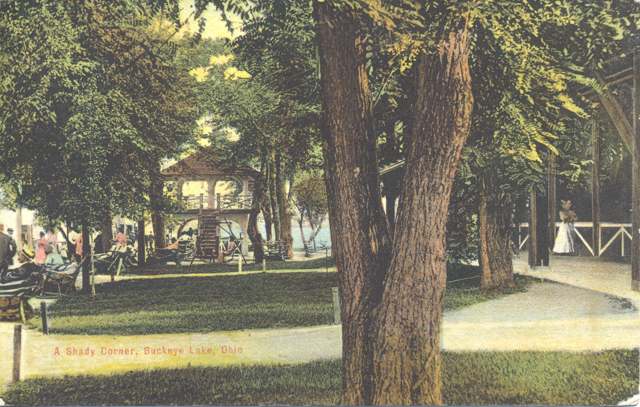
Photo: Miami University Libraries Digital Collections, via Flickr Commons and Wikimedia Commons, no known copyright restrictions · Wikimedia Commons
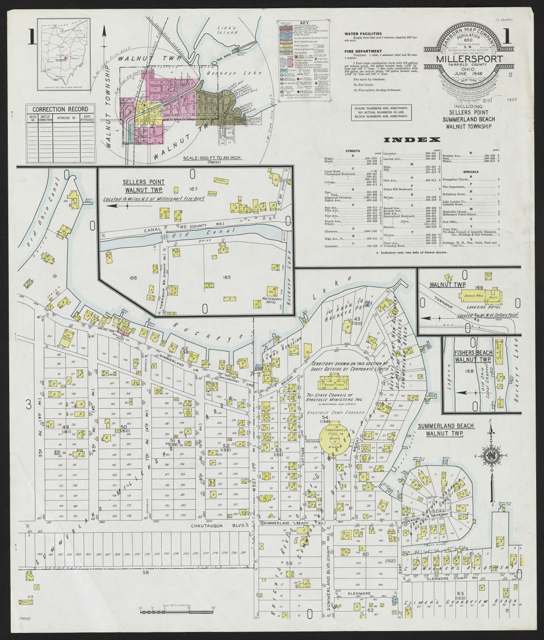
Photo: Kent State University, via the Digital Public Library of America and Ohio Digital Network, public domain · Wikimedia Commons
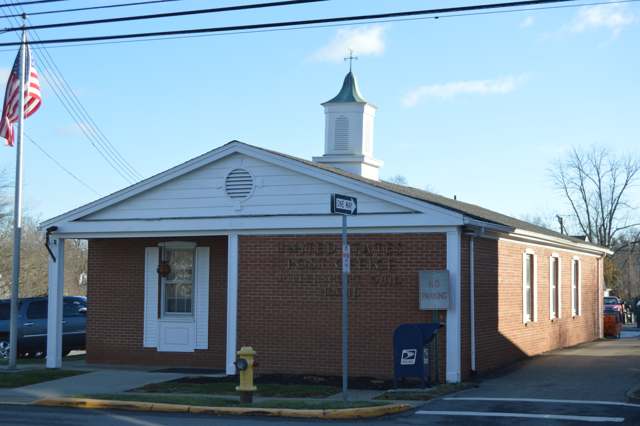
Photo: Nyttend, via Wikimedia Commons, public domain · Wikimedia Commons
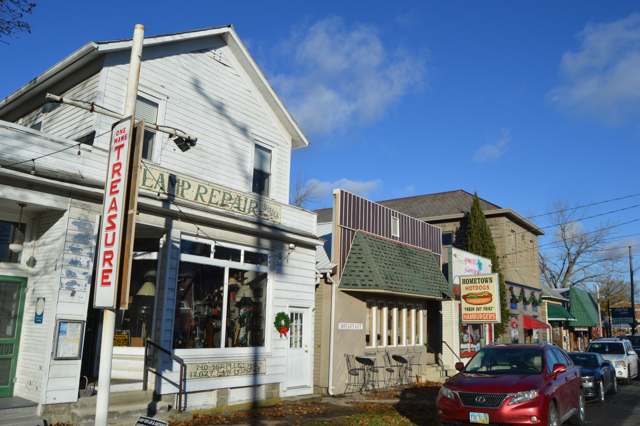
Photo: Nyttend, via Wikimedia Commons, public domain · Wikimedia Commons
Local history sources: en.wikipedia.org · archive.org · archive.org · en.wikipedia.org · whiznews.com · commons.wikimedia.org · commons.wikimedia.org · commons.wikimedia.org · commons.wikimedia.org
Water
Mostly private wells The water here
- Millersport Village96% of residentsGroundwater wells (4 wells)
- Buckeye Lake, Village Of4% of residentsGroundwater wells (4 wells)
Its ZIP codes
Each ZIP code that touches Millersport, with the share of its residents who live here and the same headline figures as the ZIP page.
| ZIP | Share | Water | Radon | Home value | Schools | Flood |
|---|---|---|---|---|---|---|
| 43046 Walnut Township and Millersport | 31% | Mostly private wells | 4.7 pCi/L average radon | Median year built 1960 | Walnut Township Local · 2.5 stars overall | 18% of residents in the 1% floodplain |
The county
Fairfield County: 13 ZIP codes, 27 cities, villages and townships, 144,692 people.
Nearby places
Cite this page
Cite this page as:
Cracked Buckeye (Open Shower Co), "Millersport, Fairfield County", https://crackedbuckeye.com/place/millersport/, built 2026-09-16, accessed [date].
Machine-readable: /api/place/millersport.json (open JSON, CC BY 4.0 for the compilation; the underlying records keep their own terms) · How to cite · Report a correction · Built 2026-09-16