Water system
Reynoldsburg City
EPA ID OH2503203 · Franklin County · 37,847 people served · owned by a local government
Reynoldsburg City buys its water from Columbus Public Water System.
The system's record
- Aquifer
- Scioto River Valley sand and gravel (buried valley) aquifer
- Water bodies
- Scioto River, Griggs Reservoir, O'Shaughnessy Reservoir, Hoover Reservoir, Big Walnut Creek, Alum Creek
- Raw intakes
- Dublin Rd Scioto River
Hap Cremean Big Walnut
Alum Creek Hoover, Hap Cremean
Doutt Reservoir Scioto - Active wells
- 6
- Serves
- 1,305,946 people · Franklin County
- EPA ID
- OH2504412
Columbus draws from three water plants: Dublin Road (Scioto River via Griggs/O'Shaughnessy Reservoirs), Hap Cremean (Hoover Reservoir on Big Walnut Creek, supplemented by water pumped in from Alum Creek Reservoir), and the Parsons Avenue Water Plant, fed by the South Well Field in the Scioto River valley near Lockbourne, which serves the southeast side.
About this area's water
Did you know
- Reynoldsburg is the 'Birthplace of the Tomato' - Alexander W. Livingston bred the Paragon there, billed as the first tomato bred for commercial use.
- The city owns no wells, no intake and no treatment plant: every drop arrives finished from Columbus through six master meters - 1.273 billion gallons in 2025.
- Which Columbus plant serves you depends on your street: E. Main and E. Broad get Hoover Reservoir surface water, State Route 256 gets Parsons Avenue groundwater.
- Reynoldsburg maintains 145.1 miles of water line and 143.8 miles of sanitary sewer but treats none of the water or sewage moving through them.
History5
- 1908Griggs Dam dedicated on the Scioto River, the first of the Columbus reservoirs that would eventually supply suburbs like Reynoldsburg.
- 1955Hoover Dam on Big Walnut Creek dedicated; Hoover Reservoir now feeds the Hap Cremean plant that supplies most of Reynoldsburg.
- 1960sColumbus built four Ranney collector wells in southern Franklin County, part of the groundwater supply behind the Parsons Avenue plant.
- 2024Sewer rates rose 6% on Jan. 1 and the capital improvement fee rose 50% in August, funding a five-year sewer rehabilitation program.
- 2025Ordinance 61-2025, passed Dec. 15, set the water rate at $12.55 per 1,000 gallons effective Jan. 1, 2026.
Treatment & pressure
How it is treated
Buys 100% finished water from Columbus through six master meters. Water entering on E. Main and E. Broad comes from the Hap Cremean plant (Hoover Reservoir surface water); water on SR 256 from the Parsons Avenue plant (groundwater). Reynoldsburg monitors chlorine daily.
Water pressure
Not published. Reynoldsburg buys finished water through six master meters and operates only distribution, so pressure is set by Columbus's supply at those meters.
What it costs
$12.55 per 1,000 gallons
Ordinance 61-2025: $12.55 per 1,000 gallons effective Jan. 1, 2026, 10% senior discount on the first 10,000 gal. Sewer $12.20; stormwater $20.25 per quarter.
Water quality & impurities8
| Contaminant | Level | Limit | Year |
|---|---|---|---|
| Total trihalomethanes (TTHM) Reynoldsburg distribution system; range 29.4-78.5 ppb - closest result to an MCL. | 67 ppb | 80 | 2025 |
| Haloacetic acids (HAA5) Reynoldsburg distribution system; range 8.4-43.8 ppb. | 34 ppb | 60 | 2025 |
| Lead 90th percentile; 1 of 324 sites over the AL, one sample at 21.9 ppb. | 2.060 ppb | 15 (action… | 2023 |
| Copper 90th percentile; 0 of 32 sites above the action level. | 0.0323 ppm | 1.3 (action… | 2023 |
| Nitrate Hap Cremean plant, range ND-1.4; not detected at Parsons Avenue. | 1.4 ppm | 10 | 2025 |
| Chlorine Reynoldsburg distribution residual; range 0.69-1.22 ppm. | 1.02 ppm | 4 (MRDL) | 2025 |
| Fluoride Hap Cremean plant; 0.98 ppm at Parsons Avenue. Added for dental health. | 0.97 ppm | 4 | 2025 |
| Turbidity Highest single result at Hap Cremean; 97% of monthly samples met the limit. | 0.68 NTU | 0.3 (treatment… | 2025 |
EPA compliance record
Lead at the tap: 90th-percentile result 2.1 ppb in 2023 (action level 15 ppb).
EPA record: no health-based violations since 2015.
EPA compliance record · Columbus Public Water System (treats the water)
Lead at the tap: 90th-percentile result 1.2 ppb in 2023 (action level 15 ppb).
EPA health-based violations since 2015:
- 2016Nitrate · exceeded a maximum contaminant level · measured 10.5 MG/L (limit 10 MG/L) · returned to compliance
Projects & plans2
Recent and current work
- Five-year sanitary sewer rehabilitation program · $4.2 million · 2025-2029 · under construction
Area sewer rehab across 14 neighborhoods plus manhole rehab and annual inspection/cleaning; $2.5M from cash on hand, $1.72M rate-funded.
Planned or needed
- Sewer rate adjustment to fund the capital program · 2025 · proposed
Baker Tilly modeled 12% or 26% increases, lifting the average monthly residential sewer bill from $45.48 to $50.94 or $57.30.
Supply stress
Risk is inherited from Columbus: the CCR rates the Scioto River, Big Walnut Creek and the Parsons Avenue aquifer as highly susceptible to spills, the aquifer because no significant clay layer protects it. Columbus says it will add PFAS treatment if 2027 monitoring shows it cannot meet the 2029 limits.
Sewers
Sanitary
No treatment plant of its own: Reynoldsburg collects sewage in 143.8 miles of city sanitary sewer and pays Columbus to treat it, about $6.0 million budgeted for the 2025 treatment contract. Columbus's combined sewers and 19 CSO outfalls are in its older core, not in Reynoldsburg.
Storm
Separate storm system billed as its own utility at $20.25 per quarter for residential customers in 2026. No major flooding problems were found in the sources reviewed.
Sourcesverified
Compiled from the utility's own reports and public records, then independently re-checked against primary sources.
Main supplier in 1 ZIP code
Serves
Main water supplier in 1 ZIP code
- 43068 · Reynoldsburg68% of residents
Also present in 3 more ZIP codes
- 43004 · Columbus and Blacklick1% of residents
- 43213 · Whitehall and Columbus0% of residents
- 43232 · Columbus0% of residents
Population-weighted resident shares; a ZIP code can have more than one system on record. Recomputed from each ZIP's own system list, not from the map's cached footprint.
Buys from · Sells to
Reynoldsburg City buys its water from Columbus Public Water System.
No other system is on record buying water from Reynoldsburg City.
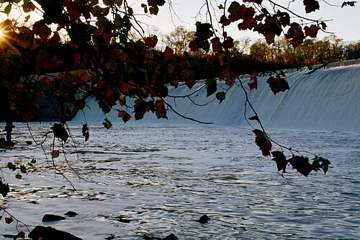
Photograph
On the map
Show this system's territory on the map — 4 ZIP codes in all.
Sources
U.S. EPA SDWIS and Community Water System Service Area Boundaries (v3, 2026), Ohio EPA primacy data, 2020 census blocks: the system serving most residents, traced through purchases to the treating utility; Ohio EPA 2023 Sewer and Water Rate Survey (Ohio State, May 2025) for household bills; Ohio EPA DEFA loan awards since 2016 for the loans paragraph · EPA SDWIS · EPA service area boundaries · Ohio EPA drinking water · Ohio EPA rate survey
Reynoldsburg City's own pages: columbus.gov