How Brown Township, Delaware County began
Brown Township grew up around a salt lick that Native people had worked long before white settlement, a resource the federal government reserved as a 4,000-acre "salt section" and leased in 1817 to speculators who bored 480 feet without striking usable brine before the venture failed and the land was auctioned off in 1826. The township itself was not organized as a separate entity until about that same year - the exact date lost when the county commissioners' record book for 1822 to 1831 went missing - after Daniel G. Thurston became its first permanent settler in 1817, following an earlier, failed 1809 settlement remembered only as "Bowetown." Out of this salt-reservation land grew the villages of Eden and, from an 1838 post office originally called "Kilbourn," the place known today as Kilbourne; the township also raised John Calvin Lee, who went on to serve twice as Ohio's Lieutenant Governor under Rutherford B. Hayes.
Settled 1809, incorporated c. 1826.
Where the name comes from
No source consulted explains why the township is named Brown, one of eight Ohio townships bearing that name. The 1880 county history, contributed by Dr. S. W. Fowler, gives only the township's tangled organizational history: originally split between Radnor and Berkshire townships when the county formed in 1808, transferred in parts to Delaware Township (1808) and Peru Township (1817), before finally being organized as Brown Township sometime between 1822 and 1831 - probably about 1826 - once the salt-reservation lots were surveyed and sold.
Before the town
The 1880 county history records that a salt lick in the northeast quarter of the township was a source of salt for Native people before the federal government surveyed the county, leading Congress to set aside a 4,000-acre reservation there for the State's educational fund. The same chapter notes that several small streams feeding Alum Creek within Brown Township, including Leatherwood Run, were "noted for having been the ancient sites of Indian encampments," from a time when the Scioto Valley formed part of the hunting grounds of the Delawares and Mingoes, though it does not name a specific village. Separately, on a farm formerly belonging to Isaac Eaton (later William Williams), a conical earthen mound about eight feet high and forty feet across, surrounded by a ditch and low embankment with a gateway-like opening, was opened by local residents; inside they found a well-preserved skeleton and charred wood, "relics pertaining to this lost race of people" - almost certainly a mound built by the Adena or a related mound-building culture, though the 1880 source does not use that terminology. For county-level Native history, including the Delaware and Mingo villages near the city of Delaware, see the Delaware County file.
Nations recorded here: Lenape (Delaware), Mingo (Seneca-Cayuga), Adena culture.
- Brown Township salt lick (other) — northeast quarter of Brown Township, pre-settlement (dn710906.ca.archive.org)
- Leatherwood Run encampments (camp) — along Leatherwood Run, Brown Township, pre-settlement (dn710906.ca.archive.org)
- Williams farm mound (mound) — on the former Isaac Eaton (later William Williams) farm, Brown Township, likely Adena or related mound-building culture (dn710906.ca.archive.org)
Timeline
- — The Treaty of Greenville cedes most of what becomes Ohio, including the future Brown Township, to the United States.
- — Dr. John Loofbourrow, learning the location of the salt lick from friendly Native informants, begins boiling salt there with his freedman, Oko Richey, in iron kettles.
- — Erastus Bowe, from Vermont, builds a cabin in the extreme southwest corner of the future township and calls the place "Bowetown"; he leaves within a few years and the place is never platted or further settled.
- — Daniel G. Thurston becomes the township's first permanent settler, moving from Berkshire Township onto the Alum Creek salt reservation.
- — A company including Thurston leases 1,000 acres around the salt lick from the State and bores to a depth of 480 feet without finding brine in paying quantities.
- — The failed salt reservation, surveyed into 100-acre lots, is sold at public auction, with early improvers given first refusal on the land they had worked.
- — Brown Township is organized as a separate civil township, its exact date lost with the county commissioners' missing 1822-1831 record book.
- — The township's first schoolhouse is built on Alum Creek near an ever-flowing spring, just north of Eden village.
- — The government commissions C. M. Thrall as postmaster at the village of Eden, naming the post office "Kilbourn" - the origin of the modern place name Kilbourne.
- — John Calvin Lee is born in Brown Township on the Peter Baker farm, where his father Hugh Lee had settled in 1827.
- — Leonardsburg, or Eden Station, is laid out by S. G. Caulkins near the township's north line and named for its first merchant, A. Leonard.
- — The Delaware County infirmary (poorhouse) is built in Brown Township on land purchased from Joseph Blain, near the center of the township.
- — John Calvin Lee, born in Brown Township, is elected Lieutenant Governor of Ohio on the ticket with Rutherford B. Hayes; he is elected again in 1869.
- — Del-Co Water Company is founded by Ralph Scott, Timothy McNamara and Gerald Solt, financed through the USDA Farmers Home Administration, later serving rural Brown Township customers.
Stories
Boiling Salt with "Friday"
Dr. John Loofbourrow, a Virginia physician who had settled in neighboring Berkshire Township, learned from friendly Native visitors where they gathered the salt his own household needed, and found the source only about five miles north, up the creek from his own place. With his household helper, a Black man remembered in the 1880 county history only by the name "Friday," Oko Richey, Loofbourrow built a furnace, set up large iron kettles, and began the slow work of boiling brine into salt - enough, in time, to make the two of them known locally as salt merchants. After about twelve years the operation drew the interest of a company of speculators who leased 1,000 acres around the site from the State in 1817, promising to bore at least 200 feet for a proper well; they went to 480 feet and found nothing worth having, and by 1826 the whole "salt reservation" had to be surveyed into ordinary farm lots and auctioned off, with Loofbourrow himself having already given up and moved to Wisconsin.
The Post Office That Named a Village
For the first twenty-one years after Daniel Thurston's arrival, Brown Township had no post office of its own; residents rode to Berkshire or Delaware for their mail. That changed in 1838, when the government commissioned C. M. Thrall postmaster at the small settlement growing up around Isaac Eaton's survey for Daniel Thurston and Isaac Leonard - a place already known locally as Eden. For reasons the county historian did not record, the post office itself was given a different name entirely: Kilbourn. The village kept the name Eden for its church, its schoolhouse and its town hall, but the post office name eventually became attached to the place itself, and the settlement is known today as Kilbourne - a rare case of a post office renaming the town that housed it rather than the other way around.
A Farm Boy Becomes Lieutenant Governor
Hugh Lee, a member of the prominent Lee family, settled in Brown Township in 1827 on what was then the Peter Baker farm. His son John Calvin Lee grew up on that farm and, during the Civil War, rose to the rank of Brigadier General. Afterward, running on the ticket with fellow Ohioan Rutherford B. Hayes - later President of the United States - Lee was twice elected Lieutenant Governor of Ohio, in 1867 and again in 1869. The 1880 county history, written while Hayes was still in the White House, noted with evident local pride that the Lee family "did not deteriorate" from its illustrious namesakes, tracing a straight line from a Brown Township farm boyhood to the second-highest office in the state.
Photographs
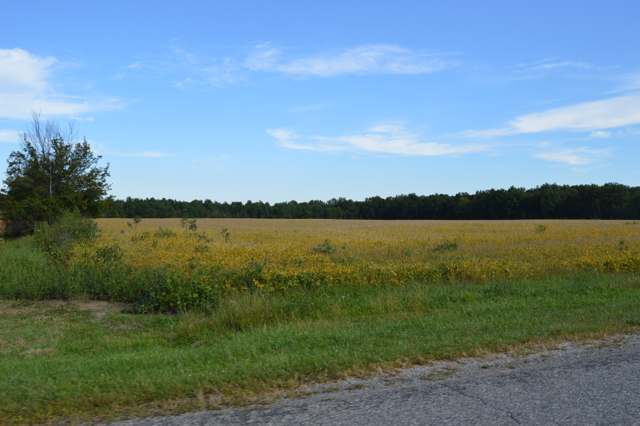
Photo: Nyttend, public domain · Wikimedia Commons
Local history sources: dn710906.ca.archive.org · en.wikipedia.org · en.wikipedia.org · commons.wikimedia.org · delcowater.org · en.wikipedia.org
Water
Olentangy River intake at Del-Co's plant on Olentangy River Rd, Liberty Twp, south of the city of Delaware The water here
- Del-co Water Company, Inc.60% of residentsOlentangy River, O'Shaughnessy and Alum Creek reservoirs, plus Knox County wells
- Delaware City40% of residentsOlentangy River (blended with deep wells)
- Marysville City0% of residentsMill Creek via Marysville Reservoir (Raymond Rd) + wells
Its ZIP codes
Each ZIP code that touches Brown Township, Delaware County, with the share of its residents who live here and the same headline figures as the ZIP page.
| ZIP | Share | Water | Radon | Home value | Schools | Flood |
|---|---|---|---|---|---|---|
| 43032 Brown Township and Kilbourne | 100% | Olentangy River intake at Del-Co's plant on Olentangy River Rd, Liberty Twp, south of the city of Delaware | 1.1 pCi/L average radon | No homes in the parcel records | Buckeye Valley Local · 5 stars overall | 0.0% of residents in the 1% floodplain |
| 43074 Sunbury | 3% | Alum Creek Reservoir intake at the Scott plant, Lewis Center Rd at Africa, Orange Township | 5.3 pCi/L average radon | Parcel list only | Big Walnut Local · 4 stars overall | 2.9% of residents in the 1% floodplain |
| 43015 Delaware | 2% | Olentangy River, drawn via the city's North and South intakes upstream of town (blended with 5 active deep wells) | 6.5 pCi/L average radon | Parcel list only | Delaware City · 4 stars overall | 1.0% of residents in the 1% floodplain |
The county
Delaware County: 11 ZIP codes, 26 cities, villages and townships, 214,126 people.
Nearby places
Cite this page
Cite this page as:
Cracked Buckeye (Open Shower Co), "Brown Township, Delaware County", https://crackedbuckeye.com/place/brown-township-delaware-county/, built 2026-09-16, accessed [date].
Machine-readable: /api/place/brown-township-delaware-county.json (open JSON, CC BY 4.0 for the compilation; the underlying records keep their own terms) · How to cite · Report a correction · Built 2026-09-16