Notable people · First Lady · Politics · Civil War · Women
Lucy Webb Hayes
Chillicothe-born first lady (1877-1881), the first president's wife with a college degree, remembered for the alcohol-free White House and the first White House Easter egg roll.
Born August 28, 1831, Chillicothe
Died June 25, 1889, Spiegel Grove, Fremont
At a glance
- Born
- August 28, 1831, Chillicothe (Ross County) source
- Died
- June 25, 1889, Spiegel Grove, Fremont (Sandusky County) source
- Buried
- Hayes tomb, Spiegel Grove (Rutherford B. Hayes Presidential Library & Museums), Fremont; first buried in Oakwood Cemetery, Fremont, and moved in 1915 (Sandusky County) source
- Also known as
- Lucy Hayes, Lucy Webb Hayes, Lucy Ware Webb, Mother Lucy
- Known as
- First Lady, Politics, Civil War, Women
Life story
Lucy Ware Webb was born in Chillicothe on August 28, 1831. After her father died in 1833, her mother moved the family to Delaware, Ohio, where Lucy took preparatory classes at Ohio Wesleyan, and she graduated from the Wesleyan Female College in Cincinnati in 1850. She married Cincinnati lawyer Rutherford B. Hayes in 1852 and pushed him toward anti-slavery work. During the Civil War she spent long stretches in the camps of his 23rd Ohio Volunteer Infantry, whose men called her "Mother Lucy". As Ohio's governor's wife she helped make the soldiers' and sailors' orphans' home at Xenia a state institution in 1870. In the White House (1877-1881) no alcohol was served, she brought the Easter egg roll to the White House lawn in 1878, and the press made "First Lady" a national title by using it for her. She died at Spiegel Grove in Fremont in 1889 and is buried there beside her husband.
Ohio ties
- Chillicothe (1831-1844)
birthplace (a four-room house that now stands at 90 W. Sixth Street as the Lucy Hayes Heritage Center); childhood Ross County · source - Delaware (1844-c. 1845)
family moved here so her brothers could attend Ohio Wesleyan University; Lucy took classes in its preparatory department and met Rutherford B. Hayes on the campus Delaware County · source - Cincinnati (c. 1845-1861)
graduated from the Wesleyan Female College (1850); married at her mother's house (1852); early married life while Hayes practised law Hamilton County · source - Columbus (1868-1872, 1876-1877)
first lady of Ohio during Hayes's three terms as governor; visited prisons, reform schools and asylums with him Franklin County · source - Xenia (1870)
helped establish the Ohio Soldiers' and Sailors' Orphans' Home as a state institution Greene County · source - Spiegel Grove, Fremont (1873-1877, 1881-1889)
family home, inherited from Hayes's uncle Sardis Birchard; she died here and is buried on the grounds Sandusky County · source - Cleveland (1894)
life-size bronze figure of her in a panel of the Cuyahoga County Soldiers' and Sailors' Monument on Public Square Cuyahoga County · source
Timeline
- 1831 Born August 28 in Chillicothe to Dr. James Webb and Maria Cook Webb, in a house her parents had rented since 1826. source
- 1833 Her father died of cholera in Kentucky, where he had gone to free the enslaved people he had inherited. source
- 1844 The family moved to Delaware, Ohio, where Lucy was allowed to take college-preparatory classes at Ohio Wesleyan University, which did not then admit women. source
- 1850 Graduated from the Wesleyan Female College in Cincinnati, making her the first first lady to graduate from college. source
- 1852 Married Rutherford B. Hayes on December 30 in a simple ceremony at her mother's house in Cincinnati. source
- 1861 During the Civil War she visited the camps of her husband's 23rd Ohio Volunteer Infantry to care for the wounded and sick, and its men called her "Mother Lucy". source
- 1870 While Hayes was governor, helped establish the Ohio Soldiers' and Sailors' Orphans' Home at Xenia as a state institution. source
- 1873 The family moved into Spiegel Grove in Fremont, the house Sardis Birchard had built with them in mind. source
- 1877 Journalist Mary Clemmer Ames called her "the First Lady of the Land" in reporting on the March inauguration, which gave the title national currency. source
- 1877 After wine was served at the April 19 state dinner for Russia's Grand Dukes Alexis and Constantine, the Hayeses stopped serving alcohol at White House functions. source
- 1877 Celebrated the couple's silver wedding anniversary in the White House on December 31. source
- 1878 With Congress having banned egg rolling on the Capitol grounds, the Hayeses opened the White House lawn to children on Easter Monday, the start of the annual White House Easter Egg Roll. source
- 1878 Toured schools, orphanages and the Woman's Medical College in Philadelphia without her husband, the first documented independent public schedule kept by a first lady. source
- 1878 Soprano Marie Selika Williams, introduced by Frederick Douglass, sang at the White House, the first African American professional musician to perform there. source
- 1880 Became the first president's wife to visit the West Coast during her husband's term. source
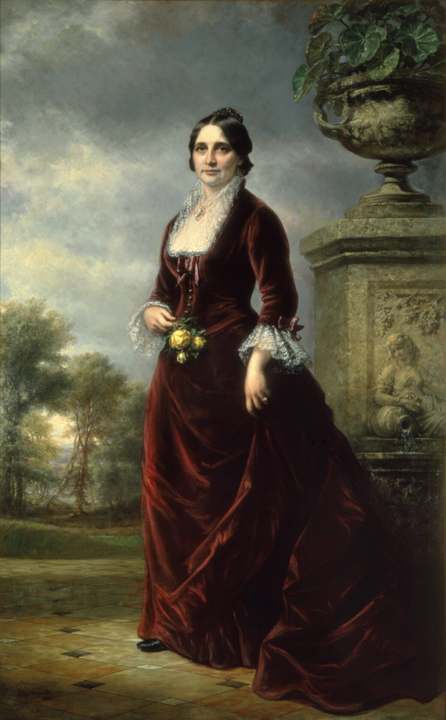
- 1881 Her portrait by Daniel Huntington, paid for by the Woman's Christian Temperance Union, was accepted into the White House collection in March, the first portrait of a president's wife painted for it. source
- 1881 Returned with the family to Spiegel Grove in Fremont at the end of the Hayes term. source
- 1880-1889 Served nine years as president of the Woman's Home Missionary Society of the Methodist Episcopal Church. source
- 1889 Died at her home in Fremont on June 25; the Ohio Republican State Convention, meeting in Columbus to nominate a governor, adopted a resolution of mourning the same day. source
- 1894 The Cuyahoga County Soldiers' and Sailors' Monument, with her life-size figure among the women of the Soldiers' Aid Society panel, was dedicated in Cleveland on July 4. source
- 1915 Her remains and her husband's were moved from Oakwood Cemetery in Fremont to a tomb at Spiegel Grove. source
- 1964 Spiegel Grove was designated a National Historic Landmark on January 29. source
- 1968 The Chillicothe Restoration Foundation saved her birthplace house from demolition; Ross County finished restoring it in 1985. source
Stories
Mother Lucy of the 23rd Ohio
When the Civil War began, Lucy Hayes backed her husband's decision to volunteer, and he joined the 23rd Ohio Volunteer Infantry as a major. Her brother, Dr. Joe Webb, was the regiment's surgeon, and Lucy, sometimes with her mother and children, spent long periods in its camps helping him with the sick and wounded and gathering supplies from Northern civilians. The men called her "Mother Lucy", and one of them, 20-year-old William McKinley, spent hours tending a campfire because she sat beside it. In 1862, told by mistake that her wounded husband was in a Washington hospital, she went there and then searched until she found him in Maryland. The couple's infant son Joseph died while the family was in camp in 1863.
A house that moved across Chillicothe
Lucy Webb was born in a four-room Federal vernacular house on East Fourth Street in Chillicothe, which her parents had rented since 1826. In 1883 the house was moved to the corner of West Sixth and South Walnut streets. By 1968 it faced demolition, and the Chillicothe Restoration Foundation saved it. It was listed on the National Register in 1973 as part of the Chillicothe Old Residential District, and the Ross County commissioners completed its restoration in 1985. Today it is the Lucy Hayes Heritage Center at 90 W. Sixth Street with an Ohio historical marker outside.
The convention stops for Mrs. Hayes
Lucy Hayes died at Spiegel Grove on June 25, 1889, after a stroke (then called apoplexy) that lasted four days. The Ohio Republican State Convention was meeting in Columbus that day to nominate a governor and state officers, and it suspended its business to put on record its respect for her and its sympathy for her family. Flags flew at half-mast in several cities, and crowds came to Fremont from across Ohio. Her sons and nephews carried her coffin out of the house. The 23rd Ohio, a Grand Army of the Republic post and the Sons of Veterans marched at the head of the procession, their bands playing her favourite music. A year later the Woman's Home Missionary Society, which she had led for nine years, published this account as a memorial.
Temperance's reluctant figurehead
When the Hayes White House stopped serving alcohol in 1877, the public gave Lucy Hayes the credit. Her grandfather Isaac Cook, a lifelong temperance man, had shaped her views. The Woman's Christian Temperance Union adopted her as a symbol, and "Lucy Hayes tea parties" became fashionable. In 1878, after claret punch was served during a Philadelphia visit, she was quoted as saying she had no wish to dictate to others. A Washington group called the Mrs. R. B. Hayes Temperance Society then denounced her as a fraud and dropped her name, while other temperance groups defended her. By 1881 the WCTU had raised money for her portrait by Daniel Huntington, which President Garfield accepted into the White House collection in March of that year.
Named for Lucy Webb Hayes
- Lucy Webb Hayes National Training School (Methodist; founded 1890; ancestor of Sibley Memorial Hospital) (Washington, D.C.) source
Sites to know
Homes, graves, markers, museums and monuments; the numbered ones are on the map.
- 1 Lucy Hayes Heritage Center (birthplace house) and Ohio Historical Marker 6-71, 90 W. Sixth Street
Chillicothe Ross County · source - 2 Spiegel Grove, Rutherford B. Hayes Presidential Library & Museums (NRHP 66000624, National Historic Landmark)
Hayes and Buckland avenues, Fremont Sandusky County · source - 3 Tomb of Rutherford B. and Lucy Webb Hayes, Spiegel Grove
Fremont Sandusky County · source - 4 Oakwood Cemetery (her first grave, 1889-1915)
Fremont Sandusky County · source - 5 Former Ohio Soldiers' and Sailors' Orphans' Home campus (now Athletes in Action and Legacy Christian Academy) (private)
Xenia Greene County · source - 6 Cuyahoga County Soldiers' and Sailors' Monument (her bronze figure in the Soldiers' Aid Society panel), Public Square
Cleveland Cuyahoga County · source
Ohio places
Where Lucy Webb Hayes was born, lived, worked and is remembered, with the ZIP code, town and county pages for each.
- Born: Chillicothe, Ross County Chillicothe · Ross County
- Connected: Chillicothe, Ross County Chillicothe · Ross County
- Connected: Delaware, Delaware County Delaware · Delaware County
- Connected: Cincinnati, Hamilton County Cincinnati · Hamilton County
- Connected: Columbus, Franklin County Columbus · Franklin County
- Connected: Xenia, Greene County Xenia · Greene County
- Connected: Spiegel Grove, Sandusky County Sandusky County
- Connected: Cleveland, Cuyahoga County Cleveland · Cuyahoga County
- Buried: Hayes tomb, Sandusky County Sandusky County
Myths and corrections
Things often said about Lucy Webb Hayes, and what the record shows.
Often said She was known as "Lemonade Lucy" while she was first lady.
The record The official White House biography says the nickname apparently came into use only after she had left the mansion. Wikipedia, citing the Hayes Presidential Center, says the first written uses date from the 20th century, after her death in 1889. source
Often said Lucy Hayes banned alcohol from the White House.
The record The public gave her the credit, but the Hayes Presidential Library says the decision was President Hayes's. He saw that the Republican Party needed temperance voters. The White House Historical Association describes it as a joint declaration after the wine served at the April 1877 dinner for the Russian grand dukes drew attention. source
Often said She was a member of the Woman's Christian Temperance Union or a national temperance league (as Find a Grave states).
The record She belonged to no temperance organization. She turned down the WCTU's efforts to make her a leader for fear of political fallout for her husband, and the White House Historical Association finds no concrete evidence that she formally joined the WCTU. She also privately opposed prohibition by law. source
Often said Lucy Hayes was the first woman ever called "First Lady".
The record The phrase was used of Martha Washington in an 1838 newspaper article and of Harriet Lane in Leslie's Illustrated Newspaper in 1860. What happened in 1877 is that Mary Clemmer Ames's inauguration coverage made it a national title for Lucy Hayes. source
Often said All eight Hayes children attended the 1877 silver-anniversary ceremony at the White House (Find a Grave).
The record Three of the eight children had died in infancy or early childhood: Joseph (1861-1863), George (1864-1866) and Manning (1873-1874). Only five grew up. source
Documents
Primary records: patents, letters, court and government files, nominations and old county histories, each at the archive that holds it.
- Lucy Webb Hayes, a Memorial Sketch, by Mrs. John Davis (Woman's Home Missionary Society) 1890, Internet Archive
- National Historic Landmark nomination: Spiegel Grove, the Rutherford B. Hayes estate (NRIS 66000624) 1984, National Park Service, NPGallery
- The Cleveland Gazette, June 29, 1889, p. 2: Ohio Republican State Convention resolution on the death of Mrs. Hayes 1889, Library of Congress, Chronicling America
- Austin Weekly Statesman, June 27, 1889, p. 1: "Noted Woman. Death of the Wife of Ex-President Hayes, at Fremont, Ohio" 1889, Library of Congress, Chronicling America
Pictures
Free to use with the credit shown. Select a picture for the original and its license.
Portrait of Mrs. Rutherford B. Hayes (Lucy Ware Webb)
Public domain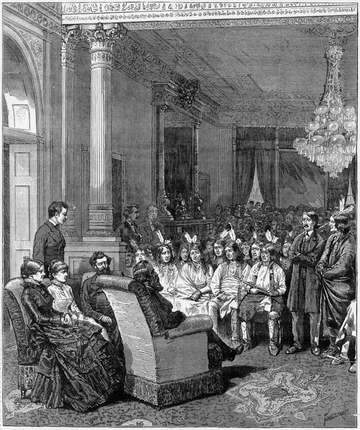
Rutherford B. Hayes and Carl Schurz, along with Mrs. Hayes with a lady friend, sit opposite a group of represe...
Public domain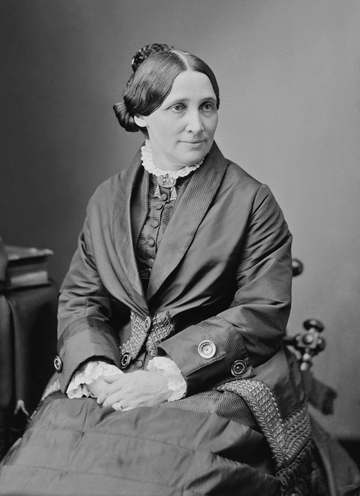
Lucy Webb Hayes. Library of Congress description: "Hayes, Mrs. RB"
Public domain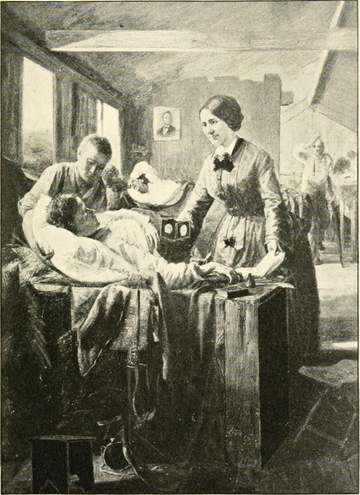
No known restrictions 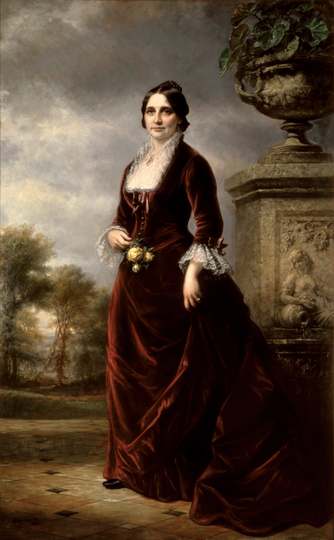
Official portrait of First Lady Lucy Webb Hayes
Public domain
Public domain 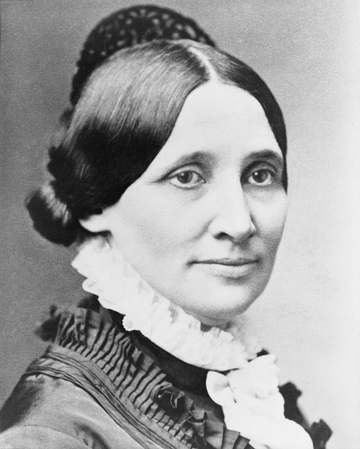
First Lady Lucy Hayes
Public domain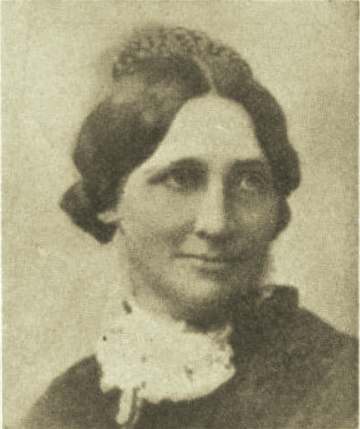
From a 1926 publication.
Public domain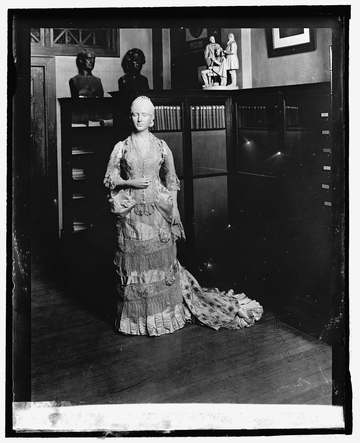
Title: Lucy Webb Hayes [inaugural dress from First Ladies Collection], 9/3/[24] Abstract/medium: National Phot...
Public domain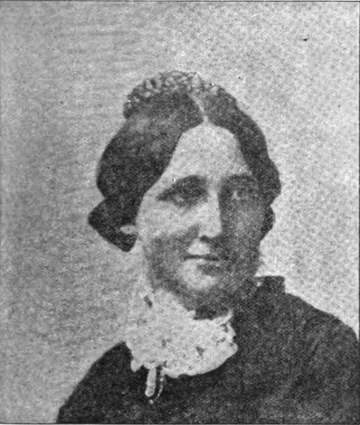
Caption: Lucy Webb Hayes, First president of the Woman's Home Missionary Society
Public domain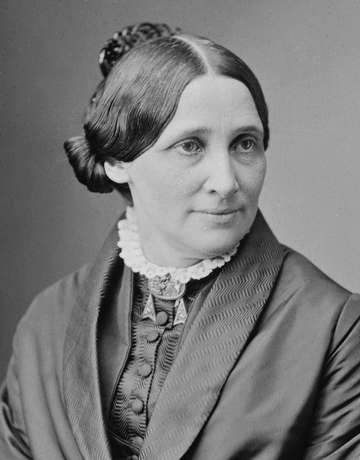
Lucy Webb Hayes. Library of Congress description: "Hayes, Mrs. RB"
Public domain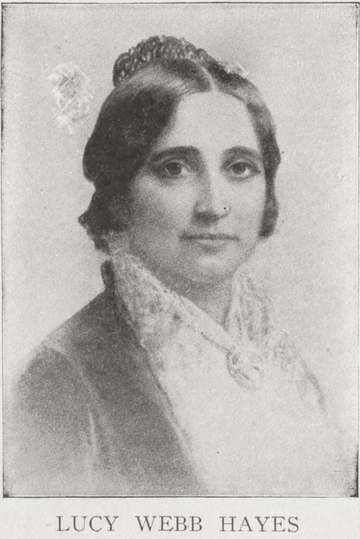
Taken from a 1909 book, the exact date of this image is unknown. Hayes died in 1889. Courtesy of Ohio Arch. an...
Public domain


Sources
Confidence. High: the main facts were confirmed in sources we opened.
- https://en.wikipedia.org/wiki/Lucy_Webb_Hayes
- https://www.rbhayes.org/hayes/lucy-webb-hayes/
- https://www.whitehousehistory.org/bios/lucy-hayes
- https://www.whitehousehistory.org/lucy-hayes-temperance-and-the-politics-of-the-white-house-dinner-table
- https://bidenwhitehouse.archives.gov/about-the-white-house/first-families/lucy-ware-webb-hayes/
- https://remarkableohio.org/marker/6-71-birthplace-of-lucy-ware-webb-hayes-lucy-webb-hayes-1831-1889/
- https://theclio.com/entry/19163
- https://www.findagrave.com/memorial/5196
- https://archive.org/details/memorialsketch00lucyrich
- https://www.loc.gov/resource/sn83035386/1889-06-29/ed-1/?sp=2
- https://www.loc.gov/resource/sn86088296/1889-06-27/ed-1/?sp=1
- https://en.wikipedia.org/wiki/Spiegel_Grove
- https://en.wikipedia.org/wiki/Oakwood_Cemetery_(Fremont,_Ohio)
- https://en.wikipedia.org/wiki/Ohio_Soldiers%27_and_Sailors%27_Orphans%27_Home
- https://en.wikipedia.org/wiki/Soldiers%27_and_Sailors%27_Monument_(Cleveland)
- https://en.wikipedia.org/wiki/First_Lady_of_the_United_States
- https://en.wikipedia.org/wiki/White_House_Easter_Egg_Roll
- https://en.wikipedia.org/wiki/Sibley_Memorial_Hospital
- https://npgallery.nps.gov/AssetDetail/NRIS/66000624
- https://www.loc.gov/item/96525596/
- https://www.loc.gov/item/2004678576/
- https://www.loc.gov/item/2010718343/
- https://commons.wikimedia.org/wiki/Category:Lucy_Webb_Hayes
Every link goes to the original source. Profile researched 2026-10-15.