How Kingston Township, Delaware County began
Kingston Township, five miles square on Delaware County's northeastern edge, was established on June 8, 1813, after John Phipps's brief 1807 settlement near Little Walnut Creek and the arrival of the Anway brothers the same year. In 1809 it drew a family that would become the township's best-known export: Dr. Daniel Rosecrans and his sons settled on Little Walnut Creek and then Taylor's Run, and a decade later his grandson William Starke Rosecrans was born there, later a Union major general, while another grandson, Sylvester, became the first Catholic bishop of Columbus. Settled by a mix of New England Puritans, Pennsylvania Dutch and Germans, and Virginians who formed a 'Virginia District' within the township, Kingston remained an agricultural community known, by its own telling, for temperance and sobriety; it remains rural today, its center still marked by the township hall on State Route 521.
Settled 1807, incorporated 1813-06-08.
Where the name comes from
No source consulted explains why the township was named Kingston. Wikipedia and the township's own site note only that it is the only Kingston Township in Ohio.
Before the town
James Wheeler, who taught Kingston Township's second schoolhouse near the Blue Church in the early nineteenth century, later entered the Methodist itinerant ministry and succeeded Rev. James B. Finley as missionary to the Wyandot, 'with whom he became very popular,' per the 1880 county history; when the Wyandot were removed to Kansas he continued the mission work among them until poor health forced his retirement. Separately, the same source records that a Native American man who had gone west with Rev. Mr. Chase and later returned died of pneumonia after bathing in the Big Walnut Creek in winter, and 'was buried in this cemetery by his white friends' — the joint Porter and Kingston Township cemetery near Stark's Corners — making it a documented Native burial site within the township. No source consulted names a Native village, mound or trail sited within Kingston's own boundaries. The land was opened to settlement by the 1795 Treaty of Greenville and by the later treaties that culminated in the Wyandot's 1843 removal from Ohio, the last Native nation to leave the state as a body. For the county's other documented Native sites see the county file.
Nations recorded here: Wyandot.
- Porter-Kingston Township Cemetery (near Stark's Corners) (burial) — shared Porter and Kingston Township cemetery near Stark's Corners, Kingston Township, burial recorded before 1880 (archive.org)
Timeline
- — The Treaty of Greenville cedes most of what becomes Ohio, including the future Kingston Township, to the United States.
- — John Phipps becomes the township's first settler, locating on or near Little Walnut Creek in the southeastern part of the township before returning East with his family; brothers Abraham and James Anway settle in the same area the same year.
- — James Stark, John Rosecrans and his four sons, Dr. Daniel Rosecrans and his four sons, and Joseph Patrick and his wife all settle in the township; the crossing of the Sunbury and Mansfield roads on Stark's farm becomes known as Stark's Corners.
- — Kingston Township is set off on June 8, five miles square, comprising four military sections totaling 16,000 acres.
- — William Starke Rosecrans is born on September 6 near Little Taylor Run in Kingston Township to Crandall Rosecrans and Jemima Hopkins; he later commands Union armies in the Civil War.
- — Moses Decker builds the first frame barn in the township for Elder Wigton, forbidding the customary whiskey at the raising; enough neighbors turn out anyway to complete the work.
- — William S. Rosecrans, by then a Union major general, wins the Tullahoma Campaign and is defeated at Chickamauga, ending his major field commands.
- — William S. Rosecrans dies on March 11 at Rancho Sausal Redondo, California; his remains are moved to Arlington National Cemetery in 1908.
Stories
The General and the Bishop
Dr. Daniel Rosecrans settled his family first on Little Walnut Creek and later on Taylor's Run in Kingston Township, and served as the township's first justice of the peace. His son Crandall married Jemima Hopkins, a relative of Declaration of Independence signer Stephen Hopkins, and their household on that farm produced two of Ohio's most notable nineteenth-century figures. William Starke Rosecrans, born there in 1819, became a West Point-trained Union major general who won the Battle of Stones River and the Tullahoma Campaign before a confused order led to defeat at Chickamauga in 1863, ending his combat command; he died in California in 1898 and is buried at Arlington National Cemetery. His brother Sylvester took a very different path, graduating West Point only to join the Roman Catholic Church, train in Rome, and become the first bishop of the newly created Diocese of Columbus, remembered for his executive ability, scholarship, and pulpit eloquence. Two brothers raised on the same Kingston Township farm ended up, one a general the Union nicknamed 'Old Rosy,' the other a bishop with authority over Catholics across central Ohio.
A Grave Far From Home
The shared Porter and Kingston Township cemetery near Stark's Corners holds an unusual burial recorded in the 1880 county history: a Native American man who had traveled west with the Rev. Mr. Chase and later returned to the area. One winter he went to the Big Walnut Creek and cut a hole in the ice to bathe; the cold proved too severe, and the illness it brought on settled in his lungs as pneumonia, from which he died. He was, the county history records, 'buried in this cemetery by his white friends' — a brief, unnamed life, but one specific enough to place a documented Native burial inside Kingston Township's own boundaries, in ground the township shares with neighboring Porter Township.
Missionary to the Wyandot
James Wheeler came to Kingston Township from the Wyoming Valley of Pennsylvania as a young man and took charge of the township's second schoolhouse, near the Blue Church, when he was about twenty-one. Raised Presbyterian, he joined the Methodist Episcopal Church, was licensed to preach, and eventually entered the itinerant ministry — where he succeeded the well-known missionary Rev. James B. Finley as missionary to the Wyandot, becoming, in the county historian's words, very popular among them. When the United States removed the Wyandot to Kansas under the 1842 treaty and its 1843 execution, Wheeler went on with the mission work rather than staying behind, continuing until his own failing health forced him onto the Methodist Church's superannuated list. He settled among friends in Bennington, Morrow County, still preaching when his health allowed, until his death.
No Liquor at the Raising
Barn raisings in early Kingston Township ran on whiskey by long custom; it was, the 1908 county history says, 'a never-failing custom' to serve liquor of some kind at all raisings. When carpenter and millwright Moses Decker built Elder Wigton's frame barn in 1827 — the township's first — he broke with that tradition and forbade any liquor on the grounds. Neighbors worried the ban would keep people away and leave the barn unbuilt. It did not: enough hands turned out anyway, and the raising succeeded. The barn itself is long gone, but Decker's stand is remembered as an early mark of the temperance and sobriety Kingston Township held onto as a point of local pride for decades afterward.
Photographs
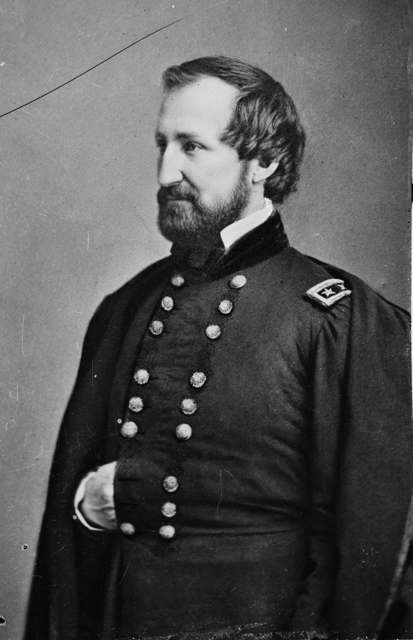
Photo: Mathew Brady, Brady-Handy Photograph Collection, Library of Congress, public domain · Wikimedia Commons
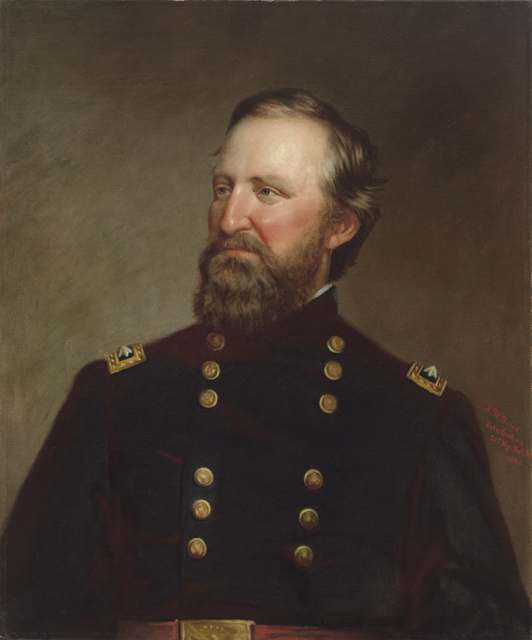
Photo: Samuel Woodson Price, public domain · Wikimedia Commons
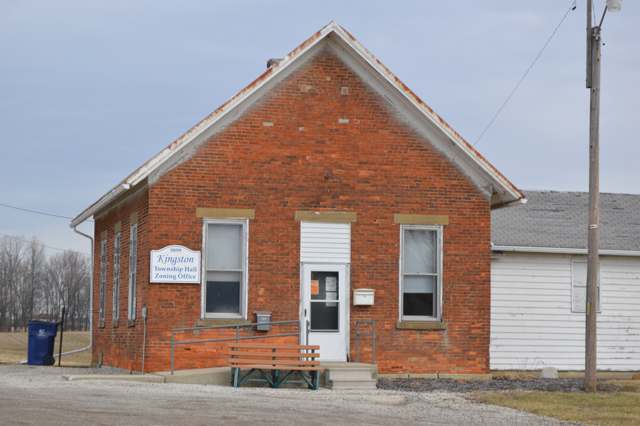
Photo: Nyttend, public domain · Wikimedia Commons
Local history sources: ohiogenealogyexpress.com · archive.org · kingstontwp.org · en.wikipedia.org · en.wikipedia.org · en.wikipedia.org · en.wikipedia.org · commons.wikimedia.org · commons.wikimedia.org · commons.wikimedia.org
Water
Alum Creek Reservoir intake at the Scott plant, Lewis Center Rd at Africa, Orange Township The water here
- Del-co Water Company, Inc.100% of residentsOlentangy River, O'Shaughnessy and Alum Creek reservoirs, plus Knox County wells
Its ZIP codes
Each ZIP code that touches Kingston Township, Delaware County, with the share of its residents who live here and the same headline figures as the ZIP page.
| ZIP | Share | Water | Radon | Home value | Schools | Flood |
|---|---|---|---|---|---|---|
| 43074 Sunbury | 15% | Alum Creek Reservoir intake at the Scott plant, Lewis Center Rd at Africa, Orange Township | 5.3 pCi/L average radon | Parcel list only | Big Walnut Local · 4 stars overall | 2.9% of residents in the 1% floodplain |
The county
Delaware County: 11 ZIP codes, 26 cities, villages and townships, 214,126 people.
Nearby places
Cite this page
Cite this page as:
Cracked Buckeye (Open Shower Co), "Kingston Township, Delaware County", https://crackedbuckeye.com/place/kingston-township-delaware-county/, built 2026-09-16, accessed [date].
Machine-readable: /api/place/kingston-township-delaware-county.json (open JSON, CC BY 4.0 for the compilation; the underlying records keep their own terms) · How to cite · Report a correction · Built 2026-09-16