How Jackson Township, Franklin County began
Jackson Township was organized in 1815 out of Franklin Township and the southwest corner of Pleasant Township, on flat, poorly drained Virginia Military District land that neighbors once called the "backwoods township." Hugh Grant Sr. and his family were its first settlers in 1804-05, followed by the Borror, Gantz and other Pennsylvania-German families who cleared and tile-drained the ground along the Scioto River. The village of Grove City grew up inside the township after 1852 and eventually incorporated separately, and today Jackson Township is both a large unincorporated area in its own right and the source territory for Grove City, Urbancrest and part of southwest Columbus.
Settled 1804-1805 (Hugh Grant Sr., wife Catharine Barr and three children, who squatted near the Scioto River before locating their purchased land); local historians credit Percival Adams with possibly settling as early as 1803, incorporated 1815, by Franklin County, carved from Franklin Township and the southwest part of Pleasant Township.
Where the name comes from
No source found states directly why the township was named Jackson. It was organized in 1815, the same year Andrew Jackson's Battle of New Orleans victory made him a national figure across Ohio, a period when many Ohio townships took his name, but no source confirms that link specifically for this township.
Before the town
The Southwest Franklin County Historical Society's history of the township states that "the Shawnee also had settlements near the river stretching from Columbus to Chillicothe," placing Shawnee presence along the Scioto River through this area. The 1880 county history adds only that "Indians were also numerous" when the township's woods were first settled, without naming a village or camp. No mound, earthwork or specific named site within Jackson Township turned up in the sources checked; broader Franklin County Native American context belongs in the county file.
Nations recorded here: Shawnee.
Timeline
- — Hugh Grant Sr., his wife Catharine Barr and their children arrive from Pittsburgh by way of Ross County, buying about 450 acres and squatting near the Scioto River until they can locate their purchase in the spring of 1805; local historian Dick Shover's research suggests Percival Adams may have settled nearby as early as 1803.
- — Hugh Grant Sr. is killed cutting a bee tree on the bank of the stream that becomes known as Grant Run; his widow raises the family alone, and his youngest child, born the same year, is by 1880 the oldest person still living who was born in the township.
- — Martin, Jacob II and Solomon Borror, grandsons of landowner Christopher Strader, move to the area and begin clearing the family's inherited land near what becomes Borror's Corners.
- — The first religious services in the Borror's Corners area are held in the home of William Miller, the beginning of the congregation that becomes the Scioto Chapel.
- — William Brown builds the first brick house in the area.
- — Jackson Township is organized from Franklin Township and the southwest corner of Pleasant Township; the same year, Borror's Corners opens the township's first school, a subscription school on Solomon Borror's land teaching twenty pupils from five families.
- — Seventeen central Ohio townships, Jackson among them, place bounties on squirrels after the animals damage corn crops; 19,660 squirrel skins are turned in on a single day.
- — Captain Adin G. Hibbs, recently arrived from Pennsylvania, plats the village of Shadeville around the Cottage Mills grist mill on the Scioto River.
- — Adam Gantz builds a brick farmhouse at the southwest corner of Hoover and Home roads, making his own brick and using a single felled tree as the central support beam.
- — The township's population is recorded at 784.
- — William Foster Breck opens Jackson Township's first post office, in the new village that grows into Grove City, ending 37 years without one; township population reaches about 1,550 by 1850.
- — The settlement of Ridpath, nicknamed Tuckyhuddle, springs up in southeast Jackson Township near Concord Church in anticipation of a branch railroad; the line's financing collapses before track is laid, and its merchants relocate to Grove City.
- — A construction crew for the Columbus, Cincinnati and Midland Railroad reaches Grove City, giving Jackson Township its first completed rail line.
- — The Gantz Homestead is listed on the National Register of Historic Places.
- — A propane tank explosion and fire at Ferrellgas on Broadway sends flames over 100 feet into the air, destroys Sue Ellen's Restaurant and damages nearby businesses; about 150 evacuated residents shelter at Grove City High School.
Stories
The death that named Grant Run
Hugh Grant Sr., a Maryland native who had married Catharine Barr in Pittsburgh, brought his family of five to Ohio in 1804, first to Ross County and then, in the spring of 1805, onto roughly 450 acres he had bought in what would become Jackson Township. Not yet sure exactly where his purchase lay, he squatted near the Scioto River rather than wait. He did not have long there: in the winter of 1806-07, cutting a bee tree on the bank of a nearby stream, he was killed, and that stream has been called Grant Run ever since. His widow took the family onto the land he had actually bought and raised their children there alone, dying in 1836. Their youngest child, Hugh Grant Jr., born June 30, 1807, the same winter his father died, still farmed the family land when the county history was written in 1880 and was, by then, the oldest person living who had been born in the township. He recalled that his father had once killed eighty-two deer in a single fall.
Borror's Corners
The land at what is now Ohio Routes 104 and 665 traces to a Revolutionary War surgeon, Dr. Robert Rose, whose original grant was bought in 1787 by Christopher Strader Sr. Strader's daughter Magdalene married Jacob Borror Jr., a Revolutionary War veteran who died of heat stroke in Virginia in 1804 while recovering a deer he had killed. In 1809 her three eldest sons, Martin, Jacob II and Solomon, moved to Franklin County to clear their grandfather's land, and two years later Magdalene followed with the rest of the family. When Strader died in 1825 he willed each of Magdalene's children 250 acres. Borror's Corners grew into the township's first real community, with a store, a blacksmith shop and carpentry shops, and its first school opened there in 1815, a subscription school on Solomon Borror's land where twenty children from the Borror, Miller, Seeds, Fishel and Fitzgerald families learned from teacher Asa Davis. Several Borror family homes, including the Absalom Borror House, still stand, and an Ohio historical marker was dedicated at Borror's Corners in 1996.
Cottage Mills and the mill that outgrew its own village
In 1832, Captain Adin G. Hibbs, newly arrived from Pennsylvania, platted a village he called Shadeville near where State Route 665 crosses the Scioto River, built around a large grist mill. The mill did such steady business that people addressed their mail to "Cottage Mills" rather than to Shadeville itself. An 1864 insurance policy on the mill, later found among family papers, covered $2,000 of wheat stock in a three-story grain tower and allowed the owners, Hughes and Rockefeller, to add up to $7,000 more coverage if needed. A feeder canal ran from the mill to Lockbourne, connecting it to the Ohio and Erie Canal, and farmers are remembered lining up wagons for more than half a mile waiting to cross the Scioto bridge to reach it. Shadeville itself is now within Hamilton Township, but its mill served Jackson Township farm families for decades.
Ridpath, the railroad that never came
About 1875, a small settlement called Ridpath, known locally as Tuckyhuddle, sprang up in southeast Jackson Township near Concord Church, at what is now London-Groveport and Hoover roads. It grew on the expectation that the Ohio Southern Railroad, building a branch line north from the Portsmouth area after 1881, would run a station and freight office through the spot. A country store, a blacksmith shop and a shoe shop opened, and for a time Ridpath even had its own post office. But construction stalled short of the settlement, between what are now Birch Bark Trail and Stargrass Avenue, and financial trouble kept track from ever reaching it. When the rail line's prospects collapsed, Ridpath's merchants packed up for Grove City and other parts of the township, and today only traces of the old railroad grade mark where the town was supposed to be.
The Gantz Homestead
Adam Johan Gantz was born in 1805 in Washington County, Pennsylvania, and came to Franklin County as a boy after his father bought 200 acres here in 1817. In 1830 he married sixteen-year-old Catherine Pennix, and around 1832 he bought 100 acres across Hoover Road and built a brick farmhouse practically from the ground up: clay dug and cast into bricks, sun-dried and burned in a scove kiln on site, plaster made from local lime and animal hair, and a single felled tree serving as the house's central support beam. The house stayed in Gantz hands for generations, down to Blodwen Jones Gantz, widow of Adam's grandson William B. Gantz, for whom a circle in the surrounding park is named. In 1973 the family donated the land around the homestead to Grove City for a public park, and the house itself was added to the National Register of Historic Places on June 20, 1979.
The Ferrellgas fire
On the afternoon of July 8, 1996, a 33-gallon propane tank caught fire at the Ferrellgas facility on Broadway, just south of Grove City's town center, and the flames spread to nearby tanks in a chain reaction that sent explosions and fire more than 100 feet into the air, visible for miles. Jackson Township Fire Chief Danny Ashcraft ordered an evacuation and had crews pour water on the site rather than attempt to fight the main blaze directly, worried that any of the surrounding 30,000-gallon propane tanks might rupture. The adjacent Sue Ellen's Restaurant burned to the ground as a secondary fire, and Columbus Fire and neighboring departments answered a four-alarm mutual-aid call. Grove City High School opened as a shelter for the roughly 150 residents evacuated from the area, fed that evening by donated pizza, hamburgers and roast beef, and by 7 p.m. the all-clear let everyone go home. A second, unrelated fire at a Bonded Oil gas station on North Broadway the same afternoon briefly raised fears of a connection to the Ferrellgas blaze before being ruled coincidental.
Photographs
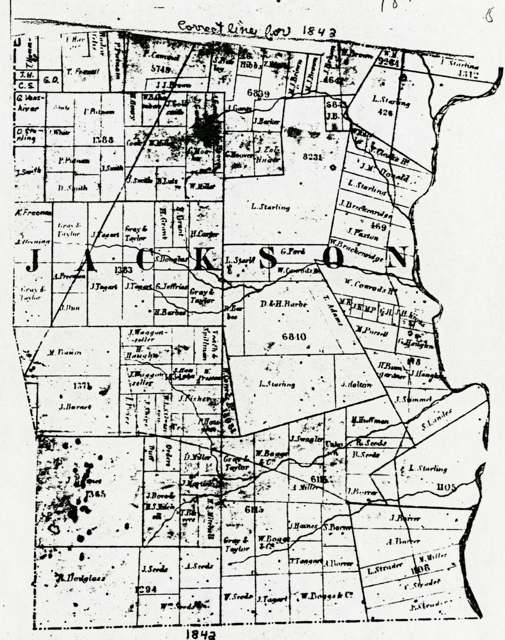
Photo: Columbus Metropolitan Library, via Digital Public Library of America / Ohio Digital Network, public domain · Wikimedia Commons
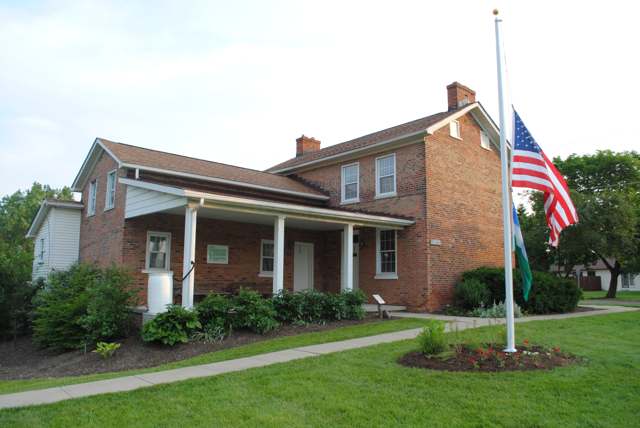
Photo: Wdzinc, via Wikimedia Commons, CC BY-SA 3.0 · Wikimedia Commons
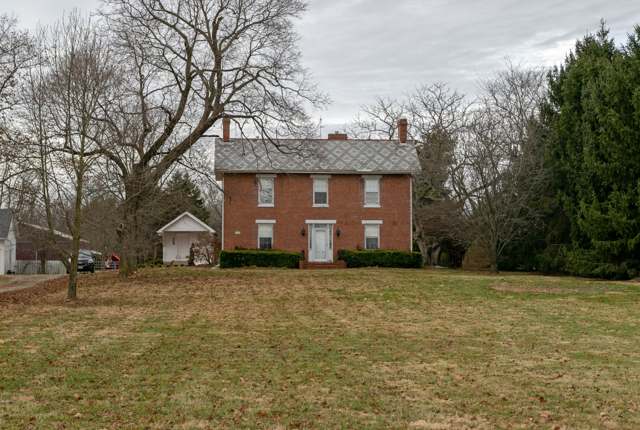
Photo: Pythaglio (Christopher Riley), via Wikimedia Commons, CC BY-SA 2.0 · Wikimedia Commons
Local history sources: swfchs.org · archive.org · en.wikipedia.org · en.wikipedia.org · en.wikipedia.org · commons.wikimedia.org · commons.wikimedia.org · commons.wikimedia.org
Water
South Well Field wells in Scioto valley sand and gravel, off Parsons Ave near Shadeville and Lockbourne The water here
- Columbus Public Water System97% of residentsScioto River (Griggs & O'Shaughnessy), Hoover Reservoir on Big Walnut Ck, plus wells
- Caravan Village MHP1% of residentsGroundwater wells (2 wells)
- Oak Hills Mobile Home Park1% of residentsGroundwater wells (2 wells)
- Commercial Point Village0% of residentsGroundwater wells (6 wells)
- Monterey Care Center0% of residentsScioto River (Griggs & O'Shaughnessy), Hoover Reservoir on Big Walnut Ck, plus wells
- Village of Orient0% of residentsGroundwater wells (7 wells)
- Lockbourne Village0% of residentsScioto River (Griggs & O'Shaughnessy), Hoover Reservoir on Big Walnut Ck, plus wells
- Darbyville Village0% of residentsGroundwater wells (3 wells)
- Johnson Mobile Home Park0% of residentsGroundwater wells (2 wells)
- Obetz Satellite 60% of residentsScioto River (Griggs & O'Shaughnessy), Hoover Reservoir on Big Walnut Ck, plus wells
- Obetz Village0% of residentsGroundwater wells (2 wells)
- Timberlake Water System0% of residentsGroundwater wells (2 wells)
Its ZIP codes
Each ZIP code that touches Jackson Township, Franklin County, with the share of its residents who live here and the same headline figures as the ZIP page.
| ZIP | Share | Water | Radon | Home value | Schools | Flood |
|---|---|---|---|---|---|---|
| 43137 Harrison Township and Lockbourne | 11% | South Well Field wells in Scioto valley sand and gravel, off Parsons Ave near Shadeville and Lockbourne | 9.5 pCi/L average radon | Median year built 1978 | Teays Valley Local · 4 stars overall | 9.3% of residents in the 1% floodplain |
| 43123 Grove City | 5% | Scioto River intake at the plant on Dublin Rd, a few miles below Griggs Dam, opposite Marble Cliff | 6.9 pCi/L average radon | Median year built 1995 | South-Western City · 3 stars overall | 3.0% of residents in the 1% floodplain |
| 43146 Scioto Township and Orient | 4% | Mostly private wells | 8.0 pCi/L average radon | Median year built 1988 | Teays Valley Local · 4 stars overall | 1.4% of residents in the 1% floodplain |
The county
Franklin County: 45 ZIP codes, 42 cities, villages and townships, 1,356,733 people.
Nearby places
Cite this page
Cite this page as:
Cracked Buckeye (Open Shower Co), "Jackson Township, Franklin County", https://crackedbuckeye.com/place/jackson-township-franklin-county/, built 2026-09-16, accessed [date].
Machine-readable: /api/place/jackson-township-franklin-county.json (open JSON, CC BY 4.0 for the compilation; the underlying records keep their own terms) · How to cite · Report a correction · Built 2026-09-16