How Urbancrest began
Urbancrest began in 1889 when Samuel and Ella Quinichett, an African American couple, built the first home at what is now First Avenue and John Cooley Drive, and the roughly 100-acre village they helped found was platted for about 30 residents in November 1890. It grew slowly as a small, historically Black community southwest of Columbus, gaining its own government only in 1948, and in 1971-72 it elected Ellen Walker Craig-Jones, believed to be the first African American woman elected mayor of a municipality anywhere in the United States by popular vote. The village remains small (just over 1,000 residents) and now racially mixed, bordered by Columbus and Grove City and served by the South-Western City Schools district.
Settled 1889, platted 1890-11-01, incorporated 1948, by Samuel and Ella Quinichett, the first African American family to settle here (1889); the village was platted the next year and incorporated decades later, with Eugene Seabury as first appointed mayor and Hannibal Johnson as first elected mayor.
Where the name comes from
Neither the village's own history page nor the other sources checked for this entry explain why the name "Urbancrest" was chosen for the village platted in 1890; it appears to combine "urban" with "crest." This should be treated as unresolved rather than invented.
Before the town
No Native American village, mound, earthwork, or trail specific to Urbancrest itself turned up in the sources checked for this entry. The land lies within the area the Treaty of Greenville (August 3, 1795) ceded to the United States. Broader Native history for the county is covered in the Franklin County file.
Nations recorded here: Wyandot, Shawnee, Lenape (Delaware), Miami.
Timeline
- — Samuel and Ella Quinichett, the first African American family to settle here, build the first home at what is now First Avenue and John Cooley Drive.
- — The settlement is platted as a village on November 1, covering about 99.94 acres with roughly 30 residents.
- — Worship services that began in the Quinichett home lead to the founding of Union Baptist Church.
- — Resident Lonnie Carmen, a mechanic and inventor, builds his own airplane using a salvaged motorcycle engine.
- — The village incorporates; Eugene Seabury serves as its first appointed mayor and Hannibal Johnson becomes its first elected mayor.
- — Urbancrest secures municipal water and sewer service, an improvement resident Ellen Walker Craig-Jones had pushed for, with help from U.S. Representative Chalmers P. Wylie.
- — Ellen Walker Craig-Jones is elected mayor of Urbancrest (the Remarkable Ohio marker and the Southwest Franklin County Historical Society instead date her election and 1972-1975 term to 1972, winning by 11 votes); she becomes, by most accounts, the first African American woman elected mayor of a municipality in the United States by popular vote.
- — The Ohio Division of Community Development publishes "Operation Urbancrest," a program of strategies and community-development alternatives prepared for the village.
- — As mayor, Craig-Jones oversees street rebuilding, new streetlights, and street signage for the village.
- — The Rev. Dr. Nelson Wesley Trout, identified by the local historical society as a village resident, is elected bishop of the South Pacific District of the American Lutheran Church, becoming the first African American bishop in its lineage.
- — Elder Joseph L. Barnes Sr. serves as mayor, the longest mayoral tenure in the village's history to date.
Stories
A village founded by the Quinichetts
In 1889, Samuel and Ella Quinichett built a home at the corner of First Avenue and what was then called Popular Street, now John Cooley Drive, becoming the first African American family to settle on the land that became Urbancrest. Other families followed, and the settlement was platted as a village of about 100 acres in November 1890, with roughly 30 residents. Three years later, worship services the Quinichetts hosted in their own home grew into Union Baptist Church, the community's first congregation. The village stayed small and largely self-governed by its residents for decades before formally incorporating in 1948, when Eugene Seabury became its first appointed mayor and Hannibal Johnson its first elected one.
Ellen Walker Craig-Jones and the water fight
Long before she held office, Ellen Walker Craig-Jones pushed Urbancrest's leaders to bring municipal water and sewer lines to the village, an effort that succeeded in 1970 with help from U.S. Representative Chalmers P. Wylie. The next year, voters elected her mayor by a margin of just eleven votes, making her, by most accounts, the first African American woman elected mayor of a municipality anywhere in the United States by popular vote. As mayor from 1972 to 1975, she kept pressing for basic infrastructure the village still lacked, overseeing street rebuilding, new streetlights, and street signage. A state historical marker in the village now carries her name.
The home-built airplane
Not every Urbancrest story is about politics. In 1926, resident Lonnie Carmen, a mechanic and inventor, built his own airplane using a salvaged motorcycle engine, a homemade feat of the sort that turns up in small-town histories more often than outsiders expect. The Southwest Franklin County Historical Society still counts Carmen among the village's notable residents alongside professional athletes and a Lutheran bishop, a reminder that a village of a few hundred people could produce an unusually wide range of accomplishment.
A state study of a small village
In 1972, not long after Ellen Walker Craig-Jones took office, the Ohio Division of Community Development prepared "Operation Urbancrest," a technical report laying out strategies and program alternatives for the village's development. The very existence of the study, now preserved as a scanned document through the Columbus Metropolitan Library and the Digital Public Library of America, shows that state officials saw Urbancrest's mid-century struggle for paved streets, streetlights, and reliable water and sewer service as a case worth studying and addressing directly.
Photographs
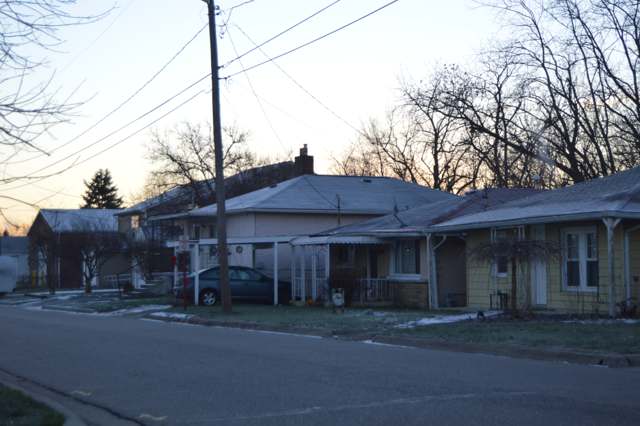
Photo: Photograph by Nyttend, CC0 · Wikimedia Commons
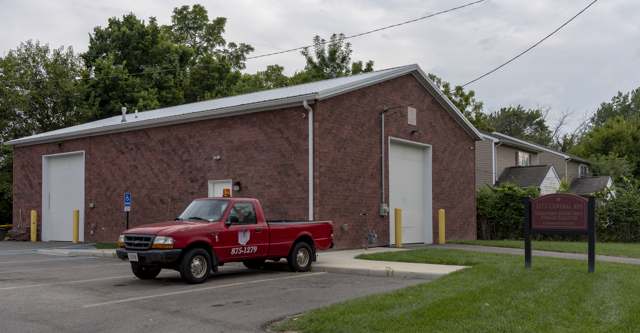
Photo: Photograph by Sixflashphoto, CC BY-SA 4.0 · Wikimedia Commons
Local history sources: en.wikipedia.org · villageofurbancrestoh.us · swfchs.org · remarkableohio.org · en.wikipedia.org · en.wikipedia.org · en.wikipedia.org · en.wikipedia.org · commons.wikimedia.org · commons.wikimedia.org · commons.wikimedia.org
Water
Scioto River intake at the plant on Dublin Rd, a few miles below Griggs Dam, opposite Marble Cliff The water here
- Columbus Public Water System99% of residentsScioto River (Griggs & O'Shaughnessy), Hoover Reservoir on Big Walnut Ck, plus wells
- Oak Hills Mobile Home Park1% of residentsGroundwater wells (2 wells)
- Monterey Care Center0% of residentsScioto River (Griggs & O'Shaughnessy), Hoover Reservoir on Big Walnut Ck, plus wells
Its ZIP codes
Each ZIP code that touches Urbancrest, with the share of its residents who live here and the same headline figures as the ZIP page.
| ZIP | Share | Water | Radon | Home value | Schools | Flood |
|---|---|---|---|---|---|---|
| 43123 Grove City | 2% | Scioto River intake at the plant on Dublin Rd, a few miles below Griggs Dam, opposite Marble Cliff | 6.9 pCi/L average radon | Median year built 1995 | South-Western City · 3 stars overall | 3.0% of residents in the 1% floodplain |
The county
Franklin County: 45 ZIP codes, 42 cities, villages and townships, 1,356,733 people.
Nearby places
Cite this page
Cite this page as:
Cracked Buckeye (Open Shower Co), "Urbancrest, Franklin County", https://crackedbuckeye.com/place/urbancrest/, built 2026-09-16, accessed [date].
Machine-readable: /api/place/urbancrest.json (open JSON, CC BY 4.0 for the compilation; the underlying records keep their own terms) · How to cite · Report a correction · Built 2026-09-16