Water system
Monterey Care Center
EPA ID OH2570736 · Franklin County · 130 people served
Monterey Care Center buys its water from Columbus Public Water System.
The system's record
- Aquifer
- Scioto River Valley sand and gravel (buried valley) aquifer
- Water bodies
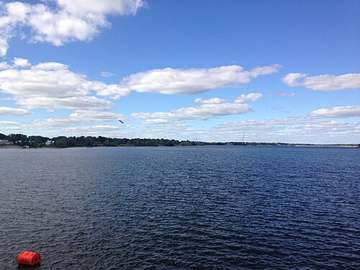
- Scioto River, Griggs Reservoir, O'Shaughnessy Reservoir, Hoover Reservoir, Big Walnut Creek, Alum Creek
- Raw intakes
- Dublin Rd Scioto River
Hap Cremean Big Walnut
Alum Creek Hoover, Hap Cremean
Doutt Reservoir Scioto - Active wells
- 6
- Serves
- 1,305,946 people · Franklin County
- EPA ID
- OH2504412
About this area's water Columbus Public Water System
Did you know
- Hoover Reservoir is named for brothers Charles P. and Clarence B. Hoover for their careers with the Columbus waterworks - no relation to President Hoover or the Nevada dam.
- Columbus softens its water with lime and soda ash, a step most big Ohio surface-water systems skip, so the finished water is noticeably less hard than the raw river.
- The Dublin Road plant runs anion exchange, essentially a water softener for nitrate, to handle spring farm runoff in the Scioto River.
- The new Home Road plant will sit on the grounds of a shuttered juvenile correctional facility in Delaware County.
History5
- 1871Columbus's first water supply system, a well and pump station, is built at the confluence of the Scioto and Olentangy rivers.
- 1908Scioto River Purification Plant and Griggs Reservoir are completed; the plant was replaced in 1975 by the Dublin Road Water Plant.
- 1953Hoover Reservoir is built on Big Walnut Creek (3,024 acres, 20.8 billion gal) per the city timeline; the dam was dedicated 1955 and opened 1958.
- 1956Big Walnut Water Treatment Plant on Morse Road is completed; it was renamed the Hap Cremean Water Plant in 1988.
- 2025Construction begins on the Home Road (fourth) Water Plant in Delaware County, on the site of the former Scioto Juvenile Correctional Facility.
Treatment & pressure
How it is treated
Screening, alum coagulation, flocculation and sedimentation, lime/soda-ash softening and second sedimentation, CO2 pH adjustment, ozone, biologically active GAC filters, UV, then chlorine, fluoride and a corrosion inhibitor. Parsons Ave. groundwater skips screening, ozone and UV.
Water pressure
Not published as a citywide average. Columbus maintains multiple pressure districts fed by elevated tanks and pump stations across a large multi-county service area.
What it costs
$5.95 per 1,000 gallons
Effective Jan. 1, 2026, inside-city residential: $4.448/CCF first 5 CCF/mo, $4.932/CCF above, plus $12.45/mo service charge (5/8in meter). 1 CCF = 748 gal.
Water quality & impurities7
| Contaminant | Level | Limit | Year |
|---|---|---|---|
| TTHM Highest of the three plants (Hap Cremean); Dublin Road 58.4. Below MCL. | 64.1 ppb | 80 | 2025 |
| HAA5 Highest of the three plants (Hap Cremean); Dublin Road 22.4. Below MCL. | 37 ppb | 60 | 2025 |
| Nitrate Dublin Road plant; seasonal Scioto River farm runoff. Anion exchange keeps it under the MCL. | 6.3 ppm | 10 | 2025 |
| Bromate Dublin Road ozonation byproduct; individual results ranged ND-13, annual average compliant. | 2 ppb | 10 | 2025 |
| Atrazine Dublin Road; agricultural herbicide runoff, range ND-0.84. | 0.2 ppb | 3 | 2025 |
| Lead (90th percentile) 0 of 50 sites above the action level. | 1.3 ppb | 15 | 2023 |
| Turbidity Highest 2025 result; 97-100% of monthly samples met the 0.3 NTU standard. | 0.68 NTU | 1 (TT) | 2025 |
EPA compliance record · Columbus Public Water System (treats the water)
Lead at the tap: 90th-percentile result 1.2 ppb in 2023 (action level 15 ppb).
EPA health-based violations since 2015:
- 2016Nitrate · above the legal limit on average · measured 10.5 MG/L (limit 10 MG/L) · returned to compliance
Projects & plans5
Recent and current work
- Hap Cremean and Dublin Road ozone / biologically active filtration · completed
Both surface plants now use ozone plus biologically active GAC filters and UV for taste, odor and byproduct control. - Home Road (Fourth) Water Plant - construction start · 2025 · under construction
Site work and early construction in Delaware County on the former Scioto Juvenile Correctional Facility site. - Lead Service Line Replacement Program · 2024-present · under construction
City program established in 2024 to remove all public and private lead and galvanized service lines. - Blueprint Columbus · 2015-present · under construction
Ohio EPA approved Dec. 1, 2015; green infrastructure and lining to cut sanitary sewer overflows.
Planned or needed
- Home Road (Fourth) Water Treatment Plant · $1600 million · planned
48 MGD initially, expandable to 80 MGD; billed as the city's largest water infrastructure investment.
Supply stress
Central Ohio's rapid growth is the driver behind the $1.6B fourth plant. The Scioto River sees seasonal nitrate spikes from farm runoff - 6.3 ppm at Dublin Road in 2025 against a 10 ppm MCL - so the plant runs anion exchange to strip nitrate. PFAS monitoring starts 2027, compliance 2029.
Sewers
Sanitary
The City of Columbus Division of Sewerage and Drainage runs two wastewater plants, Jackson Pike and Southerly, which together treated an average of 181 million gallons per day in 2023. Blueprint Columbus, approved by Ohio EPA on Dec. 1, 2015, is the city's Clean Water Act plan for cutting sanitary sewer overflows.
Storm
Older parts of Columbus have combined sanitary/storm sewers. Blueprint Columbus leans on green infrastructure, sewer lining and redirected downspouts to keep rain out of the sanitary system rather than building storage alone.
Sourcesverified
Compiled from the utility's own reports and public records, then independently re-checked against primary sources.
Present in 1 ZIP code
Serves
No ZIP code has Monterey Care Center on record as its main water supplier.
Also present in 1 more ZIP code
- 43123 · Grove City0% of residents
Population-weighted resident shares; a ZIP code can have more than one system on record. Recomputed from each ZIP's own system list, not from the map's cached footprint.
Buys from · Sells to
Monterey Care Center buys its water from Columbus Public Water System.
No other system is on record buying water from Monterey Care Center.
What the records show about Monterey Care Center
Who runs it
EPA's record says Monterey Care Center has 1 service connection and serves 130 people.
EPA classes it as a community water system, one that serves the same residents all year.
Its office telephone on EPA's record is 614-875-7700.
Source: EPA Safe Drinking Water Information System (SDWIS), water system record.
How the water is treated
Monterey Care Center buys water that Columbus Public Water System treats first, so the steps that count are the seller's. EPA's treatment table registers these steps for Columbus Public Water System: corrosion control, coagulation and settling, chlorine disinfection, iron and manganese removal, fluoridation, ion-exchange softening, lime softening, ozone, powdered activated carbon, sand or media filtration, and ultraviolet disinfection.
The list is what each system registered with EPA for treatment plants EPA still shows as active, and it can lag a plant upgrade.
Source: EPA Safe Drinking Water Information System (SDWIS) treatment table (EPA Envirofacts, pulled September 2026).
Lead and copper at the tap
EPA's file holds no lead and copper tap results for Monterey Care Center.
Every water system has to inventory its service lines, the pipes from the main to each building. In the inventory Monterey Care Center sent EPA, 1 line is counted.
| Material | Lines |
|---|---|
| Lead | 0 |
| Galvanized, needing replacement | 0 |
| Unknown material | 0 |
| Not lead | 1 |
| All lines | 1 |
Systems sample taps in the homes most likely to have lead pipes or solder. The 90th-percentile result is the level nine in ten of the sampled homes were at or below. Lead comes mostly from service lines and house plumbing, not the source water, so a low result for the system does not clear an old house.
EPA's dashboard status for this inventory: reported all required service line types.
Source: EPA Safe Drinking Water Information System (SDWIS) lead and copper 90th-percentile results (EPA Envirofacts), sampling periods ending 2016 or later; EPA's service line inventory dashboard, Ohio's 2026 Q2 submission.
PFAS
The water Monterey Care Center buys is treated by Columbus Public Water System, so the results below are Columbus Public Water System's.
EPA's fifth national round of testing (UCMR 5) took 12 samples of the water entering the pipes of Columbus Public Water System in 2024 and measured 29 PFAS.
The highest PFOA or PFOS result, 5.3 ng/L, is at or above the federal limit of 4 ng/L that EPA set in 2024. Systems have until 2029 to comply, and in May 2026 EPA proposed letting systems apply for two more years. One sample over the limit is not a violation: compliance is judged on a running annual average.
The highest PFAS results were PFHxA 18.2 ng/L, PFBA 17 ng/L, and PFPeA 14.2 ng/L.
The highest PFOA or PFOS result was measured at Dublin Road WTP.
The system reported potential PFAS sources near its supply.
Ohio EPA's own statewide sampling tested 3 plants of Columbus Public Water System (latest sample October 2020). Not one of the six PFAS tested (PFOA, PFOS, PFHxS, PFNA, GenX and PFBS) was detected.
| Compound | Highest result | Federal limit |
|---|---|---|
| PFOA | 5.3 ng/L | 4 ng/L |
| PFOS | not detected | 4 ng/L |
PFAS are the 'forever chemicals' from firefighting foam, plating shops and non-stick coatings. Results are for water leaving the plant, not your tap.
Source: EPA UCMR 5 occurrence data (final release, August 2026); Ohio EPA statewide PFAS sampling, 2019 to 2021, and its sampling status map.
Nitrate, arsenic and radioactivity
The water Monterey Care Center buys is treated by Columbus Public Water System, so the results below are Columbus Public Water System's.
Nitrate: the highest of 232 samples was 12.5 mg/L (as nitrogen) in 2015; in 2019, the last year sampled, the highest was 3.6 mg/L. 12 of the samples went over the limit of 10 mg/L. Nitrate above 10 is unsafe for infants.
Arsenic was not detected in 18 samples (limit 10 µg/L).
| Contaminant | Samples | Highest result | Limit | Samples over limit |
|---|---|---|---|---|
| Nitrate (as nitrogen) | 232 | 12.5 mg/L | 10 mg/L | 12 |
| Arsenic | 18 | not detected | 10 µg/L | 0 |
Measured in finished water: at the plant's entry points and in the distribution system; raw well and intake samples are left out. Non-detects count as zero.
EPA's file lumps the entry-point samples of all 3 plants of Columbus Public Water System together, so a result over a limit may come from a plant that serves a different part of town.
Source: EPA Six-Year Review 4 compliance monitoring data, 2012 to 2019, finished water of Columbus Public Water System.
Solvents and fuels
The water Monterey Care Center buys is treated by Columbus Public Water System, so the results below are Columbus Public Water System's.
EPA's file holds results for all six solvent and fuel compounds it checked. Benzene, carbon tetrachloride, 1,2-dichloroethane, trichloroethylene, tetrachloroethylene, and vinyl chloride were not detected in 18 samples each.
| Compound | Limit | Samples | Detected in | Highest result | Samples over limit |
|---|---|---|---|---|---|
| Benzene | 5 µg/L | 18 | 0 of 18 | not detected | 0 |
| Carbon tetrachloride | 5 µg/L | 18 | 0 of 18 | not detected | 0 |
| 1,2-dichloroethane | 5 µg/L | 18 | 0 of 18 | not detected | 0 |
| Trichloroethylene (TCE) | 5 µg/L | 18 | 0 of 18 | not detected | 0 |
| Tetrachloroethylene (PCE) | 5 µg/L | 18 | 0 of 18 | not detected | 0 |
| Vinyl chloride | 2 µg/L | 18 | 0 of 18 | not detected | 0 |
"Not detected" means the lab's result was below what its method can measure, not that the compound is absent. Non-detects count as zero in the highest-result column.
Source: EPA Six-Year Review 4 compliance monitoring data, 2012 to 2019, finished water of Columbus Public Water System.
Farm chemicals and metals
The water Monterey Care Center buys is treated by Columbus Public Water System, so the results below are Columbus Public Water System's.
EPA's file holds results for all nine herbicides and metals it checked. Detected: atrazine in 21 of 57 samples, highest 2.8 µg/L (limit 3); alachlor in 6 of 57 samples, highest 0.37 µg/L (limit 2); barium in 11 of 18 samples, highest 17 µg/L (limit 2,000). Not detected: 2,4-D in 2 samples, chromium in 18 samples, cadmium in 18 samples, mercury in 18 samples, selenium in 18 samples, thallium in 18 samples.
| Substance | Kind | Limit | Samples | Detected in | Highest result | Samples over limit |
|---|---|---|---|---|---|---|
| Atrazine | Farm chemical | 3 µg/L | 57 | 21 of 57 | 2.8 µg/L | 0 |
| Alachlor | Farm chemical | 2 µg/L | 57 | 6 of 57 | 0.37 µg/L | 0 |
| 2,4-D | Farm chemical | 70 µg/L | 2 | 0 of 2 | not detected | 0 |
| Chromium | Metal | 100 µg/L | 18 | 0 of 18 | not detected | 0 |
| Cadmium | Metal | 5 µg/L | 18 | 0 of 18 | not detected | 0 |
| Barium | Metal | 2,000 µg/L | 18 | 11 of 18 | 17 µg/L | 0 |
| Mercury | Metal | 2 µg/L | 18 | 0 of 18 | not detected | 0 |
| Selenium | Metal | 50 µg/L | 18 | 0 of 18 | not detected | 0 |
| Thallium | Metal | 2 µg/L | 18 | 0 of 18 | not detected | 0 |
Non-detects count as zero in the highest-result column.
EPA's file lumps the entry-point samples of all 3 plants of Columbus Public Water System together, so a result over a limit may come from a plant that serves a different part of town.
Source: EPA Six-Year Review 4 compliance monitoring data, 2012 to 2019, finished water of Columbus Public Water System.
Fluoride
The Ohio Department of Health's report to the CDC (My Water's Fluoride) says Monterey Care Center buys its water from Columbus Public Water System, a system that adjusts the fluoride level to the recommended level for preventing tooth decay.
EPA's treatment table lists fluoridation among the steps at Columbus Public Water System, which treats the water Monterey Care Center buys.
Measured fluoride: 0.97 mg/L on average leaving the plants of Columbus Public Water System, which supplies Monterey Care Center, in 2019 (in the range dentists aim for); samples ran from 0.82 to 1.01 mg/L across 18 samples in 2012 to 2019.
The recommended level for preventing tooth decay is 0.7 mg/L; the federal limit is 4 mg/L. The treatment list is what each system registered with EPA and can lag a plant upgrade.
Source: CDC My Water's Fluoride (fluoridation status as reported by the Ohio Department of Health, fetched September 2026); EPA Safe Drinking Water Information System (SDWIS) treatment table; EPA Six-Year Review 4 compliance monitoring data, 2012 to 2019, entry-point fluoride samples.
Lithium
Lithium was not detected in 10 UCMR 5 samples at Columbus Public Water System, which supplies Monterey Care Center, last sampled in 2024 (the method reports from 9 µg/L).
Lithium is not regulated. EPA's draft health reference level is 10 µg/L, and it occurs naturally in deep groundwater, so well systems in the northwest run highest.
Source: EPA UCMR 5 occurrence data (final release, August 2026), samples from 2023 to 2025.
Algal toxins
The water Monterey Care Center buys is treated by Columbus Public Water System, so the results below are Columbus Public Water System's.
Ohio EPA tests for microcystin, a toxin that harmful algal blooms can release, in raw water at the intake and in treated water.
At the intake, microcystin was detected 18 times in 802 raw-water samples, across 6 bloom seasons (2016 to 2026); the highest raw-water result was 0.7 µg/L on October 31, 2016. The highest raw-water result since 2024 was 0.29 µg/L.
In treated water, microcystin was detected 2 times; the highest result was 0.26 µg/L (October 2025), below the 0.3 µg/L advisory level.
In all, 1,604 samples from 2016 to 2026, the latest on August 24, 2026.
| Water | Samples | Detections | Highest result |
|---|---|---|---|
| Raw water, at the intake | 802 | 18 | 0.7 µg/L |
| Treated water | 802 | 2 | 0.26 µg/L |
The ten-day advisory levels for treated water are 0.3 µg/L for children under six and 1.6 µg/L for everyone else. Any detection at the intake triggers more frequent testing until two clean weeks.
Source: Ohio EPA public water system harmful algal bloom monitoring, 2016 to present (HAB data, fetched September 2026).
How well the service area is mapped
The service area drawn on the map for Monterey Care Center comes from the utility's own map.
Source: EPA Service Area Boundaries; resident estimate by this atlas from ZIP-code overlap.
On the map
Show this system's territory on the map — 1 ZIP code in all.
Sources
U.S. EPA SDWIS and Community Water System Service Area Boundaries (v3, 2026), Ohio EPA primacy data, 2020 census blocks: the system serving most residents, traced through purchases to the treating utility; Ohio EPA 2023 Sewer and Water Rate Survey (Ohio State, May 2025) for household bills; Ohio EPA DEFA loan awards since 2016 for the loans paragraph · EPA SDWIS · EPA service area boundaries · Ohio EPA drinking water · Ohio EPA rate survey
EPA's own record for this system: Enforcement and Compliance History report for OH2570736 (EPA ECHO).
