How Gahanna began
Gahanna grew up where the old Zanesville Road crossed Big Walnut Creek in Mifflin Township, land settled after about 1799 mostly by Pennsylvania-German families. In 1849 John Clark, whose father Joseph had bought 800 acres here from Governor Thomas Worthington in 1814, platted a village and named it Gahanna, an old name recorded for Big Walnut Creek and said to mean 'three creeks joining into one.' A rival village, Bridgeport, grew up just across Granville Street in 1853; the two merged and incorporated together as Gahanna in 1881. It stayed a small milling, farming and, later, herb-growing town into the twentieth century before Columbus's suburban growth after 1950 turned it into a city of more than 35,000.
Settled 1849, platted 1849, incorporated 1881, by John Clark (village); merged with Jesse Baughman's Bridgeport.
Where the name comes from
Sources describe 'Gahanna' as a Native American word meaning 'three creeks joining into one' or 'three into one,' historically applied to Big Walnut Creek itself — the stream that ran through John Clark's land, which he called his 'Gahanna Plantation.' An 1833 Ohio act is recorded as having restored the name 'Gahannah' to Big Walnut Creek. The literal three-way confluence — of Alum Creek, Blacklick Creek and Big Walnut Creek — is about eight miles south of the city, at what is now Three Creeks Metro Park, but Gahanna took the name for its own; the city seal carries the motto 'Three In One.' None of the sources checked name the specific Native language the word is drawn from. The resemblance to the Biblical 'Gehenna' is coincidental and not the source of the name.
Before the town
The clearest Native imprint on Gahanna is its own name, recorded as an old word for the creek running through it (see 'The name' under 'How Gahanna began' below). Beyond that, no source found in this research documents a specific Wyandot, Shawnee, Lenape (Delaware) or other village, camp, burial ground or trail within Gahanna's own footprint. The 1880 county history's chapter on Mifflin Township, which the city grew up in, describes the township's first Pennsylvania-German settlers of 1799-1820 in detail and records no Native place-name, encounter or site there. Central Ohio's Native nations certainly traveled and hunted along Big Walnut Creek before and during that settlement period — the neighboring Sharon Township chapter of the same county history recalls Indians 'frequently' passing through 'from their towns near Sandusky' in the early 1800s — but no source ties a named site to Gahanna specifically. For the fuller county-level record of prehistoric cultures, historic nations, treaties and removal, see the Franklin County file.
Timeline
- — William Read, later an associate judge and state legislator, becomes one of the first settlers of the area that became Mifflin Township.
- — Mifflin Township is set off from Liberty Township; Pennsylvania-emigrant settlers name it for Pennsylvania Governor Thomas Mifflin.
- — Joseph Clark of Ross County buys 800 acres along Big Walnut Creek from Governor Thomas Worthington.
- — Rev. Charles Henkle organizes a Lutheran congregation in Mifflin Township, meeting first in settlers' homes before building a schoolhouse and, in 1838, a church north of Gahanna.
- — John Clark, Joseph's son, plats the village of Gahanna on the family's Big Walnut Creek land.
- — Jesse Baughman, a former Franklin County commissioner, plats the rival village of Bridgeport directly across Granville Street from Gahanna.
- — Joel and Jesse Baughman build Mifflin Township's first and only grist-mill, at Gahanna; it is still running in 1880.
- — The Evangelical Association puts up a church building in Gahanna, though the 1880 county history notes the society was 'not in a flourishing condition.'
- — Fifty-five citizens petition Franklin County in March to incorporate the merged village under the Gahanna name (Bridgeport already belonged to a town in Belmont County); incorporation is granted in June and recorded August 8.
- — L. John Neiswander is sworn in as Gahanna's first mayor on October 6, after the village's first election.
- — The McDannald Homestead, an 1850s farmhouse a few miles from Gahanna on Sunbury Road remembered as an Underground Railroad sanctuary stop, is listed on the National Register of Historic Places (February 17).
- — The Shepard Street School in Gahanna is listed on the National Register of Historic Places (November 29).
- — Allstate Insurance demolishes the McDannald Homestead on September 24 to build a commercial office park, despite its National Register listing.
- — A United Express commuter plane, Flight 6291, crashes in snow and fog about 1.2 miles short of the Port Columbus runway near Gahanna on the night of January 7, killing five of the eight aboard.
- — The Nafzger-Miller House in Gahanna is listed on the National Register of Historic Places (January 21).
Stories
Two Villages on One Creek
In 1849 John Clark platted a village on his father's land along Big Walnut Creek and named it for the creek's old name, Gahanna. Four years later Jesse Baughman, a former county commissioner, laid out a second village directly across Granville Street and called it Bridgeport. For thirty years the two little settlements sat side by side, each with its own stores and postmaster, before deciding their rivalry made less sense than union. When they merged and petitioned Franklin County to incorporate in 1881, they took the Gahanna name rather than Bridgeport, in part because another Ohio town — in Belmont County — already held that name. Fifty-five citizens signed the incorporation petition that March; the state granted it in June, and the new village elected L. John Neiswander its first mayor that October.
The Deer Hunter of Big Walnut
James Price arrived in Mifflin Township from Maryland in 1811 and became, by the account of the 1880 county history, the area's most celebrated deer hunter, reckoned to have killed around 500 deer before the animals disappeared from the township around 1848. One hunt nearly killed him first: he wounded a deer that turned and fought him, goring and battering him badly before the animal became tangled under the root of an elm tree, giving Price the opening he needed to finish the fight. He farmed and worked as a blacksmith between hunts, and served in the War of 1812.
A Farmhouse on the Underground Railroad
Built of brick fired on its own grounds around 1850, the McDannald Homestead on Sunbury Road stood two and a half stories tall with thirteen rooms finished in local walnut and cherry — one of the largest farmhouses of its kind left in Franklin County by the time it was listed on the National Register in 1978. It was remembered locally as a sanctuary stop on the Underground Railroad. None of that saved it: Allstate Insurance bought the property to build a commercial office park, and on September 24, 1993, the house came down. A Columbus city councilman, Michael Coleman, noted afterward that a local historic-register listing — adopted that same July, too late to help — could have blocked the demolition. The National Register listing, it turned out, carried no such power.
Five Miles Short of the Runway
Late on the night of January 7, 1994, United Express Flight 6291, a British Aerospace Jetstream 41 inbound from Washington Dulles, was on approach to Port Columbus in low cloud, light snow and fog. The crew flew an unstable, poorly planned descent; when the stall warning sounded they did not fly the recovery procedure the manufacturer specified. The aircraft struck trees about a mile and a quarter short of the runway near Gahanna and came to rest burning in a commercial building. Both pilots, the flight attendant, and two passengers were killed; three members of one family survived, hampered in their escape by trouble releasing their seatbelts. Investigators found an inexperienced first officer paired with a captain who had a history of failed check rides, and faulted the airline's training.
Photographs
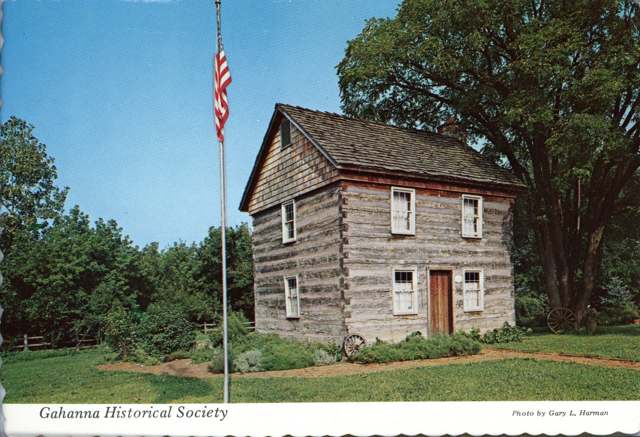
Photo: Columbus Metropolitan Library, via Digital Public Library of America, no known copyright restrictions · Wikimedia Commons
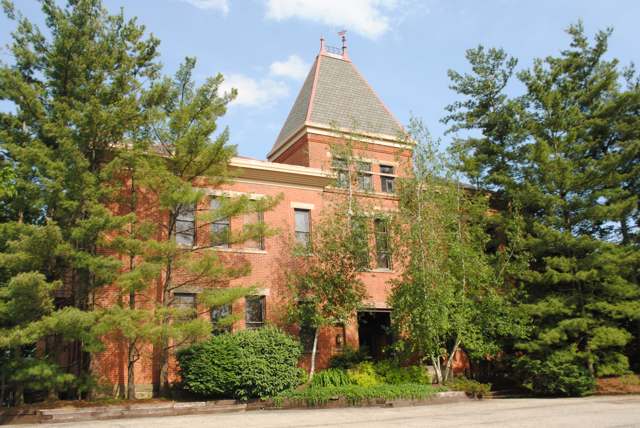
Photo: Wdzinc, CC BY-SA 3.0 · Wikimedia Commons
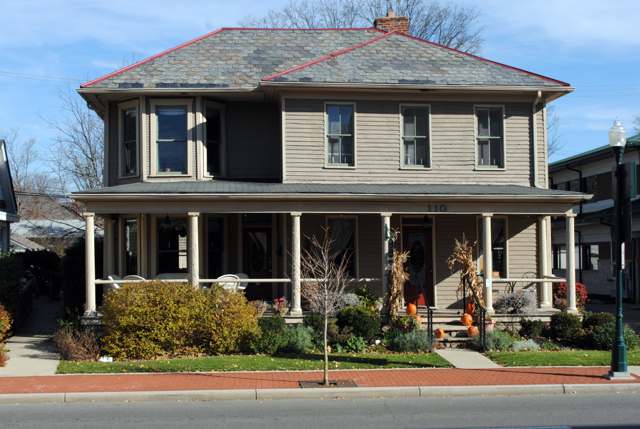
Photo: Wdzinc, CC BY-SA 3.0 · Wikimedia Commons
Local history sources: gahanna.gov · en.wikipedia.org · wosu.org · ohiohistorycentral.org · ohiogenealogyexpress.com · ohiogenealogyexpress.com · en.wikipedia.org · en.wikipedia.org · commons.wikimedia.org · commons.wikimedia.org
Water
Big Walnut Creek at the plant's low-head dam and screen house on Morse Rd, below Hoover Dam The water here
- Gahanna City54% of residentsScioto River (Griggs & O'Shaughnessy), Hoover Reservoir on Big Walnut Ck, plus wells
- Columbus Public Water System46% of residentsScioto River (Griggs & O'Shaughnessy), Hoover Reservoir on Big Walnut Ck, plus wells
- Del-co Water Company, Inc.0% of residentsOlentangy River, O'Shaughnessy and Alum Creek reservoirs, plus Knox County wells
- Jefferson Water and Sewer District0% of residentsLocal groundwater wells (Blacklick/eastern Franklin Co.)
- Reynoldsburg City0% of residentsScioto River (Griggs & O'Shaughnessy), Hoover Reservoir on Big Walnut Ck, plus wells
- Licking Regional Water District0% of residentsRaccoon Creek Valley aquifer (local wells)
Its ZIP codes
Each ZIP code that touches Gahanna, with the share of its residents who live here and the same headline figures as the ZIP page.
| ZIP | Share | Water | Radon | Home value | Schools | Flood |
|---|---|---|---|---|---|---|
| 43230 Gahanna and Columbus | 57% | Big Walnut Creek at the plant's low-head dam and screen house on Morse Rd, below Hoover Dam | 8.0 pCi/L average radon | Median year built 1989 | Gahanna-Jefferson City · 4 stars overall | 1.7% of residents in the 1% floodplain |
| 43054 Columbus and New Albany | 8% | Big Walnut Creek at the plant's low-head dam and screen house on Morse Rd, below Hoover Dam | 4.6 pCi/L average radon | Median year built 2003 | New Albany-Plain Local · 5 stars overall | 3.1% of residents in the 1% floodplain |
| 43004 Columbus and Blacklick | 1% | Big Walnut Creek at the plant's low-head dam and screen house on Morse Rd, below Hoover Dam | 6.0 pCi/L average radon | Median year built 2003 | Licking Heights Local · 4 stars overall | 1.2% of residents in the 1% floodplain |
The county
Franklin County: 45 ZIP codes, 42 cities, villages and townships, 1,356,733 people.
Nearby places
Cite this page
Cite this page as:
Cracked Buckeye (Open Shower Co), "Gahanna, Franklin County", https://crackedbuckeye.com/place/gahanna/, built 2026-09-16, accessed [date].
Machine-readable: /api/place/gahanna.json (open JSON, CC BY 4.0 for the compilation; the underlying records keep their own terms) · How to cite · Report a correction · Built 2026-09-16