How Utica began
Utica grew from a cabin and log mill that brothers William and James Robertson built in 1810 on the North Fork of the Licking, near the Knox County line. Major Robertson laid out the village in 1815 under the name Wilmington; around 1820, needing a distinct name for a post office, the settlement became Utica, likely echoing Utica, New York, though the county's own 1881 history does not explain the choice. Scotch-Irish settlers from the north of Ireland's descendants filled in the surrounding farms, and in 1914 a Lebanese immigrant, Joseph Dager, began making ice cream in a Utica confectionary's basement, a business that grew into Velvet Ice Cream and, since 1960, has run its headquarters and museum from Ye Olde Mill just south of the village. The area's darker pioneer record includes the unsolved 'Squawtown' killing of a Native woman on a wager, recorded soberly by the 1881 county historian as a crime of its own era.
Settled 1810 (William and James Robertson build a cabin and log mill on the site), platted 1815, by Major William Robertson.
Where the name comes from
The village was first named Wilmington when Major Robertson laid it out in 1815. The 1881 county history records only that 'when they applied for a post office, about 1820, it became necessary to change the name, and Utica was adopted,' without explaining why that particular name was chosen; Wikipedia's article on the village states it was named after Utica, New York, a common pattern among Ohio towns settled from the east, but this is not confirmed in the nineteenth-century source.
Before the town
The 1881 county history says that by the time this area was first settled, 'the Indians had generally moved further north and west,' and that 'the pioneers made the acquaintance of but few of them,' with peaceful relations the norm. One documented exception is grim: the source records the killing of an unnamed Native woman two miles east of Utica, at a place it calls 'Squawtown,' after a group of men including one surnamed McLean and one surnamed Hughes (not Elias Hughes) played a card game to decide who would shoot her. McLean was convicted and sentenced to two years in the state penitentiary; accounts differ on whether he was pardoned shortly before his term ended or died in prison, but the source records him telling an official, 'I am innocent, but I have suffered; one is enough to suffer, and I decline to tell,' when pressed to name the guilty party. A stone mound of Mound Builder origin, unrelated to this event, stands two miles south of the village. No source consulted identifies the nation of the woman killed at Squawtown, or gives a precise date for the killing beyond the general period of the village's earliest settlement.
- "Squawtown" (other) — two miles east of Utica, early settlement period, likely 1810s (archive.org)
- Stone mound south of Utica (mound) — near the residence of Eli Smoots, two miles south of Utica, prehistoric (Mound Builder) (archive.org)
Timeline
- — The first permanent settlers arrive in what becomes Washington Township, around the future site of Utica.
- — William and James Robertson purchase the land on which Utica now stands, build a cabin and a log mill on the site of the present mill, with millwright work by pioneer James King.
- — Washington Township is organized.
- — Major William Robertson lays out the village, first named Wilmington.
- — The Presbyterian church of Utica is organized, with Rev. James Cunningham as its first pastor.
- — The village is renamed Utica so it can have its own post office; Richard Lamson becomes the first postmaster.
- — Elias Hughes, one of the first two permanent white settlers of Licking County in 1798, dies in Utica at about age ninety, having lived his last years with his son Jonathan.
- — Utica's fire department is organized.
- — Joseph Dager, a Lebanese immigrant, founds what becomes Velvet Ice Cream in the basement of a Utica confectionary.
- — Velvet Ice Cream moves its operations to Ye Olde Mill, a mill site one mile south of the company's original location.
- — Ye Olde Mill begins hosting an annual ice cream festival each Memorial Day, later known as the Old Fashioned Ice Cream Festival.
- — The Fuller House, built in 1826 at 203 N. Main Street, is listed on the National Register of Historic Places.
Stories
Wilmington Becomes Utica
William and James Robertson bought the land where Utica now sits in 1810 and put up a cabin and a log mill, the millwright work done by an eccentric Irish pioneer named James King. Major Robertson laid the village out five years later, in 1815, and called it Wilmington. The name lasted only until the settlement wanted its own post office around 1820; since another Ohio post office already answered to Wilmington, the village took a new name, Utica, for reasons the county's own 1881 historian did not think worth recording. Richard Lamson, known locally as 'Esquire' Lamson, became the first postmaster and ran the village's first hotel, in whose bar-room a Mr. Messenger opened the first stock of dry goods ever sold in Utica.
The Tragedy at Squawtown
The 1881 county history, generally a chronicle of mills, churches and first settlers, sets aside a paragraph for one act of violence it plainly finds shameful. Two miles east of Utica, at a place remembered afterward only as 'Squawtown,' a group of men that included one surnamed McLean and one surnamed Hughes played a card game to decide which of them would shoot a Native woman living nearby. McLean was tried, found guilty and sentenced to two years in the state penitentiary. The record of what happened next is uncertain: some said he was pardoned shortly before his sentence ended and died soon after; others said he died still in prison. One account has a prison official pressing him, on his way out, to name his accomplices, to which McLean is said to have answered, 'I am innocent, but I have suffered; one is enough to suffer, and I decline to tell.' No name for the woman he was convicted of killing survives in the sources consulted for this file.
From a Confectionery Basement to Ye Olde Mill
Joseph Dager, a Lebanese immigrant, started making ice cream in the basement of a Utica confectionary in 1914. The business that grew from it, Velvet Ice Cream, stayed in the family for generations, and in 1960 it moved a mile south of its original site to Ye Olde Mill, a park-like property that today combines the company's headquarters with an ice cream museum, a visitor center and a working ice cream shop drawing more than 150,000 visitors a year. Since 1974, Ye Olde Mill has hosted an ice cream festival every Memorial Day, and by 2015 the company was investing millions in a new distribution center, still run by descendants of the Dager family who started it all in a basement.
Photographs
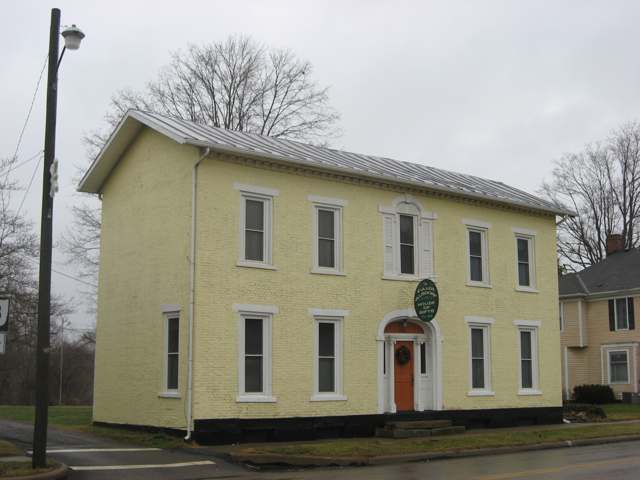
Photo: Nyttend, public domain · Wikimedia Commons
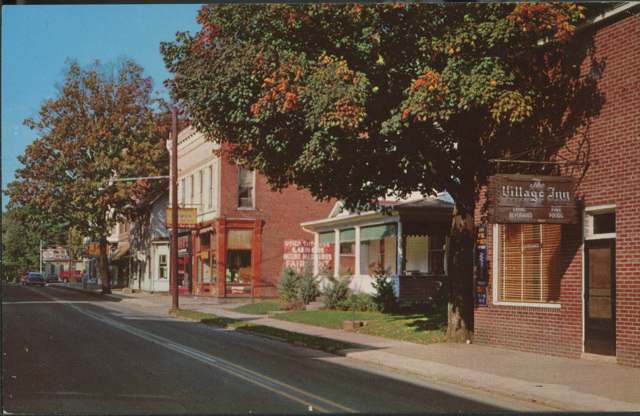
Photo: Columbus Metropolitan Library postcard collection, via DPLA/Ohio Digital Network, no known copyright restrictions · Wikimedia Commons
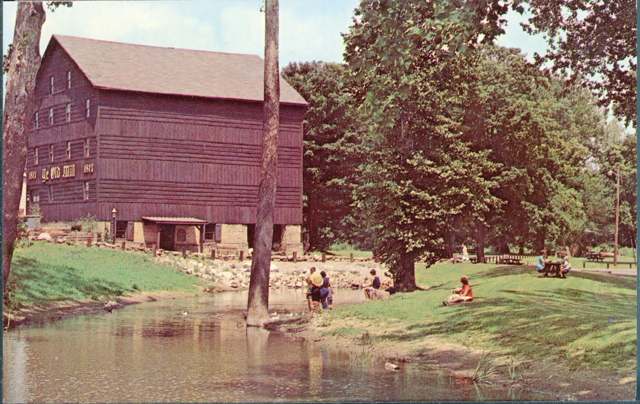
Photo: Columbus Metropolitan Library postcard collection, via DPLA/Ohio Digital Network, no known copyright restrictions · Wikimedia Commons
Local history sources: archive.org · en.wikipedia.org · en.wikipedia.org · en.wikipedia.org · commons.wikimedia.org · commons.wikimedia.org · commons.wikimedia.org
Water
Mostly private wells The water here
- Utica Village97% of residentsGroundwater wells (2 wells)
- Martinsburg Village3% of residentsGroundwater wells (3 wells)
Its ZIP codes
Each ZIP code that touches Utica, with the share of its residents who live here and the same headline figures as the ZIP page.
| ZIP | Share | Water | Radon | Home value | Schools | Flood |
|---|---|---|---|---|---|---|
| 43080 Utica | 39% | Mostly private wells | 16.1 pCi/L average radon | Median year built 1972 | North Fork Local · 3 stars overall | 6.9% of residents in the 1% floodplain |
The county
Licking County: 17 ZIP codes, 38 cities, villages and townships, 160,939 people.
Nearby places
Cite this page
Cite this page as:
Cracked Buckeye (Open Shower Co), "Utica, Licking County", https://crackedbuckeye.com/place/utica/, built 2026-09-16, accessed [date].
Machine-readable: /api/place/utica.json (open JSON, CC BY 4.0 for the compilation; the underlying records keep their own terms) · How to cite · Report a correction · Built 2026-09-16