How Berne Township, Fairfield County began
Berne Township, southeast of Lancaster along the Hocking River, was settled beginning in 1798 by the Carpenter family and other Pennsylvania Germans, and organized in 1805 under a name Samuel Carpenter chose for the Canton of Berne, Switzerland, his ancestral home. Its only town, Sugar Grove, grew up at the junction of the Hocking and Rush Creek on the site of a former Indian encampment and burial ground, and later drew trade from the Hocking Canal. The township's most substantial landmark is the 1857-1860 John Artz farmhouse, built on land Jacob Artz took up in 1818; part of the city of Lancaster now sits within the township's northwest corner. A hint tying the well-known Rock Mill to Berne township does not hold up against the county histories, which place that mill in neighboring Greenfield township instead.
Settled 1798, incorporated 1805 (township organized), by Samuel Carpenter and the Carpenter, Shellenberger, Eckert, Ream and Stukey families.
Where the name comes from
The township was christened Berne by Samuel Carpenter, one of its earliest settlers, in honor of the Canton of Berne, Switzerland, the home of his ancestry, according to both the 1883 and 1912 county histories.
Before the town
Fairfield County lay within the 1795 Treaty of Greenville cession, and the Wyandot held Tarhetown (Cranetown), a town of about a hundred wigwams under Chief Tarhe, at the site of Lancaster just northwest of Berne township; hunting parties returned to the Hocking valley as late as 1812. Within Berne township itself, the 1883 county history describes three symmetrical conical mounds standing near together, one on the farm of a Dr. Shoemaker, ten to twelve feet high, with a curiously wrought stone ledge nearby that the writer guessed might have served as a breastwork; no source consulted names a builder culture. On the farm of Jacob Crawford, four miles east of Lancaster in the north end of the township, the same history describes a hilltop of several level acres bearing a stone structure the compiler and Crawford took for an altar or rostrum, and a number of undressed stones set upright in the sod in a pattern resembling a rude cemetery, which the two supposed to be a place of entombment; the county history offers this only as conjecture. Sugar Grove itself is recorded as standing on the site of a former Indian encampment and a large burying ground, from which numerous skeletons and other evidence of occupation were unearthed as the village grew, though no nation is named for it. A separate hint associating the Rock Mill, a noted early landmark, with Berne township does not check out: both the 1883 and 1912 county histories place the Rock Mill (built 1799-1800 by Hezekiah Smith and James Loveland) squarely in Greenfield township, on the Hocking a few miles northwest, where Indians reportedly gathered to trade for the whiskey the millers also distilled.
Nations recorded here: Wyandot.
- Three conical mounds and stone ledge (mound) — Berne Township, near a farm then owned by a Dr. Shoemaker, precontact, mound-builder culture not specified by the source (archive.org)
- Stone structure and standing stones, Crawford farm (other) — farm of Jacob Crawford, four miles east of Lancaster, north end of Berne Township, precontact, culture and age undetermined; interpreted by 1883 observers as a possible burial ground and altar (archive.org)
- Indian encampment and burial ground, Sugar Grove (camp) — site of the village of Sugar Grove, at the junction of the Hocking River and Rush Creek, not dated by the source; historic or late precontact (archive.org)
Timeline
- — The Treaty of Greenville cedes most of what becomes Ohio, including the future Berne township, to the United States.
- — William, David, Samuel and John Carpenter, with their father, emigrate from Lancaster County, Pennsylvania, and settle in the Hocking valley just below Lancaster; the Shellenberger brothers, George Eckert, Abraham Ream and Joseph Stukey settle the same year.
- — Berne Township is organized and named by settler Samuel Carpenter for the Canton of Berne, Switzerland.
- — Jacob Artz, recently arrived in Fairfield County from Rockingham County, Virginia, takes up the farm on Duffy Road where his son will later build the John Artz farmhouse.
- — Sugar Grove is laid out by Mrs. Elizabeth Rudolph on the site of a former Indian encampment and burial ground; the 1883 county history dates the first house to about 1835, while a modern source gives the plat as 1830 and notes early settlers Asa McDole and the Isbell brothers arriving in 1834.
- — Joseph Stukey builds the grist mill at Sugar Grove that is later fed by the Hocking Canal.
- — Sugar Grove is incorporated as a village.
- — John Artz, son of Jacob Artz, builds the two-story brick farmhouse on the family property, blending Greek Revival and Italianate styles; he occupies it until 1895.
- — Sugar Grove's German Reform congregation builds its $4,000 church, described by the county history as having few equals among country churches.
- — The John Artz Farmhouse is listed on the National Register of Historic Places.
Stories
Indian John
Before the Carpenters or any other settler family reached Berne township, its only known resident was a man the pioneers called 'Indian John,' identified as a white renegade hunter named John Sisco from the South. He lived a wild, free life in a rudely built shanty or wigwam along the Hocking, subsisting by the hunt as the Indians around him did. As white settlement pushed into the valley after 1798 and encroached on his hunting grounds, Sisco moved steadily southward ahead of it, eventually settling for good near Logan, where he died. The 1883 county history preserves him as the township's first known non-Native inhabitant, a solitary figure on the edge of two worlds.
The Panther at the Door
Wild game and predators were still common in Berne township when Abraham Ream, one of the earliest Rush Creek settlers, lay seriously ill in his cabin. His wife took their team of horses down to the Hocking to water them, and the animals grew suddenly terrified; sensing danger, she hurried them back to the stable, then bolted herself and them inside the cabin. Looking out through the small window that served as her only view of the yard, she saw a full-grown panther with its forepaws braced on the low fence around the cabin, lashing its tail in open aggression. The same family later told of Ream's son Absalom treeing and roping a panther in a hollow log during a hunt, only for the captured animal to gorge itself on water after its release and drop dead — the kind of encounter the 1883 county history says was typical of Berne's earliest years.
A Village Built Over a Burial Ground
Sugar Grove took its name from a stand of sugar-maple timber that once covered the ground where the Hocking River meets Rush Creek, but the site had an older history: an Indian encampment had stood there, with a large burying ground close by. As Mrs. Elizabeth Rudolph's new village grew through the 1830s and 1840s, numerous skeletons and other signs of the earlier occupation were unearthed in the course of building it. By 1883 Sugar Grove had grown into the township's only real town, with three churches, dry-goods and general stores, tanneries and a canal-fed grist mill that shipped flour down the Hocking Canal to the mining towns below — a working village built, quite literally, over the traces of the people who had lived there first.
Photographs
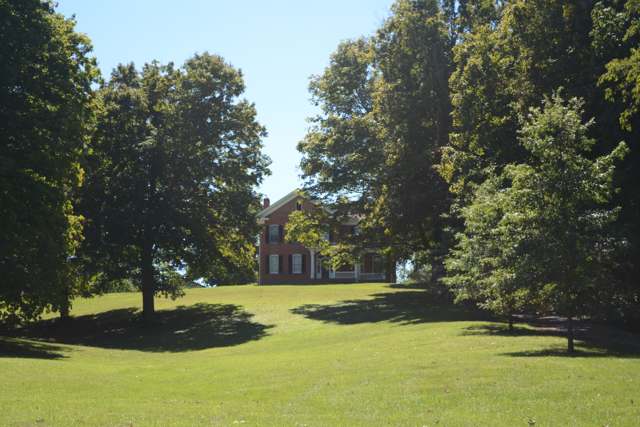
Photo: Tristan Blatt, via Wikimedia Commons, CC BY-SA 4.0 · Wikimedia Commons
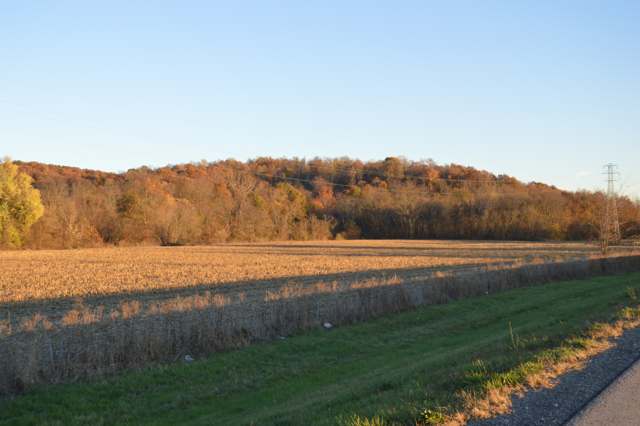
Photo: Nyttend, via Wikimedia Commons, public domain · Wikimedia Commons
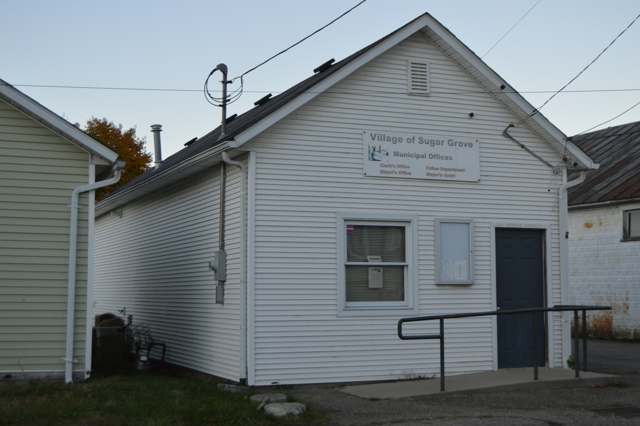
Photo: Nyttend, via Wikimedia Commons, public domain · Wikimedia Commons
Local history sources: archive.org · archive.org · en.wikipedia.org · en.wikipedia.org · en.wikipedia.org · en.wikipedia.org · commons.wikimedia.org · commons.wikimedia.org · commons.wikimedia.org
Water
Mostly private wells The water here
- Lancaster City89% of residentsHocking River Valley Aquifer (wells)
- Sugar Grove Village9% of residentsGroundwater wells (2 wells)
- Greenfield Twp Water District3% of residentsGroundwater wells (2 wells)
- Brookdale Mobile Home Park0% of residentsGroundwater wells (2 wells)
- Colony Village MHP0% of residentsGroundwater wells (1 wells)
- Fairfield County Utilities0% of residentsLocal groundwater wells (central Ohio, aquifer undocumented)
Its ZIP codes
Each ZIP code that touches Berne Township, Fairfield County, with the share of its residents who live here and the same headline figures as the ZIP page.
| ZIP | Share | Water | Radon | Home value | Schools | Flood |
|---|---|---|---|---|---|---|
| 43155 Berne Township and Sugar Grove | 46% | Mostly private wells | 11.7 pCi/L average radon | Median year built 1978 | Berne Union Local · 3.5 stars overall | 10% of residents in the 1% floodplain |
| 43130 Lancaster | 6% | Miller Park well field (12 wells) drawing groundwater from the Hocking River Valley Aquifer, in Miller Park along N. Memorial Drive north of downtown Lancaster | 8.5 pCi/L average radon | Median year built 1963 | Lancaster City · 3.5 stars overall | 6.2% of residents in the 1% floodplain |
The county
Fairfield County: 13 ZIP codes, 27 cities, villages and townships, 144,692 people.
Nearby places
Cite this page
Cite this page as:
Cracked Buckeye (Open Shower Co), "Berne Township, Fairfield County", https://crackedbuckeye.com/place/berne-township-fairfield-county/, built 2026-09-16, accessed [date].
Machine-readable: /api/place/berne-township-fairfield-county.json (open JSON, CC BY 4.0 for the compilation; the underlying records keep their own terms) · How to cite · Report a correction · Built 2026-09-16