How Rushcreek Township, Fairfield County began
Rush Creek Township, in the southeastern corner of Fairfield County, was surveyed by Elnathan Schofield and organized in 1804, taking its name from the Big and Little Rush Creeks that divide it. Its first settler, John Ashbaugh, floated a flatboat down the Ohio River from Pennsylvania about 1798 and poled a canoe up the Hocking and Rush Creek to reach Raccoon Creek, where his son David, born January 1, 1800, was the township's first recorded child. Bremen, platted on the school section in 1834, grew slowly for seven decades until a 1907 oil strike on the Kittle farm made it the center of one of Ohio's most productive early oil fields, with over 150 local stock companies formed to work it. Today the township remains rural farmland around Bremen, its only village.
Settled 1798-1799 (John Ashbaugh, on Raccoon Creek), incorporated 1804 (organized as a township), by surveyed by Elnathan Schofield of Lancaster.
Where the name comes from
The township took its name from Rush Creek (divided into Big Rush Creek and Little Rush Creek), the streams that cross it and join a little east of its center. No source consulted explains why the creek itself carries that name.
Before the town
No source consulted names a Wyandot or Lenape (Delaware) village, camp, or trail inside Rush Creek Township's own boundaries. County historian A. A. Graham did record, in his 1883 chapter on county archaeology, three or four ancient mounds 'on the Raccoon, in Rush Creek township' among the roughly twenty mound-builder works he counted across Fairfield County, alongside similar mounds in Bloom, Clear Creek, Hocking, Berne, Walnut and Richland townships; none of the Rush Creek mounds had been opened or examined as of 1883, so nothing is recorded of their contents or age. The broader Hocking Valley, a few miles northwest at Lancaster, was Wyandot chief Tarhe's town (Tarhetown) until the years after the 1795 Treaty of Greenville, when most of the tribe withdrew to the Sandusky country; hunting parties of Wyandot and Delaware continued to pass through Fairfield County, including its eastern townships, until about 1812.
Nations recorded here: Wyandot, Lenape (Delaware), Adena culture, Hopewell culture.
- Raccoon Creek mounds (mound) — on the Raccoon [Creek], within Rush Creek Township, pre-contact, culture undetermined (unexcavated as of 1883) (archive.org)
Timeline
- — The Treaty of Greenville cedes most of what becomes Ohio, including the future Rush Creek Township, to the United States.
- — John Ashbaugh, from Redstone, Pennsylvania, travels by flatboat down the Ohio River and by canoe up the Hocking to Rush Creek, settling on Raccoon Creek as the township's first settler.
- — David Ashbaugh, son of John Ashbaugh, is born January 1, the first child recorded in what becomes Rush Creek Township.
- — Edward Young marries Rachel Miller, the first wedding recorded in the township.
- — Rush Creek becomes an organized township; its first election is held at Samuel Hammel's house on Rush Creek.
- — Samuel Hammel builds the first water-powered grist mill on Rush Creek.
- — George Beery plats Bremen on the southeast corner of Section 16 (the school lands), at the center of the township.
- — The first train passes through Bremen on the Cincinnati and Muskingum Valley Railroad on July 4.
- — The Toledo and Ohio Central Railroad is built north from Bremen along Little Rush Creek.
- — Bremen incorporates as a village; L. O. Binkley serves as its first mayor.
- — The Rush Creek Oil & Gas Company's well on the Stewart farm north of Bremen strikes a heavy gas flow at 1,790 feet, an estimated 5,000,000 cubic feet a day, giving Bremen, Rushville and West Rushville their first natural gas; the well is ruined by salt water about eighteen months later.
- — In the fall, the Bremen Gas & Oil Company's J. W. Huston well comes in at about 140 barrels of oil a day, opening the Bremen oil field after J. E. Purvis's decade of failed attempts to raise drilling capital.
- — The Bremen Stock Exchange forms in February, listing 36 local oil companies as the boom accelerates.
Stories
Down the Ohio and Up the Hocking
John Ashbaugh left Redstone, Pennsylvania, and came down the Ohio River on a flatboat, then turned his canoe up the Hocking and Rush Creek to reach Raccoon Creek, where he settled with his family about 1798 or 1799 — the first white settler within what became Rush Creek Township. His son David, born January 1, 1800, was the township's first recorded birth. Behind Ashbaugh came Edward Young, traveling the same way from Pennsylvania about 1801, who married Rachel Miller in 1802 in the township's first wedding. By the time the township organized in 1804, forty-three voters besides women and children had arrived, casting their first ballots at Samuel Hammel's house on Rush Creek.
A Village Built on the School Lands
Bremen was platted in 1834 by George Beery on the southeast corner of Section 16, the section every Ohio township reserved to support its schools, putting the new village at the center of Rush Creek Township. Growth came slowly: fifty years after the plat, the county history counted only about two hundred residents, and as late as 1854 the town had no railroad at all. That changed on July 4, 1855, when the first train ran through on the Cincinnati and Muskingum Valley line, an event the county historian later said caused as much excitement in the town as the discovery of oil and gas would decades afterward.
Gas Before Oil
Bremen's underground wealth showed itself first as gas, not oil. In 1896 the newly formed Rush Creek Oil & Gas Company drilled a well on the Stewart farm just north of town; at 1,790 feet the crew struck a flow of gas estimated at five million cubic feet a day, and lines were laid to give Bremen, Rushville and West Rushville their first supply of natural gas. The strike so impressed investors that a buyer offered $100,000 for the company's leases — enough to have left $82,000 for the stockholders after expenses — but the offer was refused. About eighteen months later a flood of salt water ruined the well, and two more disappointing tries on nearby farms sent the company into receivership. It would take J. E. Purvis another decade of failed financing before Bremen's oil, rather than its gas, finally paid off in 1907.
The Persistence of J. E. Purvis
Nearly twenty years before Bremen struck oil, J. E. Purvis had already secured options on some five thousand acres around the town, convinced that the natural gas reservoirs nearby meant oil was waiting underneath. He could not raise the capital, lost the options, and tried twice more without success through the 1890s and 1900s. Not until the spring of 1907, when a well drilled for gas seven miles northwest of Bremen came up with oil instead, could Purvis finally organize the Bremen Gas & Oil Company. Its first test well, on the Kittle farm, reached the Clinton sand in July 1907 with a showing of oil; that same year the company's Huston well came in at roughly 140 barrels a day, and within months over 150 stock companies had formed to drill the surrounding farms, most of them owned by local people rather than outside capital.
Photographs
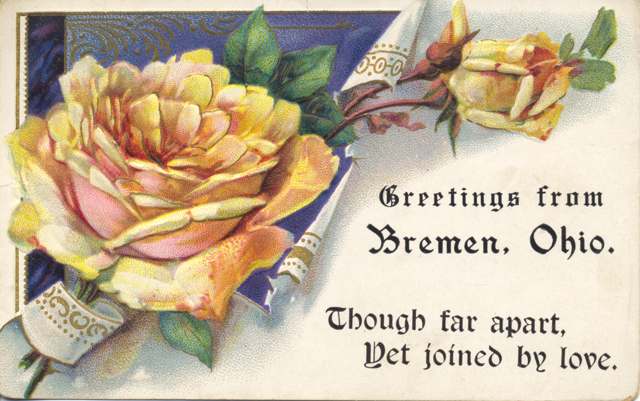
Photo: Miami University Libraries Digital Collections, via Flickr Commons, no known copyright restrictions · Wikimedia Commons
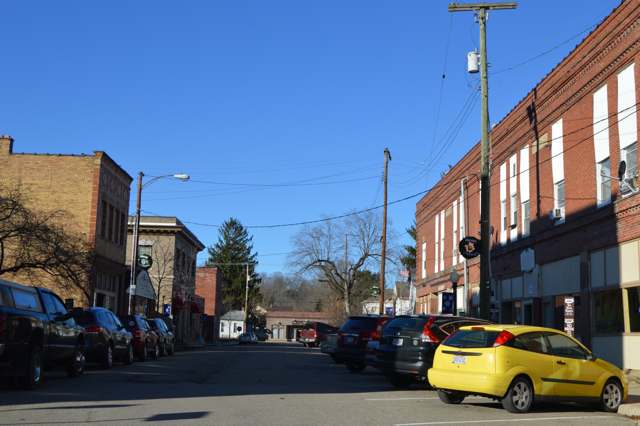
Photo: Nyttend, public domain · Wikimedia Commons
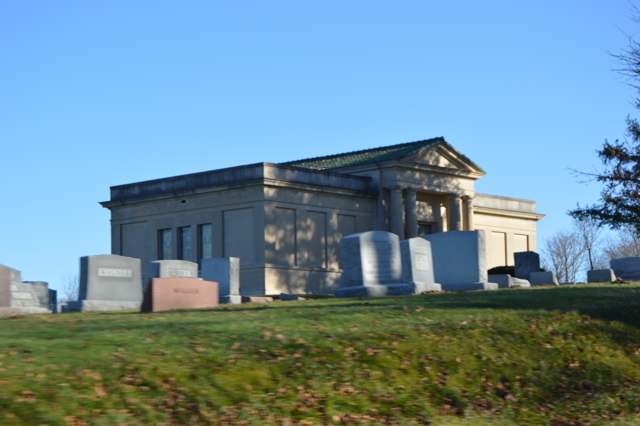
Photo: Nyttend, public domain · Wikimedia Commons
Local history sources: archive.org · archive.org · en.wikipedia.org · en.wikipedia.org · en.wikipedia.org · petroleumhistoryblog.com · commons.wikimedia.org · commons.wikimedia.org · commons.wikimedia.org
Water
Mostly private wells The water here
- Bremen Village63% of residentsGroundwater wells (4 wells)
- Lancaster City35% of residentsHocking River Valley Aquifer (wells)
- Sugar Grove Village1% of residentsGroundwater wells (2 wells)
- Greenfield Twp Water District1% of residentsGroundwater wells (2 wells)
- Rushville Village1% of residentsGroundwater wells (4 wells)
- Brookdale Mobile Home Park0% of residentsGroundwater wells (2 wells)
- Colony Village MHP0% of residentsGroundwater wells (1 wells)
- Fairfield County Utilities0% of residentsLocal groundwater wells (central Ohio, aquifer undocumented)
Its ZIP codes
Each ZIP code that touches Rushcreek Township, Fairfield County, with the share of its residents who live here and the same headline figures as the ZIP page.
| ZIP | Share | Water | Radon | Home value | Schools | Flood |
|---|---|---|---|---|---|---|
| 43107 Rushcreek Township and Bremen | 50% | Mostly private wells | 12.3 pCi/L average radon | Median year built 1966 | Fairfield Union Local · 4 stars overall | 4.7% of residents in the 1% floodplain |
| 43150 Richland Township and Rushville | 7% | Mostly private wells | 8.3 pCi/L average radon | Median year built 1985 | Fairfield Union Local · 4 stars overall | 0.0% of residents in the 1% floodplain |
| 43155 Berne Township and Sugar Grove | 3% | Mostly private wells | 11.7 pCi/L average radon | Median year built 1978 | Berne Union Local · 3.5 stars overall | 10% of residents in the 1% floodplain |
| 43130 Lancaster | 1% | Miller Park well field (12 wells) drawing groundwater from the Hocking River Valley Aquifer, in Miller Park along N. Memorial Drive north of downtown Lancaster | 8.5 pCi/L average radon | Median year built 1963 | Lancaster City · 3.5 stars overall | 6.2% of residents in the 1% floodplain |
The county
Fairfield County: 13 ZIP codes, 27 cities, villages and townships, 144,692 people.
Nearby places
Cite this page
Cite this page as:
Cracked Buckeye (Open Shower Co), "Rushcreek Township, Fairfield County", https://crackedbuckeye.com/place/rushcreek-township-fairfield-county/, built 2026-09-16, accessed [date].
Machine-readable: /api/place/rushcreek-township-fairfield-county.json (open JSON, CC BY 4.0 for the compilation; the underlying records keep their own terms) · How to cite · Report a correction · Built 2026-09-16