How Pickerington began
Pickerington grew from the eighty acres a Revolutionary War veteran named George Kirke claimed on the future townsite, land that Abraham Pickering later bought and platted into town lots in 1815. The county's own 1883 and 1912 histories say Pickering named the place Pickerington from the start; modern accounts instead hold that he first called it Jacksonville, for Andrew Jackson's victory at New Orleans, and that residents petitioned to rename it for Pickering only in 1827 -- the two versions cannot be fully reconciled from the sources at hand. The town stayed a small crossroads village of a few hundred people for more than a century, incorporating in 1881 and gaining little population until Columbus's eastward suburban growth reached it in the later twentieth century. Pickerington was certified a city in 1991, was named the 'Violet Capital of Ohio' in 1996, and since 1999 has been home to the AMA Motorcycle Hall of Fame Museum, moved there from the American Motorcyclist Association's former Westerville headquarters.
Settled by or before 1806 (George Kirke, a Revolutionary War veteran, is recorded as the first resident, entering the 80 acres on which the town would stand; Abraham Pickering and his family emigrated to Fairfield County from Rockingham County, Virginia, in 1806), platted 1815 (Abraham Pickering, having bought the section of land including Kirke's claim, laid off a few lots), incorporated village, 1881; city, certified by the Ohio Secretary of State in 1991, by Abraham Pickering (1776-1833), born in Rockingham County, Virginia; his wife was Ann Looker.
Where the name comes from
The 1883 and 1912 Fairfield County histories agree that Abraham Pickering laid off the town's first lots in 1815 and 'gave them the name of Pickerington' directly, with no mention of any earlier name. Modern sources, including Wikipedia (citing William D. Overman's 1958 reference book 'Ohio Town Names') and a CityScene Columbus magazine history, instead state that Pickering first named the settlement Jacksonville on September 15, 1815, to honor Andrew Jackson's recent victory at the Battle of New Orleans, and that the Ohio legislature changed the name to Pickerington only in 1827 after a citizen petition. Both the 1883 and 1912 county histories were compiled from local recollection within living memory of the town's early decades and say nothing of a Jacksonville period; this discrepancy could not be resolved from the sources consulted.
Before the town
Fairfield County lies within the roughly two-thirds of Ohio that twelve Native nations, including the Wyandot, Shawnee, Lenape (Delaware), Miami and Odawa (Ottawa), ceded to the United States at the Treaty of Greenville in 1795, opening the area to the settlement that produced Pickerington two decades later. The 1883 county history's chapter on Violet Township, in which Pickerington stands, records that when the first settlers arrived 'Indians were few and friendly, and soon left for lands further west,' and that while they remained, 'the children of whites and Indians played together, amusing themselves by wrestling and running foot races.' No source consulted names a specific village, camp, or trail within the town's own boundaries, though two Adena burial mounds (the Fortner Mounds) stand just outside the city to the northeast, in Violet Township proper -- see that township's file for detail. No earlier Paleo-Indian, Archaic, or Hopewell material specific to the townsite was found in the sources consulted.
Nations recorded here: Wyandot, Shawnee, Lenape (Delaware), Miami, Ottawa.
Timeline
- — The Treaty of Greenville cedes most of Ohio, including the future site of Pickerington, to the United States.
- — Abraham Pickering and his family emigrate from Rockingham County, Virginia, and settle in Fairfield County.
- — Abraham Pickering, having bought the section of land that included Revolutionary War veteran George Kirke's earlier claim, lays off a few town lots; the 1883 and 1912 county histories state he named the place Pickerington directly.
- — Modern accounts (not corroborated by the 1883 or 1912 county histories) instead hold that Pickering named the new town Jacksonville on September 15, 1815, honoring Andrew Jackson's victory at the Battle of New Orleans earlier that year.
- — By the modern accounts' version of events, the Ohio legislature changes the town's name from Jacksonville to Pickerington after a citizen petition honoring its founder.
- — The Toledo and Ohio Central Railroad reaches Pickerington, lifting the town's population from about 150 to 290 and the surrounding township's from 1,220 to 1,970.
- — Pickerington incorporates as a village.
- — Passenger rail service through Pickerington ends as automobile travel replaces it.
- — Freight rail service through Pickerington ends.
- — The American Motorcyclist Association forms the American Motorcycle Heritage Foundation to build a national Hall of Fame and museum.
- — The Motorcycle Hall of Fame Museum opens to the public in August at the AMA's then-headquarters in Westerville, Ohio.
- — The Ohio Secretary of State certifies Pickerington as a city.
- — The Pickerington Carnegie Library and the Dovel-Bowers House are added to the National Register of Historic Places.
- — The Ohio Legislature designates Pickerington the 'Violet Capital of Ohio.'
- — The Motorcycle Hall of Fame Museum relocates to a purpose-built 26,000-square-foot building in Pickerington, opening with the exhibit '75 Years of Excitement' marking the AMA's diamond anniversary.
Stories
A Soldier's Claim, A Founder's Town
Before there was a town, there was a single log hut. George Kirke, who had served in the Revolutionary War, was the first person to settle on the eighty acres that would become Pickerington, building himself what the 1883 county history calls 'a very ordinary log hut... could hardly be called a dwelling.' Kirke used it as shelter from wild beasts and storms rather than as a proper home. A few years later Abraham Pickering, a Virginia-born veteran himself, bought the section of land that included Kirke's claim, and in 1815 laid out a handful of town lots -- reserving, according to a family sketch preserved in the 1912 county history, a site for a church, a site for a schoolhouse, and a site for a cemetery before selling anything else. Kirke's name appears nowhere on the map that resulted; the town instead carries Pickering's.
One Naming Story, Two Versions
Ask when Pickerington got its name and you will get two different answers depending on which shelf you pull the book from. The oldest sources -- an 1883 county history and a 1912 successor, both compiled from the recollections of people who had known the town's founders -- say plainly that Abraham Pickering laid off his lots in 1815 and gave the place his own name from the outset. Twentieth-century references tell a livelier story: that Pickering first called his new town Jacksonville, on September 15, 1815, to honor Andrew Jackson's victory at the Battle of New Orleans, and that the name only became Pickerington in 1827 after townspeople petitioned the state legislature to honor their founder instead. Neither of the two nineteenth- and early twentieth-century county histories mentions a Jacksonville period at all. Which account is right could not be settled from the sources examined here; both are given rather than picking one.
A Village Wakes Up, Twice
For decades after its founding, Pickerington did little more than hold its ground. The 1883 county history reports that after its first promising years, the town 'came to a stand still with indications of finally dying out,' revived somewhat when the Hocking Valley Railroad reached it, declined again, and was only reawakened 'to new life' when the Ohio Central Railroad arrived. That pattern of long stillness followed by sudden change repeated itself a century later: Pickerington remained a village of a few hundred people until Columbus's suburbs finally reached it in the later twentieth century, when the town was certified a city in 1991 and, within a decade, had gained a national museum as a neighbor.
A National Museum Finds a Small Town
The Motorcycle Hall of Fame Museum did not start out in Pickerington at all. The American Motorcyclist Association's affiliated heritage foundation opened it in August 1990 at the AMA's own headquarters building in Westerville, Ohio. Only in June 1999 did the museum move into a purpose-built, 26,000-square-foot home in Pickerington, marking the occasion with an exhibit called '75 Years of Excitement' for the AMA's diamond anniversary. The relocation gave the small Fairfield County city -- by then freshly promoted from village to city status and soon to be dubbed the 'Violet Capital of Ohio' -- a nationally known landmark and, eventually, the AMA's own headquarters as well.
Photographs
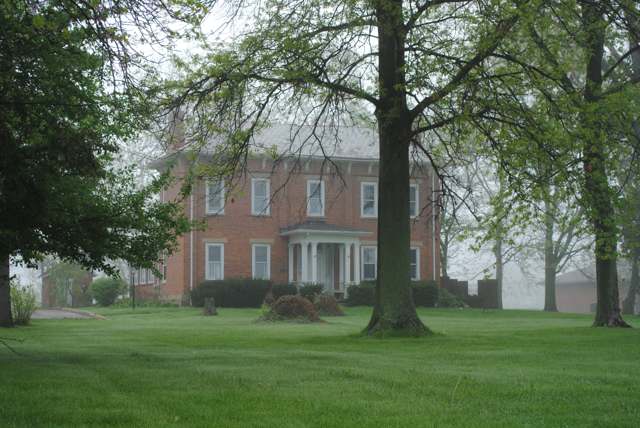
Photo: Wdzinc, via Wikimedia Commons, CC BY-SA 3.0 · Wikimedia Commons
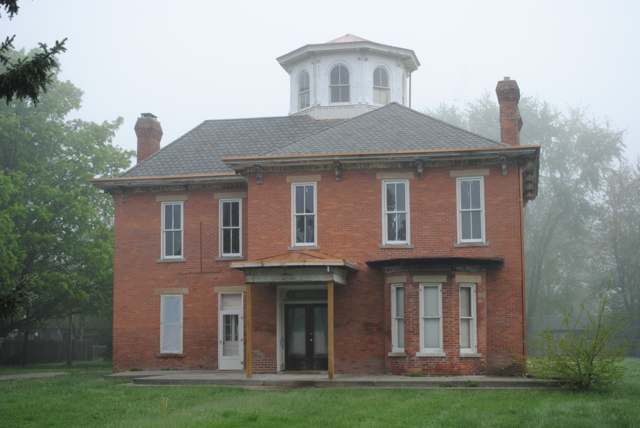
Photo: Wdzinc, via Wikimedia Commons, CC BY-SA 3.0 · Wikimedia Commons
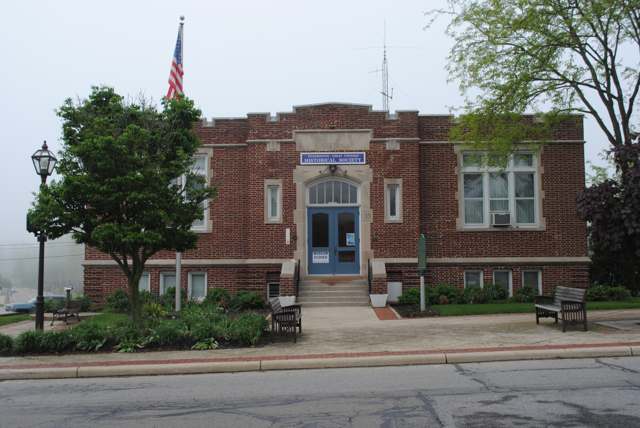
Photo: Wdzinc, via Wikimedia Commons, CC BY-SA 3.0 · Wikimedia Commons
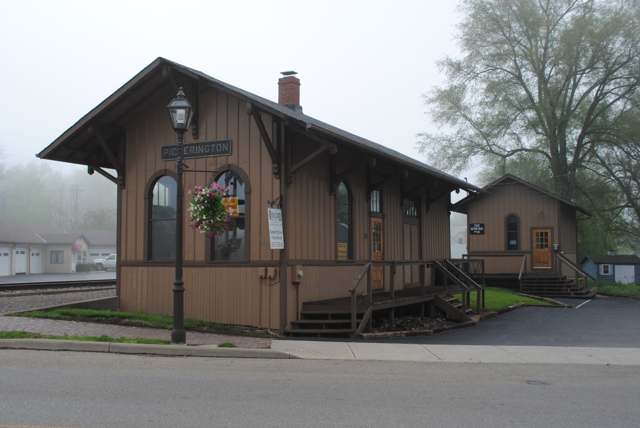
Photo: Wdzinc, via Wikimedia Commons, CC BY-SA 3.0 · Wikimedia Commons
Local history sources: archive.org · archive.org · en.wikipedia.org · en.wikipedia.org · en.wikipedia.org · cityscenecolumbus.com · motorcyclemuseum.org · commons.wikimedia.org · commons.wikimedia.org · commons.wikimedia.org · commons.wikimedia.org
Water
Five active wells drawing from the local buried-valley aquifer near Diley Road The water here
- Pickerington City47% of residentslocal buried-valley aquifer (wells near Diley Road)
- Fairfield County Utilities41% of residentsLocal groundwater wells (central Ohio, aquifer undocumented)
- Columbus Public Water System11% of residentsScioto River (Griggs & O'Shaughnessy), Hoover Reservoir on Big Walnut Ck, plus wells
- Canal Winchester City0% of residentsLocal groundwater wells (Franklin Co.)
- Lithopolis Village0% of residentsGroundwater wells (3 wells)
Its ZIP codes
Each ZIP code that touches Pickerington, with the share of its residents who live here and the same headline figures as the ZIP page.
| ZIP | Share | Water | Radon | Home value | Schools | Flood |
|---|---|---|---|---|---|---|
| 43147 Pickerington | 51% | Five active wells drawing from the local buried-valley aquifer near Diley Road | 7.0 pCi/L average radon | Median year built 1996 | Pickerington Local · 4 stars overall | 3.1% of residents in the 1% floodplain |
| 43110 Columbus and Canal Winchester | 1% | South Well Field wells in Scioto valley sand and gravel, off Parsons Ave near Shadeville and Lockbourne | 7.9 pCi/L average radon | Median year built 2002 | Canal Winchester Local · 4 stars overall | 11% of residents in the 1% floodplain |
The county
Fairfield County: 13 ZIP codes, 27 cities, villages and townships, 144,692 people.
Nearby places
Cite this page
Cite this page as:
Cracked Buckeye (Open Shower Co), "Pickerington, Fairfield County", https://crackedbuckeye.com/place/pickerington/, built 2026-09-16, accessed [date].
Machine-readable: /api/place/pickerington.json (open JSON, CC BY 4.0 for the compilation; the underlying records keep their own terms) · How to cite · Report a correction · Built 2026-09-16