How Lithopolis began
Lithopolis, the principal village of Bloom Township, was laid out in 1815 by Frederick Baugher under the name Centerville, near the sandstone quarries along Quarry Run that later gave the town its Greek name — 'stone city' — when it was chartered in 1836. It grew slowly through the nineteenth century as a market and church town of a few hundred people, but became known statewide through one family: Adam Willis Wagnalls, co-founder of the Funk & Wagnalls publishing house, was born nearby, and his daughter Mabel Wagnalls Jones built the Wagnalls Memorial library in the village in 1925 in her parents' memory. After remaining under a thousand people for most of the twentieth century, Lithopolis nearly doubled between 2010 and 2020 as Columbus-area suburbanization reached it.
Platted 1815, incorporated 1836 (chartered, and renamed from Centerville to Lithopolis), by Frederick Baugher.
Where the name comes from
The village was first laid out under the name Centerville in 1815. When it was chartered in 1836 it was renamed Lithopolis, Greek for 'stone city,' after the valuable deposits of building stone worked at nearby quarries on Quarry Run.
Before the town
No source consulted names a Native village, camp, or trail on the ground of Lithopolis itself. Bloom Township, in which the village lies, was one of the townships county historian A. A. Graham counted among roughly twenty places in Fairfield County holding ancient mound-builder works; the most thoroughly examined of these, opened by Professor E. B. Andrews a few years before his death in 1880, stood near Greencastle in Bloom Township (a few miles from Lithopolis) and yielded a large quantity of human bones, mostly skull and jaw fragments, at its base and center — bones Andrews believed belonged to the mound builders themselves rather than to a later Native burial, since Native custom buried the dead near the surface rather than at a mound's core. The broader Hocking Valley around Lancaster, a dozen miles south, was Wyandot territory until the years after the 1795 Treaty of Greenville.
Nations recorded here: Adena culture, Hopewell culture, Wyandot.
- Greencastle mound (mound) — near Greencastle, Bloom Township (a few miles from Lithopolis), pre-contact, culture undetermined (archive.org)
Timeline
- — Frederick Baugher lays out the village under the name Centerville; an addition is later made by Solomon Baugher.
- — Dr. E. L. Miner, born in Vermont, moves to Centerville and spends forty-five years as the town's physician.
- — A post office opens under the name Lithopolis.
- — Dr. E. L. Miner, George Custer, the Browns and thirteen others found the town's Presbyterian society.
- — The village is chartered and renamed Lithopolis; Elias Perry serves as first mayor and Isaac Cade as first clerk.
- — Lithopolis Lodge No. 169, Free and Accepted Masons, is chartered September 29, with William Reiley as Worthy Master.
- — Mabel Wagnalls (later Mabel Wagnalls Jones) is born April 20 in Kansas City, Missouri, the only child of Adam Willis Wagnalls, a native of this part of Ohio and later co-founder of the Funk & Wagnalls publishing company.
- — Mabel Wagnalls marries Richard J. Jones.
- — The Wagnalls Memorial library is dedicated in Lithopolis, built by Mabel Wagnalls Jones and her father in memory of her parents, Adam and Anna Wagnalls, as a gift to Lithopolis and Bloom Township.
- — Mabel Wagnalls Jones dies March 22 in New York at age 74, having established the Wagnalls Foundation to oversee the library and its scholarships.
- — An Ohio EPA source water assessment finds the village's shallow sand-and-gravel aquifer has 'high susceptibility to contamination,' prompting a wellhead protection effort.
- — The village's population grows 92.9 percent, from 1,106 to 2,134, as Columbus-area suburbanization reaches Lithopolis.
Stories
A Town Renamed for Its Stone
When Frederick Baugher laid out his new town in 1815 on ground near the local sandstone quarries, he called it Centerville, a plain name shared by dozens of other Ohio villages. It kept that name for two decades, growing slowly around Dr. E. L. Miner's medical practice and the Presbyterian church he helped found in 1834. Then, when the town was chartered in 1836, its founders reached for something more distinctive: Lithopolis, built from the Greek words for stone and city, honoring the quarries on Quarry Run that had supplied building stone since the village's earliest days. The name has stuck for nearly two centuries since.
The Publisher's Daughter and the Library
Adam Willis Wagnalls grew up in the Lithopolis area before leaving to help found Funk & Wagnalls, the New York publishing house behind the Standard Dictionary. His only child, Mabel, born in Kansas City in 1871, trained as a concert pianist in Berlin, Paris and Vienna, debuted at the Sing-Akademie in Berlin in 1889, and then turned to writing after retiring from the stage; her novel The Rose-bush of a Thousand Years was adapted into two silent films. In 1925, Mabel and her father gave the village a library built in memory of her mother and father, Adam and Anna Wagnalls — the Wagnalls Memorial, still standing on Columbus Street. After her father's and her own death in 1946, the Wagnalls Foundation she established continued to run the library and fund scholarships for area students.
Bones at the Bottom of a Mound
A few years before his death in 1880, Professor E. B. Andrews of Lancaster dug into a mound near Greencastle in Bloom Township, a few miles from Lithopolis, and went, in the county historian's words, 'through and to the bottom of it.' What he found was not the shallow burial typical of historic-era Native peoples but a large quantity of human bone concentrated at the mound's base and center — teeth, jaw fragments, and one intact skull, worn and aged but structurally no different from the bones of any other race. Because Native custom buried the dead near the surface, the county historian concluded these were 'the teeth and bones of the veritable mound builders' themselves, deposited long before any Wyandot or Delaware walked the Hocking Valley.
Photographs
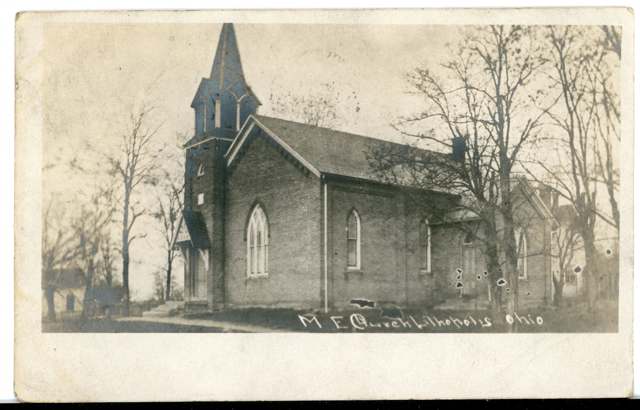
Photo: Columbus Metropolitan Library, via DPLA/Ohio Digital Network, no known copyright restrictions · Wikimedia Commons
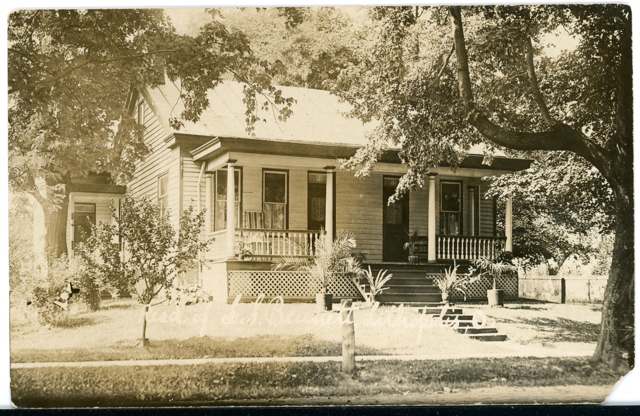
Photo: Columbus Metropolitan Library, via DPLA/Ohio Digital Network, no known copyright restrictions · Wikimedia Commons
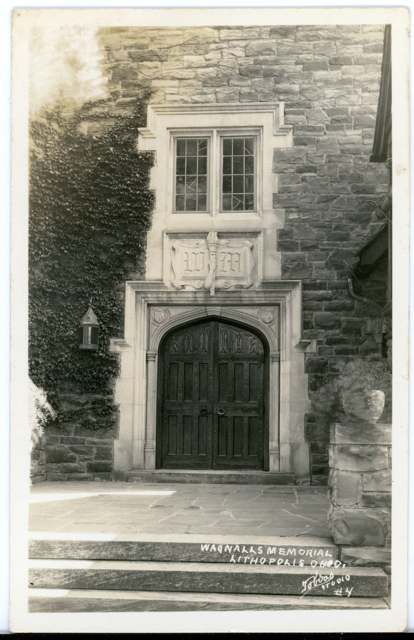
Photo: Columbus Metropolitan Library, via DPLA/Ohio Digital Network, no known copyright restrictions · Wikimedia Commons
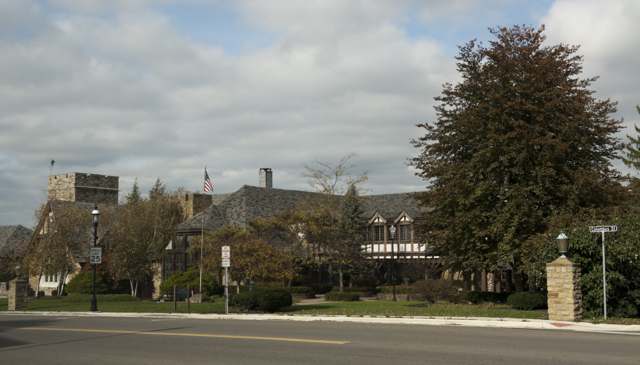
Photo: Sixflashphoto, via Wikimedia Commons, CC BY-SA 4.0 · Wikimedia Commons
Local history sources: archive.org · archive.org · archive.org · en.wikipedia.org · en.wikipedia.org · en.wikipedia.org · commons.wikimedia.org · commons.wikimedia.org · commons.wikimedia.org · commons.wikimedia.org
Water
Groundwater wells (3 wells) The water here
- Lithopolis Village88% of residentsGroundwater wells (3 wells)
- Columbus Public Water System9% of residentsScioto River (Griggs & O'Shaughnessy), Hoover Reservoir on Big Walnut Ck, plus wells
- Canal Winchester City2% of residentsLocal groundwater wells (Franklin Co.)
- Fairfield County Utilities0% of residentsLocal groundwater wells (central Ohio, aquifer undocumented)
- Pickerington City0% of residentslocal buried-valley aquifer (wells near Diley Road)
Its ZIP codes
Each ZIP code that touches Lithopolis, with the share of its residents who live here and the same headline figures as the ZIP page.
| ZIP | Share | Water | Radon | Home value | Schools | Flood |
|---|---|---|---|---|---|---|
| 43136 Lithopolis | 93% | Groundwater wells (3 wells) | 7.5 pCi/L average radon | Median year built 2014 | Bloom Carroll Local · 4 stars overall | 0.0% of residents in the 1% floodplain |
| 43110 Columbus and Canal Winchester | 1% | South Well Field wells in Scioto valley sand and gravel, off Parsons Ave near Shadeville and Lockbourne | 7.9 pCi/L average radon | Median year built 2002 | Canal Winchester Local · 4 stars overall | 11% of residents in the 1% floodplain |
The county
Fairfield County: 13 ZIP codes, 27 cities, villages and townships, 144,692 people.
Nearby places
Cite this page
Cite this page as:
Cracked Buckeye (Open Shower Co), "Lithopolis, Fairfield County", https://crackedbuckeye.com/place/lithopolis/, built 2026-09-16, accessed [date].
Machine-readable: /api/place/lithopolis.json (open JSON, CC BY 4.0 for the compilation; the underlying records keep their own terms) · How to cite · Report a correction · Built 2026-09-16