Notable people · Politics · Law · Civil War
Edwin Stanton
Steubenville lawyer who became Lincoln's Secretary of War from 1862 to 1868 and whose firing by Andrew Johnson led to Johnson's impeachment.
Born December 19, 1814, Steubenville (two-story brick house behind the Market Street building marked by the 1897 tablet)
Died December 24, 1869, Washington, DC
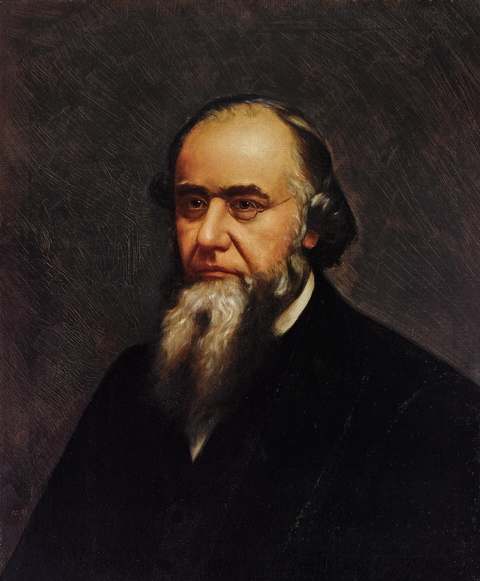
At a glance
- Born
- December 19, 1814, Steubenville (two-story brick house behind the Market Street building marked by the 1897 tablet) (Jefferson County) source
- Died
- December 24, 1869, Washington, DC source
- Buried
- Oak Hill Cemetery, Washington, Reno Hill, Lot 675 source
- Also known as
- Edwin M. Stanton, Edwin Stanton, E. M. Stanton
- Known as
- Politics, Law, Civil War
Life story
Edwin M. Stanton was born in Steubenville in 1814, the son of Quaker-descended physician David Stanton, whose death in 1827 put the boy to work in James Turnbull's bookstore. He spent about a year and a half at Kenyon College in Gambier (1831-1832) before money ran out, studied law in Steubenville under his guardian Daniel Collier, and practised in Cadiz, where he was Harrison County prosecutor in 1837, and then in Steubenville with Senator Benjamin Tappan. He was the Ohio Supreme Court's reporter from 1842 and Steubenville's first city solicitor in 1847 before moving his practice to Pittsburgh, keeping his Steubenville home. Buchanan made him Attorney General in December 1860, and Lincoln made him Secretary of War in January 1862; he ran the Union war machine, stood at Lincoln's deathbed, and clashed with Andrew Johnson until Johnson's attempt to remove him led to impeachment in 1868. Grant nominated him to the Supreme Court and the Senate confirmed him on December 20, 1869, but he died four days later; Steubenville raised a bronze statue of him by its native sculptor Alexander Doyle in 1911.
Ohio ties
- Steubenville (1814-1831)
birthplace and boyhood; clerk in James Turnbull's bookstore after his father's death in 1827 Jefferson County · source - Gambier (Kenyon College) (1831-1832)
student from April 1831 until September 7, 1832, when he left in his junior year for lack of money Knox County · source - Columbus (1832-1833, 1836, 1842-1845)
ran Turnbull's branch bookstore; married Mary A. Lamson there December 31, 1836; elected reporter of the Ohio Supreme Court March 7, 1842 (Ohio Reports vols. 11-13) Franklin County · source - St. Clairsville (1835)
examined for admission to the bar in August 1835 Belmont County · source - Cadiz (1836-1838)
law partner of Chauncey Dewey from January 1, 1836; Harrison County prosecuting attorney from 1837 Harrison County · source - Steubenville (1838-1847 and after)
law partner of Benjamin Tappan from October 1838; first city solicitor, 1847; kept his home and office here after moving his practice to Pittsburgh Jefferson County · source - Carlisle (1868)
featured speaker at the October 3, 1868 Republican rally for Robert C. Schenck Warren County · source
Timeline
- 1814 Born December 19 in Steubenville, the first of four children of Dr. David Stanton and Lucy Norman Stanton. source
- 1827 His father died suddenly in December, leaving the family poor; his mother opened a store in the front room and Edwin went to work in a Steubenville bookstore. source
- 1831 Left Steubenville by stage in April for Kenyon College at Gambier, delayed two days at Wooster by asthma. source
- 1832 Left Kenyon on September 7 in his junior year, intending to return in a year or two, and never did. source
- 1835 Passed his bar examination at St. Clairsville in August, though not yet of age to be formally admitted. source
- 1836 Joined Chauncey Dewey's law practice in Cadiz on January 1 and married Mary A. Lamson in Columbus on December 31. source
- 1837 Was elected Harrison County prosecuting attorney as a Democrat. source
- 1838 Returned to Steubenville in October as law partner of Benjamin Tappan, elected to the U.S. Senate that December. source
- 1842 The legislature elected him reporter of the Ohio Supreme Court on March 7 for a three-year term at $300 a year. source
- 1844 His wife Mary died in March in Steubenville. source
- 1847 Became Steubenville's first city solicitor in January, then on October 30 was admitted to the Allegheny County bar in Pittsburgh, keeping his Steubenville home and office. source
- 1860 Sworn in as U.S. Attorney General under President Buchanan on December 20. source
- 1862 Became Secretary of War under Lincoln on January 20. source
- 1863 Moved 20,000 soldiers more than 1,200 miles by rail in a week to relieve the siege of Chattanooga. source
- 1867 President Johnson suspended him on August 12; the Senate reinstated him in January 1868 and he barricaded himself in the War Department for weeks while Johnson was impeached. source
- 1868 Was the featured speaker at a Republican rally near Carlisle, Warren County, on October 3 for Congressman Robert C. Schenck, who defeated Clement Vallandigham. source
- 1869 Nominated by Grant to the Supreme Court and confirmed 46-11 on December 20; he died of asthma on December 24 before taking the oath and was buried in Oak Hill Cemetery. source
- 1897 Jefferson County schoolchildren paid for a bronze tablet marking his birthplace on Market Street, placed during Steubenville's centennial, whose first day (August 24) was given to his memory. source
- 1906 Andrew Carnegie spoke on Stanton Memorial Day at Kenyon, where he endowed a chair of political economy in Stanton's memory; Eliphalet Andrews's portrait of Stanton was hung in the Jefferson County courthouse on April 14. source
- 1911 Alexander Doyle's bronze statue of Stanton was unveiled at the Jefferson County Courthouse on the Thursday of Steubenville's homecoming week (September 7) before a crowd of at least 20,000. source
Stories
Bishop Chase's horse
Kenyon in 1831 was a college in an unbroken forest, where the rising bell rang at 5 in winter and students cut their own firewood. Stanton was taken with a Miss Douglass who lived in a log cabin some miles off, and one stormy night he and a friend rode Bishop Philander Chase's fine horse, Cincinnatus, out to see her and her sisters and back over deep roads. The next morning the bishop found his horse exhausted and spattered with mud, and the culprits were brought before the faculty. On the advice of professor Heman Dyer, Stanton went to the bishop and confessed. According to Dyer, the bishop spoke to him about his widowed mother and his future, and the two ended in tears and parted friends.
Fighting the South at Kenyon
At Kenyon Stanton chose an 'irregular course' that let him pick his own studies, and he at once joined the Philomathesian Literary Society, giving it its first record book, inscribed 'Presented by E. M. Stanton.' The states'-rights and nullification fight of the early 1830s then reached the society. Students who backed John C. Calhoun's view that a state stood above the United States, which Stanton attacked hard, resigned and founded a new society. Stanton was elected secretary of the reorganized Philomathesians and took one side or the other in nearly every debate until he left Gambier in 1832. Thirty years later he was running the Union's war against secession.
A tablet on the wrong building
In 1897, for Steubenville's centennial, the county's schoolchildren bought a bronze tablet reading 'Born Here 19th December, 1814' and fixed it over a doorway of a three-story brick building on Market Street. Joseph Doyle's 1911 memoir warned that a stranger would be misled: the real birthplace was a two-story brick house a few feet behind it, gable end to the street, hidden once the bigger building went up in front. The money left over from the tablet started the fund for a statue. Steubenville-born sculptor Alexander Doyle offered his work, the legislature in 1908 let the county commissioners add $5,000, and the bronze was unveiled at the courthouse in September 1911 before a crowd of at least 20,000, with Governor Judson Harmon, Frederick Dent Grant, Nelson Miles and Daniel Sickles on the program.
The telegraph boy who remembered him
Stanton moved his law practice from Steubenville to Pittsburgh in 1847. There a young telegraph messenger named Andrew Carnegie often delivered messages to his office and was proud to get a nod of recognition when he stopped him in the street. Carnegie remembered him as vigorous and always serious, with nothing of Lincoln's humour or ability to laugh. More than fifty years later Carnegie gave the address on Stanton Memorial Day at Kenyon College, published in 1906, calling him Kenyon's most illustrious son. He described Stanton as a Democrat who stayed a Free Soiler, true to his family's anti-slavery tradition.
Named for Edwin Stanton
- Stanton Middle School (Hammondsville, Jefferson County) source
- Stanton Street (laid out on his former orchard, 'The Patch', crossing Grant Street) (Steubenville, Jefferson County) source
- Stanton chair of political economy, Kenyon College (endowed by Andrew Carnegie) (Gambier, Knox County) source
- Stanton County, Nebraska; Stanton Park and Fort Stanton, Washington, D.C. (Nebraska; Washington, D.C.) source
Sites to know
Homes, graves, markers, museums and monuments; the numbered ones are on the map.
- 1 Edwin M. Stanton statue by Alexander Doyle (1911), Jefferson County Courthouse
Steubenville, 301 Market Street (corner of Market and North 3rd) Jefferson County · source - 2 Ohio historical marker 7-41, Secretary of War Edwin M. Stanton
Steubenville, Jefferson County Courthouse, left of the statue Jefferson County · source - Birthplace site and 1897 schoolchildren's tablet, upper Market Street (unknown)
Steubenville, Market Street Jefferson County · source - 3 Ohio historical marker 7-42, Kenyon College, Pioneer in Higher Education (names Stanton)
Gambier, SW corner of Wiggins St. and Chase Ave. Knox County · source - 4 Ohio historical marker 21-83, Carlisle Station Depot / Schenck-Stanton Rally, October 3, 1868
Carlisle, 453 Park Drive (opposite the Carlisle Area Historical Society Museum) Warren County · source - Stanton grave, Oak Hill Cemetery, Reno Hill, Lot 675
Washington, D.C. (Georgetown) source
Ohio places
Where Edwin Stanton was born, lived, worked and is remembered, with the ZIP code, town and county pages for each.
- Born: Steubenville, Jefferson County Steubenville · Jefferson County
- Connected: Steubenville, Jefferson County Steubenville · Jefferson County
- Connected: Gambier, Knox County Gambier · Knox County
- Connected: Columbus, Franklin County Columbus · Franklin County
- Connected: St. Clairsville, Belmont County Belmont County
- Connected: Cadiz, Harrison County Cadiz · Harrison County
- Connected: Steubenville, Jefferson County Steubenville · Jefferson County
- Connected: Carlisle, Warren County Carlisle · Warren County
Myths and corrections
Things often said about Edwin Stanton, and what the record shows.
Often said Stanton graduated from Kenyon College (the state marker at Gambier lists him among its nineteenth-century graduates).
The record He entered Kenyon in April 1831 and left on September 7, 1832, in his junior year, because his family could not afford it; he never returned or took a degree. source
Often said The 1897 Market Street tablet marks the building where Stanton was born.
The record The tablet is on the front of a three-story brick building; Doyle's 1911 memoir says the actual birthplace was a two-story brick house a few feet behind it, hidden when the larger building was put up. source
Often said At Lincoln's deathbed Stanton said, 'Now he belongs to the ages.'
The record Witnesses' accounts differ; he said either 'Now he belongs to the ages' or 'Now he belongs to the angels,' and the wording has never been settled. source
Often said Stanton was a Justice of the U.S. Supreme Court, as the 1911 statue inscription says.
The record The Senate confirmed him on December 20, 1869 and he accepted, but he died on December 24 before taking the oaths; he is the only confirmed nominee to die before doing so. source
Documents
Primary records: patents, letters, court and government files, nominations and old county histories, each at the archive that holds it.
- Joseph B. Doyle, 'In Memoriam Edwin McMasters Stanton: His Life and Work, with Account of Dedication of Bronze Statue in His Native City' (Steubenville: Stanton Monument Association, 1911) 1911, Internet Archive
- Andrew Carnegie, 'Edwin M. Stanton: An Address on Stanton Memorial Day at Kenyon College' (Doubleday, Page, 1906) 1906, Internet Archive
- Frank Abial Flower, 'Edwin McMasters Stanton: The Autocrat of Rebellion, Emancipation, and Reconstruction' (1905) 1905, Internet Archive
Pictures
Free to use with the credit shown. Select a picture for the original and its license.
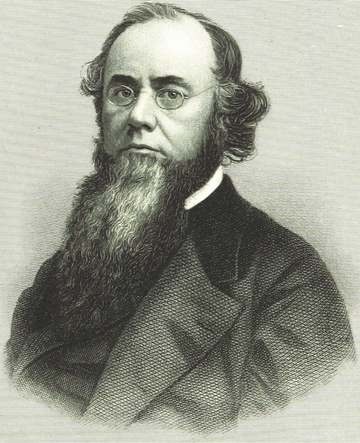
Public domain 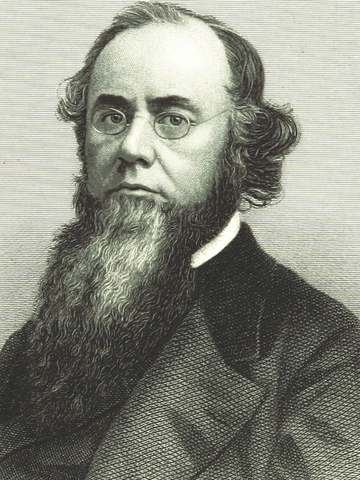
Public domain 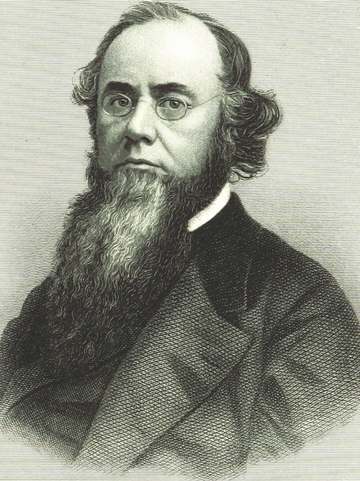
Public domain 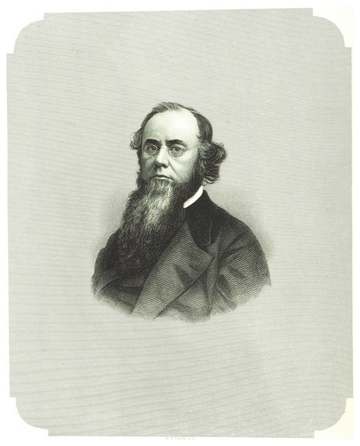
Public domain 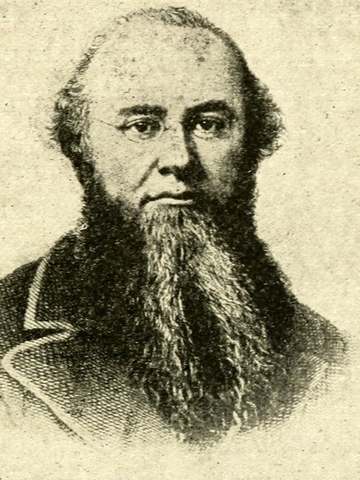
No known restrictions 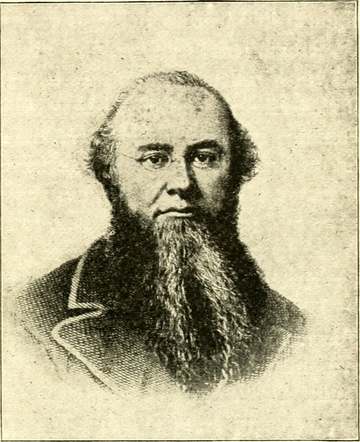
No known restrictions 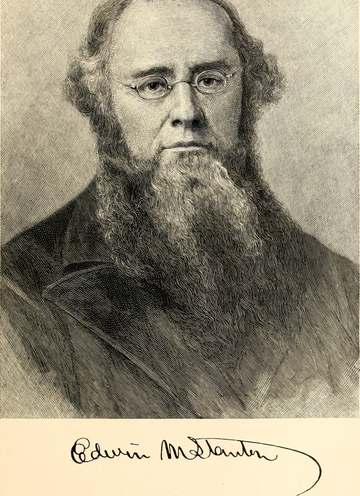
No known restrictions 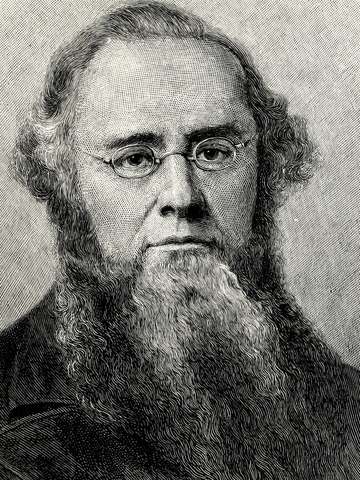
No known restrictions 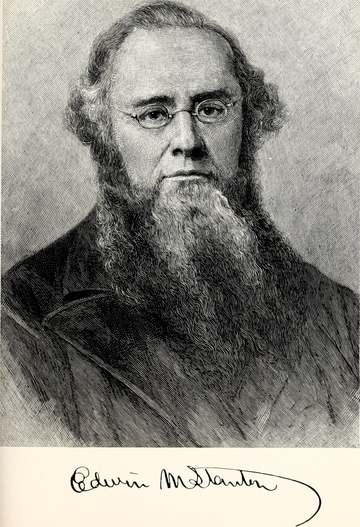
No known restrictions 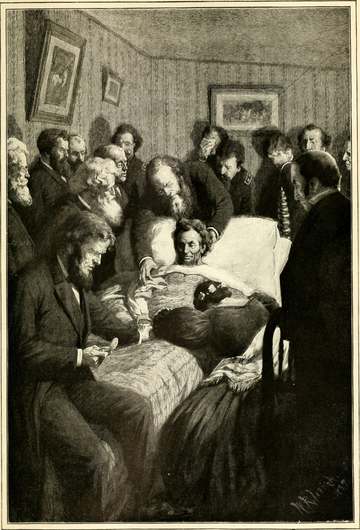
No known restrictions 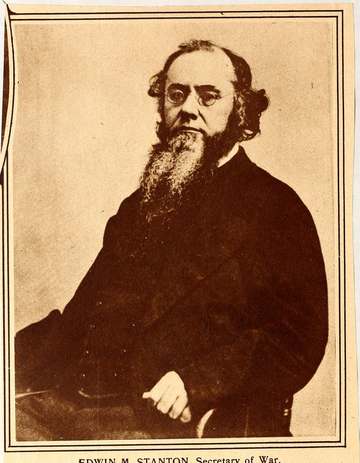
No known restrictions 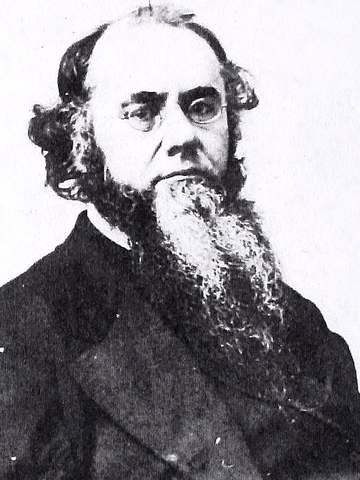
No known restrictions


Sources
Confidence. High: the main facts were confirmed in sources we opened.
- https://en.wikipedia.org/wiki/Edwin_Stanton
- https://archive.org/details/mcmastersstanton00doylrich
- https://archive.org/details/edwinmcmastersst00flowrich
- https://archive.org/details/edwinmstantonad00carn
- https://remarkableohio.org/marker/7-41-secretary-of-war-edwin-m-stanton/
- https://remarkableohio.org/marker/7-42-kenyon-college-pioneer-in-higher-education/
- https://remarkableohio.org/marker/21-83-carlisle-station-depot-schenck-stanton-rally-october-3-1868/
- https://en.wikipedia.org/wiki/Assassination_of_Abraham_Lincoln
- https://en.wikipedia.org/wiki/Jefferson_County_Courthouse_(Ohio)
- https://www.findagrave.com/memorial/973/edwin-mcmasters-stanton
- https://commons.wikimedia.org/wiki/File:Edwin_M._Stanton,_Secretary_of_War_-_NARA_-_526869.jpg
- https://commons.wikimedia.org/wiki/File:Edwin_M._Stanton_-_Brady-Handy.jpg
- https://commons.wikimedia.org/wiki/File:Edwin_M._Stanton%27s_birthplace.jpg
- https://commons.wikimedia.org/wiki/File:Stanton%27s_home_in_Steubenville.jpg
- https://commons.wikimedia.org/wiki/File:Stanton_Statue,_Steubenville,_Ohio_-_DPLA_-_d2d043f8971cdac97f955556906b334d_(page_1).jpg
- https://commons.wikimedia.org/wiki/File:Charles_Patterson_Filson.Portrait_of_Edwin_M._Stanton,Lincoln%27s_Secretary_of_War.Oil_on_canvas,76,8_x_63,5_cm.jpg


Every link goes to the original source. Profile researched 2026-10-15.