How Amanda began
Amanda was laid out about 1830 by Samuel Kessler (also recorded as Kester) on the old Chillicothe road, near the log tavern that Virginia-born Frederick Leathers, the neighborhood's first settler, had already run for years. The Cincinnati and Muskingum Valley Railroad reached the village by 1850, and by the early 1880s Amanda was drawing an estimated four hundred thousand bushels of grain a year from the surrounding farms for shipment east. The village's own modern history page instead dates its founding to 1819, a discrepancy no source resolves. Amanda incorporated in 1903 and remains today the trade center of Amanda Township in the southwest corner of Fairfield County.
Settled date unrecorded (Frederick Leathers, a Virginian, is called the first settler in the vicinity; he kept one of the county's first taverns on the old Chillicothe road, about a hundred yards east of the later village), platted about 1830, by Samuel Kessler (Kester); the village's own history page instead gives 1819, without explanation, incorporated 1903, by Samuel Kessler (Kester).
Where the name comes from
Two different explanations for the name are in circulation, and neither is fully documented. Scott's 1877 county history says it was "commonly understood" that William Hamilton, Fairfield County's first surveyor, gave the settlement its name, and the village's own modern history page repeats this, adding only that "why remains a delightful mystery." Separately, Wikipedia's article on Amanda Township states the township was named for Fort Amanda, a War of 1812 stockade built in what is now Auglaize County, without explaining any connection between the fort and Hamilton's choice of name for this village and township.
Before the town
The best-documented Native site associated with Amanda Township is Tobytown (Toby Town), a village on Toby Creek (renamed Little Walnut Creek and so marked on later maps), a mile or so northwest of Royalton and several miles north of Amanda village itself. Graham's 1883 county history places Tobytown within Amanda Township and identifies its people as Delaware, under "chief Toby, who governed there"; a firsthand 1877 letter from Royalton resident Thomas Cole, printed in Scott's county history, instead places the site precisely in Bloom Township, section 33, and adds that its residents left for Sandusky about 1806 or 1807 to join the Wyandot there, after which only stragglers were occasionally seen. Cole also records that settler William Clark, digging on the abandoned village site for clay to daub his cabin, unearthed a double handful of silver rings, brooches and other ornaments buried with what were evidently a chief's remains, and that arrowheads, human bones and other relics kept turning up under the plow for years afterward. No source ties any Native site or encounter to Amanda village's own ground, three miles or more south of Tobytown; see the county file for the wider record of Wyandot and Delaware presence across Fairfield County.
Nations recorded here: Lenape (Delaware), Wyandot.
- Tobytown (Toby Town) (village) — on Toby Creek (now Little Walnut Creek), about a mile northwest of Royalton; Graham's 1883 history places this in Amanda Township, while an 1877 resident's letter printed by Scott places it in Bloom Township, section 33 -- several miles north of Amanda village either way, occupied until its Delaware residents left for Sandusky and the Wyandot towns there, about 1806-1807 (archive.org)
Timeline
- — The Clark family settles within thirty rods of Tobytown, in what becomes Bloom or Amanda Township; they are never seriously troubled by their Native neighbors in the years that follow.
- — Tobytown's Delaware residents leave for Sandusky to join the Wyandot there; a few stragglers are seen for a year or two afterward before the site is finally abandoned.
- date unrecorded — Frederick Leathers settles nearby and opens a two-story log tavern with an attached still-house on the old Chillicothe road, just east of the future village; it burns to the ground about 1858 under later owner Isaac Griffith.
- — Samuel Kessler lays out the village of Amanda; the first three houses belong to a shoemaker, a cooper, and a blacksmith, and Joseph Reed brings in the first stock of goods to sell, "about a wheel-barrow load."
- — Amanda's post office is established.
- — The Presbyterian Church at Amanda is organized with thirteen original members, William McKinley, John Wylie and Thomas Propeck among its first elders; membership grows to ninety within a year.
- — The railroad (later the Cincinnati and Muskingum Valley Railroad) is extended to Amanda, and development in the village begins in earnest.
- — Central Valley Lodge, I.O.O.F. No. 548, is instituted at Amanda on July 10.
- — Photographer Marion G. Warner takes two photographs of a barber shop on State Road in Amanda, with the Baptist Church, at the corner of Forrer and Mulberry streets by the railroad tracks, visible in the background.
- — Amanda incorporates as a village.
Stories
Silver Rings in the Ashes of Tobytown
After the Delaware left Tobytown for Sandusky around 1806, a settler named William Clark built his cabin on the abandoned village site and, digging for clay to daub its walls, turned up a double handful of silver rings, brooches and other ornaments mixed among human bones -- almost certainly the grave of a chief. His young grandson Elijah carried some of the pieces home to his mother, who thought she smelled something unpleasant about them and made him carry them straight back to the ground. The next Sunday two young men from a neighboring family dug the ornaments up again anyway. For years afterward, Thomas Cole wrote in 1877, arrow-heads, human bones and other relics of the vanished village kept turning up under the plow, though by then "tradition alone now marks the spot."
A Wheelbarrow Load of Goods
When Samuel Kessler laid out Amanda about 1830, the new village's commerce started about as small as it could: Joseph Reed brought in the first stock of goods to sell, reckoned at "about a wheel-barrow load," before Joseph Temple offered a somewhat larger assortment and Henry Sunderman built the first business of any real size. By the early 1880s the transformation was complete -- three general stores, two hotels, a grist mill, a brickyard and two harness shops served a farm trade so large that an estimated four hundred thousand bushels of grain were sold and shipped from Amanda every year, drawn from every direction by roads that all sloped gently down toward the village.
Photographs
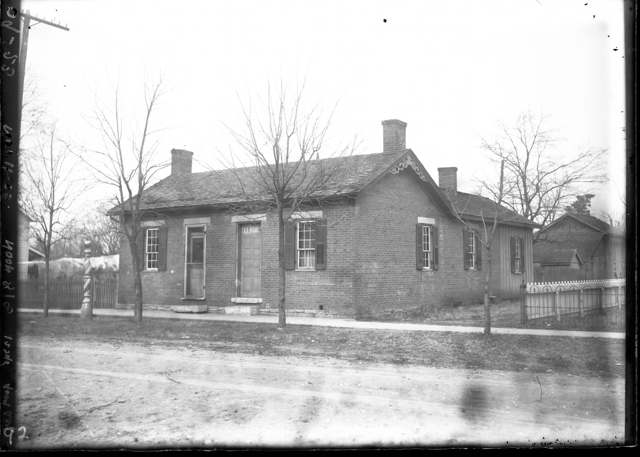
Photo: Marion G. Warner (1861-1922); Midpointe Library System, via the Digital Public Library of America and Ohio Digital Network, public domain · Wikimedia Commons
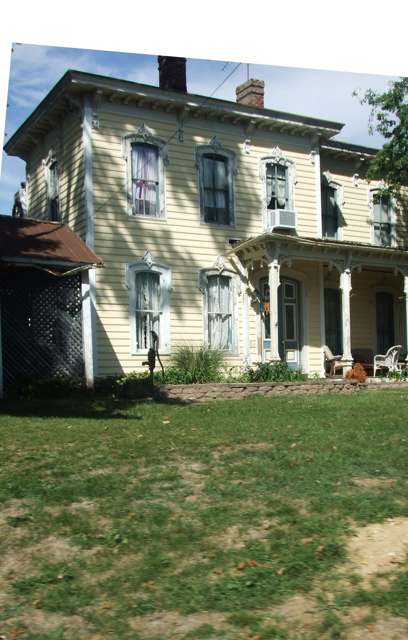
Photo: Sadpine, via Wikimedia Commons, CC BY-SA 3.0 · Wikimedia Commons
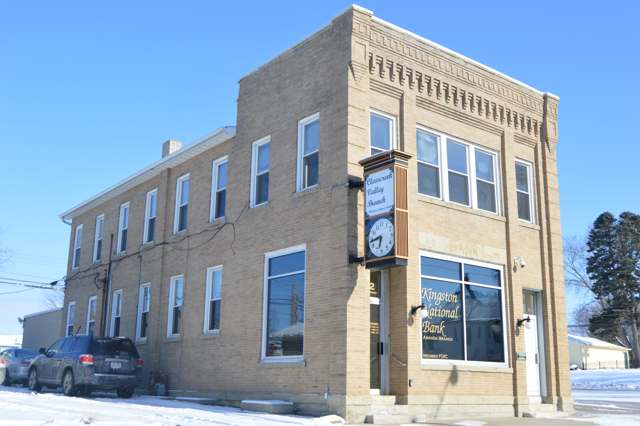
Photo: Nyttend, via Wikimedia Commons, public domain · Wikimedia Commons
Local history sources: archive.org · archive.org · en.wikipedia.org · en.wikipedia.org · en.wikipedia.org · villageofamanda.com · en.wikipedia.org · commons.wikimedia.org · commons.wikimedia.org · commons.wikimedia.org
Water
Mostly private wells The water here
- Amanda Village100% of residentsGroundwater wells (3 wells)
Its ZIP codes
Each ZIP code that touches Amanda, with the share of its residents who live here and the same headline figures as the ZIP page.
| ZIP | Share | Water | Radon | Home value | Schools | Flood |
|---|---|---|---|---|---|---|
| 43102 Clearcreek Township and Amanda | 15% | Mostly private wells | 6.5 pCi/L average radon | Median year built 1979 | Amanda-Clearcreek Local · 3 stars overall | 1.4% of residents in the 1% floodplain |
The county
Fairfield County: 13 ZIP codes, 27 cities, villages and townships, 144,692 people.
Nearby places
Cite this page
Cite this page as:
Cracked Buckeye (Open Shower Co), "Amanda, Fairfield County", https://crackedbuckeye.com/place/amanda/, built 2026-09-16, accessed [date].
Machine-readable: /api/place/amanda.json (open JSON, CC BY 4.0 for the compilation; the underlying records keep their own terms) · How to cite · Report a correction · Built 2026-09-16