How Galena began
Galena stands on a ridge between the Big and Little Walnut Creeks in Berkshire Township, on ground the Carpenter family began developing with a sawmill in 1809. William Carpenter platted the village in April 1816 under the name Zoar, and it kept that name until about 1834, when the need for a post office distinct from an existing Zoar, Ohio, forced a change to Galena. Nineteenth-century farmers plowed down at least three ancient mounds within a few miles of the village, one of them professionally excavated in 1879 for Harvard's Peabody Museum. Galena grew slowly around its mills, churches and, later, its Columbus & Mount Vernon Railroad depot, and remained a modest village of a few hundred people for more than a century before recent Columbus-area growth roughly tripled its population since 2000.
Settled 1809 (Gilbert Carpenter Sr.'s sawmill, on the site), platted April 3, 1816, as "Zoar," by William Carpenter of Sunbury; renamed Galena c. 1834, by William Carpenter.
Where the name comes from
The village was platted as Zoar in 1816, a Biblical name (the small town Lot fled to in Genesis) that the 1880 county history guesses the founders chose because they felt it "a city of refuge, though a little one." About 1834, when local residents sought a post office, they found the name Zoar was already taken elsewhere in Ohio. At the suggestion of Nathan Dustin the village took the name Galena instead. Establishing the new post office still required the signature of the nearest existing postmaster, Marcus Curtis, on nearby "Yankee Street"; Curtis at first refused, telling the petitioners it was no use, that people would always have to come to Yankee Street for their mail anyway. The office was created regardless, and it is Yankee Street residents who now come to Galena for their mail.
Before the town
No source found describes a Native village or camp on the exact ridge where Galena stands, but the surrounding country carried real physical evidence of much older occupation. In August 1879 Prof. John T. Short of Ohio University, working for Harvard's Peabody Museum of American Archaeology and Ethnology, opened three mounds within a few miles of the village and published a detailed report reprinted in the 1880 county history. Two stood together on a bluff between Big Walnut Creek and Spruce Run: a central mound inside a circular earthen enclosure 570 feet around, with a graded ceremonial ramp descending to the stream, which Short excavated to find a bed of ashes and calcined bone at its center, ringed by broken pottery, one vessel probably twelve to fourteen inches tall and decorated with a lozenge pattern; he concluded the mound likely marked a site of cremation or sacrifice. A smaller mound, 165 feet around, stood on the Phillips estate a mile south of Galena. A third, entirely built of stone and already partly quarried away by its owner by 1879, stood three miles south of the village on Isaac Brimberger's farm; beneath its center diggers found a timber-roofed burial vault holding the remains of three people, one a child, wrapped in cloth woven from plant fiber and animal hair. These earthworks belong to the mound-building traditions that archaeologists now call the Adena and Hopewell cultures, though the 1880 excavators did not use those names. Delaware County as a whole is named for the Lenape (Delaware) people, and the Wyandot, Shawnee and Mingo also hunted, traveled and lived in this part of Ohio before the 1795 and 1805 treaties opened it to settlement; see the Delaware County file for that broader record, since no source ties any of those historic nations to a specific site at Galena itself.
Nations recorded here: Adena culture, Hopewell culture, Lenape (Delaware), Wyandot.
- Circular enclosure and mound on the Jacob Rhodes estate (earthwork) — on a bluff between Big Walnut Creek and Spruce Run, near Galena, prehistoric mound-building culture (Adena or Hopewell) (archive.org)
- Mound on the Phillips estate (mound) — one mile south of Galena, prehistoric mound-building culture (archive.org)
- Stone mound and burial vault on the Brimberger farm (burial) — three miles south of Galena, prehistoric mound-building culture (archive.org)
Timeline
- — Gilbert Carpenter Sr. builds a sawmill using a millrace cut between the Big and Little Walnut Creeks, on the site that becomes Galena.
- — William Carpenter plats the village on April 3 under the name Zoar; the plat is recorded April 23.
- — Benjamin Carpenter Jr. builds a gristmill on a second millrace just south of the first.
- — The largest church building in Berkshire Township, a Methodist frame meetinghouse, is erected at Galena.
- — The village is renamed Galena when a post office is established and the existing name Zoar proves already taken.
- — The Galena Lodge of the Independent Order of Odd Fellows, No. 404, is instituted, taking over the hall of the older Charity Masonic Lodge.
- — Galena's Protestant Episcopal church is organized by the Rev. John Ely with eight or ten members, drawing much of its early membership from the older Berkshire Corners congregation.
- — Prof. John T. Short excavates three mounds near Galena for Harvard's Peabody Museum, finding a ceremonial enclosure with a graded ramp, cremated remains and pottery, plus a separate timber burial vault.
- — Galena's population grows from 653 to 924, part of a longer climb from about 300 residents in 2000 toward roughly 1,000 by the early 2020s.
Stories
A City of Refuge, Renamed by a Postmaster's Refusal
Galena's first name lasted less than twenty years. William Carpenter platted the village in April 1816 and called it Zoar, after the small town in Genesis that Lot escaped to ahead of the destruction of Sodom, apparently because its founders saw their own settlement as a similar refuge. When residents sought their own post office around 1834, the postal service turned them down: there was already a Zoar in Ohio. On the suggestion of Nathan Dustin, the village took the name Galena instead. But creating any new post office required the written consent of the nearest sitting postmaster, and that was Marcus Curtis, on nearby Yankee Street, who had been collecting the mail traffic himself. Curtis refused to sign, telling the Galena petitioners flatly that it would do them no good, since people would always end up coming to Yankee Street anyway. His prediction did not hold. The office at Galena was established over his objection, and it is Yankee Street that now sends its mail through Galena.
What a Harvard Excavation Found Near Galena
In August 1879, Prof. John T. Short of Ohio University spent several days opening ancient mounds within a few miles of Galena on behalf of the Peabody Museum of American Archaeology and Ethnology at Harvard, and his detailed report survives in the 1880 county history. On a bluff between Big Walnut Creek and Spruce Run, he found a mound standing inside a circular earthwork 570 feet around, with a graded ceremonial way cut down to the water at an angle of about thirty degrees. Digging into the mound's center, he uncovered a circular bed of reddish ash eight feet across, shot through with a seam of white, calcined bone, and ringed by the broken pieces of a large decorated pottery vessel; he judged the site had likely been used for cremation or sacrifice. Three miles south, on Isaac Brimberger's farm, an entirely different kind of mound, built up out of stone rather than earth, had already been partly quarried away by its owner when a timber-roofed burial vault was found at its center, holding the remains of three people laid in a covering of cloth woven from plant fiber and animal hair.
Photographs
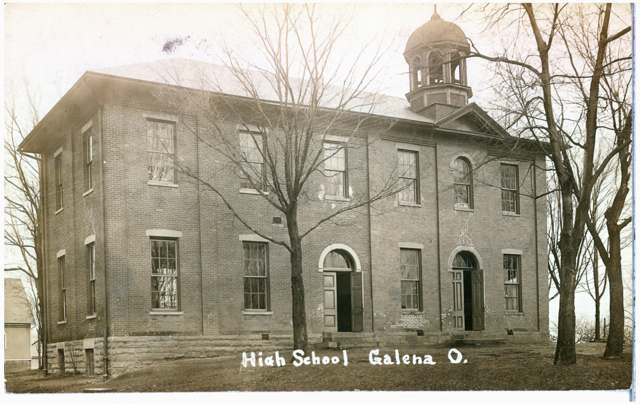
Photo: Columbus Metropolitan Library, via DPLA/Ohio Digital Network, no known copyright restrictions · Wikimedia Commons
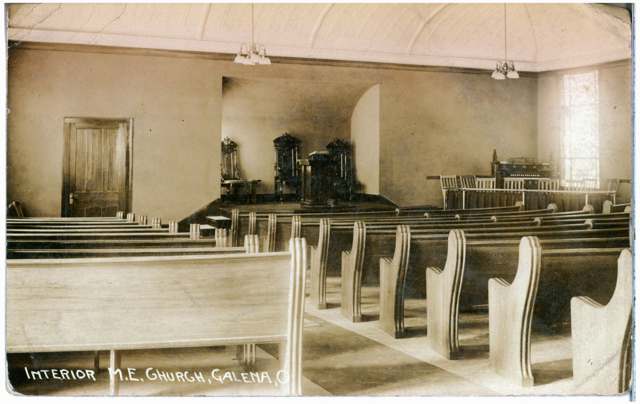
Photo: Columbus Metropolitan Library, via DPLA/Ohio Digital Network, no known copyright restrictions · Wikimedia Commons
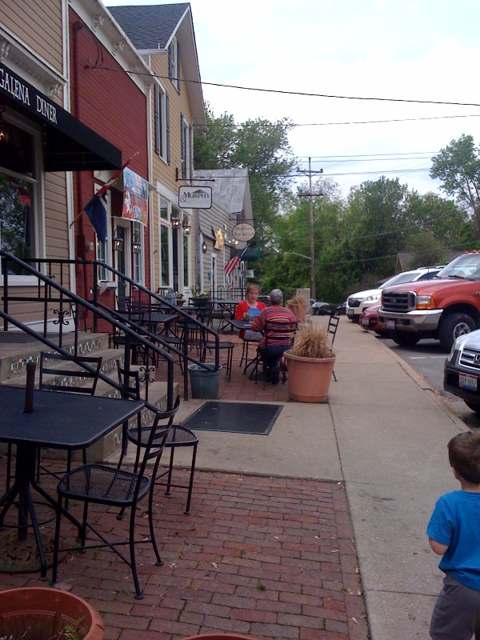
Photo: Ben Turover, via Wikimedia Commons, CC BY-SA 3.0 · Wikimedia Commons
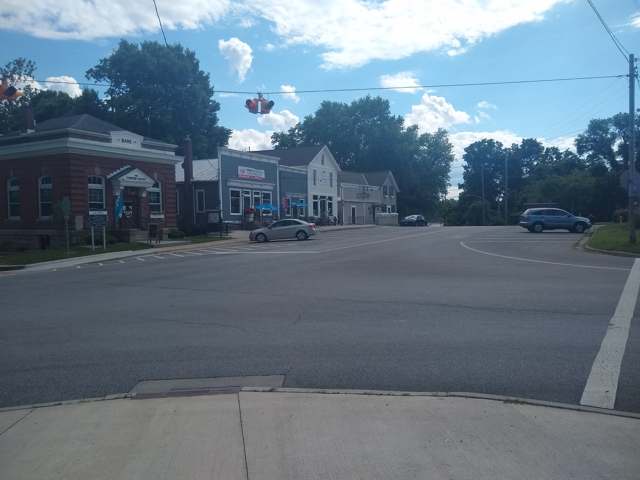
Photo: Andrew Humphreys, via Wikimedia Commons, CC BY 4.0 · Wikimedia Commons
Local history sources: archive.org · en.wikipedia.org · commons.wikimedia.org · commons.wikimedia.org · commons.wikimedia.org · commons.wikimedia.org
Water
Alum Creek Reservoir intake at the Scott plant, Lewis Center Rd at Africa, Orange Township The water here
- Del-co Water Company, Inc.100% of residentsOlentangy River, O'Shaughnessy and Alum Creek reservoirs, plus Knox County wells
Its ZIP codes
Each ZIP code that touches Galena, with the share of its residents who live here and the same headline figures as the ZIP page.
| ZIP | Share | Water | Radon | Home value | Schools | Flood |
|---|---|---|---|---|---|---|
| 43021 Genoa Township and Galena | 6% | Alum Creek Reservoir intake at the Scott plant, Lewis Center Rd at Africa, Orange Township | 6.2 pCi/L average radon | Parcel list only | Olentangy Local · 5 stars overall | 1.6% of residents in the 1% floodplain |
The county
Delaware County: 11 ZIP codes, 26 cities, villages and townships, 214,126 people.
Nearby places
Cite this page
Cite this page as:
Cracked Buckeye (Open Shower Co), "Galena, Delaware County", https://crackedbuckeye.com/place/galena/, built 2026-09-16, accessed [date].
Machine-readable: /api/place/galena.json (open JSON, CC BY 4.0 for the compilation; the underlying records keep their own terms) · How to cite · Report a correction · Built 2026-09-16