How Worthington began
Worthington began as a planned New England colony: in 1802 a group of Connecticut and Massachusetts families organized the Scioto Company under James Kilbourne, bought about 16,000 acres along the Whetstone River (now the Olentangy), and in 1803 sent eleven families west by wagon to settle it. They laid the village out around a public green in the New England style and named it for Thomas Worthington, who had helped them find and buy the land and who later became Ohio's governor. It grew slowly as a farm and mill village and college town — Philander Chase started the school here that became Kenyon College before moving it to Gambier in 1824 — until an 1893 streetcar line to Columbus began turning it into a suburb, and post-war growth did the rest. The Jeffers Mound, the last visible piece of a Hopewell ceremonial earthwork that stood on this ground two thousand years before Kilbourne's wagons arrived, still rises on the city's west side.
Settled 1803, platted 1804, incorporated 1835, by James Kilbourne and the Scioto Company, on behalf of eleven emigrant families from Connecticut and Massachusetts.
Where the name comes from
The settlers named their new village for Thomas Worthington, who helped James Kilbourne locate and negotiate the Scioto Company's purchase of the land and who went on to serve as one of Ohio's first two United States senators and later as governor. The village was formally named for him on August 10, 1803, months before the first families finished their six-week wagon journey from Connecticut.
Before the town
Long before the Scioto Company's families arrived, people of the Hopewell culture built a ceremonial complex on a bluff above the Olentangy River on what is now Worthington's west side: a rectangular embankment about three feet high enclosing roughly eight acres, two circular enclosures, and two mounds, built and used for ritual purposes between about 100 BC and AD 400. Farming destroyed most of the complex over the nineteenth century; the larger mound, later named for the Jeffers family who owned the land, survives and was donated to the Worthington Historical Society in 1974, the same year it entered the National Register of Historic Places. Two thousand years later, when the Scioto Company's settlers arrived, the 1880 county history recorded that Wyandot people from towns near Sandusky 'frequently' traveled through the area and stopped at settlers' houses, and that relations were friendly — a false alarm over an accidental gunshot once led settlers to briefly fortify the academy building, but no attack followed. No source found names a specific village, camp or trail belonging to the historic-era Wyandot within Worthington itself; see the Franklin County file for the fuller county-level record.
Nations recorded here: Wyandot, Hopewell culture.
- Worthington Earthworks (Jeffers Mound) (earthwork) — along Plesenton Drive on the west side of Worthington, above the Olentangy River, Hopewell culture, c. 100 BC - AD 400 (en.wikipedia.org)
Timeline
- — James Kilbourne organizes the Scioto Company in Granby, Connecticut, and it purchases about 16,000 acres along the Whetstone (Olentangy) River.
- — Ezra Griswold, arriving by ox-cart, becomes the settlement's first settler on October 26, ahead of the rest of the Connecticut families.
- — Worthington is laid out into 162 lots around a public square reserved for schools and churches.
- — James Kilbourne builds a grist-mill and the Worthington post office opens.
- — Worthington Academy is incorporated, with a brick building on the public square.
- — Worthington militia march north with General William Hull's army; that October, General William Henry Harrison issues orders from 'Northwest Army Headquarters, Worthington, Ohio.'
- — Philander Chase becomes rector of St. John's Episcopal Church and principal of Worthington Academy, and begins the project that grows into Kenyon College.
- — Ohio's legislature charters Kenyon College and Bexley Hall seminary in December; Chase relocates both to newly purchased land in Knox County that he names Gambier.
- — St. John's Episcopal Church, still standing today, is built at High Street and Granville Road.
- — The Ohio legislature incorporates Worthington as a village.
- — Worthington's 'Olentangy Reserves,' serving as Company E of the 46th Ohio Volunteer Infantry under Thomas Worthington Jr., suffer about 40 percent casualties at the Battle of Shiloh in April.
- — Abraham Lincoln's funeral train passes through Worthington on April 29.
- — An electric streetcar line links Worthington to Columbus, beginning the village's shift from farm town toward suburb.
- — The Niles Car & Manufacturing Company builds interurban combine car No. 21, later preserved at Worthington's Ohio Railway Museum, founded 1948.
- — The Jeffers Mound, the surviving remnant of the Worthington Earthworks, is listed on the National Register of Historic Places and donated to the Worthington Historical Society.
Stories
Eleven Families from Connecticut
In May 1802, James Kilbourne organized the Scioto Company in Granby, Connecticut, to found a colony in the Northwest Territory. He traveled to Chillicothe that August to meet Thomas Worthington, who helped him find and negotiate the purchase of roughly 16,000 acres along the Whetstone River — later renamed the Olentangy. In September 1803, eleven families loaded wagons and set out from Connecticut; it took six weeks to cover the six hundred miles to their new home, and Ezra Griswold, traveling ahead by ox-cart, reached the site first on October 26. The company laid the village out New England-style, around a public square set aside for a school and a church, and named it Worthington in gratitude to the man who had helped them find it. Within two years the settlement had a post office, a mill, and an academy.
A False Alarm at the Academy
The 1880 county history remembered the settlers' relations with the Wyandot people who still traveled the country as generally easy: bands from towns near Sandusky passed through often in Worthington's first years and, the history says, 'were friendly, and did no harm,' sometimes stopping at settlers' cabins along the way. Fear got the better of the village only once, when an accidental gunshot was mistaken for the start of an attack; the alarmed settlers threw up a makeshift stockade around the academy building before realizing nothing was wrong. No battle, no siege — just a scare, remembered a lifetime later as a story about a village that expected trouble and never really got any.
From Worthington to Gambier
Philander Chase came to Worthington in 1817 to lead St. John's Episcopal Church and run Worthington Academy, and quickly decided the frontier needed something bigger: a college that could train its own clergy rather than import them from the East. He sailed for England in October 1823 with nothing but a letter of introduction from Henry Clay, and by the following July had raised nearly $30,000 from English donors — including Lord Kenyon and Nicholas Vansittart, Baron Bexley. Worthington's farmland proved too small for what Chase had in mind; in December 1824 the Ohio legislature chartered both Kenyon College and an affiliated seminary, Bexley Hall, and Chase moved the whole project northeast to 8,000 newly purchased acres in Knox County that he named Gambier, after yet another donor. Bexley Hall's name would resurface in an odd coincidence more than a century later, when the seminary relocated to Columbus in 1998 and settled in a suburb called Bexley — named in 1908 for an English town, with no connection to Chase's benefactor beyond the shared name.
The Olentangy Reserves at Shiloh
When the Civil War broke out, Captain William Pinney recruited fourteen Worthington men into a company they called the Olentangy Reserves, mustered in as Company E of the 46th Ohio Volunteer Infantry under Colonel Thomas Worthington Jr. — grandson of the town's namesake. The regiment saw its worst fighting at Shiloh in April 1862, one of the war's bloodiest early battles, where the company suffered roughly 40 percent casualties. Three years later, the war's end reached Worthington in a different way: on April 29, 1865, the train carrying Abraham Lincoln's body from Washington to burial in Springfield, Illinois, passed through the village, part of a funeral procession that crossed seven states and let ordinary Americans mark the president's death in person.
Photographs
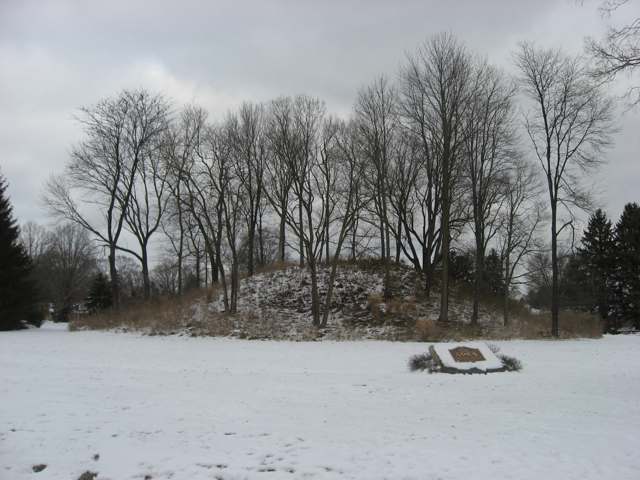
Photo: Nyttend, public domain · Wikimedia Commons
Photo: Nyttend, public domain · Wikimedia Commons
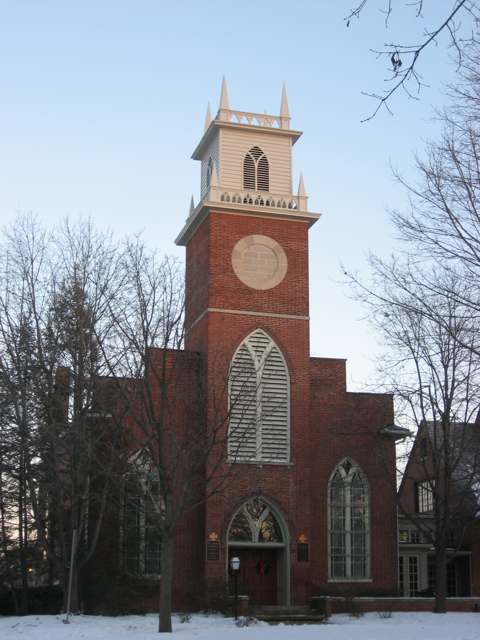
Photo: Nyttend, public domain · Wikimedia Commons
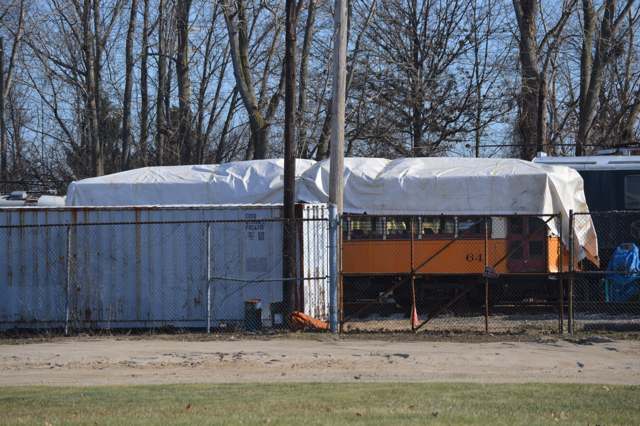
Photo: Nyttend, public domain · Wikimedia Commons
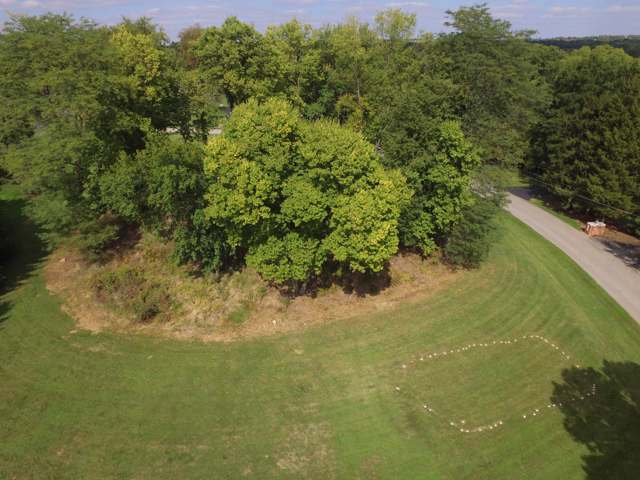
Photo: Kevin Payravi, CC BY-SA 4.0 · Wikimedia Commons
Local history sources: worthington.org · en.wikipedia.org · ohiogenealogyexpress.com · en.wikipedia.org · en.wikipedia.org · en.wikipedia.org · en.wikipedia.org · commons.wikimedia.org
Water
Big Walnut Creek at the plant's low-head dam and screen house on Morse Rd, below Hoover Dam The water here
- Columbus Public Water System100% of residentsScioto River (Griggs & O'Shaughnessy), Hoover Reservoir on Big Walnut Ck, plus wells
Its ZIP codes
Each ZIP code that touches Worthington, with the share of its residents who live here and the same headline figures as the ZIP page.
| ZIP | Share | Water | Radon | Home value | Schools | Flood |
|---|---|---|---|---|---|---|
| 43085 Worthington and Columbus | 58% | Big Walnut Creek at the plant's low-head dam and screen house on Morse Rd, below Hoover Dam | 8.0 pCi/L average radon | Median year built 1977 | Worthington City · 4 stars overall | 0.1% of residents in the 1% floodplain |
The county
Franklin County: 45 ZIP codes, 42 cities, villages and townships, 1,356,733 people.
Nearby places
Cite this page
Cite this page as:
Cracked Buckeye (Open Shower Co), "Worthington, Franklin County", https://crackedbuckeye.com/place/worthington/, built 2026-09-16, accessed [date].
Machine-readable: /api/place/worthington.json (open JSON, CC BY 4.0 for the compilation; the underlying records keep their own terms) · How to cite · Report a correction · Built 2026-09-16