How Truro Township, Franklin County began
Truro Township was organized in 1810 out of the eastern part of Liberty Township and named for Truro, Nova Scotia, the former home of several founding families who had been resettled on the nearby Refugee Tract after losing property in Canada for aiding the American Revolution. Its main village, laid out in 1831 as "Frenchtown" and soon renamed Reynoldsburg for merchant James C. Reynolds, later became known as the birthplace of the modern commercial tomato through resident Alexander W. Livingston, and the township's East Broad Street corridor was home to the Kahiki Supper Club, one of the country's most famous Polynesian-themed restaurants, from 1961 to 2000. Farmland gave way through the 20th century to suburban growth, and Columbus and Reynoldsburg have since annexed nearly all of the township's original 7.4 square miles, leaving only small unincorporated remnants such as Brice.
Settled 1805, incorporated 1810, by First settlers John and Charles Medford (from Pennsylvania) and Thomas Palmer (from Maine) in 1805; township organized from Liberty Township in 1810 with Ebenezer Richards as first justice of the peace.
Where the name comes from
The township took its name from Truro, Nova Scotia. Several of its earliest settlers, including Matthew Long, Robert Taylor, and Daniel Ross, came from Nova Scotia as part of a group Congress resettled on the Refugee Tract, a strip of land granted to Canadians who had aided the American cause in the Revolution and had their estates seized by the British government. Robert Taylor, who arrived in the fall of 1806, built the first framed house in the township.
Before the town
No Native American village, mound, earthwork, or trail specific to Truro Township itself turned up in the sources checked for this entry. The township's land lies within the area the Treaty of Greenville (signed August 3, 1795, by the United States and the Wyandot, Delaware, Shawnee, Odawa, Chippewa, Potawatomi, Miami, and other nations) ceded to the United States, and it was later surveyed as part of the Refugee Tract, a narrow strip of land Congress set aside for Canadian and Nova Scotian supporters of the Revolution rather than for the standard rectangular township grid. Broader Native history for the county, including nations that lived in, hunted, or traveled through the wider Scioto and Big Walnut Creek valleys, is covered in the Franklin County file.
Nations recorded here: Wyandot, Shawnee, Lenape (Delaware), Miami, Ottawa.
Timeline
- — John and Charles Medford of Pennsylvania and Thomas Palmer of Maine become the first settlers in what will become Truro Township.
- — Robert Taylor, newly arrived from Nova Scotia, builds the first framed house in the township; fellow Nova Scotian Matthew Long arrives and later runs the township's first saw and grist mill.
- — Truro Township is organized out of Liberty Township and named for Truro, Nova Scotia, home of several founding families.
- — The township's first schoolhouse, a log cabin on the east bank of Big Walnut Creek, opens with a teacher named McAfferty.
- — John French lays out a village first called "Frenchtown" along the National Road; it is soon renamed Reynoldsburg for early merchant and first postmaster James C. Reynolds.
- — Reynoldsburg is chartered (1839) and organizes a municipal government (1840) with Abraham Johnston as its first mayor.
- — A post office opens at Hibernia, a small hamlet formed where the National Road crosses Big Walnut Creek.
- — The Baltimore & Ohio Railroad bypasses Reynoldsburg and instead builds a station at Black Lick, diverting trade away from the village after its most prosperous years (about 1846-47).
- — Contractor Nathan Orcutt builds the house of seedsman Alexander W. Livingston on Graham Road near Reynoldsburg.
- — Alexander W. Livingston introduces the Paragon, which he markets as the first tomato bred specifically for commercial use; he and his company go on to develop seventeen varieties in all.
- — The Franklin County Historical Society recognizes Reynoldsburg as "The Home of the Tomato" for Livingston's work.
- — The Kahiki Supper Club, a Polynesian-themed restaurant built by Bill Sapp and Lee Henry at a cost of about $1 million, opens February 20 on East Broad Street.
- — The Alexander W. Livingston House is listed on the National Register of Historic Places.
- — The Kahiki is listed on the National Register of Historic Places on December 8.
- — The Kahiki closes on August 26 rather than pay for costly repairs, and is demolished that November; a Walgreens is later built on the site.
Stories
The refugees of Truro
Truro Township's name traces to a group of families who did not come to Ohio by the usual route. In the Revolutionary War, colonists in Nova Scotia and other parts of British Canada who sided with the American cause had their estates seized by the British government. Congress later granted these refugees land on a narrow strip through central Ohio known as the Refugee Tract, and a number of them settled the wooded country along Big Walnut Creek east of the new town of Columbus. Robert Taylor, who arrived from Nova Scotia in the fall of 1806, built the first framed house in the township and died there in 1828; Matthew Long, also from Nova Scotia, put up the township's first sawmill and gristmill and ran it until 1825. When the township organized in 1810, settlers chose to name it for Truro, Nova Scotia, the town many of them had left behind.
The tomato king of Reynoldsburg
Alexander W. Livingston grew up on a farm near Reynoldsburg and worked for another seed grower before buying land of his own. Nineteenth-century tomatoes were small, ribbed, and irregular, and Livingston spent years saving seed from the smoothest, roundest fruit he could find until, in 1870, he introduced the Paragon, which he billed as the first tomato variety bred specifically for commercial market growing. His seed business grew from shipping 400 boxes a year to 4,000 by 1877, and Livingston and his sons eventually released seventeen tomato varieties in all, including the popular Acme in 1875, from their company, A. W. Livingston's Sons, in Columbus. A 1937 U.S. Department of Agriculture yearbook credited him with a hand in roughly half of the major tomato varieties then grown in the country. In 1965 the Franklin County Historical Society named Reynoldsburg "The Home of the Tomato," and the city still holds an annual Tomato Festival; Livingston's 1864-65 house on Graham Road, built by contractor Nathan Orcutt, is a museum and a National Register property.
A Polynesian paradise on Broad Street
Bill Sapp and Lee Henry ran a small tiki bar called the Grass Shack that was popular with World War II veterans until it burned down; rather than simply rebuild, they spent 1957 to 1960 touring the South Pacific with designer Coburn Morgan, gathering artifacts and ideas. The result, the Kahiki Supper Club, opened February 20, 1961, on East Broad Street: a 20,000-square-foot A-frame shaped like a war canoe, its entrance flanked by two Moai statues with flaming heads and a bridge over a moat, the dining room filled with mock rainforest, aquariums, and thatch huts. Waitresses carried the restaurant's signature "Mystery Drink," eight ounces of rum and brandy served in a smoking bowl, out to diners' tables, and guests over the years included Bob Hope, Zsa Zsa Gabor, and Milton Berle. The National Register of Historic Places listed the building in December 1997 as "the most elaborate tiki restaurant ever built," but rising maintenance costs and falling business forced its closure on August 26, 2000; Walgreens bought the property and demolished the building that November, though the Fraternal Order of Moai formed in 2005 to preserve what was salvaged, and the related Kahiki Foods frozen-meal company, started in 1995, still operates out of Gahanna.
A boomtown bypassed
John French laid out the village of Frenchtown along the route of the National Road in the fall of 1831; it was quickly renamed Reynoldsburg for James C. Reynolds, who ran the first store out of a log building and became the first postmaster when the post office opened in 1833. Mitchel Demorest built the Central House hotel in 1832, and the village was chartered in 1839 and organized its own municipal government the following year under first mayor Abraham Johnston. Reynoldsburg's busiest years came around 1846-47, while travelers and freight moved along the National Road through town. That changed in 1853, when the Baltimore & Ohio Railroad laid its tracks to the south and built a station at Black Lick instead of Reynoldsburg; trade shifted to the new rail village, and Reynoldsburg's growth stalled for decades before the city eventually grew again as a Columbus suburb in the 20th century.
Photographs
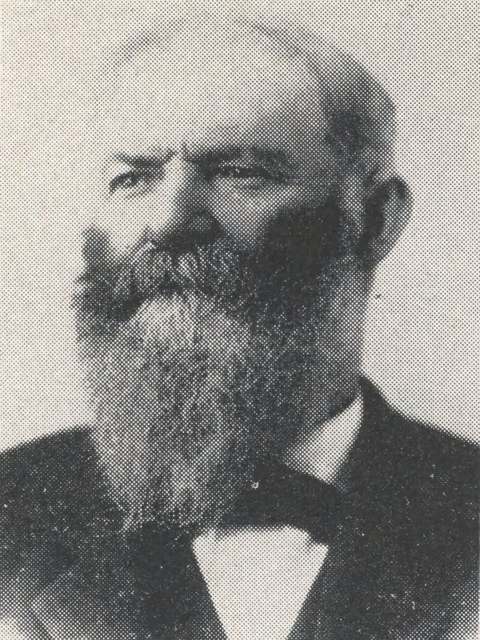
Photo: Columbus Metropolitan Library, via Digital Public Library of America / Ohio Digital Network, public domain · Wikimedia Commons
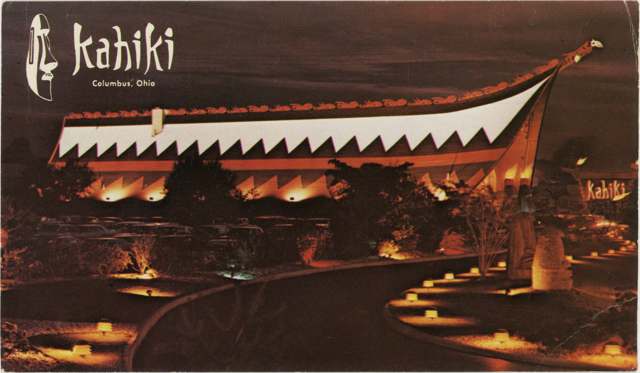
Photo: Columbus Metropolitan Library digital collection, no known copyright restrictions · Wikimedia Commons
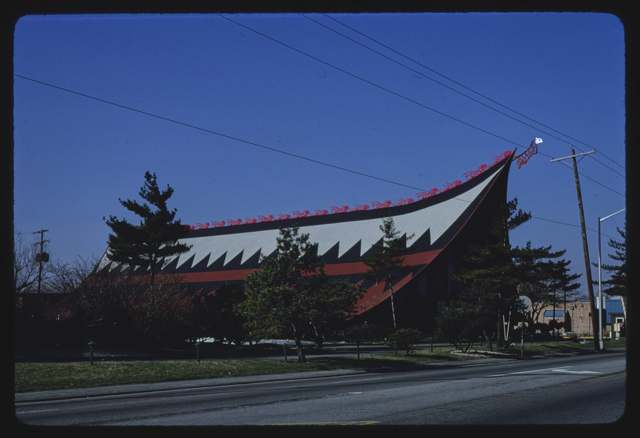
Photo: John Margolies, John Margolies Roadside America photograph archive, Library of Congress, no known copyright restrictions · Wikimedia Commons
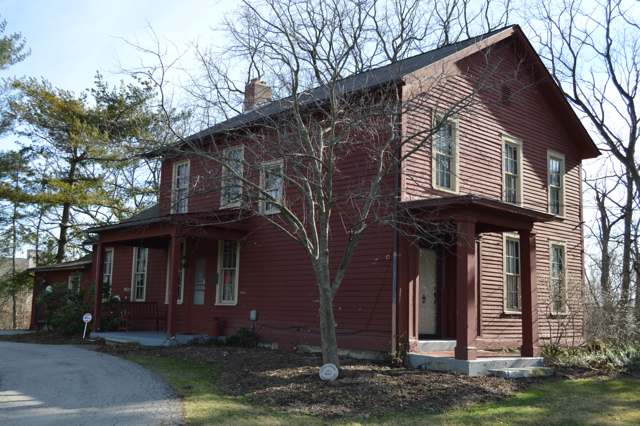
Photo: Photograph by Nyttend, CC0 · Wikimedia Commons
Local history sources: en.wikipedia.org · en.wikipedia.org · en.wikipedia.org · en.wikipedia.org · ohiogenealogyexpress.com · reynoldsburg.gov · remarkableohio.org · commons.wikimedia.org · commons.wikimedia.org · commons.wikimedia.org · commons.wikimedia.org
Water
South Well Field wells in Scioto valley sand and gravel, off Parsons Ave near Shadeville and Lockbourne The water here
- Columbus Public Water System81% of residentsScioto River (Griggs & O'Shaughnessy), Hoover Reservoir on Big Walnut Ck, plus wells
- Aqua Ohio - Blacklick19% of residentsGroundwater wells (3 wells)
- Reynoldsburg City0% of residentsScioto River (Griggs & O'Shaughnessy), Hoover Reservoir on Big Walnut Ck, plus wells
Its ZIP codes
Each ZIP code that touches Truro Township, Franklin County, with the share of its residents who live here and the same headline figures as the ZIP page.
| ZIP | Share | Water | Radon | Home value | Schools | Flood |
|---|---|---|---|---|---|---|
| 43232 Columbus | 3% | South Well Field wells in Scioto valley sand and gravel, off Parsons Ave near Shadeville and Lockbourne | 7.4 pCi/L average radon | Median year built 1971 | Columbus City · 2 stars overall | 18% of residents in the 1% floodplain |
The county
Franklin County: 45 ZIP codes, 42 cities, villages and townships, 1,356,733 people.
Nearby places
Cite this page
Cite this page as:
Cracked Buckeye (Open Shower Co), "Truro Township, Franklin County", https://crackedbuckeye.com/place/truro-township-franklin-county/, built 2026-09-16, accessed [date].
Machine-readable: /api/place/truro-township-franklin-county.json (open JSON, CC BY 4.0 for the compilation; the underlying records keep their own terms) · How to cite · Report a correction · Built 2026-09-16