How Groveport began
Groveport grew up where the Ohio and Erie Canal's Columbus feeder line crossed Madison Township in southern Franklin County, about twelve miles southeast of Columbus. Jacob B. West began the settlement in 1833 on canal-front land leased from Adam Rarey and platted his half of town as Wert's Grove in 1843; William H. Rarey platted the other half as Rarey's Port in 1844, and by 1846-47 the two rival plats merged under a compromise name built from the tail ends of both. The village incorporated in 1847 and prospered first on canal trade and pork-packing, then on a railroad and an interurban line, while the Rarey family - most famously horse trainer John S. Rarey - supplied much of its early business, land, and architecture. Groveport is now a city of roughly 6,000 people that still centers on its canal-era Main Street, with a Heritage Museum in the 1876 Town Hall and several individual National Register listings within the city.
Settled 1833, platted 1843 (west half, platted by Jacob B. West as Wert's Grove); 1844 (east half, platted by William H. Rarey as Rarey's Port), incorporated 1847, by Jacob B. West and William H. Rarey.
Where the name comes from
Groveport combines the tail ends of two rival plat names. Jacob B. West platted the west side of town in September 1843 and called it Wert's Grove, then became postmaster when a post office of that name was established in 1844. William H. Rarey platted the east side in February 1844 and called it Rarey's Port. Each man wanted his own name to stick, and for a time mail addressed to either name reached the same post office. Townspeople finally compromised at a public meeting, discarding the personal halves of both names and joining what was left - Grove and Port - into Groveport. The 1880 county history and a 2022 Ohio Historical Marker both spell the west plat 'Wert's Grove'; the city's own history page instead spells it 'Wirt's Grove.' The founder's own surname was West, so the exact origin of the 'Wert'/'Wirt' spelling is unclear from the sources checked.
Before the town
No mound, earthwork, or named Native village turned up in the sources checked for the ground Groveport now occupies. The surrounding township was still Native-inhabited land when the first Euro-American settlers arrived, though: the 1880 county history records that around 1804-05, settlers Ezekiel Groom and William Bush, looking for a shorter route to Methodist meetings at Toby Town (near present Royalton, Fairfield County), 'called at an Indian camp in the neighborhood' of Madison Township and were guided through the wilderness by a Wyandot man the book names only as 'Billy Wyandot,' who held up eight fingers to show the distance and was hired to pilot them through. The same source notes that when settler John McGuffey was born in Madison Township in 1810, 'the Indians [were] more numerous than the whites' there. Groveport sits in the broader Scioto valley borderlands that this county history describes as used and commingled among the Wyandot, Shawnee, Lenape (Delaware), and Mingo (Seneca-Cayuga) peoples through the late 1700s and early 1800s; small mounds and stone tools attributed to 'the later race of Indians' are recorded a few miles south, in the separate, same-named Madison Township across the line in Pickaway County, but nothing of that kind is recorded at the Groveport town site itself. Fuller county-level mound, treaty, and removal history belongs in data/history/counties/Franklin.json.
Nations recorded here: Wyandot.
- Billy Wyandot's camp (wilderness guide to Toby Town) (camp) — Madison Township, Franklin County, in the vicinity of present Groveport, c. 1804-1805 (archive.org)
Timeline
- — Settlers Ezekiel Groom and William Bush, seeking a shorter route to Methodist meetings, are guided through the Madison Township wilderness by a Wyandot man the county history names only as Billy Wyandot, met at 'an Indian camp in the neighborhood'; the same source records that as late as 1810, 'the Indians [were] more numerous than the whites' in the township.
- — Charles Rarey, born in Germany and by way of Virginia, settles in Madison Township about two miles south of the future Groveport; his son Adam later settles on the exact spot in Groveport where the Rarey mansion, built by grandson John S. Rarey, now stands.
- — John S. Rarey, later internationally known as a horse trainer, is born in Groveport (a companion state historical marker gives his birth year as 1828).
- — The Ohio and Erie Canal's feeder line opens through the still-unplatted future site of Groveport on September 25.
- — Jacob B. West leases canal-front land from Adam Rarey and builds a warehouse near the canal bridge, in what the county history calls 'the beginning of Groveport.'
- — West plats the part of town west of the street running past the Methodist church and names it Wert's Grove.
- — William H. Rarey plats the part of town to the east and names it Rarey's Port; a post office named Wert's Grove is established with West as postmaster.
- — Citizens of the rival plats hold a public meeting and compromise on a joint name, dropping West's and Rarey's surnames and keeping Grove and Port to make Groveport; the village incorporates at the 1846-47 legislative session and elects its first officers, including A. Shoemaker as mayor.
- — Jacob B. West, who had built a large business in merchandising, grain, and pork-packing, dies at Groveport.
- — A railroad reaches the area, beginning the commercial decline of the Ohio and Erie Canal at Groveport.
- — Groveport Town Hall, a three-story High Victorian Italianate building, is built in 1876 as a joint project of the village, Madison Township, and two local lodges on land William H. Rarey had sold the village in 1857; it is listed, with neighboring buildings, on the National Register of Historic Places in 1978 as the Groveport Town Hall Historic Group.
- — Boat traffic on the Ohio and Erie Canal at Groveport ceases entirely.
- — The Scioto Valley Traction Line's electric interurban, completed in 1904, links Groveport to Columbus and Canal Winchester; passenger service ends in 1930 as automobiles and buses make the line obsolete.
- — Groveport Methodist Church completes its present Gothic Revival building in 1908, designed and built under architect Charles Rarey, who resigned as Franklin County court clerk to finish the $25,000 project; it is listed on the National Register of Historic Places in 1995.
- — Voters approve a bond levy to build Groveport School, which opens in 1923 partly on the former Elmont Hotel property and is listed on the National Register of Historic Places in 2009.
- — Groveport hires Albert Whipple as its first Chief of Police, ending the village's part-time town-marshal system in place since 1847; Whipple brings in fellow pilot Paul Tibbets to help train the new officers.
- — The Groveport Log House, built around 1815, is discovered under later siding and carefully moved to save it during preparation of a new post office site on Main Street in 1974, then listed on the National Register of Historic Places in 1976.
Stories
Two Plats, One Compromise
Groveport exists because two men could not agree on whose name should stick. In 1833 Jacob B. West leased land on the new Ohio and Erie Canal feeder from Adam Rarey and built a warehouse and store near the canal bridge; in September 1843 he platted the ground west of the street running past the Methodist church and called it Wert's Grove, then secured a post office under that name with himself as postmaster. William H. Rarey platted the ground to the east in February 1844 and named it Rarey's Port. Both names circulated at once - mail addressed to either town reached the same post office - until townspeople held a public meeting and compromised: they dropped the personal halves of both names and kept the rest, Grove and Port, to make Groveport. The merged village incorporated at the 1846-47 legislative session, and its first officers, elected in spring 1847, included A. Shoemaker as mayor and William James as town marshal. West did not enjoy the settlement he had founded for long: he died at Groveport in the spring of 1850.
John S. Rarey and Cruiser
John S. Rarey grew up in the tavern his father Adam kept in Groveport and went on to become one of the most famous Ohioans of his century. Rarey developed a horse-taming method built on kindness, patience, and firmness rather than force, and his reputation crossed the Atlantic, bringing him a commission to tame Cruiser, a stallion so wild-tempered that his owner, Guy Carlton, Earl of Dorchester, could barely handle him. After only three hours of work, Rarey had gentled the dark bay horse, and the amazed Englishman gave Cruiser to him outright. Cruiser was shipped back and stabled in Groveport, where he became a local legend in his own right, though without Rarey's special touch the old stallion reportedly reverted to some of his untamed ways. Rarey carefully specified in his will how Cruiser should be cared for. A monument to Rarey stands today in Groveport Cemetery, adjoining the Groveport Log House.
Canal, Rail, and Interurban
For most of the nineteenth century Groveport's fortunes rose and fell with three transportation technologies in turn. The Ohio and Erie Canal's feeder line reached the site on September 25, 1831, before the town was even platted, and W. H. Richardson's lock 22 - the only lock within Groveport, ninety feet long - helped make the village a center of commerce; a boatyard and dry dock in what is now Blacklick Park built and repaired canal boats, said to be the first such operation on the canal below Baltimore, Ohio. West himself dealt heavily in grain and pork, killing thirty-five thousand hogs for packing in a single year at the height of the trade. A railroad reached the area in 1868 and began drawing freight from the slower canal; by 1900 canal boat traffic here had stopped entirely. The Scioto Valley Traction Line's electric interurban, completed in 1904, replaced the canal as Groveport's link to the outside world - the first Columbus-to-Canal Winchester run took just five minutes at a reported 62 miles an hour - until automobiles and buses made it obsolete and passenger service ended in 1930.
An Enola Gay Pilot Trains Groveport's Police
Groveport policed itself with part-time town marshals from its 1847 incorporation until 1966, when the village hired Albert Whipple as its first Chief of Police and asked him to build a real department from scratch. Whipple, an avid private pilot, brought in a fellow flyer to help train his new officers on firearms: Paul W. Tibbets, the World War II pilot who had flown the Enola Gay and dropped the atomic bomb that helped end the war in the Pacific. Under Whipple the department grew from a handful of marshals into a real force, and for a few years, from 1968 to 1971, Groveport's officers - by then called the Groveport-Madison Police - patrolled the whole of Madison Township, including Canal Winchester, before the township formed its own department in 1972. The city's police department still keeps its own historian and collects artifacts and photographs of this history. It is a small-town story that captures how modest a place Groveport still was in the 1960s, when a village police chief could simply call on a famous friend to help drill the new hires.
Saving the Log House
By the early 1970s Groveport's oldest surviving building, a two-story hewn-log house on Main Street built around 1815, was in the way of a new federal post office. The log structure, later covered in siding and easy to mistake for an ordinary frame house, was recognized for what it was before it could be lost to the construction project. In 1974 it was carefully moved to a new site along the old Ohio and Erie Canal route, in what is now Heritage Park, rather than demolished. It was added to the National Register of Historic Places in 1976, and a monument to horse trainer John S. Rarey stands in the adjoining Groveport Cemetery within sight of it. The log house now anchors Groveport's Heritage Museum grounds and is used for tours and public events - a rare surviving example of the kind of building nearly every early Franklin County settler actually lived in before frame and brick construction took over.
Photographs
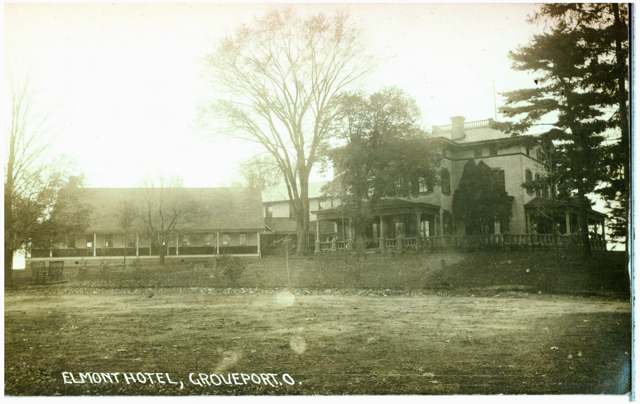
Photo: Columbus Metropolitan Library, via Digital Public Library of America / Ohio Digital Network, no known copyright restrictions · Wikimedia Commons
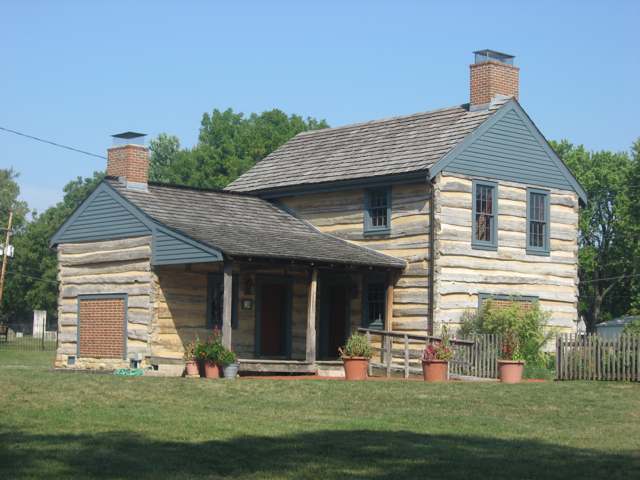
Photo: Nyttend, public domain · Wikimedia Commons
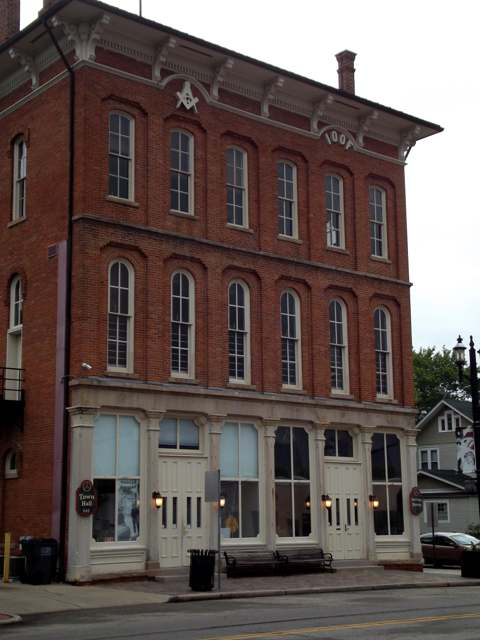
Photo: Central Avenue, CC BY 4.0 · Wikimedia Commons
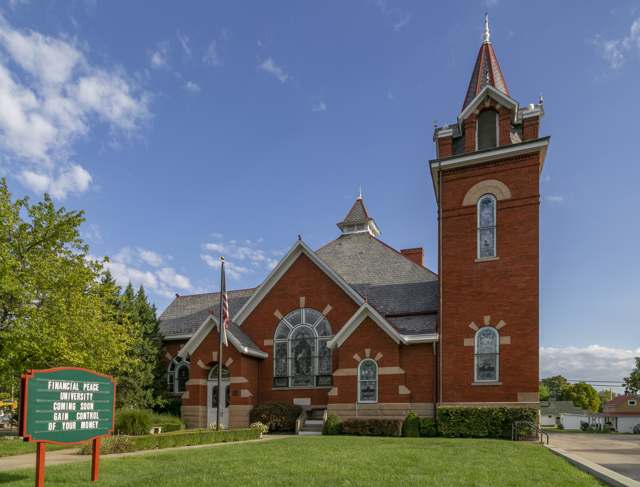
Photo: Christopher Riley (Flickr username Pythaglio), CC BY-SA 2.0 · Wikimedia Commons
Local history sources: en.wikipedia.org · en.wikipedia.org · en.wikipedia.org · en.wikipedia.org · en.wikipedia.org · en.wikipedia.org · groveport.org · remarkableohio.org · remarkableohio.org · remarkableohio.org · remarkableohio.org · archive.org · archive.org · commons.wikimedia.org · commons.wikimedia.org · commons.wikimedia.org · commons.wikimedia.org
Water
South Well Field wells in Scioto valley sand and gravel, off Parsons Ave near Shadeville and Lockbourne The water here
- Columbus Public Water System55% of residentsScioto River (Griggs & O'Shaughnessy), Hoover Reservoir on Big Walnut Ck, plus wells
- Groveport32% of residentsGroundwater wells (2 wells)
- Obetz Satellite 28% of residentsScioto River (Griggs & O'Shaughnessy), Hoover Reservoir on Big Walnut Ck, plus wells
- Obetz Village6% of residentsGroundwater wells (2 wells)
Its ZIP codes
Each ZIP code that touches Groveport, with the share of its residents who live here and the same headline figures as the ZIP page.
| ZIP | Share | Water | Radon | Home value | Schools | Flood |
|---|---|---|---|---|---|---|
| 43125 Groveport | 42% | South Well Field wells in Scioto valley sand and gravel, off Parsons Ave near Shadeville and Lockbourne | 10.3 pCi/L average radon | Median year built 1998 | Groveport Madison Local · 3.5 stars overall | 28% of residents in the 1% floodplain |
The county
Franklin County: 45 ZIP codes, 42 cities, villages and townships, 1,356,733 people.
Nearby places
Cite this page
Cite this page as:
Cracked Buckeye (Open Shower Co), "Groveport, Franklin County", https://crackedbuckeye.com/place/groveport/, built 2026-09-16, accessed [date].
Machine-readable: /api/place/groveport.json (open JSON, CC BY 4.0 for the compilation; the underlying records keep their own terms) · How to cite · Report a correction · Built 2026-09-16