Water system
Wilmot Village
EPA ID OH7606012 · Stark County · 325 people served · owned by a local government
Wilmot Village treats its own water from Groundwater wells (2 wells).
The system's record
- Active wells
- 2
- Serves
- 325 people · Stark County
- EPA ID
- OH7606012
About this area's water
Did you know
- Wilmot was originally platted as "Milton" in 1836 before being renamed Wilmot when its post office opened in 1866.
- The village's population peaked at 412 in 1880 (per U.S. Census figures compiled by Wikipedia) and stood at 282 as of the 2020 census.
- EPA ECHO records show the system has accumulated 16 violations since 1994, with a violation for an inadequate yearly water quality report recurring repeatedly from 2018 through early 2026.
Source: en.wikipedia.orgdata.epa.gov
History6
- 1836Village laid out under the original name Milton (per local histories cited by Wikipedia).
- 1866Post office established under the name Wilmot after the town was renamed.
- 1994Monitoring/reporting violation opened; later resolved.
- 1998A health-based violation opened: public education about lead not carried out; resolved 2008.
- 2018-2026A violation for an inadequate yearly water quality report, not health-based, has been opened repeatedly since Nov 29, 2018 (new instances in 2018, 2020, 2022, 2024, and Jan 2026) and remains open as of the latest EPA ECHO data…
- 2024A lead service line inventory violation (health-based in EPA's count, though a records requirement) and a related reporting violation opened October 17, 2024 and were resolved that month; violations for missed disinfection byproduct testing in 2024 were resolved by August 2025.
Source: en.wikipedia.orgdata.epa.gov
Treatment & pressure
How it is treated
EPA treatment records for the Wilmot WTP show pre- and post-hypochlorination for disinfection, permanganate oxidation, and greensand filtration — used for both manganese removal and general filtration — indicating the plant treats for iron/manganese in addition to disinfecting.
Source: data.epa.gov
Water pressure
Not published — no pressure-zone or engineering data found.
What it costs
Current residential water rate not published in any source found; the village has no discoverable rates page or online ordinance.
Water quality & impurities
EPA compliance record
Lead at the tap: 90th-percentile result 0 ppb in 2025 (action level 15 ppb).
EPA health-based violations since 2015:
- 2024Lead and Copper Rule Revisions · lead service line inventory missing or incomplete (a records requirement, not a lead test result) · returned to compliance
- 2021Ground Water Rule · did not fix a deficiency the state found · returned to compliance
13 violations of any kind logged since 2020: 2 for required testing that was missed or reported late; 9 for a report, record or notice that was missing, late or incomplete (the yearly water quality report, a public notice, lead line records); 2 health-based.
Supply stress
No source found addressing groundwater quantity, drought, or contamination-specific stress. The system's compliance record shows recurring violations over the yearly water quality report since 2018 alongside occasional violations EPA counts as health-based (public education about lead in 1998, an unfixed deficiency in 2021, the lead service line inventory in 2024), suggesting operational/reporting strain more than a resource-scarcity issue.
Source: data.epa.gov
Sourcesverified
Compiled from the utility's own reports and public records, then independently re-checked against primary sources.
Main supplier in 1 ZIP code
Serves
Main water supplier in 1 ZIP code
- 44689 · Paint Township and Wilmot47% of residents
Also present in 1 more ZIP code
- 44608 · Sugar Creek Township and Beach City0% of residents
Population-weighted resident shares; a ZIP code can have more than one system on record. Recomputed from each ZIP's own system list, not from the map's cached footprint.
Buys from · Sells to
Wilmot Village does not buy water from another system on record; it treats its own source water.
No other system is on record buying water from Wilmot Village.
What the records show about Wilmot Village
Who runs it
EPA's record describes Wilmot Village as owned by a local government. It has 189 service connections and serves 325 people.
EPA classes it as a community water system, one that serves the same residents all year.
Its office telephone on EPA's record is 330-359-7918.
Source: EPA Safe Drinking Water Information System (SDWIS), water system record.
How the water is treated
EPA's treatment table registers these steps for Wilmot Village: chlorine disinfection and iron and manganese removal.
The list is what each system registered with EPA for treatment plants EPA still shows as active, and it can lag a plant upgrade.
Source: EPA Safe Drinking Water Information System (SDWIS) treatment table (EPA Envirofacts, pulled September 2026).
Violations
EPA counts 2 health-based violations for Wilmot Village since 2015. Health-based means a contaminant above its legal limit or a required treatment step not carried out. They fall into 2 separate problems (one contaminant or rule in one year); the table lists them all.
EPA logs 13 violations of any kind since 2020: 2 for required testing that was missed or reported late; 9 for a report, record or notice that was missing, late or incomplete (the yearly water quality report, a public notice, lead line records); 2 health-based.
| Year | Contaminant or rule | Kind | Measured | Limit | Status in EPA's record |
|---|---|---|---|---|---|
| 2024 | Lead and Copper Rule Revisions | lead service line inventory missing or incomplete (a records requirement, not a lead test result) | not on file | not on file | returned to compliance |
| 2021 | Ground Water Rule | did not fix a deficiency the state found | not on file | not on file | returned to compliance |
Source: EPA Safe Drinking Water Information System (SDWIS) violation records: health-based violations with compliance periods beginning in 2015 or later, all violations from 2020 or later (EPA Envirofacts, pulled September 2026).
Lead and copper at the tap
In the sampling period ending December 2025, the 90th-percentile lead result at Wilmot Village was 0 ppb, under both the current 15 ppb action level and the 10 ppb level that applies from 2027. A result of 0 means at least nine in ten of the homes sampled had no lead detected.
The highest result on file is 1.9 ppb, in the period ending December 2023.
EPA has 6 sampling periods on file for Wilmot Village since 2016, the first ending in 2018; no period was above 10 ppb.
Every water system has to inventory its service lines, the pipes from the main to each building. In the inventory Wilmot Village sent EPA, 195 lines are counted.
| Material | Lines |
|---|---|
| Lead | 0 |
| Galvanized, needing replacement | 0 |
| Unknown material | 0 |
| Not lead | 195 |
| All lines | 195 |
Systems sample taps in the homes most likely to have lead pipes or solder. The 90th-percentile result is the level nine in ten of the sampled homes were at or below. Lead comes mostly from service lines and house plumbing, not the source water, so a low result for the system does not clear an old house.
EPA's dashboard status for this inventory: reported all required service line types.
Source: EPA Safe Drinking Water Information System (SDWIS) lead and copper 90th-percentile results (EPA Envirofacts), sampling periods ending 2016 or later; EPA's service line inventory dashboard, Ohio's 2026 Q2 submission.
PFAS
Ohio EPA's own statewide sampling tested 1 plant of Wilmot Village (latest sample September 2020). Not one of the six PFAS tested (PFOA, PFOS, PFHxS, PFNA, GenX and PFBS) was detected.
Ohio EPA's current sampling status map lists 1 plant of Wilmot Village as sampled, most recently April 2026.
PFAS are the 'forever chemicals' from firefighting foam, plating shops and non-stick coatings. Results are for water leaving the plant, not your tap.
Source: EPA UCMR 5 occurrence data (final release, August 2026); Ohio EPA statewide PFAS sampling, 2019 to 2021, and its sampling status map.
Disinfection byproducts
Chlorine that disinfects water also reacts with organic matter to form byproducts. Two groups have federal limits: total trihalomethanes (TTHM, 80 µg/L) and five haloacetic acids (HAA5, 60 µg/L), judged on running yearly averages at each sampling site.
For TTHM, the average of Wilmot Village's samples in 2019, the last year it was sampled, was 0 µg/L. The worst yearly average was 0 µg/L and the highest single sample was 0 µg/L, from 7 samples taken from 2013 to 2019.
For HAA5, the average in the last year sampled was 0 µg/L. The worst yearly average was 0 µg/L and the highest single sample was 0 µg/L, from 7 samples.
| Byproduct | Limit | Latest yearly average | Worst yearly average | Highest sample | Samples |
|---|---|---|---|---|---|
| TTHM | 80 µg/L | 0 µg/L (2019) | 0 µg/L | 0 µg/L | 7 |
| HAA5 | 60 µg/L | 0 µg/L | 0 µg/L | 0 µg/L | 7 |
A yearly average of 0 means nothing was detected in that year's samples. EPA's file stops at 2019; Ohio EPA's Drinking Water Watch has newer results.
Source: EPA Six-Year Review 4 compliance monitoring data, 2012 to 2019, distribution-system samples (non-detects counted as zero).
Nitrate, arsenic and radioactivity
Nitrate was not detected in 8 samples through 2019 (limit 10 mg/L as nitrogen; above 10 is unsafe for infants).
Arsenic was not detected in 3 samples (limit 10 µg/L).
| Contaminant | Samples | Highest result | Limit | Samples over limit |
|---|---|---|---|---|
| Nitrate (as nitrogen) | 8 | not detected | 10 mg/L | 0 |
| Arsenic | 3 | not detected | 10 µg/L | 0 |
Measured in finished water: at the plant's entry points and in the distribution system; raw well and intake samples are left out. Non-detects count as zero.
Source: EPA Six-Year Review 4 compliance monitoring data, 2012 to 2019, finished water.
Solvents and fuels
EPA's file holds results for all six solvent and fuel compounds it checked. Benzene, carbon tetrachloride, 1,2-dichloroethane, trichloroethylene, tetrachloroethylene, and vinyl chloride were not detected in 4 samples each.
| Compound | Limit | Samples | Detected in | Highest result | Samples over limit |
|---|---|---|---|---|---|
| Benzene | 5 µg/L | 4 | 0 of 4 | not detected | 0 |
| Carbon tetrachloride | 5 µg/L | 4 | 0 of 4 | not detected | 0 |
| 1,2-dichloroethane | 5 µg/L | 4 | 0 of 4 | not detected | 0 |
| Trichloroethylene (TCE) | 5 µg/L | 4 | 0 of 4 | not detected | 0 |
| Tetrachloroethylene (PCE) | 5 µg/L | 4 | 0 of 4 | not detected | 0 |
| Vinyl chloride | 2 µg/L | 4 | 0 of 4 | not detected | 0 |
"Not detected" means the lab's result was below what its method can measure, not that the compound is absent. Non-detects count as zero in the highest-result column.
Source: EPA Six-Year Review 4 compliance monitoring data, 2012 to 2019, finished water.
Farm chemicals and metals
EPA's file holds results for 8 of the nine herbicides and metals it checked. Detected: barium in 3 of 3 samples, highest 49 µg/L (limit 2,000). Not detected: atrazine, alachlor, chromium, cadmium, mercury, selenium, and thallium, in 3 samples each.
| Substance | Kind | Limit | Samples | Detected in | Highest result | Samples over limit |
|---|---|---|---|---|---|---|
| Atrazine | Farm chemical | 3 µg/L | 3 | 0 of 3 | not detected | 0 |
| Alachlor | Farm chemical | 2 µg/L | 3 | 0 of 3 | not detected | 0 |
| Chromium | Metal | 100 µg/L | 3 | 0 of 3 | not detected | 0 |
| Cadmium | Metal | 5 µg/L | 3 | 0 of 3 | not detected | 0 |
| Barium | Metal | 2,000 µg/L | 3 | 3 of 3 | 49 µg/L | 0 |
| Mercury | Metal | 2 µg/L | 3 | 0 of 3 | not detected | 0 |
| Selenium | Metal | 50 µg/L | 3 | 0 of 3 | not detected | 0 |
| Thallium | Metal | 2 µg/L | 3 | 0 of 3 | not detected | 0 |
Non-detects count as zero in the highest-result column.
Source: EPA Six-Year Review 4 compliance monitoring data, 2012 to 2019, finished water.
Bacteria in the pipes
From 2012 to 2019, 0 of 96 routine total coliform samples taken in the distribution system at Wilmot Village tested positive (0%); in 2019, the last year on file, 0 of 12 did.
A positive coliform test is a warning sign, not a violation by itself. E. coli is a sign that human or animal waste may have reached the water. Coliform counts are routine samples only; E. coli counts include repeat samples.
Source: EPA Six-Year Review 4 compliance monitoring data, 2012 to 2019, distribution-system presence/absence tests for total coliform and E. coli.
Fluoride
The Ohio Department of Health's report to the CDC (My Water's Fluoride) says Wilmot Village has fluoride from natural sources, but at a level below what is recommended for preventing tooth decay, and does not adjust it. The level it reports is 0.02 mg/L.
EPA's treatment table lists no fluoridation step at Wilmot Village.
Measured fluoride: 0.3 mg/L on average at the plant's entry points in 2019 (below the 0.7 mg/L target); samples ran from 0.3 to 0.35 mg/L across 3 samples in 2012 to 2019.
The recommended level for preventing tooth decay is 0.7 mg/L; the federal limit is 4 mg/L. The treatment list is what each system registered with EPA and can lag a plant upgrade.
Source: CDC My Water's Fluoride (fluoridation status as reported by the Ohio Department of Health, fetched September 2026); EPA Safe Drinking Water Information System (SDWIS) treatment table; EPA Six-Year Review 4 compliance monitoring data, 2012 to 2019, entry-point fluoride samples.
How well the service area is mapped
The service area drawn on the map for Wilmot Village comes from the utility's own map.
Source: EPA Service Area Boundaries; resident estimate by this atlas from ZIP-code overlap.
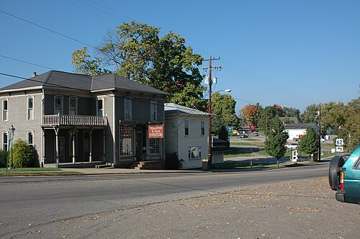
Photograph
On the map
Show this system's territory on the map — 2 ZIP codes in all.
Sources
U.S. EPA SDWIS and Community Water System Service Area Boundaries (v3, 2026), Ohio EPA primacy data, 2020 census blocks: the system serving most residents, traced through purchases to the treating utility; Ohio EPA 2023 Sewer and Water Rate Survey (Ohio State, May 2025) for household bills; Ohio EPA DEFA loan awards since 2016 for the loans paragraph · EPA SDWIS · EPA service area boundaries · Ohio EPA drinking water · Ohio EPA rate survey
EPA's own record for this system: Enforcement and Compliance History report for OH7606012 (EPA ECHO).
Notable facts: en.wikipedia.org, data.epa.gov
History: en.wikipedia.org, data.epa.gov
Treatment: data.epa.gov
Supply stress: data.epa.gov
