Water system
Jackson, City Of
EPA ID OH4000111 · Jackson County · 9,691 people served · owned by a local government
Jackson, City Of treats its own water from Jisco Lake + Hammertown Lake (Jackson City Reservoir).
The system's record
- Water bodies
- Jisco Lake, Hammertown Lake
- Raw intakes
- Jisco Lake
Hammertown Lake - Serves
- 9,691 people · Jackson County
- EPA ID
- OH4000111
About this area's water
Did you know
- Hammertown Lake, Jackson's working reservoir, sits behind a 60-foot-high, 1,200-foot-long earthen dam commissioned in 1954 and still owned by the city; it holds about 4,200 acre-feet at normal pool.
- Jackson does not blend its two lakes: Hammertown is the source and Jisco is the backup, per the city's own 2025 water quality report - a common misreading of this system.
- The waterline the state paid $1.6 million to replace on South Street had been in the ground since about 1898 - galvanized setters, potential lead joints, and so odd-sized the city struggled to find parts when it broke.
- About a quarter of the water Jackson treats never reaches a customer: the state put the city's water-loss rate at 24% when it awarded the 2023 waterline grant.
- In June 2025 Jackson had to mail every customer a violation notice - not for anything in the water, but for missing the federal deadline to inventory its lead service lines.
Source: damsoftheworld.comjacksonohio.uscontent.govdelivery.com
History6
- 1898The South Street waterline (Main Street to Ohio Avenue) is installed - still in service 123 years later, with galvanized setters and potential lead joints, when the state funded its replacement.
- 1954Hammertown Lake Dam is commissioned - a 60-foot-high, 1,200-foot-long earthen embankment designed by Jones and Henry Engineers, built for water supply and owned by the City of Jackson.
- 2003Ohio EPA completes the Source Water Assessment for the Jackson public water system.
- 2021Jackson receives a $1.01 million Ohio BUILDS grant (Round 2) for the Mill Street Area Sewer Extension, serving about 24 unsewered households.
- 2023Jackson receives a $1,625,046 Ohio BUILDS grant (Round 5) to replace the failing 1898 South Street waterline; the award notes the city's 24% water-loss rate.
- 2024The city fails to submit its initial lead and galvanized service line inventory to Ohio EPA by the October 16, 2024 federal deadline - a drinking water violation.
Source: jacksonohio.uscontent.govdelivery.comcontent.govdelivery.com
Treatment & pressure
How it is treated
Surface water from two city-owned reservoirs, filtered and chlorinated. Hammertown Lake is the working source and Jisco Lake is a backup - the 2025 CCR says the city 'receives its water from Hammertown lake and utilizes Jisco Lake as a backup water source.'
Source: jacksonohio.us
Water pressure
Not published. The 2025 CCR's backflow section discusses low-pressure conditions only generically (hydrant flushing, main breaks, fires, high demand) and gives no system psi or…
Source: jacksonohio.us
What it costs
Not published online. The city's Utility Office page (which bills electric, water, sewer and garbage together) carries no rate table and points customers to the American Legal…
Water quality & impurities10
| Contaminant | Level | Limit | Year |
|---|---|---|---|
| Total Trihalomethanes (TTHM) Range 27.30-80.2 ppb. The high end of the range exceeds the 80 ppb MCL, but compliance is on the locational running… | 62.53 ppb | 80 | 2025 |
| Haloacetic Acids (HAA5) Range 16-29.8 ppb. Chlorination byproduct, expected in a surface-water system with high organic load. | 24.93 ppb | 60 | 2025 |
| Chlorine Range 1.06-1.44 ppm. Disinfectant residual. | 1.30 ppm | 4 (MRDL) | 2025 |
| Fluoride Range 1.06-1.17 ppm. | 1.17 ppm | 4 | 2025 |
| Nitrate Range 0.1-0.13 ppm. Very low. | 0.13 ppm | 10 | 2025 |
| Barium Erosion of natural deposits; far below the MCL. | 0.011 ppm | 2 | 2025 |
| Radium-228 Naturally occurring radioactive material; about 45% of the combined radium-226/228 MCL. Monitored less than annually.… | 2.25 pCi/L | 5 | 2021 |
| Lead (90th percentile) 0 of 20 samples above the action level; all repeat samples below detection. | <2.0 ppb | 15 (AL) | 2025 |
| Copper (90th percentile) Range 0.00-0.057 ppm; 0 of 20 samples above the action level. | 0.033 ppm | 1.3 (AL) | 2025 |
| Turbidity Highest recorded 2025 result per the CCR narrative; 100% of monthly samples met the limit. The CCR's own table prints… | 0.12 NTU | TT (0.3 NTU in… | 2025 |
Source: jacksonohio.us
EPA compliance record
Lead at the tap: 90th-percentile result 0 ppb in 2025 (action level 15 ppb).
EPA health-based violations since 2015:
- 2024Lead and Copper Rule Revisions · lead service line inventory missing or incomplete (a records requirement, not a lead test result) · returned to compliance
5 violations of any kind logged since 2020: 4 for a report, record or notice that was missing, late or incomplete (the yearly water quality report, a public notice, lead line records); 1 health-based.
Projects & plans3
Recent and current work
- South Street waterline replacement (Main Street to Ohio Avenue) · $1.6 million · 2023
Ohio BUILDS Round 5 grant announced July 20, 2023: about 5,800 linear feet of 8-inch waterline, 32 gate valves, 3,000 linear feet of service line, 100 service… - Mill Street Area Sewer Extension · $1 million · 2021
Ohio BUILDS Round 2 grant: public sewer to about 24 households with failing home sewage treatment systems on Mill, Putnam, Ohio, Summit and Crossin streets…
Source: content.govdelivery.comcontent.govdelivery.com
Planned or needed
- Complete and submit the initial lead and galvanized service line inventory to Ohio EPA · 2025-2026 · needed
The city missed the October 16, 2024 federal deadline and issued a public violation notice on June 12, 2025. As of that notice the inventory was partially…
Source: jacksonohio.us
Supply stress
Ohio EPA's 2003 source water assessment treats all Ohio surface waters as susceptible to contamination - readily accessible, and contaminable by chemicals and pathogens that can reach the intake with little warning. Jackson's drinking water source protection area specifically contains home sewage disposal system discharges, runoff from…
Sewers
Sanitary
City-owned and city-operated. Jackson runs its own wastewater treatment plant at 225 Wood Ave (740-286-1137), staffed with a chief plant operator, Class II and Class III operators, a plant repairman and a pretreatment coordinator, and it operates the collection system and pump stations. Plant capacity, receiving stream and NPDES permit…
Storm
Not published. The city website has no stormwater utility, MS4 permit, or storm sewer page.
Sourcesverified
Compiled from the utility's own reports and public records, then independently re-checked against primary sources.
Main supplier in 1 ZIP code
Serves
Main water supplier in 1 ZIP code
- 45640 · Jackson47% of residents
Also present in 1 more ZIP code
- 45692 · Wellston1% of residents
Population-weighted resident shares; a ZIP code can have more than one system on record. Recomputed from each ZIP's own system list, not from the map's cached footprint.
Buys from · Sells to
Jackson, City Of does not buy water from another system on record; it treats its own source water.
No other system is on record buying water from Jackson, City Of.
What the records show about Jackson, City Of
Who runs it
EPA's record describes Jackson, City Of as owned by a local government. It has 3,409 service connections and serves 9,691 people.
EPA classes it as a community water system, one that serves the same residents all year.
EPA's record says it has substantially implemented source water protection under Ohio's program, dating the program from 2023. Its office telephone on EPA's record is 740-286-3010.
Source: EPA Safe Drinking Water Information System (SDWIS), water system record.
How the water is treated
EPA's treatment table registers these steps for Jackson, City Of: corrosion control, coagulation and settling, chlorine disinfection, iron and manganese removal, fluoridation, and sand or media filtration.
The list is what each system registered with EPA for treatment plants EPA still shows as active, and it can lag a plant upgrade.
Source: EPA Safe Drinking Water Information System (SDWIS) treatment table (EPA Envirofacts, pulled September 2026).
Violations
EPA counts 1 health-based violation for Jackson, City Of since 2015. Health-based means a contaminant above its legal limit or a required treatment step not carried out. It falls into 1 separate problem (one contaminant or rule in one year); the table lists it.
EPA logs 5 violations of any kind since 2020: 4 for a report, record or notice that was missing, late or incomplete (the yearly water quality report, a public notice, lead line records); 1 health-based.
| Year | Contaminant or rule | Kind | Measured | Limit | Status in EPA's record |
|---|---|---|---|---|---|
| 2024 | Lead and Copper Rule Revisions | lead service line inventory missing or incomplete (a records requirement, not a lead test result) | not on file | not on file | returned to compliance |
Source: EPA Safe Drinking Water Information System (SDWIS) violation records: health-based violations with compliance periods beginning in 2015 or later, all violations from 2020 or later (EPA Envirofacts, pulled September 2026).
Lead and copper at the tap
In the sampling period ending December 2025, the 90th-percentile lead result at Jackson, City Of was 0 ppb, under both the current 15 ppb action level and the 10 ppb level that applies from 2027. A result of 0 means at least nine in ten of the homes sampled had no lead detected.
EPA has 4 sampling periods on file for Jackson, City Of since 2016, the first ending in 2018; no period was above 10 ppb.
Every water system has to inventory its service lines, the pipes from the main to each building. In the inventory Jackson, City Of sent EPA, 3,857 lines are counted.
| Material | Lines |
|---|---|
| Lead | 0 |
| Galvanized, needing replacement | 1 |
| Unknown material | 2,709 |
| Not lead | 1,147 |
| All lines | 3,857 |
Systems sample taps in the homes most likely to have lead pipes or solder. The 90th-percentile result is the level nine in ten of the sampled homes were at or below. Lead comes mostly from service lines and house plumbing, not the source water, so a low result for the system does not clear an old house.
EPA's dashboard status for this inventory: reported all required service line types.
Source: EPA Safe Drinking Water Information System (SDWIS) lead and copper 90th-percentile results (EPA Envirofacts), sampling periods ending 2016 or later; EPA's service line inventory dashboard, Ohio's 2026 Q2 submission.
PFAS
EPA's fifth national round of testing (UCMR 5) took 4 samples of the water entering the pipes of Jackson, City Of in 2023 and measured 29 PFAS.
PFOA and PFOS were not detected, against a federal limit of 4 ng/L each.
The highest PFAS result was PFBA 9.3 ng/L.
Ohio EPA's own statewide sampling tested 1 plant of Jackson, City Of (latest sample June 2020). Not one of the six PFAS tested (PFOA, PFOS, PFHxS, PFNA, GenX and PFBS) was detected.
| Compound | Highest result | Federal limit |
|---|---|---|
| PFOA | not detected | 4 ng/L |
| PFOS | not detected | 4 ng/L |
PFAS are the 'forever chemicals' from firefighting foam, plating shops and non-stick coatings. Results are for water leaving the plant, not your tap.
Source: EPA UCMR 5 occurrence data (final release, August 2026); Ohio EPA statewide PFAS sampling, 2019 to 2021, and its sampling status map.
Disinfection byproducts
Chlorine that disinfects water also reacts with organic matter to form byproducts. Two groups have federal limits: total trihalomethanes (TTHM, 80 µg/L) and five haloacetic acids (HAA5, 60 µg/L), judged on running yearly averages at each sampling site.
For TTHM, the average of Jackson, City Of's samples in 2019, the last year it was sampled, was 52.8 µg/L. The worst yearly average was 55.4 µg/L and the highest single sample was 85.5 µg/L, from 60 samples taken from 2012 to 2019.
For HAA5, the average in the last year sampled was 30.7 µg/L. The worst yearly average was 33.7 µg/L and the highest single sample was 56 µg/L, from 60 samples.
| Byproduct | Limit | Latest yearly average | Worst yearly average | Highest sample | Samples |
|---|---|---|---|---|---|
| TTHM | 80 µg/L | 52.8 µg/L (2019) | 55.4 µg/L | 85.5 µg/L | 60 |
| HAA5 | 60 µg/L | 30.7 µg/L | 33.7 µg/L | 56 µg/L | 60 |
A yearly average of 0 means nothing was detected in that year's samples. EPA's file stops at 2019; Ohio EPA's Drinking Water Watch has newer results.
Source: EPA Six-Year Review 4 compliance monitoring data, 2012 to 2019, distribution-system samples (non-detects counted as zero).
Nitrate, arsenic and radioactivity
Nitrate: the highest of 95 samples was 0.32 mg/L (as nitrogen) in 2017; in 2019, the last year sampled, the highest was 0.3 mg/L. No sample was over the limit of 10 mg/L. Nitrate above 10 is unsafe for infants.
Arsenic was not detected in 8 samples (limit 10 µg/L).
| Contaminant | Samples | Highest result | Limit | Samples over limit |
|---|---|---|---|---|
| Nitrate (as nitrogen) | 95 | 0.32 mg/L | 10 mg/L | 0 |
| Arsenic | 8 | not detected | 10 µg/L | 0 |
Measured in finished water: at the plant's entry points and in the distribution system; raw well and intake samples are left out. Non-detects count as zero.
Source: EPA Six-Year Review 4 compliance monitoring data, 2012 to 2019, finished water.
Solvents and fuels
EPA's file holds results for all six solvent and fuel compounds it checked. Benzene, carbon tetrachloride, 1,2-dichloroethane, trichloroethylene, tetrachloroethylene, and vinyl chloride were not detected in 8 samples each.
| Compound | Limit | Samples | Detected in | Highest result | Samples over limit |
|---|---|---|---|---|---|
| Benzene | 5 µg/L | 8 | 0 of 8 | not detected | 0 |
| Carbon tetrachloride | 5 µg/L | 8 | 0 of 8 | not detected | 0 |
| 1,2-dichloroethane | 5 µg/L | 8 | 0 of 8 | not detected | 0 |
| Trichloroethylene (TCE) | 5 µg/L | 8 | 0 of 8 | not detected | 0 |
| Tetrachloroethylene (PCE) | 5 µg/L | 8 | 0 of 8 | not detected | 0 |
| Vinyl chloride | 2 µg/L | 8 | 0 of 8 | not detected | 0 |
"Not detected" means the lab's result was below what its method can measure, not that the compound is absent. Non-detects count as zero in the highest-result column.
Source: EPA Six-Year Review 4 compliance monitoring data, 2012 to 2019, finished water.
Farm chemicals and metals
EPA's file holds results for 8 of the nine herbicides and metals it checked. Detected: barium in 8 of 8 samples, highest 23 µg/L (limit 2,000). Not detected: atrazine, alachlor, chromium, cadmium, mercury, selenium, and thallium, in 8 samples each.
| Substance | Kind | Limit | Samples | Detected in | Highest result | Samples over limit |
|---|---|---|---|---|---|---|
| Atrazine | Farm chemical | 3 µg/L | 8 | 0 of 8 | not detected | 0 |
| Alachlor | Farm chemical | 2 µg/L | 8 | 0 of 8 | not detected | 0 |
| Chromium | Metal | 100 µg/L | 8 | 0 of 8 | not detected | 0 |
| Cadmium | Metal | 5 µg/L | 8 | 0 of 8 | not detected | 0 |
| Barium | Metal | 2,000 µg/L | 8 | 8 of 8 | 23 µg/L | 0 |
| Mercury | Metal | 2 µg/L | 8 | 0 of 8 | not detected | 0 |
| Selenium | Metal | 50 µg/L | 8 | 0 of 8 | not detected | 0 |
| Thallium | Metal | 2 µg/L | 8 | 0 of 8 | not detected | 0 |
Non-detects count as zero in the highest-result column.
Source: EPA Six-Year Review 4 compliance monitoring data, 2012 to 2019, finished water.
Bacteria in the pipes
From 2012 to 2019, 2 of 990 routine total coliform samples taken in the distribution system at Jackson, City Of tested positive (0.2%); in 2019, the last year on file, 1 of 123 did. E. coli was found in 1 of 12 samples tested for it.
A positive coliform test is a warning sign, not a violation by itself. E. coli is a sign that human or animal waste may have reached the water. Coliform counts are routine samples only; E. coli counts include repeat samples.
Source: EPA Six-Year Review 4 compliance monitoring data, 2012 to 2019, distribution-system presence/absence tests for total coliform and E. coli.
Fluoride
The Ohio Department of Health's report to the CDC (My Water's Fluoride) says Jackson, City Of adjusts the fluoride level to the recommended level for preventing tooth decay.
EPA's treatment table lists fluoridation among the steps at Jackson, City Of.
Measured fluoride: 1.06 mg/L on average at the plant's entry points in 2019 (in the range dentists aim for); samples ran from 1 to 1.13 mg/L across 8 samples in 2012 to 2019.
The recommended level for preventing tooth decay is 0.7 mg/L; the federal limit is 4 mg/L. The treatment list is what each system registered with EPA and can lag a plant upgrade.
Source: CDC My Water's Fluoride (fluoridation status as reported by the Ohio Department of Health, fetched September 2026); EPA Safe Drinking Water Information System (SDWIS) treatment table; EPA Six-Year Review 4 compliance monitoring data, 2012 to 2019, entry-point fluoride samples.
Lithium
Lithium was not detected in 4 UCMR 5 samples at Jackson, City Of, last sampled in 2023 (the method reports from 9 µg/L).
Lithium is not regulated. EPA's draft health reference level is 10 µg/L, and it occurs naturally in deep groundwater, so well systems in the northwest run highest.
Source: EPA UCMR 5 occurrence data (final release, August 2026), samples from 2023 to 2025.
Algal toxins
Ohio EPA tests for microcystin, a toxin that harmful algal blooms can release, in raw water at the intake and in treated water.
No microcystin was detected in the 240 raw-water samples.
Microcystin was never detected in treated water (117 samples).
In all, 357 samples from 2016 to 2026, the latest on August 12, 2026.
| Water | Samples | Detections | Highest result |
|---|---|---|---|
| Raw water, at the intake | 240 | 0 | not detected |
| Treated water | 117 | 0 | not detected |
The ten-day advisory levels for treated water are 0.3 µg/L for children under six and 1.6 µg/L for everyone else. Any detection at the intake triggers more frequent testing until two clean weeks.
Source: Ohio EPA public water system harmful algal bloom monitoring, 2016 to present (HAB data, fetched September 2026).
How well the service area is mapped
EPA estimated the service area of Jackson, City Of with a computer model rather than drawing it from the utility's map, so its edges are approximate.
Counting the people who live in the ZIP codes it overlaps, this atlas estimates 7,587 residents are inside the boundary, 78% of the 9,691 people Jackson, City Of reports serving.
The resident count is an estimate from 2020 Census ZIP-code populations, not a count of customers.
Source: EPA Service Area Boundaries; resident estimate by this atlas from ZIP-code overlap.
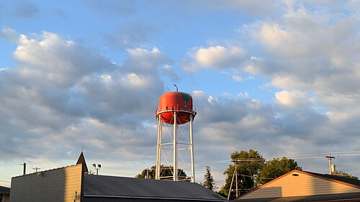
Photograph
On the map
Show this system's territory on the map — 2 ZIP codes in all.
Sources
U.S. EPA SDWIS and Community Water System Service Area Boundaries (v3, 2026), Ohio EPA primacy data, 2020 census blocks: the system serving most residents, traced through purchases to the treating utility; Ohio EPA 2023 Sewer and Water Rate Survey (Ohio State, May 2025) for household bills; Ohio EPA DEFA loan awards since 2016 for the loans paragraph · EPA SDWIS · EPA service area boundaries · Ohio EPA drinking water · Ohio EPA rate survey
EPA's own record for this system: Enforcement and Compliance History report for OH4000111 (EPA ECHO).
Jackson, City Of's own pages: athensconservancy.org, athensconservancy.org
Notable facts: damsoftheworld.com, jacksonohio.us, content.govdelivery.com
History: jacksonohio.us, content.govdelivery.com, content.govdelivery.com, damsoftheworld.com
Water quality: jacksonohio.us
Planned work: jacksonohio.us
Water pressure: jacksonohio.us
Capital projects: content.govdelivery.com, content.govdelivery.com
Rates: jacksonohio.us, codelibrary.amlegal.com
Sewers: jacksonohio.us, jacksonohio.us, content.govdelivery.com
Treatment: jacksonohio.us
Supply stress: jacksonohio.us, content.govdelivery.com
