Water system
Seven Mile Village
EPA ID OH0902612 · Butler County · 1,000 people served · owned by a local government
Seven Mile Village buys its water from Southwest Regional Water District.
The system's record
- Aquifer
- Great Miami Buried Valley Aquifer
- Active wells
- 7
- Seller serves
- 42,856 people · Butler County
- Seller's EPA ID
- OH0903912
About this area's water Southwest Regional Water District
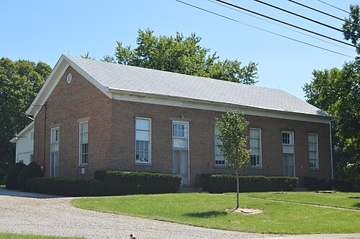
The history, photo, rates, sewer details and water quality notes below are for Southwest Regional Water District, which supplies the water Seven Mile Village buys. They are not Seven Mile Village's own figures.
Did you know
- It began in 1968 as a farmer-organized rural water cooperative and only became a political subdivision in 1992, which let it borrow tax-free.
- Its aquifer-protection consortium is an odd coalition: Butler County Water & Sewer, the cities of Hamilton, Fairfield and Cincinnati, and the Molson-Coors brewery.
- The average district household uses about 155 gallons of water a day.
- In all of 2025 the district drew just 69,090 gallons through its emergency connection with the City of Hamilton, across five days.
History5
- 1968Organized as the Southwestern Butler County Water Association, a not-for-profit rural water cooperative: a 2.3 mgd plant, 160 miles of main, about 2,800 users.
- 1978-1981Added 150 miles of main and 1,100 users, expanded treatment capacity to 3.6 mgd, and renamed itself The Water Association.
- 1992Completed a $3,000,000 improvement (4 elevated tanks, a clearwell, 15 miles of transmission main) and reorganized as the Southwest Regional Water District, effective Sept 1, 1992.
- 1997The North Water Treatment Plant began operating in May 1997, ending the W. Guy Metcalf plant's run as the district's only production facility.
- 2003Ohio EPA found the Great Miami Buried Valley Aquifer very productive but highly susceptible to contamination.
Treatment & pressure
How it is treated
Two plants treat Great Miami Buried Valley Aquifer groundwater: W. Guy Metcalf (Ross Twp, 3.6 MGD, three 1,600-gpm wells) does chlorination, fluoridation and softening; North WTP (St. Clair Twp, 6 MGD, four wells) adds iron and manganese removal.
Water pressure
The district operates 18 storage tanks across its pressure zones but states no psi figure.
What it costs at Southwest Regional Water District
$7.05 per 1,000 gallons
$7.05 per 1,000 gallons effective Feb 1, 2026, plus a $20.00/month minimum service availability charge, raised from $19.00.
Water quality & impurities8
| Contaminant | Level | Limit | Year |
|---|---|---|---|
| Nitrate North plant 1.26, Metcalf 2.23. CCR calls it evidence of manmade influence. | 1.26-2.23 ppm | 10 | 2025 |
| Total trihalomethanes (TTHM) 17.3 at DS201, 11.6 at DS202; well under the MCL. | 11.6-17.3 ppb | 80 | 2025 |
| Haloacetic acids (HAA5) 4.8 at DS201, non-detect at DS202. | 4.8 ppb | 60 | 2025 |
| Lead (90th percentile) 0 of 30 samples exceeded the 15 ppb action level. | 1.3 ppb | 15 | 2025 |
| Copper (90th percentile) 0 of 30 samples exceeded the 1.3 ppm action level. | 0.566 ppm | 1.3 | 2025 |
| Fluoride North 1.18, Metcalf 1.21; added by the district. | 1.18-1.21 ppm | 4 | 2025 |
| Combined radium Naturally occurring; well under the MCL. | 1.15 pCi/L | 5 | 2023 |
| PFBS (PFAS) UCMR5: detected at Metcalf, non-detect at North plant. No MCL for PFBS. | 0.00309 ppb | n/a | 2023 |
EPA compliance record · Seven Mile Village
Lead at the tap: 90th-percentile result 1.9 ppb in 2025 (action level 15 ppb).
EPA record: no health-based violations since 2015.
2 violations of any kind logged since 2020: 2 for a report, record or notice that was missing, late or incomplete (the yearly water quality report, a public notice, lead line records).
EPA compliance record · Southwest Regional Water District (treats the water)
Lead at the tap: 90th-percentile result 1.3 ppb in 2025 (action level 15 ppb).
EPA record: no health-based violations since 2015.
Projects & plans9
Recent and current work
- SR 122 Water Main Replacement (West Alexandria Rd to Hill St) · under construction
Listed in progress on the district's capital projects page. - Darrtown Rd Water Main Replacement (Stillwell Beckett Rd to Shollenbarger Rd) · under construction
Listed in progress on the district's capital projects page. - SR 503 Water Main Replacement (Tolbert Rd to Oxford Middletown Rd) · completed
Listed complete on the district's capital projects page. - W. Guy Metcalf WTP Well #1 and Well #2 rehabilitation · completed
Both well rehabilitations listed complete; the plant runs three production wells. - Water System Master Plan · completed
Listed complete on the district's capital projects page.
Planned or needed
- SR 177 Water Main Replacement (North St to Somerville Rd) · planned
Listed as planned on the district's capital projects page. - Taylor Rd Water Main Replacement (Ringwood Rd to Jones Rd) · planned
Listed as planned on the district's capital projects page. - US 27 Water Main Replacement south of Minton Rd · planned
About 1,600 feet of water main to be replaced. - North Plant Rehabilitation · planned
Listed as planned on the district's capital projects page.
Supply stress
Ohio EPA determined in 2003 that the Great Miami Buried Valley Aquifer, though very productive, is highly susceptible to contamination. The district's CCR says nitrate in treated water (1.26-2.23 ppm) confirms manmade influence, well under the 10 ppm standard. No drought or capacity limits reported.
Sewers at Southwest Regional Water District
Sanitary
The district sells water only. Its own Sewer Service Rates page carries no rates and instead points customers to Butler County Water & Sewer Department and the City of Hamilton. Rural unincorporated parts of the service area rely on on-site septic systems.
Storm
Not detailed in district sources; the service area is largely rural and low-density.
Serves
Seven Mile Village is not mapped to any ZIP code on record.
Population-weighted resident shares; a ZIP code can have more than one system on record. Recomputed from each ZIP's own system list, not from the map's cached footprint.
Buys from · Sells to
Seven Mile Village buys its water from Southwest Regional Water District.
No other system is on record buying water from Seven Mile Village.
What the records show about Seven Mile Village
Who runs it
EPA's record describes Seven Mile Village as owned by a local government. It has 320 service connections and serves 1,000 people.
EPA classes it as a community water system, one that serves the same residents all year.
Source: EPA Safe Drinking Water Information System (SDWIS), water system record.
How the water is treated
Seven Mile Village buys water that Southwest Regional Water District treats first, so the steps that count are the seller's. EPA's treatment table registers these steps for Southwest Regional Water District: corrosion control, chlorine disinfection, fluoridation, ion-exchange softening, lime softening, and sand or media filtration.
The list is what each system registered with EPA for treatment plants EPA still shows as active, and it can lag a plant upgrade.
Source: EPA Safe Drinking Water Information System (SDWIS) treatment table (EPA Envirofacts, pulled September 2026).
Violations
EPA's record shows no health-based violations for Seven Mile Village since 2015.
EPA logs 2 violations of any kind since 2020: 2 for a report, record or notice that was missing, late or incomplete (the yearly water quality report, a public notice, lead line records).
Source: EPA Safe Drinking Water Information System (SDWIS) violation records: health-based violations with compliance periods beginning in 2015 or later, all violations from 2020 or later (EPA Envirofacts, pulled November 2026).
Lead and copper at the tap
In the sampling period ending December 2025, the 90th-percentile lead result at Seven Mile Village was 1.9 ppb, under both the current 15 ppb action level and the 10 ppb level that applies from 2027.
EPA has 9 sampling periods on file for Seven Mile Village since 2016, the first ending in 2017; no period was above 10 ppb.
Every water system has to inventory its service lines, the pipes from the main to each building. In the inventory Seven Mile Village sent EPA, 325 lines are counted.
| Material | Lines |
|---|---|
| Lead | 0 |
| Galvanized, needing replacement | 0 |
| Unknown material | 325 |
| Not lead | 0 |
| All lines | 325 |
Systems sample taps in the homes most likely to have lead pipes or solder. The 90th-percentile result is the level nine in ten of the sampled homes were at or below. Lead comes mostly from service lines and house plumbing, not the source water, so a low result for the system does not clear an old house.
EPA's dashboard status for this inventory: reported all required service line types.
Source: EPA Safe Drinking Water Information System (SDWIS) lead and copper 90th-percentile results (EPA Envirofacts), sampling periods ending 2016 or later; EPA's service line inventory dashboard, Ohio's 2026 Q2 submission.
PFAS
The water Seven Mile Village buys is treated by Southwest Regional Water District, so the results below are Southwest Regional Water District's.
EPA's fifth national round of testing (UCMR 5) took 5 samples of the water entering the pipes of Southwest Regional Water District in 2023 and measured 29 PFAS.
EPA's UCMR 5 file shows no PFOA or PFOS detected, against a federal limit of 4 ng/L each.
The highest PFAS result was PFBS 3.1 ng/L.
The system reported potential PFAS sources near its supply.
Ohio EPA's own statewide sampling tested 2 plants of Southwest Regional Water District (latest sample July 2020). Not one of the six PFAS tested (PFOA, PFOS, PFHxS, PFNA, GenX and PFBS) was detected.
Ohio EPA's current sampling status map lists 2 plants of Southwest Regional Water District as sampled, most recently May 2026.
| Compound | Highest result | Federal limit |
|---|---|---|
| PFOA | not detected | 4 ng/L |
| PFOS | not detected | 4 ng/L |
PFAS are the 'forever chemicals' from firefighting foam, plating shops and non-stick coatings. Results are for water leaving the plant, not your tap.
Source: EPA UCMR 5 occurrence data (final release, August 2026); Ohio EPA statewide PFAS sampling, 2019 to 2021, and its sampling status map.
Disinfection byproducts
Chlorine that disinfects water also reacts with organic matter to form byproducts. Two groups have federal limits: total trihalomethanes (TTHM, 80 µg/L) and five haloacetic acids (HAA5, 60 µg/L), judged on running yearly averages at each sampling site.
For TTHM, the average of Seven Mile Village's samples in 2019, the last year it was sampled, was 15.8 µg/L. The worst yearly average was 24.6 µg/L and the highest single sample was 34 µg/L, from 14 samples taken from 2013 to 2019.
For HAA5, the average in the last year sampled was 0 µg/L. The worst yearly average was 3 µg/L and the highest single sample was 6 µg/L, from 14 samples.
| Byproduct | Limit | Latest yearly average | Worst yearly average | Highest sample | Samples |
|---|---|---|---|---|---|
| TTHM | 80 µg/L | 15.8 µg/L (2019) | 24.6 µg/L | 34 µg/L | 14 |
| HAA5 | 60 µg/L | 0 µg/L | 3 µg/L | 6 µg/L | 14 |
A yearly average of 0 means nothing was detected in that year's samples. EPA's file stops at 2019; Ohio EPA's Drinking Water Watch has newer results.
Source: EPA Six-Year Review 4 compliance monitoring data, 2012 to 2019, distribution-system samples (non-detects counted as zero).
Nitrate, arsenic and radioactivity
The water Seven Mile Village buys is treated by Southwest Regional Water District, so the results below are Southwest Regional Water District's.
Nitrate: the highest of 16 samples was 3 mg/L (as nitrogen) in 2013; in 2019, the last year sampled, the highest was 2.27 mg/L. No sample was over the limit of 10 mg/L. Nitrate above 10 is unsafe for infants.
Arsenic was not detected in 4 samples (limit 10 µg/L).
| Contaminant | Samples | Highest result | Limit | Samples over limit |
|---|---|---|---|---|
| Nitrate (as nitrogen) | 16 | 3 mg/L | 10 mg/L | 0 |
| Arsenic | 4 | not detected | 10 µg/L | 0 |
Measured in finished water: at the plant's entry points and in the distribution system; raw well and intake samples are left out. Non-detects count as zero.
EPA's file lumps the entry-point samples of all 2 plants of Southwest Regional Water District together, so a result over a limit may come from a plant that serves a different part of town.
Source: EPA Six-Year Review 4 compliance monitoring data, 2012 to 2019, finished water of Southwest Regional Water District.
Solvents and fuels
The water Seven Mile Village buys is treated by Southwest Regional Water District, so the results below are Southwest Regional Water District's.
EPA's file holds results for all six solvent and fuel compounds it checked. Benzene, carbon tetrachloride, 1,2-dichloroethane, trichloroethylene, tetrachloroethylene, and vinyl chloride were not detected in 4 samples each.
| Compound | Limit | Samples | Detected in | Highest result | Samples over limit |
|---|---|---|---|---|---|
| Benzene | 5 µg/L | 4 | 0 of 4 | not detected | 0 |
| Carbon tetrachloride | 5 µg/L | 4 | 0 of 4 | not detected | 0 |
| 1,2-dichloroethane | 5 µg/L | 4 | 0 of 4 | not detected | 0 |
| Trichloroethylene (TCE) | 5 µg/L | 4 | 0 of 4 | not detected | 0 |
| Tetrachloroethylene (PCE) | 5 µg/L | 4 | 0 of 4 | not detected | 0 |
| Vinyl chloride | 2 µg/L | 4 | 0 of 4 | not detected | 0 |
"Not detected" means the lab's result was below what its method can measure, not that the compound is absent. Non-detects count as zero in the highest-result column.
Source: EPA Six-Year Review 4 compliance monitoring data, 2012 to 2019, finished water of Southwest Regional Water District.
Farm chemicals and metals
The water Seven Mile Village buys is treated by Southwest Regional Water District, so the results below are Southwest Regional Water District's.
EPA's file holds results for all nine herbicides and metals it checked. Detected: barium in 3 of 4 samples, highest 40 µg/L (limit 2,000). Not detected: atrazine in 6 samples, alachlor in 6 samples, 2,4-D in 6 samples, chromium in 7 samples, cadmium in 7 samples, mercury in 4 samples, selenium in 4 samples, thallium in 4 samples.
| Substance | Kind | Limit | Samples | Detected in | Highest result | Samples over limit |
|---|---|---|---|---|---|---|
| Atrazine | Farm chemical | 3 µg/L | 6 | 0 of 6 | not detected | 0 |
| Alachlor | Farm chemical | 2 µg/L | 6 | 0 of 6 | not detected | 0 |
| 2,4-D | Farm chemical | 70 µg/L | 6 | 0 of 6 | not detected | 0 |
| Chromium | Metal | 100 µg/L | 7 | 0 of 7 | not detected | 0 |
| Cadmium | Metal | 5 µg/L | 7 | 0 of 7 | not detected | 0 |
| Barium | Metal | 2,000 µg/L | 4 | 3 of 4 | 40 µg/L | 0 |
| Mercury | Metal | 2 µg/L | 4 | 0 of 4 | not detected | 0 |
| Selenium | Metal | 50 µg/L | 4 | 0 of 4 | not detected | 0 |
| Thallium | Metal | 2 µg/L | 4 | 0 of 4 | not detected | 0 |
Non-detects count as zero in the highest-result column.
EPA's file lumps the entry-point samples of all 2 plants of Southwest Regional Water District together, so a result over a limit may come from a plant that serves a different part of town.
Source: EPA Six-Year Review 4 compliance monitoring data, 2012 to 2019, finished water of Southwest Regional Water District.
Bacteria in the pipes
From 2012 to 2019, 0 of 98 routine total coliform samples taken in the distribution system at Seven Mile Village tested positive (0%); in 2019, the last year on file, 0 of 12 did.
A positive coliform test is a warning sign, not a violation by itself. E. coli is a sign that human or animal waste may have reached the water. Coliform counts are routine samples only; E. coli counts include repeat samples.
Source: EPA Six-Year Review 4 compliance monitoring data, 2012 to 2019, distribution-system presence/absence tests for total coliform and E. coli.
Fluoride
The Ohio Department of Health's report to the CDC (My Water's Fluoride) says Seven Mile Village buys its water from Southwest Regional Water District, a system that adjusts the fluoride level to the recommended level for preventing tooth decay.
EPA's treatment table lists fluoridation among the steps at Southwest Regional Water District, which treats the water Seven Mile Village buys.
Measured fluoride: 0.99 mg/L on average leaving the plants of Southwest Regional Water District, which supplies Seven Mile Village, in 2017 (above the 0.7 mg/L level now recommended and well under the 4 mg/L limit); samples ran from 0.89 to 1 mg/L across 4 samples in 2012 to 2019.
The recommended level for preventing tooth decay is 0.7 mg/L; the federal limit is 4 mg/L. The treatment list is what each system registered with EPA and can lag a plant upgrade.
Source: CDC My Water's Fluoride (fluoridation status as reported by the Ohio Department of Health, fetched September 2026); EPA Safe Drinking Water Information System (SDWIS) treatment table; EPA Six-Year Review 4 compliance monitoring data, 2012 to 2019, entry-point fluoride samples.
Lithium
Lithium was not detected in 4 UCMR 5 samples at Southwest Regional Water District, which supplies Seven Mile Village, last sampled in 2023 (the method reports from 9 µg/L).
Lithium is not regulated. EPA's draft health reference level is 10 µg/L, and it occurs naturally in deep groundwater, so well systems in the northwest run highest.
Source: EPA UCMR 5 occurrence data (final release, August 2026), samples from 2023 to 2025.
On the map
Sources
U.S. EPA SDWIS and Community Water System Service Area Boundaries (v3, 2026), Ohio EPA primacy data, 2020 census blocks: the system serving most residents, traced through purchases to the treating utility; Ohio EPA 2023 Sewer and Water Rate Survey (Ohio State, May 2025) for household bills; Ohio EPA DEFA loan awards since 2016 for the loans paragraph · EPA SDWIS · EPA service area boundaries · Ohio EPA drinking water · Ohio EPA rate survey
EPA's own record for this system: Enforcement and Compliance History report for OH0902612 (EPA ECHO).