How Whitehall began
Whitehall sits on land that was part of Truro Township, granted in 1810 to Robert Taylor, a Nova Scotia refugee of the Revolution, on the National Road between Columbus and the Big Walnut Creek crossing. An 1836 property transfer is the earliest record of the name 'White Hall,' attached to a farmhouse that also served travelers as an inn and tavern; the settlement stayed a rural crossroads under that name for another century. It grew fast after incorporating as a village in 1947, the same year (by the city's own account) that the Town and Country shopping center went up on its Broad Street frontage — described by the city and by retail historians as the first shopping-center strip built in the United States. Whitehall became a city in the 1950s as postwar subdivisions filled in around it, and in 1961 it became home to the Kahiki, one of the most elaborate Polynesian-themed restaurants ever built anywhere in the country.
Settled 1810, incorporated 1947, by residents' petition; land originally granted to Robert Taylor.
Where the name comes from
The earliest documented use of the name is a property transfer: in 1820 President James Monroe's government conveyed a 156-acre parcel to John Long, who conveyed it to John M. Walcutt in 1821; when Walcutt transferred the land to George Spencer in 1836, the transfer document called the parcel 'White Hall, and occupied by J. M. Walcutt.' No source found explains why the name was chosen — whether for a building's color, an English place name, or some other reason. The farmhouse on the property served travelers and merchants on the National Road as an inn and tavern, and by 1923 a township school across the road carried the Whitehall name as well.
Before the town
No source found in this research documents a Native American village, camp, burial site or named trail on the land that became Whitehall specifically. The area was part of Truro Township; the 1880 county history's chapter on Truro records its 1805-1812 settlers in some detail — the Medfords and Thomas Palmer from Maine (1805), John Edgar, John Lynch, Benjamin Cornell, Matthew Long (1806), the Taylor family (1806) — but does not mention Native people, villages or trails there. The Scioto Trail, a major north-south Native route linking the Ohio River to Sandusky Bay, ran through central Ohio to the west of this ground, and neighboring Sharon Township's 1880 history recalls Wyandot and other travelers passing through the area 'frequently' in the early 1800s on their way to and from towns near Sandusky; no source, though, places a specific site or encounter within what is now Whitehall. See the Franklin County file for the fuller county-level record.
Timeline
- — First settlers of Truro Township, the land Whitehall grew from, arrive: John and Charles Medford and Thomas Palmer in 1805, followed by John Edgar, John Lynch, Benjamin Cornell, Matthew Long and the Taylor family in 1806.
- — Robert Taylor, a Nova Scotia refugee compensated for service to the American colonies, receives a land grant in the area between the Scioto River and Big Walnut Creek.
- — The federal government, under President James Monroe, conveys a 156-acre parcel of this land to John Long.
- — John Long conveys the parcel to John M. Walcutt, whose farmhouse serves travelers on the National Road as an inn and tavern.
- — Walcutt transfers the property to George Spencer; the transfer document is the earliest record calling the parcel 'White Hall.'
- — A township school named Whitehall is built across the road from the old inn.
- — Whitehall incorporates as a village; the city's own history places the opening of the Town and Country shopping center, built by developer Don Casto, in the same year (Wikipedia dates the shopping center to 1948).
- — Postwar subdivisions — English Village, Parklawn Manor, Norton Field — fill in around Whitehall as veterans seek affordable housing; the village grows into a city.
- — Whitehall's borders expand eastward to take in the country club and reach Big Walnut Creek.
- — The Kahiki, a Polynesian-themed restaurant designed by architect Coburn Morgan, is built on East Broad Street at a reported cost of about $1 million, on the site of the Grass Shack bar that had burned down in 1959.
- — The Kahiki Supper Club opens, built by Bill Sapp and Lee Henry; it can seat more than 500 guests around a giant carved stone fireplace and a monkey fountain nicknamed George.
- — Two Whitehall department stores are bombed in August in connection with a robbery scheme.
- — The Kahiki is listed on the National Register of Historic Places (December 8), cited for its Polynesian design and influence on restaurant history.
- — The Kahiki closes on August 25 after its owners sell the site to Walgreens; the building is demolished despite its National Register listing.
- — Shoe retailer DSW relocates its corporate headquarters to Whitehall.
Stories
The Name on a Deed
Whitehall carries no grand founding story — no company town, no platted New England green. The name surfaces first in a chain of ordinary property transfers along the National Road east of Columbus. The federal government granted land here in 1810 to Robert Taylor, a Nova Scotian who had backed the American side in the Revolution and was compensated with Ohio acreage. The tract passed from Taylor's grant through a 1820 government conveyance to John Long, then to John M. Walcutt in 1821, whose farmhouse took in travelers and merchants as an inn and tavern on the National Road. When Walcutt sold to George Spencer in 1836, the deed described the property as 'White Hall, and occupied by J. M. Walcutt' — the earliest paper trail of the name that would eventually belong to a city of 20,000. Why 'White Hall' specifically, no record explains.
Casto's Town and Country
The year Whitehall incorporated as a village, developer Don Casto opened the Town and Country shopping center on its Broad Street frontage — a strip of stores set back from the road behind a shared parking lot, rather than lined up storefront-to-sidewalk downtown-style. Whitehall's own history and other accounts describe it as the first shopping center of its kind built anywhere in the United States, a format that would go on to reshape American retailing and, eventually, hollow out the downtowns it borrowed customers from. Postwar veterans moving into the new subdivisions going up around it — English Village, Parklawn Manor, Norton Field — had a car-oriented shopping strip on their doorstep almost from the day they moved in.
The Most Elaborate Tiki Restaurant Ever Built
After their bar, the Grass Shack, burned down on East Broad Street in 1959, Bill Sapp and Lee Henry rebuilt bigger: the Kahiki Supper Club, designed by Columbus architect Coburn Morgan and completed in 1960 for a reported $1 million. It opened in 1961 seating more than 500 guests beneath a roofline shaped like a Polynesian long-house, past a moat and a giant carved stone Moai fireplace, with waterfalls, fish tanks, live birds and a monkey fountain named George. It became one of the most famous restaurants in Columbus and, by some accounts, the most elaborate tiki restaurant ever built anywhere. The federal government listed it on the National Register of Historic Places in 1997, citing its 'rich Polynesian culture, architectural design and influence on national and local restaurant history' — but three years later its owners sold the site to Walgreens, and on August 25, 2000, the doors closed for the last time. The building came down shortly after, register listing or not.
Photographs
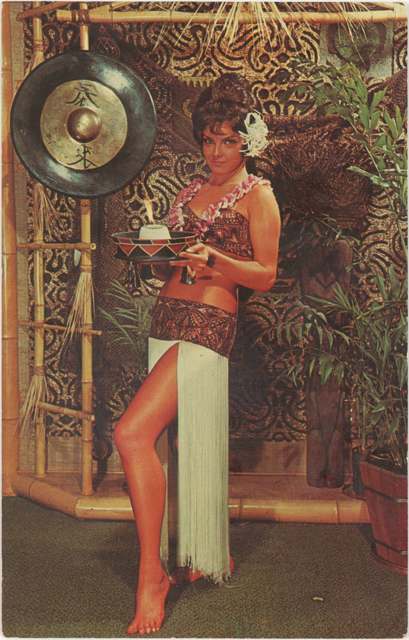
Photo: unknown (Kahiki Supper Club promotional postcard), no known copyright restrictions · Wikimedia Commons
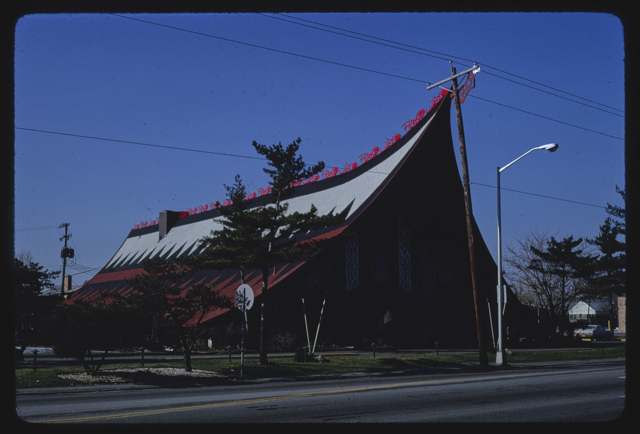
Photo: John Margolies, Library of Congress, public domain · Wikimedia Commons
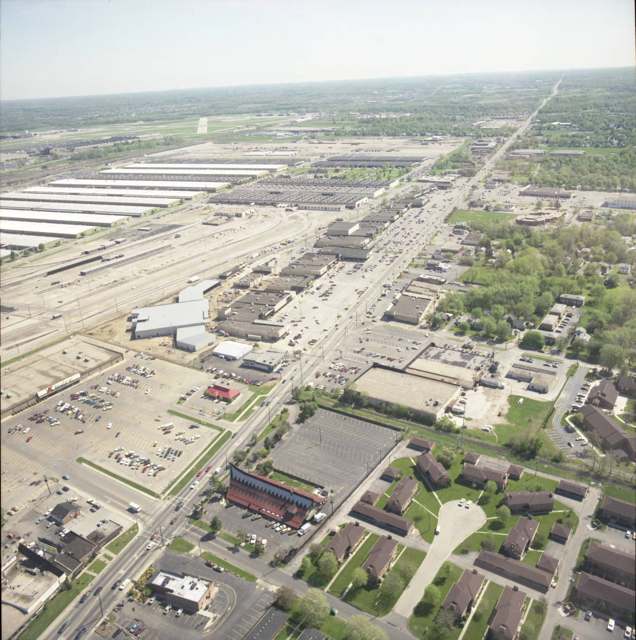
Photo: David E. Lucas, public domain · Wikimedia Commons
Local history sources: whitehall-oh.us · en.wikipedia.org · ohiogenealogyexpress.com · ohiogenealogyexpress.com · hmdb.org · en.wikipedia.org · ohiohistory.org · commons.wikimedia.org
Water
Big Walnut Creek at the plant's low-head dam and screen house on Morse Rd, below Hoover Dam The water here
- Columbus Public Water System100% of residentsScioto River (Griggs & O'Shaughnessy), Hoover Reservoir on Big Walnut Ck, plus wells
- Reynoldsburg City0% of residentsScioto River (Griggs & O'Shaughnessy), Hoover Reservoir on Big Walnut Ck, plus wells
Its ZIP codes
Each ZIP code that touches Whitehall, with the share of its residents who live here and the same headline figures as the ZIP page.
| ZIP | Share | Water | Radon | Home value | Schools | Flood |
|---|---|---|---|---|---|---|
| 43213 Whitehall and Columbus | 53% | Big Walnut Creek at the plant's low-head dam and screen house on Morse Rd, below Hoover Dam | 4.5 pCi/L average radon | Median year built 1959 | Whitehall City · 2.5 stars overall | 12% of residents in the 1% floodplain |
| 43227 Columbus | 6% | South Well Field wells in Scioto valley sand and gravel, off Parsons Ave near Shadeville and Lockbourne | 6.7 pCi/L average radon | Median year built 1958 | Columbus City · 2 stars overall | 3.5% of residents in the 1% floodplain |
The county
Franklin County: 45 ZIP codes, 42 cities, villages and townships, 1,356,733 people.
Nearby places
Cite this page
Cite this page as:
Cracked Buckeye (Open Shower Co), "Whitehall, Franklin County", https://crackedbuckeye.com/place/whitehall/, built 2026-09-16, accessed [date].
Machine-readable: /api/place/whitehall.json (open JSON, CC BY 4.0 for the compilation; the underlying records keep their own terms) · How to cite · Report a correction · Built 2026-09-16