How Valleyview began
Valleyview is a small residential village on the west side of the Columbus area, carved from the southern part of Franklin Township, whose Ohio history begins with Lucas Sullivant's 1797 survey of nearby Franklinton, the county's first Euro-American settlement. The village sits close to the site of Camp Chase, the Civil War training camp and Confederate prison that operated a few miles to the northeast from 1861 to 1865, and shares its ZIP code with the Adena-culture burial mound now known as Campbell Mound or Shrum Mound. No source found for this entry gives Valleyview's own platting or incorporation date; it already had 611 residents at the first census in which it appears, 1950, and has held between about 600 and 900 people ever since.
Where the name comes from
No source found for this entry explains why "Valleyview" was chosen as the village's name; the village lies in the Scioto River valley west of Columbus, which may be the origin, but this is not confirmed by any source and should not be treated as established fact.
Before the town
The most significant Native American site in the immediate area is the mound long known as Campbell Mound (its official National Register name) and now more commonly called Shrum Mound, an Adena-culture burial mound at 3141 McKinley Avenue in Columbus's West Scioto neighborhood, in Campbell Memorial Park. It sits roughly two miles from Valleyview's own small boundary, within the same stretch of west Columbus that shares Valleyview's ZIP code, rather than inside the village itself. Sources disagree slightly on the Adena period's dates, giving either roughly 800 BC to AD 100 or roughly 500 BC to AD 200. The mound stands about 20 feet high and 100 feet across, covering about one acre; it has never been archaeologically excavated, so its contents are unknown, though an archaeologist quoted by Ohio History Connection believes it likely still holds burials. No other Native village, trail, or earthwork specific to Valleyview itself was found in the sources checked; broader Native history for the county is covered in the Franklin County file.
Nations recorded here: Adena culture, Wyandot, Shawnee.
- Campbell Mound (Shrum Mound) (mound) — 3141 McKinley Avenue, Columbus, in Campbell Memorial Park, about two miles from Valleyview, Adena culture, roughly 800 BC-AD 100 (Ohio History Connection) or 500 BC-AD 200 (Ohio Memory/Ancient Ohio Trail) (en.wikipedia.org)
Timeline
- — Lucas Sullivant surveys and lays out Franklinton, the first Euro-American settlement in what becomes Franklin Township, a few miles from present Valleyview.
- — Franklin Township organizes at roughly the same time as Franklin County itself.
- — Camp Chase is established west of Columbus, named for Ohio governor and Lincoln Treasury Secretary Salmon P. Chase, first as a training camp for Union volunteers.
- — A wood engraving of Camp Chase as a prison for captured Confederates runs in Frank Leslie's Illustrated Newspaper on February 6.
- — Camp Chase's Confederate prisoner population peaks at about 8,000, including officers captured in Morgan's Raid such as Colonel Basil W. Duke.
- — A smallpox epidemic during the winter kills hundreds of prisoners at the camp.
- — Camp Chase closes at the war's end; by this point roughly 150,000 Union soldiers and 25,000 Confederate prisoners had passed through it since 1861.
- — The camp is fully dismantled by September, its salvaged lumber used to help build the National Asylum for Disabled Volunteer Soldiers in Dayton.
- — A Friends (Quaker) congregation organizes on the former Camp Chase grounds.
- — Former Union soldier William H. Knauss organizes the first memorial service at the Camp Chase Confederate Cemetery.
- — The Confederate Soldier Memorial arch is dedicated at the cemetery, by then holding 2,260 Confederate dead from Camp Chase and Camp Dennison.
- — Educator Minnie R. Shrum deeds the site of Campbell Mound, by then also known as Shrum Mound, to the Ohio Historical Society.
- — Campbell Mound is listed on the National Register of Historic Places on November 10.
- — The Camp Chase Site is listed on the National Register of Historic Places on April 11.
- — A Confederate soldier statue atop the cemetery's memorial arch, decapitated by vandals in 2017, is repaired and reinstalled in May.
Stories
A training camp becomes a prison
Camp Chase went up west of Columbus in May 1861, named for Salmon P. Chase, the former Ohio governor then serving as Lincoln's Treasury Secretary, and it began as an ordinary muster and training ground for Ohio's Union volunteers. As Confederate prisoners started arriving, the camp's mission shifted, and by 1863 it held roughly 8,000 of them at once, including officers swept up in John Hunt Morgan's cavalry raid through Ohio and Indiana. Conditions were hard rather than deliberately cruel: prisoners were not intentionally starved, but with the Union army feeding its own soldiers first, rations ran short, and a smallpox epidemic in the winter of 1863-1864 killed hundreds. Across the war, an estimated 150,000 Union soldiers and 25,000 Confederate prisoners passed through the camp's gates. It closed in 1865 and was torn down by September 1867, its lumber salvaged to help build a veterans' home in Dayton; the ground where it stood was redeveloped as the Westgate neighborhood in the late 1920s and 1930s, and today only a cornerstone marker in front of a Masonic temple on Sullivant Avenue points to what was there.
The Confederate dead of Camp Chase
Not everyone who came to Camp Chase as a prisoner left it alive, and 2,260 of them, along with dead from Camp Dennison near Cincinnati, are buried together in the Camp Chase Confederate Cemetery. Thirty years after the war ended, a former Union soldier named William H. Knauss organized the cemetery's first memorial service in 1895, an act of reconciliation that led in 1902 to the dedication of a stone memorial arch topped by a statue of a Confederate soldier. Knauss published a full history of the camp and cemetery in 1906, and the United Daughters of the Confederacy held annual commemorations there from 1912 until 1994; today the Hilltop Historical Society continues the tradition each June. The site's power to provoke strong feeling has not faded: in August 2017 vandals pushed the soldier statue off the arch and broke off its head, and it took until May 2019 for the repaired statue to be reinstalled.
The mound before the camp
Long before Camp Chase existed, people of the Adena culture built a burial mound a couple of miles from what is now Valleyview, on ground later named Campbell Memorial Park. Standing about 20 feet high and 100 feet across, the mound has never been archaeologically excavated, so no one knows for certain what or who lies inside it, though an Ohio History Connection archaeologist believes it likely still holds burials. It carries two names today: Campbell Mound, the name under which it was added to the National Register of Historic Places in 1970, and Shrum Mound, for Minnie R. Shrum, the educator who deeded the site to the Ohio Historical Society in 1928 so that it would be preserved rather than leveled for development, as so many of central Ohio's other mounds had already been by that date.
A quiet village with big neighbors
Valleyview itself has left a much thinner paper trail than the historic sites that share its ZIP code. No source turned up for this entry gives a founding date, a platter's name, or an incorporation year; the village simply appears in the census with 611 residents in 1950 and has stayed a small, stable community of a few hundred households ever since, dipping as low as 601 in 2000 and standing at 669 in 2020. It is, in other words, an ordinary small Ohio village that happens to sit between two extraordinary places, a Civil War prison camp's cemetery and a two-thousand-year-old burial mound, without itself being the subject of much written history.
Photographs
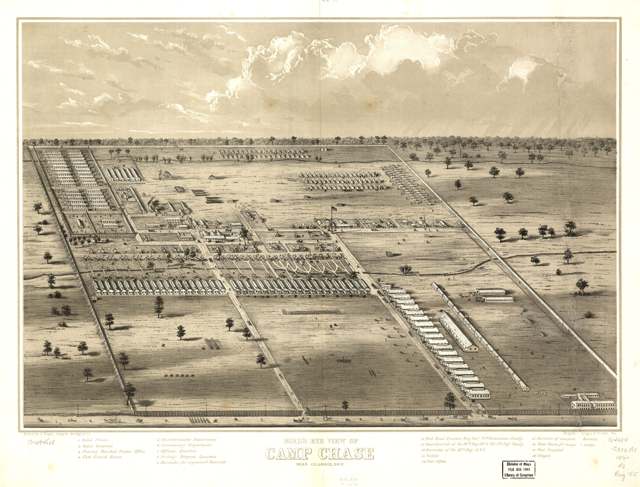
Photo: Ehrgott, Forbriger & Co.; Library of Congress Geography and Map Division, public domain · Wikimedia Commons
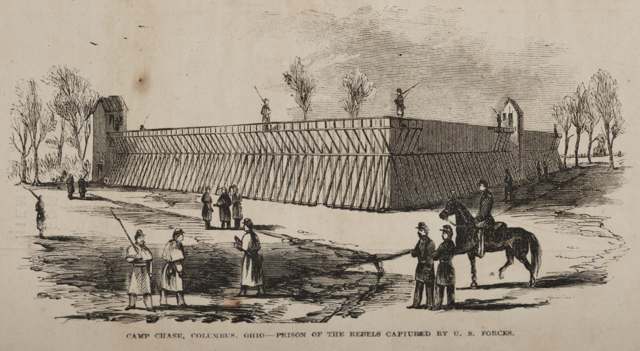
Photo: Frank Leslie's Illustrated Newspaper; Library of Congress Prints and Photographs Division, public domain · Wikimedia Commons
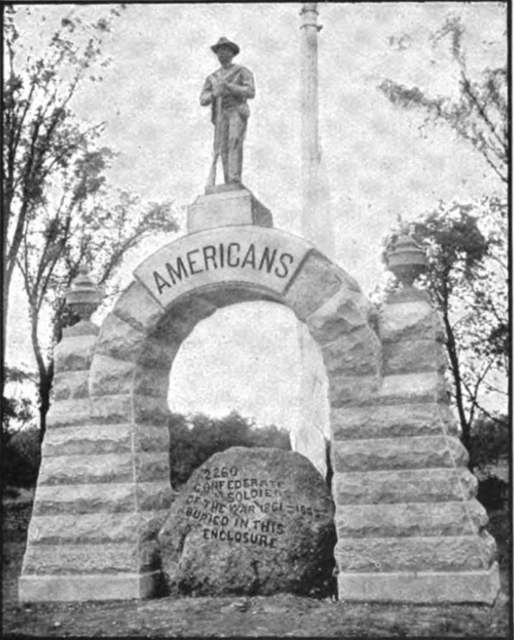
Photo: The Chautauquan magazine, August 1902, public domain · Wikimedia Commons
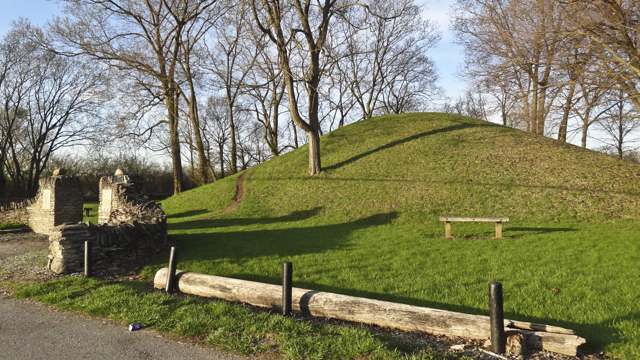
Photo: Photograph by Niagara66, CC BY-SA 4.0 · Wikimedia Commons
Local history sources: en.wikipedia.org · en.wikipedia.org · en.wikipedia.org · en.wikipedia.org · ohiogenealogyexpress.com · remarkableohio.org · city-data.com · en.wikipedia.org · commons.wikimedia.org · commons.wikimedia.org · commons.wikimedia.org · commons.wikimedia.org
Water
Scioto River intake at the plant on Dublin Rd, a few miles below Griggs Dam, opposite Marble Cliff The water here
- Columbus Public Water System100% of residentsScioto River (Griggs & O'Shaughnessy), Hoover Reservoir on Big Walnut Ck, plus wells
Its ZIP codes
Each ZIP code that touches Valleyview, with the share of its residents who live here and the same headline figures as the ZIP page.
| ZIP | Share | Water | Radon | Home value | Schools | Flood |
|---|---|---|---|---|---|---|
| 43204 Columbus | 2% | Scioto River intake at the plant on Dublin Rd, a few miles below Griggs Dam, opposite Marble Cliff | 4.4 pCi/L average radon | Median year built 1954 | Columbus City · 2 stars overall | 1.9% of residents in the 1% floodplain |
The county
Franklin County: 45 ZIP codes, 42 cities, villages and townships, 1,356,733 people.
Nearby places
Cite this page
Cite this page as:
Cracked Buckeye (Open Shower Co), "Valleyview, Franklin County", https://crackedbuckeye.com/place/valleyview/, built 2026-09-16, accessed [date].
Machine-readable: /api/place/valleyview.json (open JSON, CC BY 4.0 for the compilation; the underlying records keep their own terms) · How to cite · Report a correction · Built 2026-09-16