How Sharon Township, Franklin County began
Sharon Township, five miles square within the U.S. Military District, began as part of a larger township called Liberty, was renamed Sharon on March 4, 1806, and had its present boundaries fixed on March 4, 1816. Its center, Worthington, was founded in 1803 by the Scioto Company, a group of Connecticut and Massachusetts colonists led by the Rev. James Kilbourne, who bought 16,000 acres and laid out a planned New England-style village in 1804, naming it for U.S. Senator Thomas Worthington and funding a church, school, and library from the start. Today the township holds historic Old Worthington's colonial-era core and the Jeffers Mound, a Hopewell-era earthwork with a documented ancient pole-house footprint.
Settled 1803, platted 1804, incorporated 1816, by the Scioto Company, led by the Rev. James Kilbourne.
Where the name comes from
The 1880 county history records that the township 'was changed from Liberty to Sharon, Mar. 4, 1806.' No source consulted explains why 'Sharon' was chosen for the township. Worthington, the township's chief village, was named more deliberately: the Scioto Company's colonists voted on August 10, 1803 to name their new settlement for Thomas Worthington, one of Ohio's first two U.S. senators.
Before the town
Within Sharon Township stands the Jeffers Mound, a Hopewell-culture earthwork (roughly 100 BC to AD 500) in Worthington, listed on the National Register of Historic Places (reference 74001499); archaeological work there has documented a Hopewell 'pole house footprint,' physical evidence of a dwelling built by the mound's makers. The 1880 county history's account of the township's earliest settlement records that 'Indians frequently traveled through the country' around Worthington in the early 1800s, and recounts two settler panics later blamed on fear of Indian attack — one caused by a girl accidentally knocking down and discharging a loaded gun during a log-rolling, the other by a militia captain at Delaware testing his soldiers with a false midnight alarm (one man reportedly ran nine miles home, losing most of his clothes to briars along the way) — but the source describes no actual conflict and names no specific Native village, camp, or trail within the township. The land was opened to settlement by the Treaty of Greenville, signed August 3, 1795, in which the Wyandot, Shawnee, Lenape (Delaware), Miami, Ottawa and other nations ceded most of what is now Ohio to the United States; the township itself lies within the U.S. Military District, surveyed for Revolutionary War bounty-land warrants.
Nations recorded here: Wyandot, Shawnee, Lenape (Delaware), Miami, Ottawa, Hopewell culture.
- Jeffers Mound (mound) — Worthington, Sharon Township (NRHP #74001499), Hopewell culture, c. 100 BC - AD 500 (commons.wikimedia.org)
Timeline
- — The Treaty of Greenville cedes most of what becomes Ohio, including the future Sharon Township, to the United States.
- — The Scioto Company organizes on May 5 at the Rev. Eber B. Clark's home in Granby, Connecticut, electing James Kilbourne president; that October it buys 16,000 acres of central Ohio land at $1.50 an acre.
- — Kilbourne arrives May 7 to inspect the purchase; the first election in the original Liberty Township is held June 21 at Joseph Beaty's house; on August 10 the Scioto Company votes to name its village Worthington and to fund a public library.
- — Ezra Griswold, who traveled alone by ox-cart, arrives October 26 and becomes Worthington's first settler.
- — A Protestant Episcopal congregation organizes over the winter.
- — Worthington is laid out in May by the Rev. James Kilbourne, divided into about 160 lots around a five-acre public green.
- — James Kilbourne builds the area's first gristmill, on the Olentangy River near Worthington.
- — The township's name is changed from Liberty to Sharon on March 4.
- — The Ohio legislature incorporates Worthington Academy on February 20; the Kilbourn Commercial Building on High Street is also built this year.
- — Arora Buttles serves as Worthington's postmaster.
- — Sharon Township's present boundaries are finally established on March 4.
- — The Niles Car and Manufacturing Company of Niles, Ohio builds interurban combine car No. 21, later preserved in Worthington at the Ohio Railway Museum.
- — A photograph documents parked automobiles on an unpaved lot in Worthington's business district.
- — The Ohio Railway Museum acquires interurban car No. 21 as its first piece of rolling stock in 1947 and moves it to the museum grounds in 1948.
Stories
A New England Colony, Planned in Connecticut
Worthington was not a place that grew by accident; it was planned before a single colonist set foot in Ohio. In May 1802 a group of families in Granby, Connecticut, organized themselves as the Scioto Company and elected the Rev. James Kilbourne their president. That October the company bought 16,000 acres of Ohio land at a dollar fifty an acre, and the following August, once Kilbourne and an advance party had cleared ground, the colonists voted to name their settlement for Thomas Worthington, one of Ohio's first two U.S. senators — and to tax themselves two dollars a head, about four days' wages, to start a public library before the town even had a proper street. Ezra Griswold, who made the whole trip alone by ox-cart, is remembered as the first settler to arrive, on October 26, 1803. The village itself was laid out the following May, gathered around a five-acre public green in the style of a New England town common.
Two False Alarms
Twice in Worthington's early years, the whole settlement panicked over Indians who were never actually attacking. The first time, a girl clearing up after a log-rolling accidentally knocked down a loaded gun standing behind a door; it fired on hitting the floor, and the sudden bang sent women fleeing to the tavern and the academy building in terror, convinced an attack was underway — the settlers even built a temporary stockade around the academy before the truth came out. The second alarm was deliberately staged: a militia captain at Delaware, testing whether his men were ready to respond, fired a shot at midnight. According to the 1880 county history, 'every one broke for his home as fast as possible,' and one soldier is said to have run nine miles through the dark, losing most of his clothes to briars along the way. Both stories say more about frontier nerves than about any actual danger — the same source notes that Indians simply 'frequently traveled through the country' without incident.
A Mound in a Modern Suburb
Centuries before Kilbourne's colonists arrived, someone built an earthen mound on ground that is now inside the village of Worthington. Archaeologists who later examined the site, known today as the Jeffers Mound, found not just the mound itself but the footprint of a pole house built by the Hopewell culture, the mound-building tradition that flourished in Ohio roughly between 100 BC and AD 500. The mound survived the platting of a New England-style town around it, survived two centuries of growth, and is listed today on the National Register of Historic Places — a rare case, in this corner of Franklin County, of a specific, named, physically surviving site tied to the region's ancient inhabitants rather than a passing mention in a settler's memoir.
Ohio's Oldest Storefront?
At 679-681 High Street in Worthington stands the Kilbourn Commercial Building, built in 1808, just five years after the first colonists arrived. It has operated as a commercial building for so long, with so little interruption, that it is sometimes described as one of Ohio's oldest continuously operating commercial structures. It carries the name of the town's founding family and stands today as a direct, physical link back to the planned New England colony that Kilbourne and the Scioto Company laid out on the town green just a few years earlier.
Riding the Rails to a Museum
In 1905, the Niles Car and Manufacturing Company of Niles, Ohio built an interurban combine car, numbered 21, fifty feet six inches long and weighing over sixty thousand pounds, with a smoking section, a main cabin seating thirty-four, and a baggage compartment finished in quartered oak. It ran the electric interurban lines that once connected small-town Ohio the way the interstate highway system would later, until the whole network was retired. In 1947 the newly formed Ohio Railway Museum, based in Worthington, acquired car No. 21 as the very first piece in its collection, moving it to the museum grounds the following year — the beginning of a collection that now preserves a piece of the interurban era the museum's own town once depended on.
Photographs
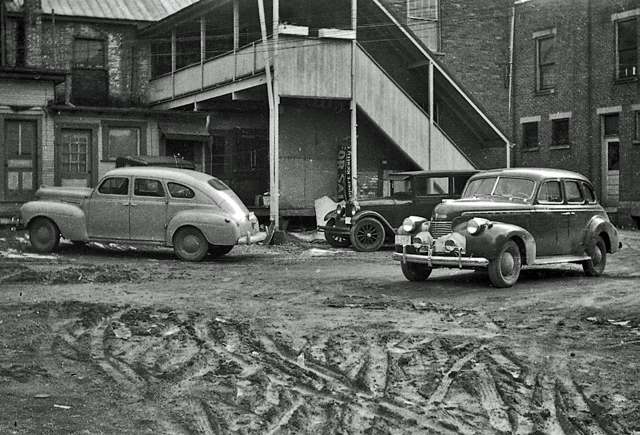
Photo: Don O'Brien (dok1), via Wikimedia Commons, CC BY 4.0 · Wikimedia Commons
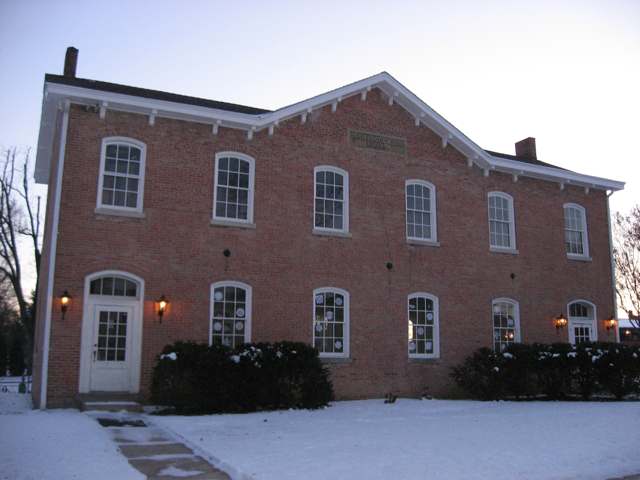
Photo: Nyttend, public domain · Wikimedia Commons
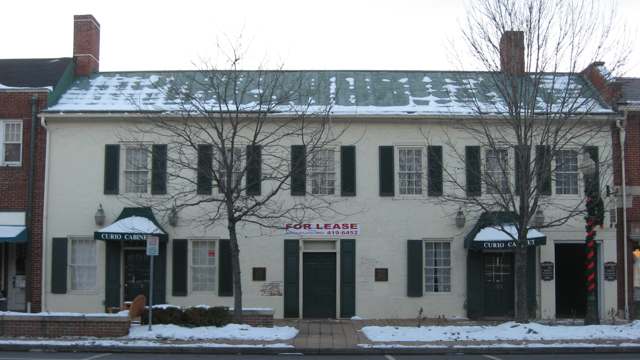
Photo: Nyttend, public domain · Wikimedia Commons
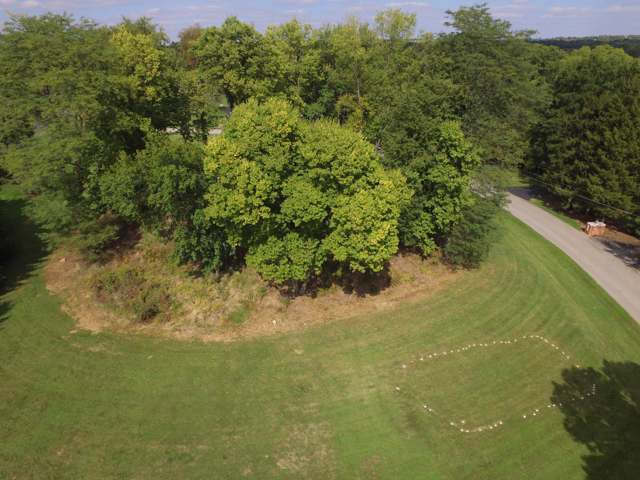
Photo: Kevin Payravi, via Wikimedia Commons, CC BY-SA 4.0 · Wikimedia Commons
Local history sources: ohiogenealogyexpress.com · en.wikipedia.org · en.wikipedia.org · en.wikipedia.org · en.wikipedia.org · commons.wikimedia.org · commons.wikimedia.org · commons.wikimedia.org · commons.wikimedia.org · commons.wikimedia.org
Water
Big Walnut Creek at the plant's low-head dam and screen house on Morse Rd, below Hoover Dam The water here
- Columbus Public Water System96% of residentsScioto River (Griggs & O'Shaughnessy), Hoover Reservoir on Big Walnut Ck, plus wells
- Aqua Ohio - Worthington Hills4% of residentsGroundwater wells (3 wells)
Its ZIP codes
Each ZIP code that touches Sharon Township, Franklin County, with the share of its residents who live here and the same headline figures as the ZIP page.
| ZIP | Share | Water | Radon | Home value | Schools | Flood |
|---|---|---|---|---|---|---|
| 43214 Columbus | 2% | Big Walnut Creek at the plant's low-head dam and screen house on Morse Rd, below Hoover Dam | 7.4 pCi/L average radon | Median year built 1948 | Columbus City · 2 stars overall | 1.8% of residents in the 1% floodplain |
| 43235 Columbus | 2% | Big Walnut Creek at the plant's low-head dam and screen house on Morse Rd, below Hoover Dam | 7.1 pCi/L average radon | Median year built 1986 | Worthington City · 4 stars overall | 0.1% of residents in the 1% floodplain |
The county
Franklin County: 45 ZIP codes, 42 cities, villages and townships, 1,356,733 people.
Nearby places
Cite this page
Cite this page as:
Cracked Buckeye (Open Shower Co), "Sharon Township, Franklin County", https://crackedbuckeye.com/place/sharon-township-franklin-county/, built 2026-09-16, accessed [date].
Machine-readable: /api/place/sharon-township-franklin-county.json (open JSON, CC BY 4.0 for the compilation; the underlying records keep their own terms) · How to cite · Report a correction · Built 2026-09-16