How Mifflin Township, Franklin County began
Mifflin Township was organized in 1811, five miles square within the U.S. Military District survey, and named by its earliest Pennsylvania-born settlers for their former governor, Thomas Mifflin. First settled around 1799-1800, it grew up around mills on Alum Creek and at Gahanna, then through the twentieth century was steadily annexed by Columbus and Gahanna until only small unincorporated islands remained. Within its historic bounds lie the former streetcar suburb of Linden, Port Columbus's original 1929 airfield and control tower — chosen by Charles Lindbergh as the eastern terminus of a coast-to-coast air-rail route — and the Valley Dale Ballroom, a nationally known big-band-era dance hall.
Settled c. 1799-1800, incorporated 1811, by Pennsylvania-born settlers, who separated it from Liberty Township and named it for former Gov. Thomas Mifflin.
Where the name comes from
The 1880 county history states the township 'was first settled by emigrants from Pennsylvania, and they gave the place of their choice the name of their old governor – Mifflin,' referring to Thomas Mifflin, Pennsylvania's first state governor. Wikipedia's article on the township attributes the name instead to Mifflin County, Pennsylvania, the former home of one of the early settlers — the same root either way, since Mifflin County was itself named for the governor.
Before the town
The 1880 county history's Mifflin Township chapter records no ancient mounds, earthworks, or historic-era Native American villages, trails, or camps within the township; its settlement and industry sections are silent on the subject. The township lies within the U.S. Military District survey, laid out for Revolutionary War bounty-land warrants: the source describes it as 'just five miles square, and ... one of the townships of the United States military lands, known, in early times as township number one, range seventeen.' The Linden neighborhood, within the township's historic bounds, traces its own earliest land title to a Revolutionary War military-service land grant made by John Adams to George Stevenson of Delaware. The land was opened to settlement by the Treaty of Greenville, signed August 3, 1795, in which the Wyandot, Shawnee, Lenape (Delaware), Miami, Ottawa and other nations ceded most of what is now Ohio to the United States. No source consulted names a specific Native nation, village, or trail within Mifflin Township's boundaries; this is regional and survey-level context rather than a site-specific record.
Nations recorded here: Wyandot, Shawnee, Lenape (Delaware), Miami, Ottawa.
Timeline
- — The Treaty of Greenville cedes most of what becomes Ohio, including the future Mifflin Township, to the United States.
- — William Read becomes among the first settlers in what becomes Mifflin Township.
- — Fred Agler settles in the township; a later Agler family home in the area, the Agler-La Follette House, is listed on the National Register of Historic Places in 1978.
- — Mathias Ridenour settles in the township.
- — Daniel Turney and James Price settle as the township is organized, separated from Liberty Township, and named for Pennsylvania's former governor Thomas Mifflin.
- — A Lutheran congregation organizes in the township.
- — Andrew McElrain builds a mill on Alum Creek, following earlier mills built by Ebenezer Dean and James Park.
- — A Presbyterian congregation organizes in the township.
- — Joel and Jesse Baughman build the township's first and only gristmill, at Gahanna.
- — Linden Heights Village is established within the township, growing into a streetcar suburb centered on Cleveland Avenue.
- — Linden's community leaders vote to allow annexation into Columbus, bringing city utilities that spur 1920s housing development.
- — The airfield later known as Port Columbus opens July 8 as the Columbus Municipal Hangar; Charles Lindbergh selects the site as the eastern terminus of the Transcontinental Air Transport coast-to-coast air-rail route.
- — Indianola Junior High School, designed by Ohio Stadium architect Howard Dwight Smith in the Art Deco style, is built.
- — The rebuilt Valley Dale Ballroom (the original hall of 1918 having burned in 1923) becomes a nationally known Big Band-era venue, hosting Glenn Miller, Duke Ellington, Benny Goodman, Tommy Dorsey, and Guy Lombardo.
Stories
Named for a Pennsylvania Governor
The families who settled this township in the years around 1800 mostly came from Pennsylvania, and when it came time to organize a government in 1811, they named their new township after the man who had governed their old home: Thomas Mifflin, Pennsylvania's first state governor after independence. William Read is remembered as the first to arrive, about 1799 or 1800, followed within a decade by the Aglers, Ridenours, Turneys, and Prices. Congregations organized early too — a Lutheran church in 1819, Presbyterians in 1840 — but the township's only real industrial center was its mills: several on Alum Creek, and finally, in 1859, the township's first and only gristmill, built by Joel and Jesse Baughman at a crossroads that grew into the town of Gahanna.
Lindbergh Picks a Cornfield
In the late 1920s, a new industry needed a foothold in central Ohio: commercial aviation. When Transcontinental Air Transport planned the country's first coast-to-coast passenger air-rail service, pairing overnight trains with daytime flights, it needed an eastern terminus somewhere near Columbus, and Charles Lindbergh himself helped pick the site in what was then rural Mifflin Township. The airfield, first called the Columbus Municipal Hangar, opened July 8, 1929; passengers would take the Pennsylvania Railroad's overnight Airway Limited from New York to Columbus, fly by day to Waynoka, Oklahoma, continue overnight by rail again, then finish by air into Los Angeles. The original terminal and hangars still stand at what is now John Glenn Columbus International Airport, and the airfield's control tower is listed on the National Register of Historic Places as the Old Port Columbus Airport Control Tower.
The Big Bands Come to Valley Dale
A dance hall on Sunbury Road first opened in 1918, burned to the ground in 1923, and was rebuilt over the following two years, reopening in 1925 as the Valley Dale Ballroom. The Peppe family took over ownership in the late 1920s and remodeled the hall again in 1941. Through the 1930s and 1940s, Valley Dale became a stop on the national touring circuit for the era's biggest orchestras — Glenn Miller, Duke Ellington, Benny Goodman, Tommy Dorsey, and Guy Lombardo all played there alongside a steady lineup of regional bands. The building was added to the National Register of Historic Places on December 17, 1982, and to the Columbus Register of Historic Properties in 1985.
From Streetcar Suburb to City Neighborhood
Linden began as its own incorporated place, Linden Heights Village, established in 1908 around a commercial strip on Cleveland Avenue reachable by streetcar from downtown Columbus. For over a decade it stayed independent, but its boundaries left it unable to grow, and in 1921 its own leaders voted to allow Columbus to annex the community. The decision paid off almost immediately: city water and sewer service let builders start filling in the neighborhood with houses, and by the end of the 1920s the northeast corridor including Linden accounted for 29 percent of every new housing subdivision built in Columbus that decade — a boom that, like much of the era's development nationwide, came bundled with deed restrictions barring minority buyers.
America's First Junior High
Indianola is remembered in education circles as the first school in the United States organized specifically as a separate junior high school, a model adopted in 1909 to keep younger teenagers in school at a time when most working-class eighth graders simply left for jobs — only 7 percent of students nationally finished high school under the old system. The Art Deco building that still carries the name, with its buffalo-head carving and animal-tile decoration over the entrance, wasn't built until 1929, designed by Howard Dwight Smith, the same Ohio State University architect responsible for Ohio Stadium. The school closed as a public junior high, and in 2018 Ohio State University bought the building for $2.35 million to preserve it, later partnering with Battelle on a STEM-focused school inside it.
Photographs
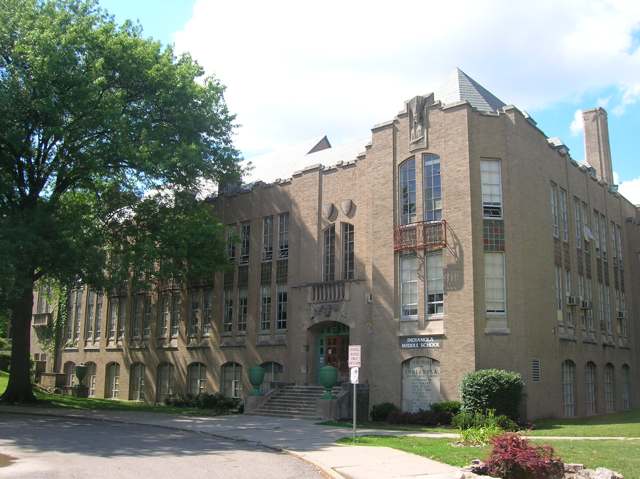
Photo: Aaron Turner, via Wikimedia Commons, CC BY-SA 4.0 · Wikimedia Commons
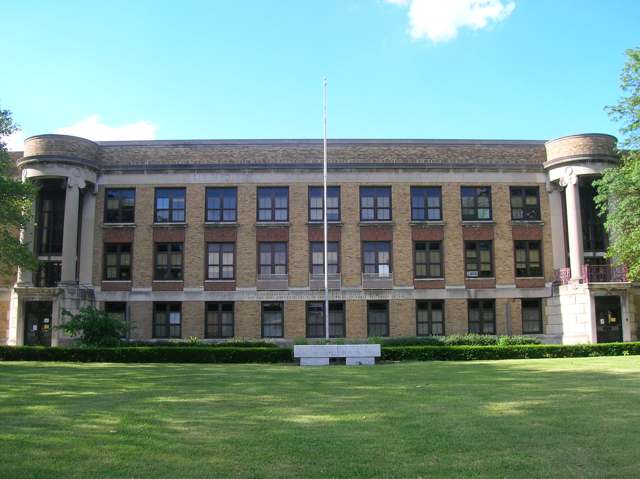
Photo: Aaron Turner, via Wikimedia Commons, CC BY-SA 4.0 · Wikimedia Commons
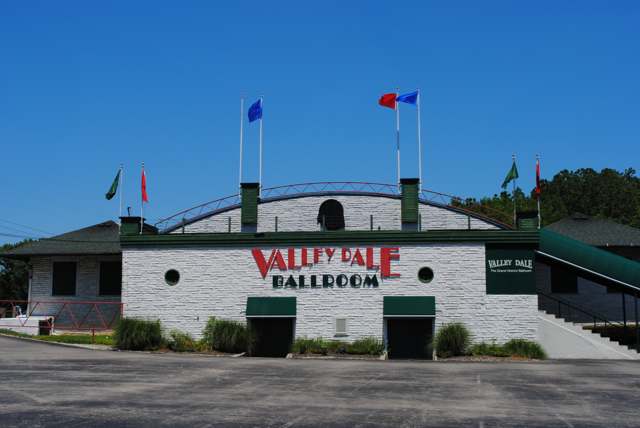
Photo: Wdzinc, via Wikimedia Commons, CC BY-SA 4.0 · Wikimedia Commons
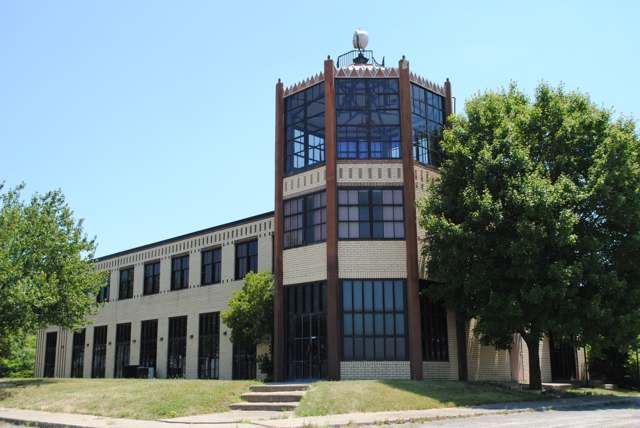
Photo: Wdzinc, via Wikimedia Commons, CC BY-SA 4.0 · Wikimedia Commons
Local history sources: ohiogenealogyexpress.com · en.wikipedia.org · en.wikipedia.org · en.wikipedia.org · en.wikipedia.org · en.wikipedia.org · en.wikipedia.org · commons.wikimedia.org · commons.wikimedia.org · commons.wikimedia.org · commons.wikimedia.org
Water
Big Walnut Creek at the plant's low-head dam and screen house on Morse Rd, below Hoover Dam The water here
- Columbus Public Water System100% of residentsScioto River (Griggs & O'Shaughnessy), Hoover Reservoir on Big Walnut Ck, plus wells
- Leonard Park0% of residentsScioto River (Griggs & O'Shaughnessy), Hoover Reservoir on Big Walnut Ck, plus wells
Its ZIP codes
Each ZIP code that touches Mifflin Township, Franklin County, with the share of its residents who live here and the same headline figures as the ZIP page.
The county
Franklin County: 45 ZIP codes, 42 cities, villages and townships, 1,356,733 people.
Nearby places
Cite this page
Cite this page as:
Cracked Buckeye (Open Shower Co), "Mifflin Township, Franklin County", https://crackedbuckeye.com/place/mifflin-township-franklin-county/, built 2026-09-16, accessed [date].
Machine-readable: /api/place/mifflin-township-franklin-county.json (open JSON, CC BY 4.0 for the compilation; the underlying records keep their own terms) · How to cite · Report a correction · Built 2026-09-16