How Baltimore began
Baltimore grew from two rival villages platted across the Pawpaw Creek valley from each other in the mid-1820s: New Market, founded by Virginians and soon incorporated under the name Baltimore, and Basil, founded by Swiss families, whose name was chosen by a tied vote broken by a single ballot. The Ohio and Erie Canal, whose builders broke ground nearby on July 4, 1825, gave both villages a boom of grain trade that lasted into the railroad era, and the two towns fought a good-natured 'twin city' rivalry for well over a century before formally consolidating as Baltimore between 1945 and 1947. The former Basil is remembered today mainly in street and park names, while modern Baltimore, still shaped by its old rail and canal crossroads, is home to about three thousand people.
Settled 1807 or 1808 (Jacob Goss's cabin, later the Basil side of the village), platted New Market (Baltimore): 1824 per the 1883 and 1912 county histories; Basil: 1825 per the 1883 county history. A firsthand 1877 settler's account and the village's own history instead date both plats to March 1825, one day apart., incorporated 1833 (New Market incorporated as Baltimore), by Henry Hildebrand (New Market/Baltimore) and Jacob Goss (Basil).
Where the name comes from
Henry Hildebrand first named his village New Market, after his native village of New Market in Virginia's Shenandoah Valley; it was incorporated as Baltimore in 1833 for reasons the 1912 county history and Wikipedia both call unexplained. Basil's name was chosen by the settlers themselves: a firsthand account recorded in the 1877 county history describes a tied vote between 'Basil' and 'Geneva,' both offered as Swiss names, broken by one man's casting ballot in 1825. The village's own modern history page instead describes 'Basil' simply as a misspelling of Basel, Switzerland, chosen by Swiss pioneer families who dedicated their plat on March 2, 1825, one day after the Virginians across the valley dedicated New Market.
Before the town
Baltimore and the former Basil sit within the 1795 Treaty of Greenville cession, about fifteen miles east of the Wyandot town of Tarhetown at Lancaster. The 1883 county history's Liberty township chapter records that various bands of Delaware, Wyandotte and other Indians continued to wander through the township for years after white settlement began, and that it was a common thing for boys of both races to meet and test their skill at wrestling, jumping and foot races; the site of the present village of Basil is named specifically as one of the frequent meeting-places for these games, along with sites at Thomas Warner's farm in neighboring Walnut township. No source consulted names a specific village, mound or treaty line at Baltimore or Basil itself; see the Fairfield County file for the wider Wyandot and Delaware history of the region.
Nations recorded here: Wyandot, Lenape (Delaware).
- Meeting-place for intertribal and settler games (other) — the site of the village of Basil, Liberty township, early settlement era, approximately 1800s-1810s (archive.org)
Timeline
- — The Treaty of Greenville cedes most of what becomes Ohio, including the future Baltimore and Basil, to the United States.
- — Jacob Goss builds a cabin on what will become the Basil side of the village.
- — Henry Hildebrand lays out New Market on the southeast side of the valley, naming it for his home village in Virginia; the 1883 and 1912 county histories give this date, though other sources place it in early 1825.
- — Jacob Goss's village, its lots surveyed by Jonathan Flattery, is named Basil by a tied vote between 'Basil' and 'Geneva' broken by a single casting ballot; the same year, ground is broken for the Ohio and Erie Canal on July 4 at Licking Summit south of Newark.
- — A post office named Baltimore begins operating.
- — In October, a towboy walks his mules down the towpath for the first time as canal water reaches the area; eight sandstone locks are eventually built nearby.
- — New Market is incorporated as Baltimore.
- — Wing, Ruffner and Coulson build the first grist mill in Baltimore; the same year, the gable of the Baptist church collapses during services, killing three people.
- — A fire destroys Baltimore's hotel, drug store and three barns.
- — The founder of the local paper industry arrives in the village by bicycle to establish his business.
- — The Liberty Union community school building graduates its first class, serving the joined Baltimore and Basil school districts.
- — After a 'notorious controversy' over what to call the merged twin villages, in which 'Baseball' (a blend of Basel and Baltimore) is rejected, the consolidated village is formally named Baltimore.
- — Baltimore and neighboring Thurston consolidate their schools into the Liberty Union-Thurston School District.
- — Baltimore is recognized as a Tree City USA by the National Arbor Day Foundation.
Stories
How Basil Got Its Name
Old Father Jacob Goss landed on what became the Basil side of the valley in 1807 or 1808 and put up a cabin, but it was not until the Ohio Canal was being surveyed through the area that the village around him got its name. When Jonathan Flattery finished surveying the lots, he asked Goss what he meant to call the place, and Goss left the choice to his neighbors. One man proposed Basil; the local squire, Joseph Hustand, countered with Geneva, both offered as fitting names for a settlement of Swiss families. A vote was called, and a boy on his way home from the old Hively log school-house, copybook still under his arm, was pressed into service to write out the ballots on a page torn from it. The count came back tied at six apiece, until the boy's uncle arrived late and was told simply, 'John, vote Basil' — which he did, breaking the tie and giving the village its name in 1825, with the very boy who wrote the ballots living to record the story in the county history fifty years later.
Beef on the Deep Cut
Henry Yanna, a Swiss butcher, built Basil's first tavern and ran a butcher shop alongside it, using a single painted ox as the sign for both businesses. During the years the Ohio Canal was under construction, with more than a hundred laborers at work on the nearby 'Deep Cut,' Yanna hauled many thousands of pounds of beef to feed them at the boom town of Monticello, then standing near the present Millersport, selling it at three cents a pound. By the time the story was recorded in 1877, Monticello itself had vanished entirely, its site given over to cornfields — a reminder of how completely the canal-era boom towns could disappear once the digging moved on.
Twin Cities and the Baseball Compromise
For more than a century after their founding one day apart in the 1820s, Basil and New Market (soon renamed Baltimore) carried on what the village's own history calls a 'twin city' feud across the Pawpaw Creek valley that divided them, each with its own churches, lodges, depot and business district even though barely a creek separated them. The rivalry outlasted the canal that had brought both villages their first prosperity and the railroads that followed it, and it was not settled until 1945 to 1947, when officials worked out how to formally consolidate the two communities. A proposal to call the merged village 'Baseball,' blending Basel and Baltimore, was seriously floated and just as seriously rejected before the name Baltimore was confirmed for good; longtime residents, the village notes, can still point out Basil Park, Market Street and other landmarks that mark where one village ended and the other began.
Photographs
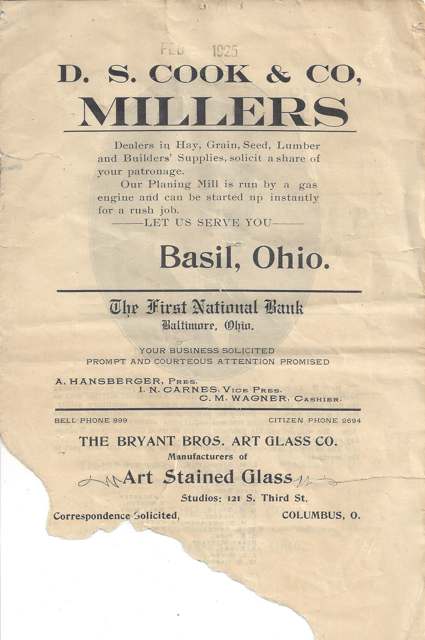
Photo: unknown source, via Wikimedia Commons, public domain · Wikimedia Commons
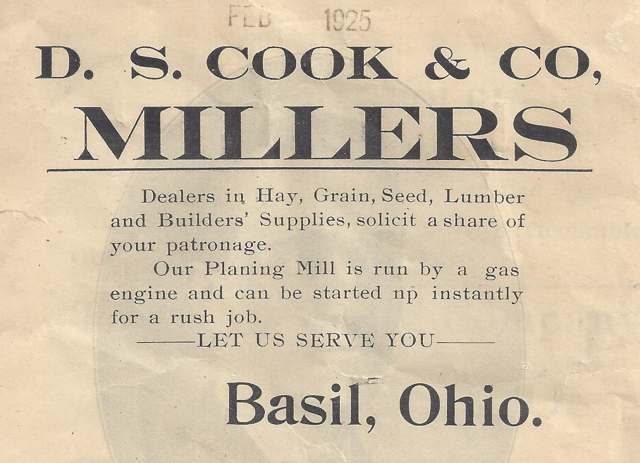
Photo: unknown source, via Wikimedia Commons, public domain · Wikimedia Commons
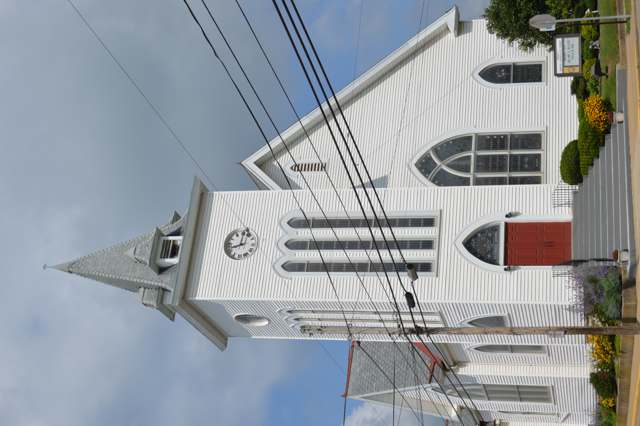
Photo: Nyttend, via Wikimedia Commons, public domain · Wikimedia Commons
Local history sources: archive.org · archive.org · archive.org · en.wikipedia.org · en.wikipedia.org · baltimoreohio.org · en.wikipedia.org · en.wikipedia.org · commons.wikimedia.org · commons.wikimedia.org · commons.wikimedia.org
Water
Mostly private wells The water here
- Baltimore Village100% of residentsGroundwater wells (3 wells)
Its ZIP codes
Each ZIP code that touches Baltimore, with the share of its residents who live here and the same headline figures as the ZIP page.
| ZIP | Share | Water | Radon | Home value | Schools | Flood |
|---|---|---|---|---|---|---|
| 43105 Liberty Township and Baltimore | 35% | Mostly private wells | 7.3 pCi/L average radon | Median year built 1975 | Liberty Union-Thurston Local · 4.5 stars overall | 6.3% of residents in the 1% floodplain |
The county
Fairfield County: 13 ZIP codes, 27 cities, villages and townships, 144,692 people.
Nearby places
Cite this page
Cite this page as:
Cracked Buckeye (Open Shower Co), "Baltimore, Fairfield County", https://crackedbuckeye.com/place/baltimore/, built 2026-09-16, accessed [date].
Machine-readable: /api/place/baltimore.json (open JSON, CC BY 4.0 for the compilation; the underlying records keep their own terms) · How to cite · Report a correction · Built 2026-09-16