Water system
Tallmadge City
EPA ID OH7704703 · Summit County · 18,394 people served · owned by a local government
Tallmadge City buys its water from Akron City.
The system's record
- Water bodies
- Lake Rockwell, Cuyahoga River, Wendell R. LaDue Reservoir, East Branch Reservoir
- Raw intakes
- Akron Lake Rockwell Inch
- Serves
- 280,000 people · Summit County
- EPA ID
- OH7700011
About this area's water
Did you know
- Tallmadge draws no water of its own — every drop comes from Akron's Upper Cuyahoga reservoir system, which starts at Lake Rockwell, built in 1915, and is pumped 11 miles to Akron before it reaches Tallmadge.
- Akron owns roughly 16,000 acres around its Cuyahoga River source reservoirs, about a third of the land bordering the river in Portage and Geauga counties, kept undeveloped as natural filtration for drinking water.
- Tallmadge's distribution system contains no known lead service lines at all — no lead, no galvanized pipe needing replacement, and no unknown-material lines.
- A hot, wet summer in 2025 loaded Akron's reservoirs with organic matter and forced heavier chlorination; the resulting disinfection byproducts pushed Tallmadge over the federal haloacetic acid limit for one quarter…
- Only about 28% of a Tallmadge utility bill is for water — the sewer charge, all of it paid to Akron for treatment, is the bigger half.
History6
- 1915Akron constructs Lake Rockwell Reservoir on the Upper Cuyahoga River in Franklin Township, Portage County, 2.5 miles north of Kent — the primary source Tallmadge buys from today.
- 1939East Branch Reservoir, in Geauga County, completed as supplemental storage for Akron's system.
- 1962Wendell R. LaDue Reservoir, also in Geauga County, completed, adding supplemental storage and drought buffering.
- 2003Ohio EPA completes a source water assessment of Akron's supply and rates its susceptibility to contamination as MODERATE, citing agricultural runoff, failing septic systems, municipal wastewater…
- 2024Akron restructures its water rates — the first increase since 2012 — raising the commodity rate from $2.73 to $3.06 per hundred cubic feet, adding a $9/month fixed infrastructure charge for…
- 2025Tallmadge incurs a Haloacetic Acids (HAA5) maximum contaminant level violation in the third quarter monitoring period, which the city attributes to unprecedented organics levels; HAA5 returns to…
Treatment & pressure
How it is treated
Tallmadge buys 100% finished water from the City of Akron and does no source treatment of its own. Akron's Water Supply Bureau draws surface water from the Upper Cuyahoga River, stored in three impounding reservoirs — Lake Rockwell in Portage County, supplemented by Wendell R. LaDue and East Branch…
Source: tallmadgeoh.govakronohio.govakronohio.gov
Water pressure
Not published. Neither Tallmadge's CCR and rate documents nor Akron's water bureau pages give a distribution system psi figure.
Source: tallmadgeoh.govtallmadgeoh.gov
What it costs
$4.61 per 1,000 gallons
Typical household bill about $23 a month for water.
Tallmadge sets its own retail rate; it does not pass through Akron's retail schedule. Per Ordinance 2026-37, effective June 1, 2026, residential metered water is $0.03449 per…
Source: tallmadgeoh.govtallmadgeoh.gov
Water quality & impurities10
| Contaminant | Level | Limit | Year |
|---|---|---|---|
| Haloacetic Acids (HAA5) VIOLATION. Tallmadge's own distribution-system sampling exceeded the MCL in the third quarter 2025 monitoring period… | 57.65 running… ppb | 60 (running… | 2025 |
| Total Trihalomethanes (TTHM) No violation, but the running annual average sits within 27% of the MCL and individual samples reached 110 ppb —… | 58.85 running… ppb | 80 (running… | 2025 |
| Total Chlorine (Tallmadge distribution) Measured in Tallmadge's own system; Akron's plant-side average was 1.20 ppm. | 1.9 (range… ppm | MRDL = 4 | 2025 |
| Chlorine Dioxide Secondary disinfectant used by Akron. | 210 (range… ppb | MRDL = 800 | 2025 |
| Chlorite Byproduct of chlorine dioxide disinfection; Akron plant data. | 0.63 (range… ppm | 1.0 | 2025 |
| Fluoride Akron plant data; natural deposits plus fluoridation. | 0.94 (range… ppm | 4 | 2025 |
| Nitrate Akron plant data; well within limit. | 0.51 (range… ppm | 10 | 2025 |
| Barium Akron plant data. | 0.025 ppm | 2 | 2025 |
| Turbidity Akron filtration performance. | 0.23 maximum… NTU | TT (0.3 NTU in… | 2025 |
| Lead (90th percentile) 0 of 31 Tallmadge taps over the action level. Tallmadge's service line inventory reports no lead, no… | 0 ppb | 15 ppb action… | 2023 |
Source: tallmadgeoh.gov
EPA compliance record
Lead at the tap: 90th-percentile result 0 ppb in 2023 (action level 15 ppb).
EPA record: no health-based violations since 2015.
3 violations of any kind logged since 2020: 3 for a report, record or notice that was missing, late or incomplete (the yearly water quality report, a public notice, lead line records).
EPA compliance record · Akron City (treats the water)
Lead at the tap: 90th-percentile result 2.7 ppb in 2025 (action level 15 ppb).
EPA health-based violations since 2015:
- 2025Haloacetic acids (HAA5) · above the legal limit on average · measured 0.062 MG/L · returned to compliance
1 violation of any kind logged since 2020: 1 health-based.
Projects & plans4
Recent and current work
- Four-year phased water rate increase · 2025 · under construction
Adopted in 2025 to restore the water fund, which the city projected would run out of cash by the third quarter of 2027. Increases of 10% (June 1, 2025) then…
Source: tallmadgeoh.gov
Planned or needed
- Water line repair and replacement program · $5.6 million · 2025 · planned
The city identifies approximately $5.6 million to repair aging and broken water lines, to be funded by the phased rate increases. - Brittain Road Reservoir replacement (Akron, supplier) · 2024 · planned
Supplier-side, not a Tallmadge asset. Akron's 110-year-old Brittain Road Reservoir is slated for replacement using the roughly $15 million per year raised by… - Akron lead service line replacement (supplier) · 2024 · under construction
Supplier-side, not a Tallmadge asset. Akron reported about 2,550 remaining active lead service connections and aims to be lead-free by the end of 2027.…
Supply stress
Tallmadge treats no water of its own and buys 100% from Akron's Upper Cuyahoga River reservoir system, though it holds emergency interconnections with Portage County Water Resources and the City of Kent (unused in 2025). Ohio EPA rated Akron's source water MODERATE susceptibility in 2003, with agricultural runoff, failing septic systems…
Sewers
Sanitary
Tallmadge owns no wastewater plant. It is a Master Meter Community whose sanitary flow is split between two districts and treated by the City of Akron under an Ohio EPA permit — the same arrangement Cuyahoga Falls, Lakemore and Summit County use. Rates: after a 34% increase from upstream providers was phased in as 16% on May 1, 2022 and…
Storm
Not published. Neither Tallmadge's utility pages nor its master fee schedule describe a storm sewer system or a stormwater utility fee, and no separate stormwater charge appears in the 2026 fee schedule.
Sourcesverified
Compiled from the utility's own reports and public records, then independently re-checked against primary sources.
Main supplier in 1 ZIP code
Serves
Main water supplier in 1 ZIP code
- 44278 · Tallmadge80% of residents
Also present in 2 more ZIP codes
- 44305 · Akron4% of residents
- 44310 · Akron1% of residents
Population-weighted resident shares; a ZIP code can have more than one system on record. Recomputed from each ZIP's own system list, not from the map's cached footprint.
Buys from · Sells to
Tallmadge City buys its water from Akron City.
No other system is on record buying water from Tallmadge City.
What the records show about Tallmadge City
Who runs it
EPA's record describes Tallmadge City as owned by a local government. It has 6,003 service connections and serves 18,394 people.
EPA classes it as a community water system, one that serves the same residents all year.
Its office telephone on EPA's record is 330-633-0851.
Source: EPA Safe Drinking Water Information System (SDWIS), water system record.
How the water is treated
Tallmadge City buys water that Akron City treats first, so the steps that count are the seller's. EPA's treatment table registers these steps for Akron City: corrosion control, chlorine dioxide, coagulation and settling, chlorine disinfection, iron and manganese removal, fluoridation, powdered activated carbon, and sand or media filtration.
Tallmadge City adds nothing of its own on that table.
The list is what each system registered with EPA for treatment plants EPA still shows as active, and it can lag a plant upgrade.
Source: EPA Safe Drinking Water Information System (SDWIS) treatment table (EPA Envirofacts, pulled September 2026).
Violations
EPA's record shows no health-based violations for Tallmadge City since 2015.
EPA logs 3 violations of any kind since 2020: 3 for a report, record or notice that was missing, late or incomplete (the yearly water quality report, a public notice, lead line records).
Source: EPA Safe Drinking Water Information System (SDWIS) violation records: health-based violations with compliance periods beginning in 2015 or later, all violations from 2020 or later (EPA Envirofacts, pulled September 2026).
Lead and copper at the tap
In the sampling period ending December 2023, the 90th-percentile lead result at Tallmadge City was 0 ppb, under both the current 15 ppb action level and the 10 ppb level that applies from 2027. A result of 0 means at least nine in ten of the homes sampled had no lead detected.
The highest result on file is 1.7 ppb, in the period ending December 2018.
EPA has 5 sampling periods on file for Tallmadge City since 2016, the first ending in 2017; no period was above 10 ppb.
Every water system has to inventory its service lines, the pipes from the main to each building. In the inventory Tallmadge City sent EPA, 6,448 lines are counted.
| Material | Lines |
|---|---|
| Lead | 0 |
| Galvanized, needing replacement | 0 |
| Unknown material | 0 |
| Not lead | 6,448 |
| All lines | 6,448 |
Systems sample taps in the homes most likely to have lead pipes or solder. The 90th-percentile result is the level nine in ten of the sampled homes were at or below. Lead comes mostly from service lines and house plumbing, not the source water, so a low result for the system does not clear an old house.
EPA's dashboard status for this inventory: reported all required service line types.
Source: EPA Safe Drinking Water Information System (SDWIS) lead and copper 90th-percentile results (EPA Envirofacts), sampling periods ending 2016 or later; EPA's service line inventory dashboard, Ohio's 2026 Q2 submission.
PFAS
EPA's fifth national round of testing (UCMR 5) took 5 samples of the water entering the pipes of Tallmadge City in 2024 and measured 29 PFAS. No PFAS was detected, PFOA and PFOS (federal limit 4 ng/L each) among them.
Ohio EPA's own statewide sampling tested 1 plant of Akron City (latest sample June 2020). Not one of the six PFAS tested (PFOA, PFOS, PFHxS, PFNA, GenX and PFBS) was detected.
Ohio EPA's current sampling status map lists 1 plant of Akron City as sampled, most recently March 2026.
PFAS are the 'forever chemicals' from firefighting foam, plating shops and non-stick coatings. Results are for water leaving the plant, not your tap.
Source: EPA UCMR 5 occurrence data (final release, August 2026); Ohio EPA statewide PFAS sampling, 2019 to 2021, and its sampling status map.
Disinfection byproducts
Chlorine that disinfects water also reacts with organic matter to form byproducts. Two groups have federal limits: total trihalomethanes (TTHM, 80 µg/L) and five haloacetic acids (HAA5, 60 µg/L), judged on running yearly averages at each sampling site.
For TTHM, the average of Tallmadge City's samples in 2019, the last year it was sampled, was 54.3 µg/L. The worst yearly average was 56.1 µg/L and the highest single sample was 114 µg/L, from 128 samples taken from 2012 to 2019.
For HAA5, the average in the last year sampled was 21.5 µg/L. The worst yearly average was 39.9 µg/L and the highest single sample was 93.4 µg/L, from 128 samples.
| Byproduct | Limit | Latest yearly average | Worst yearly average | Highest sample | Samples |
|---|---|---|---|---|---|
| TTHM | 80 µg/L | 54.3 µg/L (2019) | 56.1 µg/L | 114 µg/L | 128 |
| HAA5 | 60 µg/L | 21.5 µg/L | 39.9 µg/L | 93.4 µg/L | 128 |
A yearly average of 0 means nothing was detected in that year's samples. EPA's file stops at 2019; Ohio EPA's Drinking Water Watch has newer results.
Source: EPA Six-Year Review 4 compliance monitoring data, 2012 to 2019, distribution-system samples (non-detects counted as zero).
Nitrate, arsenic and radioactivity
The water Tallmadge City buys is treated by Akron City, so the results below are Akron City's.
Nitrate: the highest of 482 samples was 0.66 mg/L (as nitrogen) in 2015; in 2019, the last year sampled, the highest was 0.5 mg/L. No sample was over the limit of 10 mg/L. Nitrate above 10 is unsafe for infants.
Arsenic: the highest of 8 samples was 1.1 µg/L (limit 10); detections averaged 1.1; none over the limit.
| Contaminant | Samples | Highest result | Limit | Samples over limit |
|---|---|---|---|---|
| Nitrate (as nitrogen) | 482 | 0.66 mg/L | 10 mg/L | 0 |
| Arsenic | 8 | 1.1 µg/L | 10 µg/L | 0 |
| Combined radium | 1 | 2.1 pCi/L | 5 pCi/L | 0 |
Measured in finished water: at the plant's entry points and in the distribution system; raw well and intake samples are left out. Non-detects count as zero.
Source: EPA Six-Year Review 4 compliance monitoring data, 2012 to 2019, finished water of Akron City.
Solvents and fuels
The water Tallmadge City buys is treated by Akron City, so the results below are Akron City's.
EPA's file holds results for all six solvent and fuel compounds it checked. Benzene, carbon tetrachloride, 1,2-dichloroethane, trichloroethylene, tetrachloroethylene, and vinyl chloride were not detected in 8 samples each.
| Compound | Limit | Samples | Detected in | Highest result | Samples over limit |
|---|---|---|---|---|---|
| Benzene | 5 µg/L | 8 | 0 of 8 | not detected | 0 |
| Carbon tetrachloride | 5 µg/L | 8 | 0 of 8 | not detected | 0 |
| 1,2-dichloroethane | 5 µg/L | 8 | 0 of 8 | not detected | 0 |
| Trichloroethylene (TCE) | 5 µg/L | 8 | 0 of 8 | not detected | 0 |
| Tetrachloroethylene (PCE) | 5 µg/L | 8 | 0 of 8 | not detected | 0 |
| Vinyl chloride | 2 µg/L | 8 | 0 of 8 | not detected | 0 |
"Not detected" means the lab's result was below what its method can measure, not that the compound is absent. Non-detects count as zero in the highest-result column.
Source: EPA Six-Year Review 4 compliance monitoring data, 2012 to 2019, finished water of Akron City.
Farm chemicals and metals
The water Tallmadge City buys is treated by Akron City, so the results below are Akron City's.
EPA's file holds results for 8 of the nine herbicides and metals it checked. Detected: barium in 7 of 8 samples, highest 45 µg/L (limit 2,000). Not detected: atrazine in 11 samples, alachlor in 11 samples, chromium in 8 samples, cadmium in 8 samples, mercury in 8 samples, selenium in 8 samples, thallium in 8 samples.
| Substance | Kind | Limit | Samples | Detected in | Highest result | Samples over limit |
|---|---|---|---|---|---|---|
| Atrazine | Farm chemical | 3 µg/L | 11 | 0 of 11 | not detected | 0 |
| Alachlor | Farm chemical | 2 µg/L | 11 | 0 of 11 | not detected | 0 |
| Chromium | Metal | 100 µg/L | 8 | 0 of 8 | not detected | 0 |
| Cadmium | Metal | 5 µg/L | 8 | 0 of 8 | not detected | 0 |
| Barium | Metal | 2,000 µg/L | 8 | 7 of 8 | 45 µg/L | 0 |
| Mercury | Metal | 2 µg/L | 8 | 0 of 8 | not detected | 0 |
| Selenium | Metal | 50 µg/L | 8 | 0 of 8 | not detected | 0 |
| Thallium | Metal | 2 µg/L | 8 | 0 of 8 | not detected | 0 |
Non-detects count as zero in the highest-result column.
Source: EPA Six-Year Review 4 compliance monitoring data, 2012 to 2019, finished water of Akron City.
Bacteria in the pipes
From 2012 to 2019, 3 of 1,947 routine total coliform samples taken in the distribution system at Tallmadge City tested positive (0.15%); in 2019, the last year on file, 0 of 240 did. E. coli was never found in the 3 samples tested for it.
A positive coliform test is a warning sign, not a violation by itself. E. coli is a sign that human or animal waste may have reached the water. Coliform counts are routine samples only; E. coli counts include repeat samples.
Source: EPA Six-Year Review 4 compliance monitoring data, 2012 to 2019, distribution-system presence/absence tests for total coliform and E. coli.
Fluoride
The Ohio Department of Health's report to the CDC (My Water's Fluoride) says Tallmadge City buys its water from Akron City, a system that adjusts the fluoride level to the recommended level for preventing tooth decay.
EPA's treatment table lists fluoridation among the steps at Akron City, which treats the water Tallmadge City buys.
Measured fluoride: 1.17 mg/L on average leaving the plants of Akron City, which supplies Tallmadge City, in 2019 (in the range dentists aim for); samples ran from 0.83 to 1.17 mg/L across 8 samples in 2012 to 2019.
The recommended level for preventing tooth decay is 0.7 mg/L; the federal limit is 4 mg/L. The treatment list is what each system registered with EPA and can lag a plant upgrade.
Source: CDC My Water's Fluoride (fluoridation status as reported by the Ohio Department of Health, fetched September 2026); EPA Safe Drinking Water Information System (SDWIS) treatment table; EPA Six-Year Review 4 compliance monitoring data, 2012 to 2019, entry-point fluoride samples.
Lithium
Lithium was not detected in 4 UCMR 5 samples at Tallmadge City, last sampled in 2024 (the method reports from 9 µg/L).
Lithium is not regulated. EPA's draft health reference level is 10 µg/L, and it occurs naturally in deep groundwater, so well systems in the northwest run highest.
Source: EPA UCMR 5 occurrence data (final release, August 2026), samples from 2023 to 2025.
Algal toxins
The water Tallmadge City buys is treated by Akron City, so the results below are Akron City's.
Ohio EPA tests for microcystin, a toxin that harmful algal blooms can release, in raw water at the intake and in treated water.
At the intake, microcystin was detected 30 times in 188 raw-water samples, across 4 bloom seasons (2016 to 2025); the highest raw-water result was 2.78 µg/L on June 20, 2017. The highest raw-water result since 2024 was 0.808 µg/L.
Microcystin was never detected in treated water (119 samples).
In all, 307 samples from 2016 to 2026, the latest on August 10, 2026.
| Water | Samples | Detections | Highest result |
|---|---|---|---|
| Raw water, at the intake | 188 | 30 | 2.78 µg/L |
| Treated water | 119 | 0 | not detected |
The ten-day advisory levels for treated water are 0.3 µg/L for children under six and 1.6 µg/L for everyone else. Any detection at the intake triggers more frequent testing until two clean weeks.
Source: Ohio EPA public water system harmful algal bloom monitoring, 2016 to present (HAB data, fetched September 2026).
How well the service area is mapped
EPA estimated the service area of Tallmadge City with a computer model rather than drawing it from the utility's map, so its edges are approximate.
Counting the people who live in the ZIP codes it overlaps, this atlas estimates 16,087 residents are inside the boundary, 87% of the 18,394 people Tallmadge City reports serving.
The resident count is an estimate from 2020 Census ZIP-code populations, not a count of customers.
Source: EPA Service Area Boundaries; resident estimate by this atlas from ZIP-code overlap.
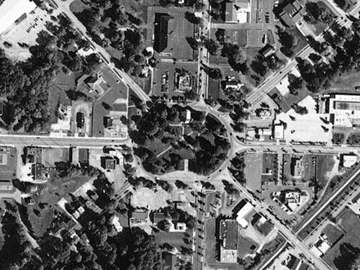
Photograph
On the map
Show this system's territory on the map — 3 ZIP codes in all.
Sources
U.S. EPA SDWIS and Community Water System Service Area Boundaries (v3, 2026), Ohio EPA primacy data, 2020 census blocks: the system serving most residents, traced through purchases to the treating utility; Ohio EPA 2023 Sewer and Water Rate Survey (Ohio State, May 2025) for household bills; Ohio EPA DEFA loan awards since 2016 for the loans paragraph · EPA SDWIS · EPA service area boundaries · Ohio EPA drinking water · Ohio EPA rate survey
EPA's own record for this system: Enforcement and Compliance History report for OH7704703 (EPA ECHO).
Tallmadge City's own pages: akronohio.gov, cms2.revize.com
Notable facts: tallmadgeoh.gov, akronohio.gov, tallmadgeoh.gov
History: tallmadgeoh.gov, akronohio.gov, akronohio.gov, wkyc.com
Water quality: tallmadgeoh.gov
Planned work: tallmadgeoh.gov, akronohio.gov, wkyc.com
Water pressure: tallmadgeoh.gov, tallmadgeoh.gov
Capital projects: tallmadgeoh.gov
Rates: tallmadgeoh.gov, tallmadgeoh.gov
Sewers: tallmadgeoh.gov, tallmadgeoh.gov, tallmadgeoh.gov
Treatment: tallmadgeoh.gov, akronohio.gov, akronohio.gov
Supply stress: tallmadgeoh.gov, tallmadgeoh.gov, wkyc.com
