Water system
Munroe Falls City
EPA ID OH7702703 · Summit County · 5,042 people served · owned by a local government
Munroe Falls City buys its water from Cuyahoga Falls City.
The system's record
- Aquifer
- Cuyahoga River buried valley sand and gravel aquifer
- Active wells
- 15
- Serves
- 51,114 people · Summit County
- EPA ID
- OH7701012
About this area's water
Did you know
- Munroe Falls has never treated a drop of its own water — it buys 100% from Cuyahoga Falls and describes itself flatly as 'a distribution system.'
- The plant that supplies it isn't in Munroe Falls, but its address is: the Cuyahoga Falls water treatment plant sits at 2028 Munroe Falls Ave.
- The city pumps at night. Its station on Munroe Falls Ave moved an average of 297,272 gallons every night in 2025 into a 1.5-million-gallon reservoir behind a retirement center and a 200,000-gallon tower on Gaylord Drive.
- In March 2026 Cuyahoga Falls told Munroe Falls it had been under-billing it and handed over a $281,178 back-bill for 2024-25; residents are paying it off at $1.84 per service per month for five years, on top of a…
- The namesake dam, built in 1903 to replace an 1817 wooden one, came out entirely in 2005-06 once crews discovered a natural rock ledge sitting underneath it.
History6
- 1809About forty settlers arrive, among them Francis Kelsey and William Stow; Kelsey builds a sawmill on the south bank of the Cuyahoga River and a gristmill goes up on the north bank. The settlement is…
- 1817A wooden dam is built to power both mills and the village is renamed Florence.
- 1836William and Edmund Munroe of Boston buy the two mills and about 250 acres around them and lay out a new village, which they name Munroe Falls.
- 1838Munroe Falls is incorporated on October 26.
- 1903A more substantial dam replaces the earlier structure.
- 2005-2006The Munroe Falls dam is removed for river restoration after low oxygen levels in the Cuyahoga River were traced largely to the stagnant pool behind it; the entire dam came out once workers found a…
Treatment & pressure
How it is treated
Munroe Falls treats no water. It is a distribution system that buys finished water from the City of Cuyahoga Falls, whose treatment plant sits at 2028 Munroe Falls Ave. Cuyahoga Falls draws groundwater from a well field in Water Works Park on the south bank of the Cuyahoga River — 15 wells per the…
Source: cityofcf.communroefalls.communroefalls.com
Water pressure
Not published. Neither the Munroe Falls CCR nor its water pages give distribution pressures; the CCR discusses pressure only in the context of backflow prevention.
What it costs
$33.10 per 1,000 gallons
Typical household bill about $127 a month for water.
Published schedule as revised March 3, 2026: a minimum monthly distribution (base) charge of $27.85 that includes up to 2,000 gallons, with all usage above 2,000 gallons billed at…
Source: munroefalls.com
Water quality & impurities7
| Contaminant | Level | Limit | Year |
|---|---|---|---|
| Lead (90th percentile) Munroe Falls' own sampling of 20 residential taps; range 0 to 13 ppb; 0 of 20 samples above the action level. The city… | 0.00 ppb | 15 ppb (AL) | 2025 |
| Copper (90th percentile) Range 0.06-0.81 ppm from 20 residential taps; 0 of 20 above the action level. | 0.56 ppm | 1.3 ppm (AL) | 2025 |
| Total trihalomethanes (TTHM) Range 27.50-52.8 ppb, sampled locally every 90 days. The supplier's system-wide 2025 average was higher at 61.78 ppb… | 45.95 ppb | 80 ppb (MCL) | 2025 |
| Haloacetic acids (HAA5) Range 15-28.7 ppb, sampled locally every 90 days. | 24.90 ppb | 60 ppb (MCL) | 2025 |
| Total chlorine Range 0.93-1.42 ppm, sampled daily. | 1.23 ppm | 4 ppm (MRDL) | 2025 |
| Fluoride Range 0.80-1.06 ppm; monitored and reported by Cuyahoga Falls, which adds it for dental health. | 0.92 ppm | 4 ppm (MCL) | 2025 |
| Hardness Not a contaminant. The Munroe Falls CCR reports finished hardness of 120 to 140 ppm; the supplier's CCR gives 100 to… | 120-140 ppm as… | none (aesthetic) | 2025 |
Source: munroefalls.comcityofcf.com
EPA compliance record
Lead at the tap: 90th-percentile result 0 ppb in 2025 (action level 15 ppb).
EPA record: no health-based violations since 2015.
EPA compliance record · Cuyahoga Falls City (treats the water)
Lead at the tap: 90th-percentile result 0 ppb in 2024 (action level 15 ppb).
EPA health-based violations since 2015:
- 2024Lead and Copper Rule Revisions · lead service line inventory missing or incomplete (a records requirement, not a lead test result) · returned to compliance
6 violations of any kind logged since 2020: 2 for required testing that was missed or reported late; 3 for a report, record or notice that was missing, late or incomplete (the yearly water quality report, a public notice, lead line records); 1 health-based.
Projects & plans5
Recent and current work
- SR 91 waterline replacement under the railroad · 2026 · under construction
Waterline replacement on Route 91 under the railroad began Aug. 24, 2026 and is expected to finish by October 2026, coinciding with ODOT's SR 91 bridge repairs…
Source: munroefalls.com
Planned or needed
- Cuyahoga Falls WTP softener building and pipe gallery replacement · 2026 · planned
Ohio EPA's 2022 sanitary survey found significant deterioration in the supplier's softener building pipe gallery; the entire softener building is to be… - State Road water tank chlorine booster station removal · 2026 · planned
The supplemental chlorine booster station was found inoperable in the 2022 Ohio EPA survey; Cuyahoga Falls plans to remove it in 2026. No cost published. - Ross Park water tank status determination · 2025 · planned
Following a reporting violation over missing inspection records, Cuyahoga Falls said the tank's future status would be determined in the first half of 2025… - Formal water rate study · 2026 · planned
After the March 2026 rate correction, Munroe Falls requested a formal rate study from an outside source (RCAP). No cost published.
Source: cityofcf.communroefalls.com
Supply stress
Low on quantity, moderate on source vulnerability, and sharply elevated on cost. The buried-valley sand and gravel aquifer is plentiful and river-recharged, but Ohio EPA's drinking water source assessment rates it highly susceptible to contamination: depth to water is only 4 to 32 feet, there is no low-permeability protective layer…
Sewers
Sanitary
Sanitary sewer service in Munroe Falls is maintained by the Summit County Department of Sanitary Sewer Services (DOSSS), 330-926-2400, not by the city or by Cuyahoga Falls. The county sewer bill is based on the customer's water usage, so a high water bill produces a high sewer bill.
Storm
The city bills each property a Stormwater Maintenance Fee, and stormwater drainage questions are handled through Summit Soil and Water Conservation District material carried on the city site. No CSO inventory or flooding data is published.
Source: munroefalls.communroefalls.com
Sourcesverified
Compiled from the utility's own reports and public records, then independently re-checked against primary sources.
Main supplier in 1 ZIP code
Serves
Main water supplier in 1 ZIP code
- 44262 · Munroe Falls100% of residents
Population-weighted resident shares; a ZIP code can have more than one system on record. Recomputed from each ZIP's own system list, not from the map's cached footprint.
Buys from · Sells to
Munroe Falls City buys its water from Cuyahoga Falls City.
No other system is on record buying water from Munroe Falls City.
What the records show about Munroe Falls City
Who runs it
EPA's record describes Munroe Falls City as owned by a local government. It has 1,996 service connections and serves 5,042 people.
EPA classes it as a community water system, one that serves the same residents all year.
Its office telephone on EPA's record is 330-688-7491.
Source: EPA Safe Drinking Water Information System (SDWIS), water system record.
How the water is treated
Munroe Falls City buys water that Cuyahoga Falls City treats first, so the steps that count are the seller's. EPA's treatment table registers these steps for Cuyahoga Falls City: corrosion control, chlorine disinfection, iron and manganese removal, fluoridation, ion-exchange softening, and sand or media filtration.
Munroe Falls City adds nothing of its own on that table.
The list is what each system registered with EPA for treatment plants EPA still shows as active, and it can lag a plant upgrade.
Source: EPA Safe Drinking Water Information System (SDWIS) treatment table (EPA Envirofacts, pulled September 2026).
Violations
EPA's record shows no health-based violations for Munroe Falls City since 2015.
EPA logs no violations of any kind for Munroe Falls City since 2020.
Source: EPA Safe Drinking Water Information System (SDWIS) violation records: health-based violations with compliance periods beginning in 2015 or later, all violations from 2020 or later (EPA Envirofacts, pulled September 2026).
Lead and copper at the tap
In the sampling period ending December 2025, the 90th-percentile lead result at Munroe Falls City was 0 ppb, under both the current 15 ppb action level and the 10 ppb level that applies from 2027. A result of 0 means at least nine in ten of the homes sampled had no lead detected.
The highest result on file is 1.9 ppb, in the period ending December 2016.
EPA has 9 sampling periods on file for Munroe Falls City since 2016, the first ending in 2016; no period was above 10 ppb.
Every water system has to inventory its service lines, the pipes from the main to each building. In the inventory Munroe Falls City sent EPA, 1,958 lines are counted.
H2Ohio paid the Rural Community Assistance Partnership to help this small system build its lead service line inventory (Ohio EPA).
| Material | Lines |
|---|---|
| Lead | 0 |
| Galvanized, needing replacement | 0 |
| Unknown material | 0 |
| Not lead | 1,958 |
| All lines | 1,958 |
Systems sample taps in the homes most likely to have lead pipes or solder. The 90th-percentile result is the level nine in ten of the sampled homes were at or below. Lead comes mostly from service lines and house plumbing, not the source water, so a low result for the system does not clear an old house.
EPA's dashboard status for this inventory: reported all required service line types.
Source: EPA Safe Drinking Water Information System (SDWIS) lead and copper 90th-percentile results (EPA Envirofacts), sampling periods ending 2016 or later; EPA's service line inventory dashboard, Ohio's 2026 Q2 submission.
PFAS
EPA's fifth national round of testing (UCMR 5) took 2 samples of the water entering the pipes of Munroe Falls City in 2023 and measured 29 PFAS. No PFAS was detected, PFOA and PFOS (federal limit 4 ng/L each) among them.
Ohio EPA's own statewide sampling tested 1 plant of Cuyahoga Falls City (latest sample June 2020). Not one of the six PFAS tested (PFOA, PFOS, PFHxS, PFNA, GenX and PFBS) was detected.
PFAS are the 'forever chemicals' from firefighting foam, plating shops and non-stick coatings. Results are for water leaving the plant, not your tap.
Source: EPA UCMR 5 occurrence data (final release, August 2026); Ohio EPA statewide PFAS sampling, 2019 to 2021, and its sampling status map.
Disinfection byproducts
Chlorine that disinfects water also reacts with organic matter to form byproducts. Two groups have federal limits: total trihalomethanes (TTHM, 80 µg/L) and five haloacetic acids (HAA5, 60 µg/L), judged on running yearly averages at each sampling site.
For TTHM, the average of Munroe Falls City's samples in 2019, the last year it was sampled, was 51.6 µg/L. The worst yearly average was 71 µg/L and the highest single sample was 106 µg/L, from 48 samples taken from 2012 to 2019.
For HAA5, the average in the last year sampled was 15.6 µg/L. The worst yearly average was 26.4 µg/L and the highest single sample was 32 µg/L, from 48 samples.
| Byproduct | Limit | Latest yearly average | Worst yearly average | Highest sample | Samples |
|---|---|---|---|---|---|
| TTHM | 80 µg/L | 51.6 µg/L (2019) | 71 µg/L | 106 µg/L | 48 |
| HAA5 | 60 µg/L | 15.6 µg/L | 26.4 µg/L | 32 µg/L | 48 |
A yearly average of 0 means nothing was detected in that year's samples. EPA's file stops at 2019; Ohio EPA's Drinking Water Watch has newer results.
Source: EPA Six-Year Review 4 compliance monitoring data, 2012 to 2019, distribution-system samples (non-detects counted as zero).
Nitrate, arsenic and radioactivity
The water Munroe Falls City buys is treated by Cuyahoga Falls City, so the results below are Cuyahoga Falls City's.
Nitrate was not detected in 9 samples through 2019 (limit 10 mg/L as nitrogen; above 10 is unsafe for infants).
Arsenic was not detected in 3 samples (limit 10 µg/L).
| Contaminant | Samples | Highest result | Limit | Samples over limit |
|---|---|---|---|---|
| Nitrate (as nitrogen) | 9 | not detected | 10 mg/L | 0 |
| Arsenic | 3 | not detected | 10 µg/L | 0 |
| Combined radium | 1 | not detected | 5 pCi/L | 0 |
Measured in finished water: at the plant's entry points and in the distribution system; raw well and intake samples are left out. Non-detects count as zero.
Source: EPA Six-Year Review 4 compliance monitoring data, 2012 to 2019, finished water of Cuyahoga Falls City.
Solvents and fuels
The water Munroe Falls City buys is treated by Cuyahoga Falls City, so the results below are Cuyahoga Falls City's.
EPA's file holds results for all six solvent and fuel compounds it checked. Benzene, carbon tetrachloride, 1,2-dichloroethane, trichloroethylene, tetrachloroethylene, and vinyl chloride were not detected in 3 samples each.
| Compound | Limit | Samples | Detected in | Highest result | Samples over limit |
|---|---|---|---|---|---|
| Benzene | 5 µg/L | 3 | 0 of 3 | not detected | 0 |
| Carbon tetrachloride | 5 µg/L | 3 | 0 of 3 | not detected | 0 |
| 1,2-dichloroethane | 5 µg/L | 3 | 0 of 3 | not detected | 0 |
| Trichloroethylene (TCE) | 5 µg/L | 3 | 0 of 3 | not detected | 0 |
| Tetrachloroethylene (PCE) | 5 µg/L | 3 | 0 of 3 | not detected | 0 |
| Vinyl chloride | 2 µg/L | 3 | 0 of 3 | not detected | 0 |
"Not detected" means the lab's result was below what its method can measure, not that the compound is absent. Non-detects count as zero in the highest-result column.
Source: EPA Six-Year Review 4 compliance monitoring data, 2012 to 2019, finished water of Cuyahoga Falls City.
Farm chemicals and metals
The water Munroe Falls City buys is treated by Cuyahoga Falls City, so the results below are Cuyahoga Falls City's.
EPA's file holds results for 8 of the nine herbicides and metals it checked. Detected: barium in 2 of 3 samples, highest 62.1 µg/L (limit 2,000). Not detected: atrazine, alachlor, chromium, cadmium, mercury, selenium, and thallium, in 3 samples each.
| Substance | Kind | Limit | Samples | Detected in | Highest result | Samples over limit |
|---|---|---|---|---|---|---|
| Atrazine | Farm chemical | 3 µg/L | 3 | 0 of 3 | not detected | 0 |
| Alachlor | Farm chemical | 2 µg/L | 3 | 0 of 3 | not detected | 0 |
| Chromium | Metal | 100 µg/L | 3 | 0 of 3 | not detected | 0 |
| Cadmium | Metal | 5 µg/L | 3 | 0 of 3 | not detected | 0 |
| Barium | Metal | 2,000 µg/L | 3 | 2 of 3 | 62.1 µg/L | 0 |
| Mercury | Metal | 2 µg/L | 3 | 0 of 3 | not detected | 0 |
| Selenium | Metal | 50 µg/L | 3 | 0 of 3 | not detected | 0 |
| Thallium | Metal | 2 µg/L | 3 | 0 of 3 | not detected | 0 |
Non-detects count as zero in the highest-result column.
Source: EPA Six-Year Review 4 compliance monitoring data, 2012 to 2019, finished water of Cuyahoga Falls City.
Bacteria in the pipes
From 2012 to 2019, 0 of 600 routine total coliform samples taken in the distribution system at Munroe Falls City tested positive (0%); in 2019, the last year on file, 0 of 72 did.
A positive coliform test is a warning sign, not a violation by itself. E. coli is a sign that human or animal waste may have reached the water. Coliform counts are routine samples only; E. coli counts include repeat samples.
Source: EPA Six-Year Review 4 compliance monitoring data, 2012 to 2019, distribution-system presence/absence tests for total coliform and E. coli.
Fluoride
The Ohio Department of Health's report to the CDC (My Water's Fluoride) says Munroe Falls City buys its water from Cuyahoga Falls City, a system that adjusts the fluoride level to the recommended level for preventing tooth decay.
EPA's treatment table lists fluoridation among the steps at Cuyahoga Falls City, which treats the water Munroe Falls City buys.
Measured fluoride: 0.58 mg/L on average leaving the plants of Cuyahoga Falls City, which supplies Munroe Falls City, in 2019 (below the 0.7 mg/L target); samples ran from 0.5 to 0.8 mg/L across 3 samples in 2012 to 2019.
The recommended level for preventing tooth decay is 0.7 mg/L; the federal limit is 4 mg/L. The treatment list is what each system registered with EPA and can lag a plant upgrade.
Source: CDC My Water's Fluoride (fluoridation status as reported by the Ohio Department of Health, fetched September 2026); EPA Safe Drinking Water Information System (SDWIS) treatment table; EPA Six-Year Review 4 compliance monitoring data, 2012 to 2019, entry-point fluoride samples.
Lithium
Lithium was not detected in 2 UCMR 5 samples at Munroe Falls City, last sampled in 2023 (the method reports from 9 µg/L).
Lithium is not regulated. EPA's draft health reference level is 10 µg/L, and it occurs naturally in deep groundwater, so well systems in the northwest run highest.
Source: EPA UCMR 5 occurrence data (final release, August 2026), samples from 2023 to 2025.
Water and sewer bills
Ohio EPA's 2023 rate survey puts the water bill at Munroe Falls City for a household using 5,000 gallons a month at $853 a year, about $71 a month.
| Use | Water, per year | Sewer, per year |
|---|---|---|
| 2,500 gallons a month | $412 | not on file |
| 5,000 gallons a month | $853 | not on file |
| 8,000 gallons a month | $1,382 | not on file |
The survey lists it as “Munroe Falls”. These are inside-city rates and annual bills at the use shown.
Source: Ohio EPA 2023 Sewer and Water Rate Survey (Ohio State University, May 2025).
How well the service area is mapped
EPA estimated the service area of Munroe Falls City with a computer model rather than drawing it from the utility's map, so its edges are approximate.
Counting the people who live in the ZIP codes it overlaps, this atlas estimates 5,012 residents are inside the boundary, 99% of the 5,042 people Munroe Falls City reports serving.
The resident count is an estimate from 2020 Census ZIP-code populations, not a count of customers.
Source: EPA Service Area Boundaries; resident estimate by this atlas from ZIP-code overlap.
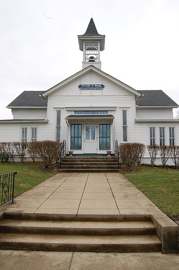
Photograph
On the map
Show this system's territory on the map — 1 ZIP code in all.
Sources
U.S. EPA SDWIS and Community Water System Service Area Boundaries (v3, 2026), Ohio EPA primacy data, 2020 census blocks: the system serving most residents, traced through purchases to the treating utility; Ohio EPA 2023 Sewer and Water Rate Survey (Ohio State, May 2025) for household bills; Ohio EPA DEFA loan awards since 2016 for the loans paragraph · EPA SDWIS · EPA service area boundaries · Ohio EPA drinking water · Ohio EPA rate survey
EPA's own record for this system: Enforcement and Compliance History report for OH7702703 (EPA ECHO).
Notable facts: munroefalls.com, munroefalls.com, en.wikipedia.org
History: en.wikipedia.org, munroefalls.com, cityofcf.com
Water quality: munroefalls.com, cityofcf.com
Planned work: cityofcf.com, munroefalls.com
Capital projects: munroefalls.com
Rates: munroefalls.com
Sewers: munroefalls.com, munroefalls.com
Treatment: cityofcf.com, munroefalls.com, munroefalls.com
Supply stress: cityofcf.com, munroefalls.com, munroefalls.com
