Water system
Piqua City
EPA ID OH5501211 · Miami County · 20,354 people served · owned by a local government
Piqua City treats its own water from Great Miami River + Ernst Gravel Pit + Swift Run Lake (hydraulic system).
The system's record
- Water bodies
- Great Miami River, Ernst Gravel Pit, Swift Run Lake (hydraulic system)
- Raw intakes
- Piqua Ernst Gravelpit Reser
Piqua Miami River
Piqua Swift Run Lake - Serves
- 20,354 people · Miami County
- EPA ID
- OH5501211
Piqua blends three intakes seasonally: Great Miami River is primary by volume (~58%), Ernst Gravel Pit ~30% (preferred for quality), and the Swift Run Lake/hydraulic system (Swift Run Lake, Echo Lake, Frantz Pond, canals) ~12%, used March-September while the river is used October-March.
About this area's water
Did you know
- Piqua's drinking water partly comes from a chain of Ohio canal-era lakes and canals still called the 'hydraulic system' - Swift Run Lake, Echo Lake and Franz Pond - blended with water from a converted gravel quarry and…
- The Ernst gravel pit is really two adjoining lakes: the 4.5-acre one Piqua owns, and a 32-acre neighbor in private residential ownership. It is the city's preferred source because its organic carbon is lowest, but it…
- Piqua sits in an area with a federally designated sole source aquifer and still cannot drink from it - the sand-and-gravel groundwater yield is too limited, so the city takes all of its water from the surface.
- A single algae sample collected July 27, 2010 confirmed cyanobacteria in the reservoir source; algae has been a tracked concern in the watershed ever since, and the city's lab now sells harmful-algal-bloom microcystin…
- Spring atrazine in the Swift Run Lake reservoir once peaked at 85 parts per billion - about 28 times the drinking water MCL - before treatment; the 2025 finished water measured 0.08 ppb.
History6
- 2003City completed its first Source Water Protection Plan and a Vulnerability Assessment under the 2002 Bioterrorism Preparedness Act.
- 2005-2010Source monitoring found spring atrazine peaks of 85 ug/L in the Swift Run Lake reservoir and 33 ug/L in the Great Miami River, and TOC as high as 9.2 mg/L in the reservoir - both driven by row-crop…
- 2010A single algae sample taken July 27, 2010 confirmed cyanobacteria (blue-green algae) in the reservoir source.
- 2011SWAP update (March 2011) found finished water compliant with all U.S. EPA and Ohio EPA rules but flagged the Stage 2 D/DBP rule for TTHMs as an upcoming challenge; documented a 7 MGD plant averaging…
- 2017-2020City built a roughly $42 million expansion/upgrade of its wastewater treatment plant under an Ohio EPA mandate to eliminate sanitary sewer overflows to the Great Miami River, financed through Ohio…
- 2025Ohio EPA performed a new assessment of Piqua's source water in June 2025; the city retains a current, unconditioned license to operate.
Source: piquaoh.govpiquaoh.orgwdtn.com
Treatment & pressure
How it is treated
Conventional lime-softening surface water treatment at the Water Division plant, 9801 N. State Route 66. Raw water is drawn from three surface sources - the canal-era Piqua Hydraulic System (Swift Run Lake and connected lakes/canals), the Ernst gravel pit, and the Great Miami River at River Mile…
Source: piquaoh.govpiquaoh.orgpiquaoh.org
Water pressure
Average distribution pressure of 70 psi, delivered by high service pumps into a system of four storage tanks, two booster stations, 107 miles of piping, and over 2,000 valves and…
Source: piquaoh.gov
What it costs
$10.40 per 1,000 gallons
Typical household bill about $58 a month for water.
Residential water (city rate page, monthly billing): base fee $27.00 for a 5/8" meter (includes the first 1,000 gallons; base scales by meter size to $38.29 at 3/4" and up to…
Source: piquaoh.govvandaliaohio.org
Water quality & impurities10
| Contaminant | Level | Limit | Year |
|---|---|---|---|
| Total Trihalomethanes (TTHM) Range 21.8-33.5 ppb; the 2011 SWAP had flagged Stage 2 TTHM compliance as a coming challenge, and the current result is… | 27.5 ppb | 80 ppb MCL | 2025 |
| Haloacetic Acids (HAA5) Range ND-7.4 ppb. | 5.2 ppb | 60 ppb MCL | 2025 |
| Nitrate Range ND-3.29 ppm; runoff from fertilizer and septic leaching. | 3.29 ppm | 10 ppm MCL | 2025 |
| Atrazine Finished-water result; source-water monitoring in 2005-2010 saw seasonal spring peaks up to 85 ppb in the reservoir. | 0.08 ppb | 3 ppb MCL | 2025 |
| Fluoride Range 0.80-1.30 ppm; added for dental health. | 0.93 ppm | 4 ppm MCL | 2025 |
| Chlorine Range 0.20-1.63 ppm. | 0.89 ppm | 4 ppm MRDL | 2025 |
| Total Organic Carbon (TOC) Range 1.70-3.40. Source-water TOC in 2005-2010 ran as high as 9.2 mg/L in the reservoir and averaged 6.1 mg/L there… | 3.40 ppb (as… | Treatment… | 2025 |
| Copper (90th percentile) 0 of 30 sites above the action level. | 0.042 ppm | 1.3 ppm action… | 2025 |
| Lead (90th percentile) 0 of 30 sites above the action level. | ND ppb | 15 ppb action… | 2025 |
| Turbidity Range 0.02-0.22 NTU; listed among unregulated substances in the CCR table. | 0.220 NTU | Treatment… | 2025 |
Source: piquaoh.orgpiquaoh.gov
EPA compliance record
Lead at the tap: 90th-percentile result 0 ppb in 2025 (action level 15 ppb).
EPA record: no health-based violations since 2015.
6 violations of any kind logged since 2020, 6 of them paperwork (monitoring, reporting, public notice or consumer report).
Projects & plans4
Recent and current work
- Wastewater treatment plant expansion and upgrade · $42 million · 2017-2020 · completed
Ordered by Ohio EPA to eliminate sanitary sewer overflows into the Great Miami River before a new NPDES permit took effect; built by Peterson Construction with… - Lead and galvanized service line inventory (Lead and Copper Rule Revisions) · 2024-2026 · completed
Inventory published at piquaoh.gov/1597; state-reported material counts were corrected and re-notified on 1/15/2026 after the reporting violation disclosed in…
Source: wdtn.combowser-morner.compiquaoh.org
Planned or needed
- Hydraulic Canal and Dam Safety Project (Swift Run Lake, Echo Lake and Franz Pond dams) · 2022-ongoing · planned
ODNR notified the city that its canal-era dam system was not designed to current extreme-weather safety standards; Stantec Consulting is doing evaluation… - Dedicated raw-water sample taps for each source at a rebuilt treatment plant · 2011 · proposed
2011 SWAP recommended adding a sample tap for each of the three sources (river, gravel pit, reservoir) whenever the WTP is next redesigned, since per-source…
Source: piquaoh.govpiquaoh.gov
Supply stress
Piqua relies entirely on surface water. Part of its watershed sits over a federally/Ohio EPA-designated sole source aquifer, but the sand-and-gravel aquifer yields too little for city demand, so all supply comes from the hydraulic system, the Ernst gravel pit (limited to under 30% of needed volume) and the Great Miami River. Ohio EPA's…
Source: piquaoh.govpiquaoh.org
Sewers
Sanitary
City of Piqua Utilities Department operates the wastewater system. The treatment plant was expanded and upgraded in a roughly $42 million project (construction began September 2017, compliance deadline March 2020) to eliminate sanitary sewer overflows of untreated wastewater into the Great Miami River, as required by Ohio EPA ahead of a…
Storm
The city runs a stormwater utility billed by Equivalent Residential Unit: $7.40 per month per ERU (1 ERU = 5,400 square feet of impervious area) for residential customers, and $7.40 times the number of ERUs for commercial and industrial customers.
Source: piquaoh.orgpiquaoh.orgwdtn.com
Sourcesverified
Compiled from the utility's own reports and public records, then independently re-checked against primary sources.
Main supplier in 1 ZIP code
Serves
Main water supplier in 1 ZIP code
- 45356 · Piqua80% of residents
Population-weighted resident shares; a ZIP code can have more than one system on record. Recomputed from each ZIP's own system list, not from the map's cached footprint.
Buys from · Sells to
Piqua City does not buy water from another system on record; it treats its own source water.
No other system is on record buying water from Piqua City.
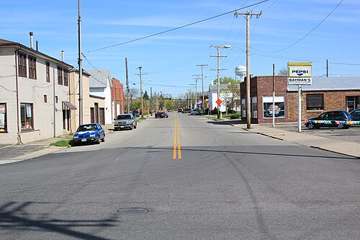
Photograph
On the map
Show this system's territory on the map — 1 ZIP code in all.
Sources
U.S. EPA SDWIS and Community Water System Service Area Boundaries (v3, 2026), Ohio EPA primacy data, 2020 census blocks: the system serving most residents, traced through purchases to the treating utility; Ohio EPA 2023 Sewer and Water Rate Survey (Ohio State, May 2025) for household bills; Ohio EPA DEFA loan awards since 2016 for the loans paragraph · EPA SDWIS · EPA service area boundaries · Ohio EPA drinking water · Ohio EPA rate survey
Piqua City's own pages: growpiquanow.org, piquaoh.gov
Notable facts: piquaoh.gov, piquaoh.gov, piquaoh.gov, piquaoh.org
History: piquaoh.gov, piquaoh.org, wdtn.com, bowser-morner.com
Water quality: piquaoh.org, piquaoh.gov
Planned work: piquaoh.gov, piquaoh.gov
Water pressure: piquaoh.gov
Capital projects: wdtn.com, bowser-morner.com, piquaoh.org
Rates: piquaoh.gov, vandaliaohio.org
Sewers: piquaoh.org, piquaoh.org, wdtn.com, bowser-morner.com
Treatment: piquaoh.gov, piquaoh.org, piquaoh.org
Supply stress: piquaoh.gov, piquaoh.org