Plays from YouTube when you press play.
Then and now · 2026-10-22
Cleveland vs Columbus Home Prices: When They Split
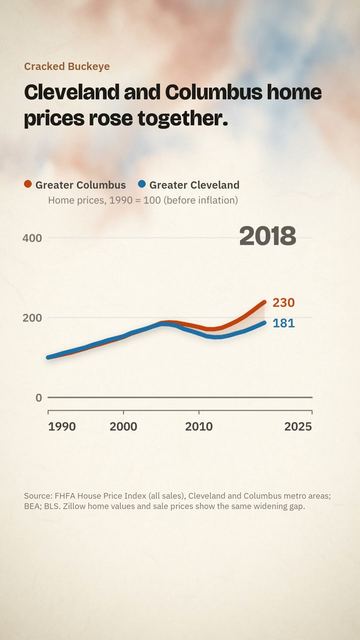
From 1990 to 2004, home prices in greater Cleveland and greater Columbus rose together, never more than 2% apart.
Then they split. Since 1990 a Columbus-area home has gained about 4.1 times in value, a Cleveland-area home about 3.2 times (before inflation). In dollars, the typical Columbus-area home is now worth about $76,000 more than the typical Cleveland-area home; in 2000 the gap was about $7,500.
Why? People and jobs. Since 1990 greater Columbus added about 760,000 people and 60% more jobs. Greater Cleveland barely grew (population down 1%, jobs up 2%). And in the 2008 crash, Cleveland-area home prices fell nearly twice as far (18% vs 9% on the federal index). And it is not because Columbus built less: it built far more homes and prices still rose faster.
This is metro areas, not the cities. The city of Cleveland fell further than its suburbs.
Which side of the split are you on?
Source: Federal Housing Finance Agency House Price Index (all transactions), Cleveland and Columbus metro areas; Zillow; U.S. Bureau of Economic Analysis; U.S. Bureau of Labor Statistics. Zillow home values and sale prices show the same widening gap.
Type your ZIP at crackedbuckeye.com to see your own town.
Watch on YouTube. Follow us on YouTube, TikTok, Facebook, Instagram.
More videos
 Did He Build the Chair He Died In? | This Week in Ohio, Oct. 22-28
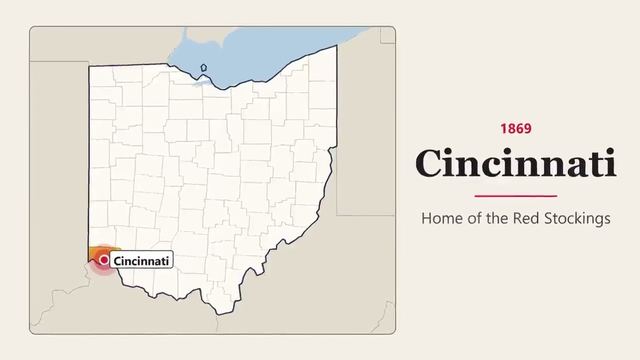 October 3 in Ohio History: The First NFL Game and Goodbye to the Old Stadium | On This Day in Ohio
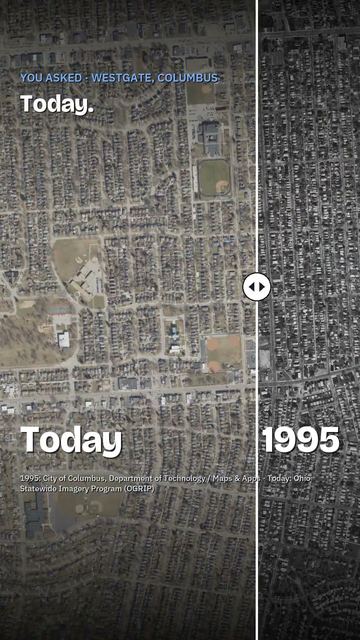 This Columbus neighborhood was a Civil War prison camp
 Why Is Ohio's Capital Named Columbus?
 Who the New Ohioans Are: Schooling, Work, Columbus, Springfield
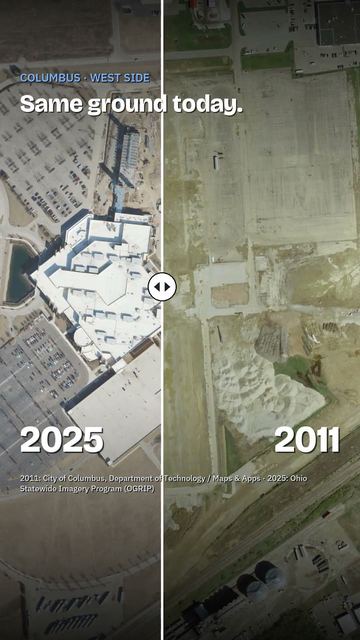 The Columbus casino that used to be a GM plant
Cite this page
Cite this page as:
Cracked Buckeye, "Cleveland vs Columbus Home Prices: When They Split", https://crackedbuckeye.com/videos/cleveland-vs-columbus-home-prices-when-they-split/, built 2026-10-31, accessed [date].
How to cite · Report a correction · Built 2026-10-31
