Local events in Tod Township, Crawford County
Nothing is posted for Tod Township itself yet; here is what is on within 10 miles. All local events in Tod Township, Crawford County
Know a calendar we should watch? Send the link
Checked October 20; the events page is refreshed daily.
How Tod Township, Crawford County began
Tod Township, in the western part of Crawford County, was part of the Wyandot Reservation until an 1836 treaty and 1837 land sale at Marion opened it to settlement; its first township organization, formed with neighboring Eden Township (now in Wyandot County) in 1839, was named Leith for John Leith, a white man held captive by the Wyandots for twenty-nine years, before German settlers' objections to pronouncing 'Leith' led to a rename to Center in 1839 and, at the 1845 county re-division, to Todd (spelled with a double d in the 1881 county history; the modern single-d 'Tod' is usually explained as honoring Ohio Governor David Tod). Its village, Osceola, grew from an 1837 land purchase by a Bucyrus-Marion investment syndicate, and the township's early settlers, especially silversmith James Winstead, lived and worked closely with Wyandot people still on the nearby reservation through the 1830s, leaving behind first-hand accounts, including an eyewitness description of Col. William Crawford's 1782 execution passed down by a Wyandot woman called Mother Cherokee.
Settled 1837 (James Winstead, considered by tradition the first white resident), incorporated 1839 (as Leith Township, jointly with present Eden Township, Wyandot County); renamed Center in 1839, then divided and renamed Todd in 1845, by Named Leith for John Leith, a Wyandot captive for 29 years, by Judge G.W. Leith, his grandson; renamed at settler petition; the 1845 division and Todd name are recorded without an explanation of the name's source in the 1881 county history.
Where the name comes from
The 1881 Baskin county history records the township's original 1839 name as 'Leith,' honoring John Leith, a white man held captive by the Wyandot Indians for twenty-nine years, at the request of his grandson Judge G. W. Leith; German-speaking settlers who found 'Leith' hard to pronounce, and who also objected to John Leith's supposed wartime alliance with the British, successfully petitioned to rename it 'Center' the same year, since the township then sat at Crawford County's geographic center. At the 1845 county boundary re-division the eastern portion was renamed 'Todd' (modern spelling 'Tod'); the source consulted does not explain the choice of this specific name, though Ohio Wikipedia sources attribute it to David Tod, a prominent Ohio Democratic political figure who had run for governor in 1844 (the year before this renaming) and was later elected the state's 25th governor in 1862.
Before the town
Tod Township holds some of the richest first-hand Wyandot material found anywhere in this county's records. Early settler James Winstead worked as a silversmith and copper-smith on the edge of the Wyandot Reservation from 1826, making rings, bracelets, anklets and religious crosses (some weighing five or six ounces) for Wyandot customers who paid him in Michigan-mined ore; in 1829 he accepted the Wyandots' offer of a cabin and orchard to move onto the reservation itself, living among them until relocating to Todd Township land in 1837. Winstead recorded that the Wyandots kept their word in trade and "less deception and lying was used" among them than he later experienced among white settlers. He preserved an account told to him by a Wyandot elder called Mother Cherokee, an eyewitness to Col. William Crawford's 1782 execution near Upper Sandusky, describing Crawford bound by a leather thong over a tree limb rather than tied to a stake, tortured slowly with fire-brands from his toes upward over the better part of a day so his death would be prolonged, in the presence of only one other white man (Simon Girty) among the assembled Wyandot warriors. Judge G. W. Leith, whose grandfather's captivity gave the township its first name, likewise recorded Wyandot customs from personal observation, describing their courtesy in council ("never, in all their public transactions, did I see two attempting to speak at a time") and a specific remembered dispute between two Wyandot men over ownership of a pair of turkeys at Osceola. The township was opened by the 1836 Three Mile Strip treaty and the 1837 land sale.
Nations recorded here: Wyandot.
Timeline
- — The United States obtains the 'Three-Mile Strip' off the eastern border of the Wyandot Reservation, including the future Tod Township, by treaty.
- — The land is sold to private buyers at a public sale in Marion; a Bucyrus-Marion investment syndicate called the Osceola Company purchases the central tract, and James Winstead becomes, by tradition, the first white settler.
- — James Winstead and Z. P. Lea are sworn in as the first Trustees of newly organized Leith Township; the township is renamed Center on June 23 of the same year after German settlers object to the name Leith.
- — 'Bishop' Tuttle builds a water-powered sawmill on Broken Sword Creek, later improved with steam power and a carding and fulling mill by owner William Sigler.
- — At the county's re-division, Center Township is split; the eastern portion is renamed Todd, its first trustees being James Winstead, Isaac Miller and Daniel Tuttle.
- — David Tod, for whom the modern spelling 'Tod' Township is usually said to be named, becomes Ohio's 25th governor.
- — The community of Lemert is established on the Ohio Central Railroad, named for Colonel W. E. Lemert.
Stories
Mother Cherokee's account of Crawford's death
James Winstead, who lived among the Wyandots on their reservation from 1829, recorded a first-hand account of Col. William Crawford's 1782 execution as told to him by a Wyandot elder named Mother Cherokee, who had witnessed it herself and repeated the story often to younger generations. Her version differed from other published accounts in its details: she said Crawford was not tied to a stake, but had his bound hands hung by a leather thong over a tree limb above his head, left in that position overnight and through the next morning while warriors gathered to witness the burning. When enough had arrived by noon, they began touching lit brands to his toes, working slowly upward as each spot went numb, deliberately prolonging his suffering rather than ending it quickly; when the numbness reached his hips, they cut him down and he fell forward, at which point a Wyandot woman scooped hot coals onto his back with a piece of bark. Winstead, who considered Mother Cherokee's account, repeated to him consistently over years, the most reliable version of the execution he had heard.
The silversmith who moved onto the reservation
James Winstead set up as a silver and copper smith on the edge of the Wyandot Reservation in 1826, making rings, bracelets, anklets and ornamental crosses that Wyandot customers, paid partly in ore obtained from mines in Michigan, wore in five- and six-ounce weights around their necks. His reputation grew until the Wyandots asked him to move his shop onto the reservation itself, offering him a double log cabin previously built by a white trader east of Upper Sandusky, an orchard, all the cleared ground he wished to farm, meat, and steady work at his trade. Winstead accepted in 1829 and lived among them for years afterward, traveling with them on hunting trips, sitting at their campfires, trading with them, and taking part in their religious and social life. He later testified that the Wyandots kept their word in business and personal dealings more reliably than he found among white settlers, a judgment county historians recorded from him as one of the most personally informed accounts of Wyandot life available in the county by 1881.
Photographs
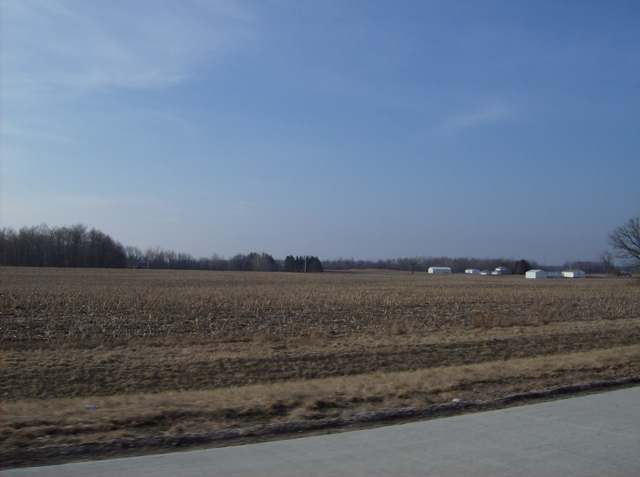
Photo: Nyttend, public domain · Wikimedia Commons
Local history sources: archive.org · en.wikipedia.org · en.wikipedia.org · crawfordcountyohiogenealogy.org · en.wikipedia.org · commons.wikimedia.org
Water
Mostly private wells The water here
- Bucyrus City46% of residentsSandusky River (via Outhwaite & Riley up-ground reservoirs)
- Nevada Village43% of residentsSandusky River (via Outhwaite & Riley up-ground reservoirs)
- Sycamore Village11% of residentsGroundwater wells (3 wells)
Its ZIP codes
Each ZIP code that touches Tod Township, Crawford County, with the share of its residents who live here and the same headline figures as the ZIP page.
| ZIP | Share | Water | Radon | Home value | Schools | Flood |
|---|---|---|---|---|---|---|
| 44849 Nevada | 16% | Mostly private wells | 5.2 pCi/L average radon | Appraisal records without year built | Wynford Local · 4 stars overall | No digital FEMA flood map for this county |
| 44882 Sycamore | 4% | Mostly private wells | 8.9 pCi/L average radon | Appraisal records without year built | Mohawk Local · 3.5 stars overall | No digital FEMA flood map for this county |
| 44820 Bucyrus | 1% | Sandusky River (via Outhwaite & Riley up-ground reservoirs) | 3.9 pCi/L average radon | Median year built 1960 | Bucyrus City · 3.5 stars overall | 2.4% of residents in the 1% floodplain |
The county
Wyandot County: 8 ZIP codes, 22 cities, villages and townships, 23,021 people.
Nearby places
Quick answers
What county is Tod Township, Ohio in?
Tod Township, Crawford County is a township in Wyandot County, Ohio, with 627 residents.
When was Tod Township, Ohio founded?
Tod Township, Crawford County was settled 1837 (James Winstead, considered by tradition the first white resident); incorporated 1839 (as Leith Township, jointly with present Eden Township, Wyandot County); renamed Center in 1839, then divided and renamed Todd in 1845. Founders on record: Named Leith for John Leith, a Wyandot captive for 29 years, by Judge G.W. Leith, his grandson; renamed at settler petition; the 1845 division and Todd name are recorded without an explanation of the name's source in the 1881 county history. Source
How did Tod Township, Ohio get its name?
The 1881 Baskin county history records the township's original 1839 name as 'Leith,' honoring John Leith, a white man held captive by the Wyandot Indians for twenty-nine years, at the request of his grandson Judge G. Source
What ZIP code is Tod Township, Ohio?
Tod Township, Crawford County is served by ZIP codes 44849 and 44882; 44849 holds the largest share of its residents.
Where does Tod Township, Ohio get its water?
The main water source for Tod Township, Crawford County (Bucyrus City): Mostly private wells.
Cite this page
Cite this page as:
Cracked Buckeye, "Tod Township, Crawford County", https://crackedbuckeye.com/place/tod-township-crawford-county/, built 2026-10-31, accessed [date].
How to cite · Report a correction · Built 2026-10-31
